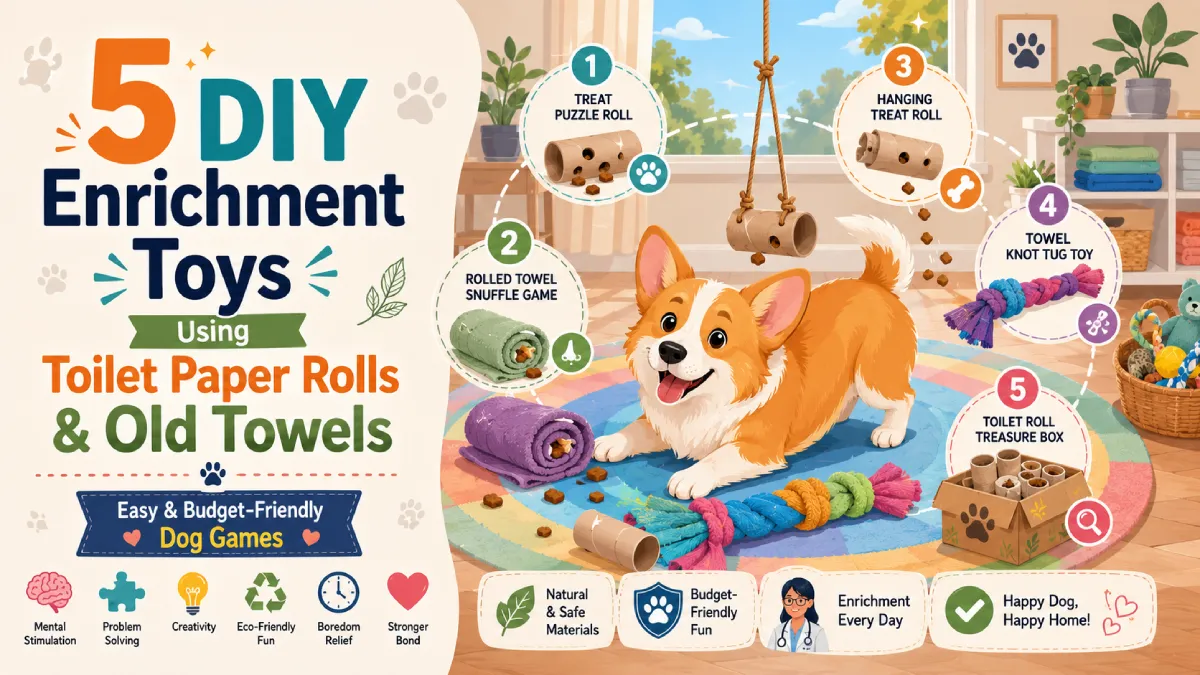
5 DIY Dog Enrichment Toys Using Toilet Paper Rolls and Old Towels (Easy & Budget-Friendly Dog Games)
Keeping a dog mentally satisfied requires more than routine walks around the neighborhood; it demands cognitive engagement that taps into their natural instincts. Cardboard cores and worn-out linens sitting in household recycling bins hold extraordinary potential for crafting DIY dog enrichment toys without spending money on expensive pet store novelties. Pet parents seeking simple ways to curb destructive chewing often look for easy DIY dog toys that channel restless energy into productive problem-solving tasks. This comprehensive guide outlines five imaginative, budget-friendly games built entirely from everyday household waste, helping your canine companion burn mental calories, reduce stress, and master fun foraging challenges safely in your living room.
Finding the right match requires balancing aesthetic appeal with practical functionality. By reviewing the linguistic roots and cultural significance behind these words, you can confidently assign a moniker that honors your dog’s unique personality.
The Psychology of Canine Enrichment and Mental Stimulation
Domestic canines possess deep-seated genetic wiring inherited from wild ancestors who spent significant portions of their day hunting, tracking, scenting, and tearing apart food sources. Modern pet lifestyles often leave these natural drives unfulfilled, leading to boredom-induced behaviors such as excessive barking, shoe chewing, or digging up backyard landscaping. Introducing cognitive challenges provides a constructive outlet for pent-up mental energy.
Why Cognitive Engagement Matters as Much as Physical Exercise
While a long game of fetch exhausts a dog physically, high-energy exercise alone does not necessarily satisfy a sharp brain. In fact, intense physical activity can sometimes leave working breeds or high-drive companion dogs in a state of physical fatigue accompanied by racing mental alertness. Structured problem-solving activities force the cerebral cortex to work, regulating heart rates and promoting calm neurochemistry. Introducing puzzle games helps lower baseline anxiety, builds confidence in timid animals, and accelerates focus during obedience drills. When developing a balanced routine for young dogs, reviewing insights on [how to choose the right puppy] can help establish healthy mental stimulation patterns early.
The Natural Foraging and Shredding Instincts
Tearing paper, shredding cardboard, and unrolling fabric are completely normal behaviors rooted in the predatory sequence of searching and dissecting prey. Instead of punishing a dog for destroying a household cushion, redirecting that exact physical urge toward designated recyclable materials satisfies their psychological needs safely. When dogs are given permission to shred specific household objects under supervision, they learn clear boundaries regarding what is acceptable to dismantle. This instinctive satisfaction prevents frustration and creates a harmonious domestic environment.
Pet Owner Note: Always supervise your dog closely during their first few interactive puzzle sessions to observe how they approach the materials, ensuring they focus on foraging rather than swallowing non-food debris.
Project 1: The Cardboard Roll Kibble Burrito
Transforming ordinary bathroom waste into an exciting puzzle game requires minimal effort and delivers maximum engagement for food-motivated canines. This project utilizes toilet paper or paper towel tubes to hide dry kibble inside a secured cardboard package.
Materials Needed and Preparation Steps
Gather clean cardboard cylinders, scissors, and a handful of your dog’s regular dry food or low-calorie training treats.
- 3 to 4 clean toilet paper rolls (or cut paper towel rolls into smaller sections)
- A selection of dry kibble or aromatic treats
- Optional: A worn cotton sock or strip of scrap fabric
Take your cardboard tubes and make small vertical snips along the open edges to create locking flaps. Place a measured portion of dry kibble inside the primary cylinder. Slip the remaining tubes over, inside, or perpendicular to the first roll to lock the food securely inside an interlocking puzzle shell. For dogs needing an extra layer of difficulty, slide the entire constructed cardboard bundle inside an old cotton sock and tie a loose knot at the end.
How to Adjust Difficulty for Advanced Solvers
Beginner dogs may become frustrated if the cardboard locks too tightly, so start by leaving the tubes unsealed or simply stuffing kibble loosely inside a single open roll. As your dog learns how to toss, paw, and chew open the cardboard enclosure, increase the challenge by interlocking multiple tubes or folding the ends shut tightly. This progressive scaling keeps problem-solving engaging and prevents boredom from settling in.
Project 2: The Rolled Towel Snail Trail
Textured linens provide a fantastic medium for scent-work games that rely primarily on olfactory engagement rather than brute physical force. This exercise mimics the natural act of foraging through tall grass or forest undergrowth.
Crafting the Snail Trail Puzzle Game
Lay a clean, dry, old bath towel flat across a non-slip rug or carpeted floor in your living room. Sprinkle a handful of highly aromatic treats or smelly training rewards evenly across the entire surface of the fabric. Begin rolling the towel tightly from one end toward the other, trapping the treats securely within the rolling folds as you go. For intermediate learners, twist the rolled towel into a tight spiral coil resembling a snail shell before presenting it to your dog.
Supervision and Safe Unrolling Techniques
Encourage your pet to use their nose and paws to unroll the fabric, releasing the hidden rewards as the layers fall open. This game forces dogs to slow down their eating pace, making it an exceptional feeding hack for fast gulpers who otherwise inhale their meals in seconds. Always retrieve the towel immediately once all the treats have been discovered to prevent chewing or ingestion of the fabric fibers.
Practical Step: Wash your old towels using a fragrance-free, hypoallergenic detergent before turning them into pet games, ensuring residual laundry chemicals do not irritate your dog’s sensitive nasal passages during scent work.
Project 3: The Hanging Roll Treat Dispenser
Elevating puzzles off the floor introduces dynamic physical movement that challenges balance, coordination, and paw dexterity. This setup turns a simple cardboard tube into a swinging kinetic dispenser.
Suspending Cardboard for Dynamic Movement
Take a single toilet paper roll and poke two small, opposing holes near each end using a pencil or skewer. Thread a piece of unflavored butcher’s twine, cotton yarn, or an old fabric strip through the holes, tying it securely so the tube hangs horizontally like a tiny clothesline. Fill the cylinder with a mix of kibble and a few high-value dehydrated treats, leaving the ends partially open or folded inward.
Engaging High-Energy Working Breeds
Hang the prepared assembly between two stable chairs, a low doorknob, or an exercise pen at your dog’s chest height. When the dog nudges the suspended roll with their nose or paws, the cylinder spins wildly, dropping treats onto the floor below. This unpredictable motion mimics the mechanics of natural foraging, keeping high-energy breeds thoroughly occupied and mentally exhausted. To support your dog’s overall development during high-energy play phases, consult resources on [puppy health and wellness] for nutritional and structural guidelines.
Project 4: The Braided Towel Tug-and-Treat Snuffle
Snuffle mats purchased online can be expensive, but you can replicate their foraging benefits using worn-out bath sheets or beach towels that have reached the end of their functional lifespan.
Weaving Fabric Strips to Mimic Snuffle Mats
Cut an old towel into long, uniform strips measuring approximately two to three inches wide and twelve inches long. Take three strips of fabric and braid them together firmly, tying secure knots at both ends to prevent unraveling. Repeat this process until you have several sturdy braided fabric links.
Repurposing Linens Responsibly
Tie or interlock the braided strips together into a dense, sprawling fabric web that features plenty of hidden folds and overlapping pockets. Shove small treats or kibble deep within the braided crevices and tight knots of the makeshift snuffle structure. Your dog must use their lips, teeth, and paws to manipulate the woven fabric, digging out the food particles just as they would unearth prey in the wild.
Safety Reminder: Inspect all DIY enrichment toys regularly for signs of excessive wear, fraying threads, or torn cardboard pieces that could pose a choking or intestinal blockage hazard if swallowed.
Project 5: The Muffin Tin and Toilet Paper Roll Puzzle Board
Combining metal bakeware with household paper cylinders creates a multi-layered interactive puzzle that rivals commercial puzzle boards costing dozens of dollars.
Combining Household Items into a Complex Game
Take a standard metal kitchen muffin tin and place a few pieces of kibble or smelly treats into several of the cups. Stand upright toilet paper rolls inside each muffin cup, effectively filling every hole with a cardboard tower. Drop additional treats down inside the hollow cardboard tubes, creating a two-tier obstacle course.
Problem-Solving Strategies for Beginners
Your dog must figure out that they need to lift the cardboard tubes out of the muffin cups to access the lower treats, while also shaking or tearing the tubes to retrieve the upper rewards. For absolute beginners, leave the cardboard cylinders out initially so they understand the muffin tin concept, then introduce the paper rolls once they master the basic lifting action. This scaffolding approach builds confidence and teaches systematic problem-solving. For behavioral insights during interactive training exercises, explore guidance on [understanding dog behavior].
Vet Check: Consult your veterinarian if your dog shows signs of gastrointestinal distress or unusual vomiting after playing with cardboard or fabric toys, as accidental ingestion requires prompt professional care.
Essential Cardboard and Fabric Safety Guidelines
While crafting household toys offers a wonderful, sustainable way to entertain your pet, safety must remain the absolute top priority. Not all paper products and textiles are created equal, and unsupervised play can quickly turn hazardous.
Preventing Ingestion Hazards and Cardboard Blockages: Cardboard itself is non-toxic, but heavily dyed, waxed, or laminated packaging materials can contain harmful chemical coatings. Stick strictly to plain brown or grey toilet paper rolls and paper towel cores that feature zero metallic inks or glossy finishes. Ensure that toxic glues, staples, or adhesive tape are completely removed before handing any cardboard item to your dog. If your dog has a known history of intentionally eating fabric or paper rather than shredding and spitting it out, switch exclusively to supervised food-dispensing rubber toys instead.
Knowing When to Discard Damaged Materials: Fabric strips and cardboard fragments weaken rapidly when exposed to canine saliva. Establish a strict disposal protocol: once a toilet paper roll has been shredded into soggy confetti, clean up the mess immediately to prevent accidental ingestion. Similarly, if an old towel begins shedding long threads or loops that could wrap around teeth or digestive tracts, discard the fabric instantly. Maintaining pristine toy hygiene protects your pet from preventable medical emergencies. When incorporating these games into daily routines alongside rewards, review techniques outlined in guides on [positive reinforcement dog training].
Frequently Asked Questions
- Are toilet paper rolls safe for dogs to chew on? Plain, unprinted toilet paper rolls and paper towel cores are generally safe for supervised shredding, provided the dog spits out the cardboard rather than swallowing large pieces.
- What should I do if my dog swallows a piece of cardboard? Monitor your dog closely for signs of lethargy, vomiting, or lack of appetite; contact a veterinarian immediately if they show signs of intestinal blockage or distress.
- Can I use cardboard boxes instead of toilet paper rolls? Yes, small shipping boxes or tissue boxes make fantastic puzzle containers, provided all plastic tape, staples, and shipping labels are removed beforehand.
- How often should I introduce new DIY enrichment toys? Introducing a new or rotated puzzle two to three times a week keeps cognitive engagement high and prevents boredom without overwhelming your pet.
- Are these toys suitable for cats as well as dogs? Many of these cardboard and towel games work wonderfully for feline companions, particularly food-motivated cats who enjoy batting at tubes and foraging for kibble.
- How do I clean old towels used for dog puzzle games? Wash the towels in hot water using a pet-safe, unscented detergent, and dry them thoroughly on a high-heat cycle before crafting any games.