Scent Games for Dogs: Easy Nose Work Activities at Home
Scent games let dogs use one of their strongest senses without requiring a large yard, expensive equipment or high-impact exercise. You can begin with visible food or a familiar toy, then gradually make the search less obvious as the dog learns that using the nose is what earns success.
Home nose work should be simple enough to keep the dog engaged, safe for the environment and matched to mobility, food motivation and confidence. It is enrichment—not a substitute for professional detection-dog training—and there is no need to use essential oils or strong chemical scents to make the game “more advanced.”
Quick Answer
Start scent games with an easy visible search, reward success, then hide food or a familiar toy in slightly harder locations. Increase only one difficulty factor at a time: hiding depth, search area, number of containers or environmental distractions. Use safe familiar materials, supervise swallowing risks, and avoid essential oils or household chemicals as scent targets.
Why Dogs Enjoy Scent Activities
Dogs use odor to gather information about people, animals, food and places. VCA and Blue Cross both recommend sniffing and searching as enrichment because these activities allow normal investigative behaviour. A scent game can be especially useful on days when intense exercise is inappropriate.
Start Easier Than You Think
The first goal is not to test the dog. It is to teach the rule of the game. Let the dog see you place a piece of food or favorite toy nearby, then release them to find it. When success is predictable, move the reward behind a chair leg or partly under a towel instead of hiding it in a different room immediately.
1. Treat Search
Place a small piece of the dog’s normal food a short distance away while the dog watches. Use a consistent cue such as “find it” if you want one. As the dog begins using the nose, place the food behind safe objects or just out of direct sight.
2. Scatter Search
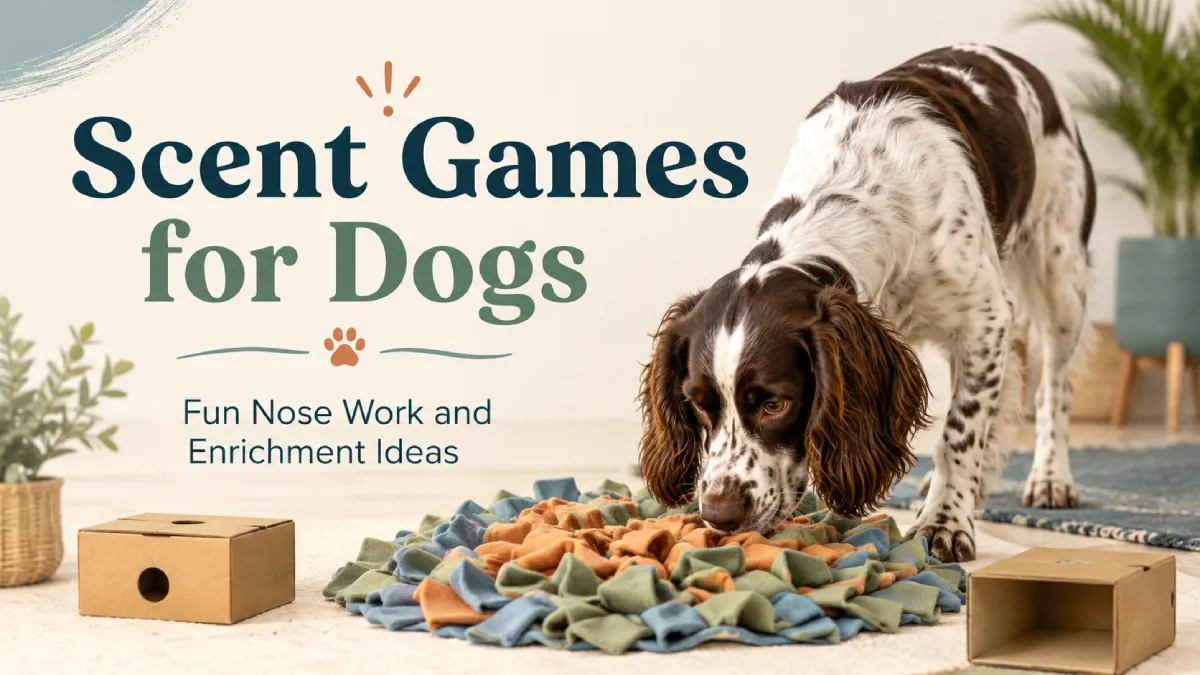
Scatter part of a meal across clean grass, a snuffle mat or a safe indoor floor area. The dog searches for individual pieces. Avoid areas treated with pesticides or chemicals and do not scatter where multiple dogs may compete over food.
3. Box Search
Place food in one open cardboard box among several empty boxes. This can teach the dog to compare odors. Cardboard is not suitable for dogs that shred and ingest it, so supervise and choose a different setup when necessary.
4. Toy Search
Use a toy the dog already values. Begin by hiding it in plain view, then progressively conceal it behind furniture or in another easy location. Blue Cross recommends keeping early searches simple rather than making the dog panic or give up.
5. Find a Person
One person can hide behind a door or piece of furniture while another briefly holds the dog. Call once or twice at first and reward the dog for finding the person. Keep the environment safe and do not hide where the dog must jump, climb dangerously or enter a restricted room.
6. Simple Scent Trail
Create a short trail using pieces of the dog’s normal food or the scent of a familiar toy. Keep it obvious at first. A home trail is a recreational search game; it is not the same as formal tracking, mantrailing or detection training.
7. Hidden Food
Once simple searches are easy, hide food behind a table leg, beside a box or under an upturned safe container that the dog can access without chewing through material. Keep the food within the dog’s dietary plan.
8. Multiple Containers
Place one food-containing container among several identical empty ones. Use containers that cannot trap the muzzle or collapse around the dog. Reward investigation of the correct container rather than physically guiding the nose.
Increase Search Area Gradually
Move from one small room to a larger room, then perhaps to two connected spaces. Expanding the area and increasing hiding difficulty at the same time can make the game unexpectedly hard, so change one variable first.
Use Different Rooms
New rooms introduce different airflow, furniture and background smells. Keep doors to unsafe spaces closed and remove medication, cleaners, food waste and fragile items before setting up a search.
Outdoor Searches
A fenced yard or safe on-leash area can add wind, vegetation and wildlife odors. Outdoor searches should remain controlled around roads, toxic plants, animal feces and discarded food. The dog’s normal recall and leash-safety rules still apply.
High-Drive Dogs
Search work can give high-drive dogs a purposeful task without relying only on repetitive running. Keep sessions short enough that the dog can disengage and recover. Combine scent work with physical exercise, settle skills and sleep rather than treating one game as the complete solution.
Senior and Mobility-Limited Dogs
Place hides at comfortable height and on non-slip flooring. A senior dog can search successfully without stairs, jumping or crouching under furniture. Dogs on rehabilitation restrictions should use locations approved by the veterinary team.
Reactive Dogs
Home scent games can offer enrichment away from crowded outdoor triggers, but they are not a treatment plan for reactivity. If fear or aggression limits daily life, use qualified reward-based behaviour support.
Food Calories Still Count
Measure food for the session before you begin. Where practical, take search rewards from the normal meal. This prevents a routine of “mental enrichment” from gradually adding excess calories.
Safe Scent Materials
Use familiar food, toys, clean containers and normal household objects that the dog can safely investigate. A scent game does not need perfume, concentrated botanical extracts or chemical odorants.
Essential-Oil Warning
Do not use essential oils to create stronger scent targets. Concentrated oils can irritate or poison animals depending on the product and exposure, and dogs may lick residues from surfaces or fur. Use safe ordinary scent sources instead.
Household Chemical Safety
Do not hide rewards near cleaning products, laundry chemicals, medications, rodenticides, garage fluids or other hazardous materials. Scent work should teach the dog to search within a deliberately safe zone, not encourage investigation of chemical storage.
How to Progress Training
- Make the reward visible and easy.
- Partly hide the reward.
- Use several possible hiding places.
- Expand the search area.
- Add mild, controlled distractions only after the dog understands the game.
If the dog starts frantically chewing containers, barking continuously or abandoning the search, reduce difficulty.
Link Scent Games With Sniff Walks
Home searches and outdoor sniffing complement each other. Use Sniff Walks for Dogs when you want the dog to investigate naturally occurring outdoor scent rather than find a hidden target.
Related Pawnium Guides
How to Tell When the Search Is at the Right Difficulty
A well-pitched search usually produces focused investigation with regular success. The dog may move between likely locations, pause to sniff and return to the task after finding one reward. Difficulty is probably too high when the dog starts randomly racing, biting containers, repeatedly looking to the handler for rescue or abandoning the activity.
Reduce only one challenge at a time. Make the target more visible before shrinking the search area, or return to fewer containers before adding a new room. Clear progressions make it easier for the dog to understand which behaviour is being reinforced.
Prevent Accidental Cueing
People often unconsciously stare at the correct hiding place or walk toward it. During container searches, stand neutrally and avoid repeatedly pointing. If the dog is learning to use the nose, your body should not become the main source of the answer.
Using Non-Food Targets
A familiar toy can be used when food is unsuitable or the dog is strongly toy-motivated. Begin with the toy visible, then partly hide it and gradually increase search difficulty. Professional odor detection uses carefully trained target scents and protocols; a home toy search does not need chemical scent materials.
Multiple Dogs
Train separately at first so one dog does not follow the other or compete over food. Separate searches also make it easier to judge each dog’s confidence and ability. In households with guarding, keep food-search sessions physically separated.
Ending a Session Well
Finish after a successful easy search rather than waiting until the dog loses interest or becomes frustrated. Give a clear end cue, collect remaining food or objects and allow the dog to disengage. This prevents the dog from continuing to search unsafe household areas after the exercise is finished.
Moving From Indoor to Outdoor Searches
Outdoor airflow and background odors make search work harder. Return to an easier hide when you first move outside. Use a secure leash or fenced area, and choose a location away from roads, wildlife, toxic plants and discarded food.
When Scent Games Should Be Modified
Adjust the setup if the dog has allergies, dietary restrictions, mobility limitations, poor vision or anxiety around containers. A scent game is flexible: the target can be placed at nose height, the search area can be smaller and reinforcement can be non-food where appropriate.
How Often to Play Scent Games
There is no required daily quota. Use scent work when it fits the dog’s routine and interest. Some dogs enjoy several short searches in a week; others prefer occasional sessions mixed with walks, play and training. Stop before the dog becomes frustrated or mentally fatigued.
Keep the Search Area Safe After the Game Ends
Collect every hidden reward and close access to rooms that contain medications, cleaners or unsafe food. A dog that has just learned “search this room” may continue investigating after the formal session.
Do Not Use Scent Games to Diagnose Ability
A dog that struggles with a search is not necessarily “bad at scent work.” Wind, distraction, motivation, learning history and handler cueing all affect performance. Make the next search easier and evaluate the setup before judging the dog.
Keep Records When You Want to Progress
Note the search area, hide type, distractions and how the dog responded. A simple log prevents accidental jumps in difficulty and helps you recognize whether the dog performs better with toys, food, boxes or open-room searches.
Use Clear Start and Finish Cues
A consistent “find it” and “all done” can help the dog understand when searching is encouraged. This is especially useful in homes where you do not want the dog investigating storage areas or other rooms after the game ends.
Keep sessions optional and successful; a dog that walks away is allowed to finish.
Original Practical Tool
| Level | Setup | Ready to progress when… |
|---|---|---|
| 1 | Easy visible search | Dog understands the search cue and succeeds calmly. |
| 2 | Simple hidden search | Dog uses nose without frantic searching. |
| 3 | Multiple hiding places | Dog checks options methodically. |
| 4 | Larger search environment | Dog can work a room without losing confidence. |
| 5 | Controlled distractions | Dog can disengage from irrelevant items and continue searching. |
FAQs
What can I use for scent games at home?
Use familiar food, toys and safe household containers. Avoid concentrated fragrances, essential oils and chemicals.
Are scent games good for high-energy dogs?
They can add useful mental work, but should be part of a balanced routine that also includes appropriate physical activity, calmness and recovery.
How long should a scent session last?
There is no fixed duration. End while the dog is still successful and able to disengage rather than continuing until frustration.
Can senior dogs do nose work?
Yes, many can. Place hides on non-slip surfaces and at comfortable heights, and follow veterinary restrictions.
Is home scent work the same as detection training?
No. Recreational home searches provide enrichment but do not equal professional detection, tracking or working-dog training.