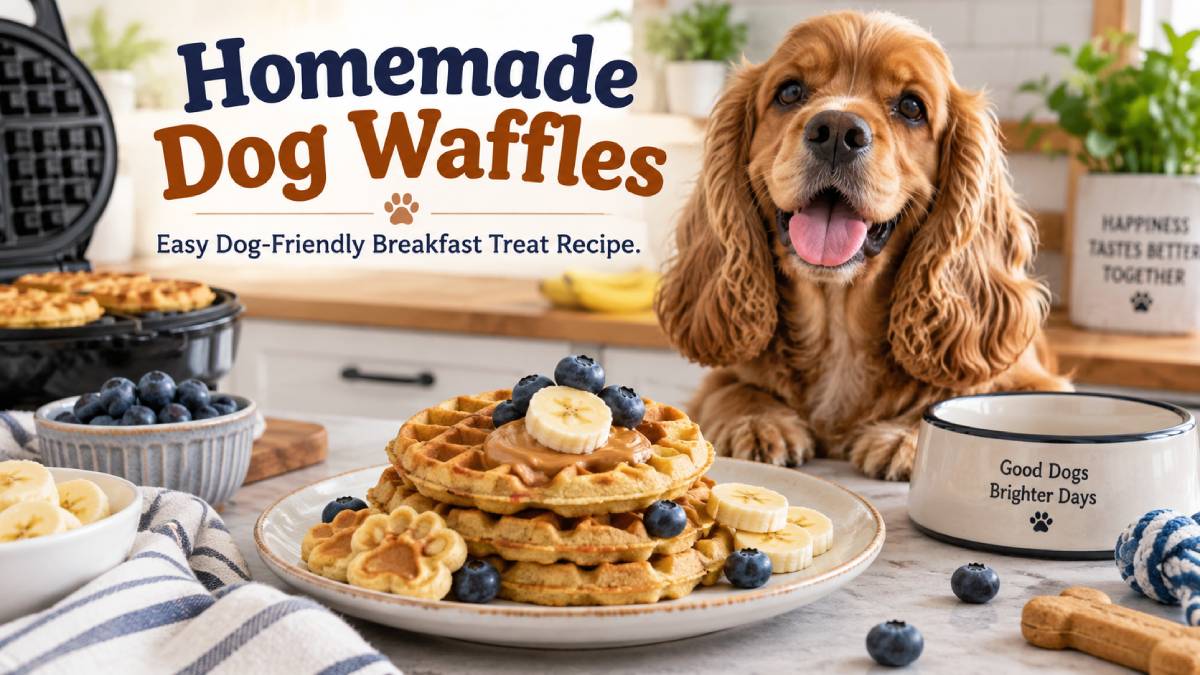
Homemade Dog Waffles: Easy Dog-Friendly Breakfast Treat
Homemade dog waffles are an easy way to turn a few plain pantry ingredients into a special breakfast-style treat without giving your dog a sugary human waffle. This version uses oat flour, egg, plain pumpkin, and water, so there is no syrup, added sugar, salt, or baking mix needed. The waffles cook quickly in a standard waffle iron and can be cut into small pieces for training, enrichment, or an occasional weekend snack.
The key is to keep the recipe simple and treat the finished waffle as a treat rather than a meal. Dogs do not need maple syrup, whipped cream, chocolate chips, or buttery toppings. A small piece served plain is usually the best option, and you can freeze the extras for later.
Ingredients
- 1 cup oat flour: Use finely ground plain oats or packaged oat flour with no added sweetener or flavoring.
- 1 large egg: Helps bind the batter and gives the waffle enough structure to release from the iron.
- 1/2 cup plain pumpkin puree: Choose 100% pumpkin, not pumpkin pie filling, which is sweetened and spiced.
- 1/3 to 1/2 cup water: Add gradually until the batter is thick but scoopable.
- Optional: a tiny amount of neutral oil for the waffle plates: Only if your waffle maker tends to stick; use as little as possible.
How to Make It
- Preheat the waffle iron on a medium setting. If your model usually sticks, wipe the plates with a very thin film of neutral oil.
- Whisk the egg and pumpkin together until the mixture looks even. Stir in the oat flour.
- Add water a little at a time. The batter should be thicker than human pancake batter but loose enough to spread when the waffle maker closes.
- Spoon a modest amount into the center of the waffle iron. Do not overfill because oat batter can expand and push out the sides.
- Close the iron and cook until the waffle is set and lifts away cleanly. Exact timing varies by appliance, so use the first waffle as a test.
- Cool completely before serving. Cut into bite-size squares that fit your dog rather than offering the whole waffle at once.
Why This Dog Waffle Recipe Works Without Sugar or Syrup
Human waffles are built around flavor and texture preferences that dogs do not need: sugar for sweetness, salt for contrast, butter for richness, and syrup for serving. A dog-friendly waffle can be much simpler. Egg provides structure, oat flour gives the batter body, and pumpkin adds moisture so the waffle is not dry and crumbly.
Pumpkin also makes the batter forgiving. If you use a little more or less water, the mixture still tends to hold together because pumpkin is thick rather than watery. That makes it easier to portion in a waffle iron than a thin batter that runs toward the edges.
The finished texture is intentionally softer than a crisp Belgian waffle. For most dogs, a soft waffle is easier to break into small pieces and is less likely to shatter into crumbs. If you want a firmer texture for a healthy adult dog with good teeth, cook a little longer and let the waffle cool uncovered before cutting.
Dog-Friendly Waffle Toppings That Stay Simple
The safest topping is no topping at all, but a special breakfast treat can still look fun without turning into a dessert. A teaspoon of plain pumpkin, a thin smear of xylitol-free peanut butter, or a spoonful of the dog’s regular wet food can work for many healthy dogs. Keep the amount tiny because toppings can quickly add more calories than the waffle itself.
Skip maple syrup, honey-heavy drizzles, whipped cream, chocolate spread, sugar-free syrup, and flavored nut butters. Sugar-free products are especially risky because some contain xylitol. Rich dairy toppings can also trigger digestive upset in dogs that do not tolerate lactose well.
Can You Make Mini Waffles for Training?
Yes. If you have a mini waffle maker, use only enough batter to create a thin round and cook it until set. Once cooled, cut the mini waffle into many small cubes. This is often more useful than serving one big breakfast portion because you can use a few pieces during training and refrigerate or freeze the rest.
If you only have a large waffle maker, the same idea works. Cook one regular waffle, let it cool, then use kitchen scissors or a knife to cut narrow strips and small squares. The goal is portion control, not a picture-perfect waffle.
Ingredient Swaps for Homemade Dog Waffles
Plain unsweetened applesauce can replace some or all of the pumpkin if your dog already tolerates apple. Mashed ripe banana is another option, although it makes the waffle sweeter and usually softer. If you use banana, you may need slightly less water.
For dogs that cannot eat egg, this specific recipe may not hold together as reliably. Rather than guessing at a substitute for a dog with a diagnosed allergy, use a recipe designed around that restriction or ask the veterinary team about appropriate ingredients. Food allergies are a medical issue, and a homemade swap is not useful if it conflicts with an elimination diet.
How Much Should You Give Your Dog?
Think of homemade treats as extras, not as a second meal. A simple approach is to cut or break the finished recipe into pieces that suit your dog’s size, then use the smallest piece that still feels rewarding. Training treats can be pea-sized for many dogs because the reward comes from frequency and timing rather than from a large portion.
For a toy or small dog, one full-size waffle corner, pancake, cookie, or cake slice can be much more than a casual snack. For a large dog, it can still be surprisingly calorie-dense if peanut butter, oats, or eggs are involved. Start smaller than you think you need and remember to count other snacks, dental chews, table scraps, and food used for training that day.
If your dog is overweight, has pancreatitis history, diabetes, kidney disease, gastrointestinal disease, food allergies, or is eating a veterinarian-prescribed diet, do not assume a homemade recipe is automatically appropriate. Ask the veterinarian or veterinary nutrition team how treats should fit the dog’s specific plan. Sometimes the safest treat is a measured portion of the dog’s regular food.
Dog-Treat Safety Rules That Matter More Than the Recipe
Homemade does not automatically mean safe, so ingredient selection matters more than whether a recipe came from your own kitchen. The biggest practical rule is to keep the ingredient list plain. Skip chocolate, grapes, raisins, macadamia nuts, onion, garlic, chives, alcohol, caffeine, and heavily seasoned human-food ingredients. The ASPCA’s list of people foods to avoid feeding pets is a useful check when you are unsure about an add-in.
Xylitol deserves a separate warning because it can appear in products that otherwise look dog-friendly, especially sugar-free foods and some nut butters. The FDA warns that xylitol can cause a rapid, dangerous drop in blood sugar in dogs and may lead to more serious complications. Every time a recipe uses peanut butter, read the ingredient label first and choose a product with no xylitol, birch sugar, or similar xylitol labeling.
These recipes are treats or toppers, not nutritionally complete meals. VCA’s veterinary nutrition guidance explains that treats should generally stay within about 10% of a dog’s daily calories, leaving the rest for a complete and balanced diet. That limit is especially useful with calorie-dense ingredients such as peanut butter, eggs, oats, and richer meat-based toppings.
The right serving size also depends on the individual dog. A large, active adult dog may be able to handle a bigger piece than a five-pound senior dog, but body size is only one part of the decision. Weight goals, medical conditions, food sensitivities, prescribed diets, and the rest of the day’s treats all matter. The WSAVA Nutrition Committee’s treat guidance recommends checking with the veterinary team when a dog has a medical condition, dietary sensitivity, or therapeutic diet.
Introduce any new homemade treat in a small amount the first time. Even ingredients that are generally dog-safe can cause loose stool, gas, or vomiting in an individual dog if the portion is too large or the food is unfamiliar. If your dog develops repeated vomiting, marked lethargy, abdominal pain, swelling, breathing difficulty, collapse, or another concerning reaction, stop the food and contact a veterinarian promptly.
How to Introduce a New Homemade Treat
Start with one small piece on a day when you can observe your dog normally. Do not introduce several new foods at once, because if stomach upset develops you will not know which ingredient was responsible. Keep the rest of the dog’s routine stable and avoid giving a large first serving simply because the dog likes the smell.
Watch for vomiting, diarrhea, excessive gas, itching, facial swelling, or an obvious change in energy after a new treat. A mild one-time soft stool can have many causes, but repeated symptoms or a stronger reaction deserve veterinary advice. Dogs with known food allergies, inflammatory bowel disease, pancreatitis, diabetes, kidney disease, or other medical conditions need more individualized guidance.
If the treat agrees with your dog, you can use it again in measured portions. Consistency makes it easier to understand what your dog tolerates and prevents a kitchen full of changing ingredients from quietly adding a lot of extra calories.
How to Keep Homemade Treats From Replacing Balanced Food
A homemade snack can look wholesome because it contains familiar foods, but familiar does not mean nutritionally complete. Dogs need specific amounts and ratios of amino acids, fatty acids, vitamins, minerals, and other nutrients across their diet. A simple treat recipe is not designed to meet all of those requirements.
That is why the practical 90/10 approach is useful: most daily calories come from complete and balanced dog food, while treats occupy a small allowance. If you use homemade pieces for training throughout the day, reduce the size of each reward rather than letting every repetition become a full snack.
For dogs that need many training rewards, another option is to reserve part of the dog’s regular meal and use those kibbles or measured food pieces during training. The homemade treat can then stay special without pushing total calories upward.
Choosing Ingredients for a Sensitive Dog
Short recipes are helpful when a dog has a sensitive stomach because there are fewer variables, but “sensitive” is not a diagnosis. If symptoms are frequent, severe, or tied to many foods, talk with a veterinarian rather than cycling through homemade recipes. An elimination diet for suspected food allergy needs to be controlled carefully to produce useful information.
When trying a recipe for a dog with no known medical restriction, choose ingredients the dog has already eaten without a problem. That is usually a better starting point than introducing several trendy ingredients at once. Plain preparation also makes it easier to spot accidental additions such as seasoning, sugar, or sweetener.
Making Homemade Dog Treats More Practical
Portion the batch before storing it. If the entire container is full of large cookies or thick slices, it is easy to over-serve. Cut them to the size you actually intend to use, then refrigerate one small container and freeze the rest.
Label freezer containers with the recipe name and date. That sounds overly organized until several similar-looking orange pumpkin treats are frozen at once. A label also helps if you later need to tell a veterinarian what your dog ate.
Keep human and dog treats separate, especially when they look similar. A dog-safe cookie may be bland to a person, while a human cookie may contain chocolate, raisins, macadamia nuts, or a sugar-free sweetener that is unsafe for dogs. Separate containers reduce mix-ups.
Storage, Freezing, and Food-Handling Tips
Homemade dog treats do not contain the commercial preservatives that make packaged biscuits shelf-stable for long periods. That is a benefit if you want a short ingredient list, but it also means storage needs more attention. Moist recipes should generally be treated more like fresh food than like a dry pantry biscuit.
Let baked items cool completely before you close them in a container. Trapping steam creates condensation, and condensation shortens shelf life by keeping the surface damp. For soft or moist treats, use a covered container in the refrigerator and make a smaller batch if your dog will not finish them quickly.
Freezing is the easiest way to stretch a batch without pushing freshness. Place individual pieces on a tray until firm, then transfer them to a freezer-safe container or bag so they do not freeze into one large block. Small treats can often thaw in the refrigerator overnight, while a single portion may only need a short time at room temperature before serving.
Discard any treat that develops mold, an unusual smell, slimy moisture, or a texture that seems clearly different from when it was fresh. When in doubt, throw it out. A few saved treats are not worth a stomach problem.
Common Recipe Problems and Easy Fixes
The mixture is too dry: Dog-treat doughs can change depending on how finely the oats are ground, how large the egg is, and how thick the pumpkin, applesauce, or peanut butter happens to be. Add plain water one teaspoon at a time until the mixture holds together. Avoid pouring in a large amount all at once because it is much harder to correct a wet dough.
The mixture is too sticky: Give oat-based dough five minutes to rest before adding more flour. Oats absorb moisture as they sit. If it is still too sticky to handle, add a small spoonful of oat flour and mix again.
The treats are browning too fast: Dog recipes do not need a deeply browned crust to taste good to a dog. Lower the heat slightly or shorten the baking time if the edges are coloring before the center sets. Dark pans and small pieces often cook faster.
The finished treat is harder than expected: Thickness and baking time change texture dramatically. Thinner pieces lose moisture faster and become crisp; thicker pieces usually stay softer. For senior dogs or dogs with dental issues, keep pieces thicker, bake just until set, and refrigerate them rather than trying to dry them into shelf-stable biscuits.
Your dog is not interested: Do not keep adding sugar, salt, cheese, bacon grease, or rich toppings to make a homemade treat more exciting. Dogs have individual preferences. A different safe ingredient, smaller portion, or even the dog’s regular kibble may work better.
Frequently Asked Questions
Can dogs eat regular waffles?
A small bite of a plain regular waffle is not necessarily toxic, but human waffles often contain more sugar, salt, butter, dairy, syrup, or sweeteners than a dog needs. A simple dog-specific version gives you much better control over the ingredients.
Can I use whole wheat flour instead of oat flour?
Many dogs can tolerate plain wheat, but only use it if your dog has no known wheat sensitivity and the flour is fully cooked. Oat flour gives this recipe a softer texture and keeps the ingredient list simple.
Can I put peanut butter on a dog waffle?
Yes, for many healthy dogs, but use a very thin layer and verify that the peanut butter contains no xylitol. Peanut butter is calorie-dense, so it should be a small accent rather than a thick topping.
Can I freeze dog waffles?
Yes. Cool them completely, cut them into portions, freeze the pieces on a tray, and transfer them to a freezer-safe container. Thaw a portion in the refrigerator before serving.
Are dog waffles a complete breakfast?
No. They are a treat. Your dog should still receive their normal complete and balanced food in an amount appropriate for the day.
A Simple Way to Use This Recipe
Make the smallest batch that is practical, serve a modest first portion, and keep the rest cold. The recipe works best as an occasional extra alongside a complete and balanced diet, not as a substitute for one. If your dog has a diagnosed condition or a prescribed diet, use the veterinary plan as the priority and ask before adding a new homemade treat or topper.
The FDA also notes that homemade pet treats can be made for your own animal, while reminding owners that ingredients such as chocolate, grapes, raisins, onions, garlic, macadamia nuts, and xylitol can be harmful. You can review the FDA’s pet health and homemade treat safety guidance when checking a new ingredient.