
Flea and Tick Prevention for Dogs: Safe Options, Risks and Common Myths
Flea and Tick Prevention for Dogs: Safe Options, Risks and Common Myths
Quick Answer
Evidence-based flea and tick prevention uses products that are specifically labeled for the dog, appropriate for age and weight, and chosen with a veterinarian according to local parasite risk and medical history. Oral preventives, topical products and collars can all be effective when used correctly. Household flea control may also require treating every appropriate pet and addressing the environment. Garlic, essential oils, vinegar and DIY pesticides are not reliable substitutes for labeled veterinary parasite prevention.
Fleas Versus Ticks
Fleas are small wingless insects that live as adults on animals while much of the immature life cycle develops in the environment. Ticks are arachnids that attach for blood meals and can transmit several pathogens. Because their biology differs, a product may cover fleas, ticks, both or neither.
Why Parasite Prevention Matters
Fleas can cause itching, flea-allergy dermatitis, anemia in vulnerable animals and contribute to tapeworm transmission. Ticks can transmit bacterial, protozoal and other infections depending on species and geography. Prevention reduces exposure but does not replace examination when a dog is already ill.
Geographic and Seasonal Variation
Parasite pressure varies with climate, wildlife, housing and travel. CAPC recommends year-round broad-spectrum parasite control because seasons are increasingly unpredictable and indoor climate can sustain fleas. Tick distributions also expand over time.
Travel Risk
Travel can expose dogs to parasite species and disease patterns that are uncommon at home. Tell the veterinarian about planned trips, camping and seasonal relocation before choosing a prevention plan.
Indoor Versus Outdoor Dogs
Indoor lifestyle can reduce some exposure but does not eliminate risk. Fleas may enter on people or other pets, ticks can be carried indoors, and dogs still go outside for toileting and exercise. Risk should be assessed realistically rather than using “indoor dog” as a guarantee.
The Flea Life Cycle
Adult fleas live on the host and lay eggs that fall into the environment. Eggs hatch into larvae, larvae develop into pupae, and adults emerge when conditions are suitable. This is why killing the fleas visible on the dog may not immediately end a household infestation.
Why Fleas Persist in Homes
Pupal stages are protected in cocoons and can persist until vibration, warmth and carbon dioxide signal a host. Newly emerged adults may therefore continue appearing after appropriate treatment has begun. Consistency matters more than repeatedly changing products every few days.
Tick Exposure
Ticks wait on vegetation and attach when hosts pass. Dogs that hike, hunt, walk through brush, visit wooded edges or travel to endemic areas may have increased exposure, but urban parks can also support ticks.
Oral Preventives
Oral flea/tick medications are given by mouth and work systemically. Product class, spectrum, dosing interval and contraindications differ. Some classes require additional discussion in dogs with a seizure history or other medical conditions, so product selection should not be based only on convenience.
Topical Preventives
Topical spot-on products are applied to the skin according to the label. Coat length, bathing, application technique, species restrictions and contact with children or other pets can affect safe use.
Collars
Some collars release active ingredients over an extended period. Effectiveness depends on correct product, fit and continuous use. Store collars in original packaging and do not combine them with other pesticides without veterinary guidance.
Product Duration, Age and Weight
Do not estimate a dose or split a product simply because two dogs are similar in size. Check the minimum age, labeled weight band and reapplication interval. Puppies outgrow weight categories quickly, so recheck the label as they grow.
Medical History
Tell the veterinarian about seizures, skin sensitivity, previous reactions, pregnancy, breeding plans, other medications and chronic disease. A product that works well for one dog may not be the best choice for another.
Homes With Cats: A Critical Safety Rule
Never assume a dog flea or tick product is safe for a cat. Some canine products, especially certain permethrin-containing topicals, can cause severe poisoning in cats. Read species warnings and follow separation instructions after applying any product in a mixed dog-cat household.
Multi-Dog Homes
When fleas are present, every appropriate household animal usually needs a coordinated control plan. One untreated host can continue supporting the flea population. Products do not need to be identical, but each pet’s treatment should be species- and patient-appropriate.
Environmental Flea Control
Vacuuming carpets, upholstery and edges can remove eggs, larvae and debris while stimulating adults to emerge from pupae. Wash washable pet bedding using an appropriate hot cycle when fabric allows. Severe infestations may require professional environmental pest control chosen with pet safety in mind.
Treat Appropriate Household Animals
Do not apply a dog product to a cat, rabbit or another species. Instead, each animal should receive a product labeled and medically appropriate for that species.
Tick Checks
After outdoor exposure, inspect the ears, face, neck, armpits, groin, toes and tail region. Run fingers through the coat and investigate small attached bumps. Regular checks complement rather than replace prevention.
Tick Removal
Use fine tweezers or an appropriate tick-removal tool, grasp close to the skin and pull steadily. Avoid crushing the tick with bare fingers, burning it or applying household chemicals. Wash hands and monitor the bite site.
What “Natural” Flea Prevention Gets Wrong
The old version of this page should not imply that “natural” equals effective or safe. Natural compounds can be toxic, irritating or simply ineffective. Parasite control needs evidence of efficacy, species safety and correct use.
Essential Oils
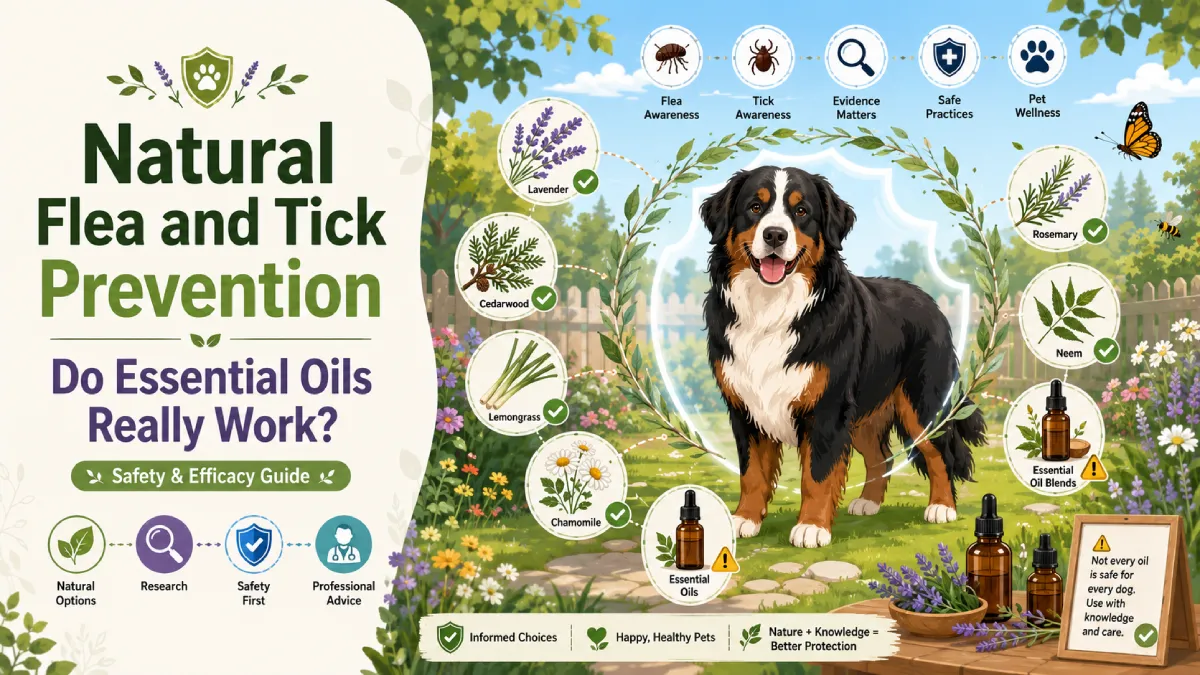
Essential oils are not a substitute for proven flea and tick prevention. Some concentrated oils can irritate skin, be toxic if swallowed and create additional risk in cat households. Do not apply DIY essential-oil mixtures to dogs for parasite control.
Garlic
Garlic is not an evidence-based flea preventive and belongs to the Allium group, which can damage red blood cells at toxic exposures. It should not be promoted as a routine parasite-control supplement.
Apple Cider Vinegar
Vinegar does not provide reliable systemic flea or tick prevention. Spraying acidic mixtures can irritate skin and create false reassurance while parasites remain uncontrolled.
Herbal Sprays and DIY Pesticides
“Herbal” does not establish a safe dose, consistent formulation or proven duration of effect. DIY pesticide recipes also risk incorrect concentration and accidental exposure to children, cats and other pets.
If a Flea Infestation Is Already Present
Use a coordinated plan rather than repeatedly bathing the dog. Treat appropriate household animals, maintain prevention long enough to interrupt the life cycle, vacuum and wash bedding, and ask the veterinarian about environmental control. Heavy infestations can take time to resolve.
If You Find a Tick
Remove it promptly and record travel/location if tick-borne disease is a concern. Finding one tick does not diagnose infection. Contact the veterinarian if the dog develops fever, lethargy, lameness, appetite loss or other illness.
Flea & Tick Prevention Method Comparison
| Method | Route | Coverage concept | Main considerations |
|---|---|---|---|
| Oral preventive | By mouth | Product-specific flea/tick spectrum | Weight, age, medical history, interval |
| Topical preventive | Skin | Product-specific | Application, bathing, contact, cat safety |
| Collar | External | Product-specific extended duration | Fit, active ingredient, species |
| Tick checks | Physical inspection | Removes attached ticks found | Does not replace preventive product |
| Vacuuming / bedding wash | Environment | Supports flea control | Does not replace treatment of pets |
| Garlic/oils/vinegar | DIY | Not reliable evidence-based prevention | Safety and efficacy concerns |
What Fleas Can Do Beyond Causing Itch
Flea bites can trigger flea-allergy dermatitis in sensitive dogs, where even a small number of bites causes disproportionate itching and skin inflammation. Heavy infestations can contribute to blood loss and anaemia, especially in puppies or medically vulnerable animals. Fleas also serve as the intermediate host for Dipylidium caninum tapeworm, which dogs may acquire by swallowing infected fleas while grooming.
A dog that is already intensely itchy, losing hair, developing infected skin or showing pale gums needs veterinary assessment rather than only a preventive-product change.
Why Environmental Flea Control Takes Time
Most flea stages in an established infestation are not on the dog. Eggs fall into carpets, furniture and bedding; larvae develop in protected areas; pupae can remain in cocoons until environmental cues trigger emergence. This means owners may continue seeing new adult fleas even after an effective product has started killing adults on the dog.
Consistent treatment of appropriate pets plus repeated vacuuming and laundering is more useful than switching products every few days. Severe infestations may take weeks or longer to resolve because protected pupae are difficult to kill directly.
Product “Failure” Often Has More Than One Explanation
Before concluding that parasites are resistant, check whether the product was given on time, matched the dog’s current weight, was applied to the skin rather than coat, was stored correctly and was used according to bathing or swimming instructions. In multi-pet homes, an untreated animal may keep supporting fleas. Travel may also expose the dog to new parasite pressure.
If fleas or ticks persist despite correct use, ask the veterinarian to review the product, application technique, environmental plan and regional parasite risk rather than stacking pesticides on top of each other.
Oral, Topical and Collar Options Require Different Safety Checks
Oral preventives avoid residue on the coat but may have medical considerations based on active ingredient and history. Topicals require correct skin application and attention to bathing and contact with other pets. Collars need correct fit and continuous contact with the coat or skin as directed. None of these routes is automatically best for every dog.
The useful comparison is not “chemical versus natural.” It is whether the method has demonstrated efficacy, an appropriate species label, a safe age and weight range, a practical administration route and a risk profile that fits the patient.
Swimming, Bathing and Grooming Can Affect Some Products
Product labels differ on how soon a dog can be bathed or swim after topical application and whether frequent water exposure changes duration. Dogs that swim regularly or receive frequent medicated baths should have that lifestyle considered when choosing a method. Do not apply a second dose early because the dog went swimming unless the label or veterinarian specifically says to do so.
Puppies, Pregnant Dogs and Dogs With Chronic Disease
Minimum age and weight restrictions are important in puppies, and growing dogs may move into a different weight band between doses. Pregnancy, lactation, seizure history, skin disease and concurrent medication can also affect product selection. Use the current label and veterinary advice rather than copying another pet’s preventive plan.
Tick-Borne Disease Prevention Is Broader Than Lyme Disease
Ticks can transmit multiple pathogens depending on species and geography. Preventing attachment and removing ticks promptly therefore remains valuable even for a dog vaccinated against Lyme disease. If a dog develops fever, lethargy, lameness, bruising, pale gums or other illness after tick exposure, veterinary testing may be appropriate.
Homes With Cats Need a Product-Separation Plan
In mixed households, store dog and cat products separately and read the species label every time. Some concentrated permethrin dog topicals can cause life-threatening neurologic toxicity in cats through direct application or close contact with a recently treated dog. Follow label instructions about separation after application.
This warning is one reason DIY combinations are especially unsafe: mixing or repurposing products can bypass species-specific safety testing.
Environmental Pesticides Also Need a Pet-Safety Review
Foggers, sprays, powders and professional pest-control products have their own labels and re-entry instructions. Keep pets away during application as directed, allow surfaces to dry when required and store concentrates securely. Do not add essential oils, vinegar or other homemade ingredients to insecticides in an attempt to “boost” them.
Flea Combs Are Useful Monitoring Tools
A fine flea comb can help find adult fleas and flea dirt, particularly around the rump, tail base, neck and abdomen. Flea dirt may turn reddish-brown when moistened because it contains digested blood. A negative comb does not rule out flea allergy, and a comb alone cannot control an established infestation.
When to Ask for Veterinary Help
Seek veterinary advice when a puppy has a heavy infestation, the dog has pale gums, severe itching, skin infection, persistent parasites despite correct prevention, neurologic signs after a product or a suspected adverse reaction. A veterinarian can also help select products for dogs with complex medical histories and households containing cats or other species.
Why Garlic, Vinegar and Essential Oils Remain Poor Replacements Even When Owners Prefer “Low Chemical” Care
Owners may reasonably want to minimize unnecessary pesticide exposure, but the alternative should still have evidence for efficacy and safety. Garlic can damage red blood cells at toxic exposures, essential oils can irritate or poison pets, and vinegar does not provide reliable systemic flea or tick protection. Using ineffective prevention can also increase exposure to flea allergy, tapeworms and tick-borne disease.
A better discussion is whether the dog needs year-round protection, which parasite spectrum is relevant locally, and which labeled route uses the fewest products necessary to meet that need.
How to Check a Product Label Before Use
Confirm species, minimum age, weight band, route, reapplication interval and active ingredients. Look for warnings related to seizures, pregnancy, bathing, children or other pets when applicable. In a cat household, read the cat-contact warning before applying any topical dog product.
If the label conflicts with advice found online, use the current label and contact the veterinarian or manufacturer for clarification rather than improvising.
Prevention Should Be Reassessed When Lifestyle Changes
A move, new dog park routine, camping season, hunting, daycare or travel can change flea and tick exposure. Likewise, an older dog with new neurologic disease or medication may need the existing product reviewed. Reassess the plan at preventive visits rather than using the same product indefinitely without considering current health and geography.
Choosing the Simplest Effective Plan
More products do not automatically provide better protection. Combining an oral preventive, topical insecticide, collar and environmental pesticide without professional guidance can increase exposure while creating overlapping ingredients. The veterinarian can help choose the narrowest practical combination that covers the parasites relevant to the dog’s region and lifestyle.
Keep a Product Record
Record the product name, active ingredient, weight range, date given and any reaction. This is especially useful when households use different products for dogs and cats. Bring the record to preventive visits so duplicate ingredients, missed doses and changes in body weight can be identified before the next administration.
Do Not Treat Preventive Products as Interchangeable
A product that controls adult fleas may differ from one that also affects flea development, repels or kills ticks, or covers other parasites. Compare the actual label rather than choosing by packaging, price or the word “natural.” If a dog has both flea and tick exposure, confirm that the selected method covers both appropriately instead of assuming any flea product also controls ticks.
Check the dog after each new product for unexpected skin irritation, vomiting, tremors, marked lethargy or another adverse change. Contact the veterinarian for suspected reactions and keep the package so the active ingredient and concentration can be identified accurately.
For dogs that travel frequently, carry enough prevention for the trip and keep products in original packaging so species, weight range and active ingredients remain clear.
Recheck the plan after moving because flea pressure, tick species and seasonal patterns can differ substantially by region.
Document any suspected reaction and review it before the next dose is due.
Related Pawnium Parasite Guides
See Heartworm in Dogs, Worms in Dogs, Puppy Vet Schedule and Dog Preventive Care Guide.
FAQs
Should dogs use flea and tick prevention all year?
CAPC recommends year-round broad-spectrum parasite control. Local climate and travel still matter, but stopping purely because of a calendar season can leave gaps.
Are natural flea remedies safer?
Not automatically. Garlic, essential oils, vinegar and herbal sprays are not reliable substitutes for labeled evidence-based products and can create safety problems.
Can I use my dog’s flea product on my cat?
No. Never assume cross-species safety. Some dog products can be highly toxic to cats.
Why am I still seeing fleas after starting treatment?
Immature flea stages in the environment continue developing. Consistent treatment plus environmental control is needed to interrupt the life cycle.
Does finding one tick mean my dog has Lyme disease?
No. Tick attachment is exposure, not a diagnosis. Remove the tick and consult a veterinarian if illness develops or testing is appropriate for the region.