Managing a High Drive Dog: Channeling Natural Drives (High-Drive Canine Training Guide)
Living with an intense working or sporting breed can often feel like handling a live wire fueled by instinct and boundless energy. When owners attempt everyday walks without understanding innate motivations, frustration mounts for both human and animal. Managing a high drive dog requires moving past basic obedience drills to deeply understand the genetic programming that drives their behavior. This article will help you explore structured outlets, impulse control techniques, and advanced safety strategies that transform high prey drive dog management from a daily battle into a harmonious partnership. Read on to discover how satisfying your dog’s ancestral needs can restore calm to your household.
Finding the right match requires balancing aesthetic appeal with practical functionality. By reviewing the linguistic roots and cultural significance behind these words, you can confidently assign a moniker that honors your dog’s unique personality.
The Neurobiology Behind Predatory and Working Drives
Canines inherit specific behavioral repertoires shaped by thousands of years of selective breeding for tasks like herding, flushing, tracking, and retrieving. These hardwired tendencies operate independently of basic obedience training, meaning a dog can sit perfectly in a quiet room yet lose all composure when a squirrel darts across a lawn.
Deciphering the Canine Predatory Sequence
The natural predatory sequence consists of distinct biological phases: eye, stalk, chase, grab-bite, and kill-bite. Different breeds are selectively bred to interrupt this chain at specific points, such as herding dogs stopping at the eye-stalk-chase phase without biting livestock. Understanding where your dog’s specific instincts interrupt this chain explains their sudden reactive surges during outdoor excursions. For foundational insights on matching animal traits to household environments, review our guide on [how to choose the right puppy].
Why Suppression Fails and Channeling Succeeds
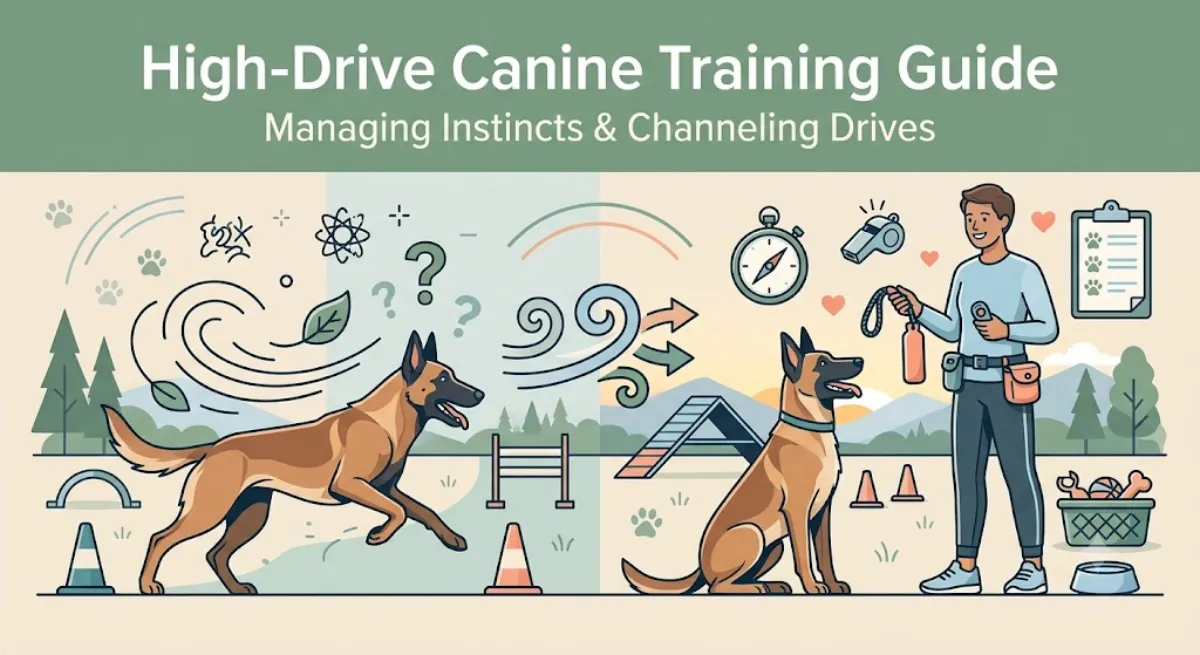
Attempting to suppress deeply embedded instincts through punishment or harsh corrections typically increases anxiety and creates unpredictable displacement behaviors. Instead of forcing a working dog to ignore their genetics, clever handlers redirect that raw mental energy into structured, human-approved outlets. Providing legal permission to chase, grip, or problem-solve satisfies the brain’s neurochemical cravings without causing domestic chaos.
Environmental Management and Threshold Control
Controlling your dog’s visual and auditory environment prevents them from crossing reactive thresholds where cognitive processing shuts down completely.
Recognizing Stress Signatures Before Reactivity Occurs
Before a high-energy dog lunges or bolts after movement, their body displays subtle physiological signs of arousal, such as dilated pupils, rigid body posture, closed mouths, and focused staring. Identifying these early tension markers allows handlers to redirect attention before adrenaline floods the bloodstream. Catching arousal at its onset preserves the dog’s ability to listen to cues.
Utilizing Decompression Walks for Mental Reset
Traditional neighborhood walks on tight leashes can overstimulate dogs sensitive to fast-moving environmental triggers like cars, bicycles, and wildlife. Decompression outings utilize long training lines in quiet, expansive natural settings where dogs can sniff freely without urban distractions. This low-pressure exploration lowers resting cortisol levels and promotes nervous system recovery.
Training Note: Practice stationary engagement exercises in a quiet hallway before attempting focus drills in high-distraction outdoor environments.
Proven Methods for Managing a High Drive Dog
Channeling intense working instincts requires creative play mechanics that safely burn off mental steam while reinforcing clear handler boundaries.
Flirt Pole Training as an Ethical Outlet
A flirt pole consists of a long tethered rope attached to a flexible wand with a lure on the end, simulating fleeing prey in a controlled outdoor space. This tool allows handlers to simulate high-speed chases and intermittent captures while enforcing strict rules like starting and stopping on cue. Engaging with a flirt pole provides an incredible cardiovascular workout and a safe release for chase urges.
Building Reliable Impulse Control Through Games
Teaching high-drive animals to override their initial impulses requires practicing structured games that reward patience around movement. Games like “leave it” or “wait” before releasing a dog to chase a tossed toy teach the cerebral cortex to pause before acting on raw instinct. For reward-based conditioning strategies, consult resources on [positive reinforcement dog training].
Fulfilling Breed-Specific Working Heritage
Working breeds require cognitive jobs that mirror their ancestral tasks, whether that involves scent-work games, tracking trails, or interactive puzzle feeders. Engaging a dog’s brain through complex problem-solving exhausts mental energy much faster than physical running alone. Satisfying their working heritage prevents destructive boredom behaviors inside the home.
Safety Reminder: Always secure a sturdy harness and double-check leash attachments before engaging in high-velocity outdoor games with powerful breeds.
Structured Redirection and Behavioral Management
Managing sudden instinctual triggers requires a proactive plan that keeps both handler and animal safe during unexpected wildlife encounters.
Redirecting Focus via Structured Tug and Retrieve
When sudden movement catches your dog’s attention, having a high-value tug toy ready allows you to redirect their predatory focus away from wildlife and onto an appropriate game. Teaching a reliable “drop” cue ensures that games of tug remain cooperative rather than resource-guarded. This redirection builds handler value during moments of high environmental arousal.
Managing Predatory Drift in Multi-Pet Environments
Predatory drift occurs when an excited dog accidentally redirects chase instincts toward smaller household pets or familiar cats during intense play arousal. Recognizing the physiological signs of hyper-arousal allows handlers to intervene and separate animals before dangerous incidents occur. Maintaining strict physical boundaries during high-energy play protects vulnerable household companions. To understand how environmental changes influence domestic behavior, explore guidance in [understanding dog behavior].
Professional Intervention and Behavioral Support
When intense working drives manifest as unmanageable aggression, severe leash reactivity, or compulsive behaviors, expert guidance becomes essential.
When to Consult a Certified Animal Behaviorist: Working with a certified animal behaviorist or credentialed trainer experienced in working lines ensures you receive individualized behavior modification plans tailored to your dog’s exact genetic makeup. Professionals evaluate underlying triggers and design safe desensitization protocols that protect household safety. Recognizing your limits is a sign of responsible pet ownership. For ongoing physiological milestones, review our guide on [puppy health and wellness].
Vet Check: Schedule a thorough veterinary examination if your high-drive dog displays sudden behavioral aggression or uncharacteristic restlessness, as physical pain or neurological discomfort can exacerbate instinctual reactivity.
Frequently Asked Questions
- Can high-drive dogs ever be safely off-leash in open areas? Off-leash freedom is possible only after establishing an infallible recall cue and demonstrating reliable impulse control in fully enclosed, low-distraction environments first.
- How do I know if my dog’s behavior is play or true predatory aggression? Predatory behavior is typically silent, highly focused, and directed toward chasing or grabbing, whereas play involves loose body language, role-reversal, and vocalizations.
- What physical exercise is best for working breeds living in apartments? Combining controlled fetch sessions, mental scent-work games, and flirt pole play inside parks provides efficient exhaustion without requiring vast square footage.
- Why does my dog stare intensely at moving shadows or cars? Visual tracking triggers the initial stalk phase of the predatory sequence, providing a self-reinforcing dopamine reward to the dog’s brain.
- Can managing a high drive dog reduce destructive chewing behaviors indoors? Yes, providing appropriate outlets for mental and physical energy prevents dogs from channeling their natural frustration into household destruction.
- How do I stop my dog from pulling toward wildlife on walks? Utilize a front-clip harness, practice engagement games away from triggers, and reward your dog whenever they acknowledge wildlife without reacting.
Conclusion
Living with a high-drive canine companion demands dedication, structure, and a deep appreciation for the genetic heritage that makes your dog unique. Rather than fighting against natural instincts, channeling working dog instincts into safe, structured outlets creates a balanced and contented pet. By prioritizing threshold management, engaging mental work, and clear impulse control games, you transform intense energy into a cooperative partnership. Building this mutual understanding ensures both you and your dog navigate everyday environments with confidence and ease while successfully redirecting canine prey drive through proper high energy working breed care. Take the next practical step today by designing a dedicated fifteen-minute training session centered around impulse control and structured play.