
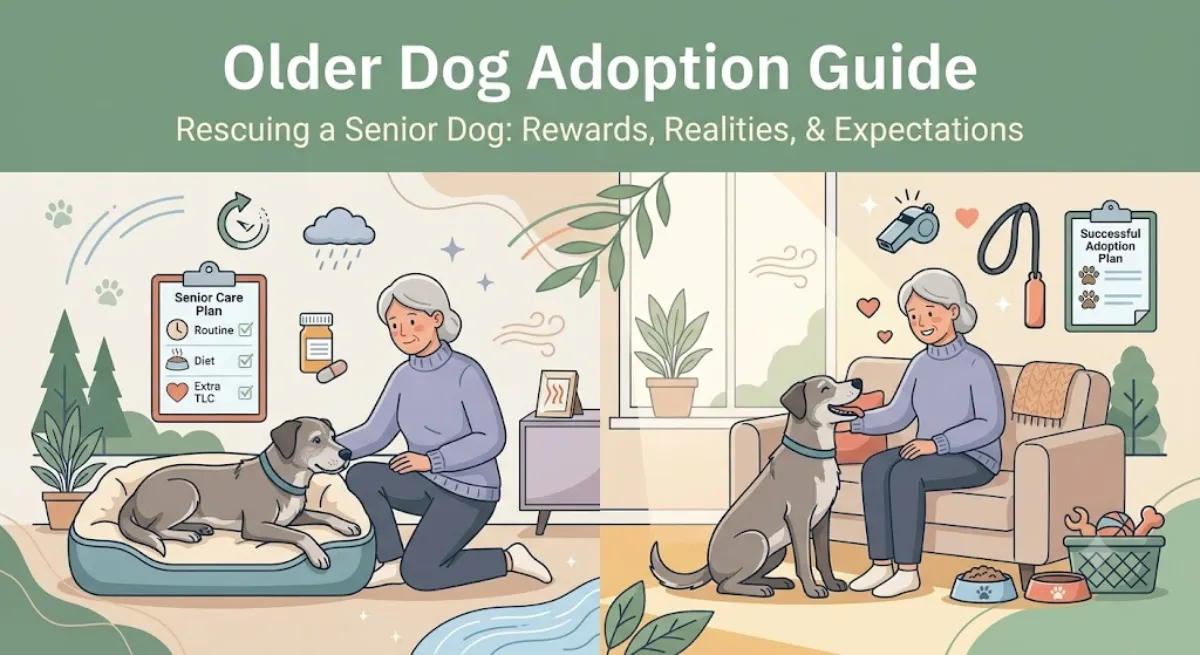
Adopting a Senior Dog: First Weeks, Health Checks and Settling-In Guide
Opening your home to a senior dog is one of the most compassionate and deeply rewarding decisions a pet parent can make. There is a profound, quiet magic in watching an older dog realize they are finally safe, loved, and settled in a permanent home after experiencing the upheaval of a shelter or foster system. However, bringing home an older dog is very different from adopting a bouncy puppy. Senior dogs come with established histories, complex medical needs, distinct personalities, and often, an initial period of intense decompression.
Whether you are exploring the profound benefits of adopting an old dog, researching what it takes when rescuing a senior dog, preparing to adopt an older dog, mapping out your first week with a senior rescue dog, navigating a senior rescue dog settling in, or mastering older rescue-dog care, this comprehensive guide provides a realistic, veterinary-reviewed roadmap. Adopting a senior dog is a journey of patience, observation, and gentle trust-building that ultimately transforms both your lives.
Quick Answer
Adopting a senior dog requires a structured, patient approach that prioritizes decompression, predictable routines, and thorough veterinary assessment over immediate training or social expectations. The first weeks involve creating a secure, low-stress environment, transitioning food gradually, establishing consistent bathroom habits, and managing medical evaluations for dental, mobility, and sensory health. While senior dogs often offer unmatched companionship and settled temperaments, adjustments are rarely instant; rescue dogs require time to decompress and reveal their true personalities, making transparency regarding medical and financial responsibilities essential for long-term success.
Benefits and Realistic Challenges of Adopting a Senior Dog
The Benefits
-
Instant Companionship: Senior dogs are past the destructive chewing, erratic house-training regressions, and sleepless nights associated with raising puppies.
-
Settled Temperaments: What you see is much closer to what you get. Their adult personality, energy levels, and social preferences are already formed.
-
Gratitude and Bond: There is an extraordinary, resilient loyalty that emerges when an older dog realizes they have been given a second chance at a comfortable retirement.
Realistic Challenges
-
Medical Expenses: Senior dogs are more likely to require immediate or ongoing veterinary care for age-related conditions like arthritis, dental disease, or organ management.
-
Decompression Stress: Moving from a shelter to a home is terrifying. Senior dogs may experience temporary anxiety, house-training slip-ups, or sleep disturbances during their first weeks.
-
Shorter Time Horizons: Loving an older dog means accepting that your time together will be shorter than with a puppy, making every single day precious.
Essential Questions to Ask the Rescue Organisation
Before bringing your senior dog home, gather as much background information as possible. Ask the rescue organization or foster coordinator these vital questions:
1. Known Medical History
-
Have they received recent senior blood panels, urinalysis, or parasite screenings?
-
Are there chronic conditions, such as early kidney disease, heart murmurs, or allergies?
2. Medication History
-
Is the dog currently prescribed daily medications or joint supplements?
-
How do they react to having pills administered?
3. Mobility Level
-
Can they rise easily from tile or hardwood floors, or do they show stiffness?
-
Do they struggle with stairs or jumping into vehicles? (Review baseline support in our master Senior-dog care pillar).
4. Behaviour History
-
How do they react to strangers, loud noises, vacuum cleaners, or being handled near their paws and ears?
-
Have they been evaluated around other dogs, cats, or children?
5. Previous Household Information
-
Do they have a known history of house-training reliability?
-
How did they handle being left alone in their previous foster or owner home?
Preparing the Home Before Arrival
Do not wait until your senior dog arrives to set up their living space. Preparing your home in advance ensures their first hours are peaceful and stress-free.
1. Safe Sleeping Area
Set up a quiet, low-traffic corner for your dog’s bed. Provide a multi-layer, high-density orthopedic memory foam bed that relieves pressure points on aging hips and elbows. (Explore comprehensive bedding guidance in our Ultimate dog-bed guide).
2. Non-Slip Flooring
Senior dogs struggle on slick hardwood and tile floors. Lay down rubber-backed runners, yoga mats, or non-skid rugs along their primary daily pathways to prevent dangerous slips. (Implement full environmental adaptations using our Senior-dog home setup guide).
3. Food and Water Setup
Position stable, non-tip elevated food and water bowls in a calm, accessible corner where your dog won’t be cornered or startled while eating.
The First 24 Hours: Day One and Night One
The First Day
When you bring your senior dog home, keep things remarkably quiet. Resist the urge to invite neighbors or family members over for a welcome party.
-
Take them directly to your designated outdoor elimination spot on a leash, let them sniff and relieve themselves, and offer high-value treats and praise.
-
Guide them gently inside, show them their water bowl and bed, and then give them space. Let them explore at their own slow pace without hovering.
The First Night
Nighttime can trigger intense anxiety for a newly rescued senior dog who is wondering where they are.
-
To ease their transition, place their orthopedic bed in your bedroom or right outside your door so they can smell and hear you.
-
If they pace or whine, remain calm and reassuring. (Review nocturnal sleep management strategies in our Senior-dog sleep changes guide).
The First Week: Decompression, Routine, and Feeding
Decompression
The initial weeks are known as the “3-3-3 Rule” of rescue: 3 days to decompress, 3 weeks to learn the routine, and 3 months to feel fully at home. During the first week, your primary goal is decompression. Keep walks short and quiet, avoid crowded dog parks, and let your dog rest as much as they need.
Establishing a Predictable Routine
Senior dogs thrive on absolute predictability. Feed them at the exact same times daily, take them out on a consistent bathroom schedule, and maintain a calm household rhythm.
Feeding Transition
Rescue organizations often send dogs home with a small bag of their shelter food. Do not switch their food abruptly. Sudden dietary shifts will cause severe digestive upset in an older dog. Transition to your chosen senior diet gradually over 7 to 10 days by mixing old and new food. (Ensure optimal nutrition using our Senior-dog feeding guide).
Toilet Routine
Assume your senior dog is house-trained, but treat them like a puppy during the first week. Take them outside frequently (every 2 to 3 hours during the day), reward successful outdoor elimination lavishly, and never scold them if an accident occurs indoors. (Manage indoor accidents compassionately via our Senior-dog bathroom accidents guide).
Comprehensive Veterinary Assessment
Schedule a thorough senior wellness examination within your dog’s first 7 to 10 days at home. This baseline checkup is critical for establishing ongoing care.
1. Dental Examination
Advanced periodontal disease is nearly universal in senior rescue dogs. Your vet will assess tartar accumulation, fractured teeth, and gum disease, which can cause chronic pain and systemic infection.
2. Mobility Assessment
A comprehensive orthopedic evaluation uncovers hidden osteoarthritis, joint inflammation, or muscle wasting, allowing you to implement early pain management or physical therapy. (Explore supportive frameworks in our Existing mobility guide).
3. Hearing and Vision Check
Assessing sensory acuity helps you understand how your dog navigates space and informs whether you need to adapt communication methods.
4. Blood Work and Urinalysis
Run senior wellness blood panels and urinalysis to check kidney, liver, thyroid, and metabolic function, establishing a clean baseline for future health tracking.
Gradual Introductions
Introducing Family Members
Allow family members to approach the dog calmly, allowing the dog to initiate contact. Instruct children and adults never to crowd the dog while they are eating or resting in their bed.
Introducing Children
Supervise all interactions between children and a newly adopted senior dog closely. Teach children to respect the dog’s personal space and recognize canine stress signals. (Review canine communication markers in our Dog body-language guide).
Introducing Other Pets
Never introduce a new senior rescue directly to resident pets in a confined indoor space. Conduct neutral-ground, leashed walks side-by-side outdoors, keeping interactions controlled, calm, and heavily rewarded.
Separation and Alone-Time Training
Senior rescue dogs frequently fear abandonment. Leaving a newly adopted dog alone for 8 hours on Day 2 can trigger severe panic and destructive behavior.
-
Build alone-time gradually. Once your dog is comfortable in their space, leave the room for 30 seconds, return before they vocalize, and reward them quietly.
-
Slowly build duration over weeks. (Master gradual desensitization protocols using our Separation-anxiety article).
Building Trust, Recognizing Pain, and Managing Expectations
Building Trust Without Pressure
Trust cannot be demanded; it must be earned through consistent kindness, predictable routines, and respectful boundaries. Let your senior dog approach you on their terms.
Recognizing Pain or Fear
Many older dogs labeled as “grumpy” or “stubborn” are actually suffering from unmanaged joint pain or sensory fear. If your dog snaps when touched near their hips, they are communicating agony, not defiance.
Managing Expectations
Do not expect your rescue dog to be a polished, perfectly adjusted companion on Day 1. Their true personality may take months to emerge as decompression unfolds.
Adoption Costs and Ongoing Care Realities
Adopting a senior dog is a financial commitment. Beyond initial adoption fees, budgeting for senior care must account for:
-
Bi-annual veterinary wellness exams and routine blood work.
-
Monthly joint supplements, prescription medications, or specialized diets.
-
Potential dental cleanings or unexpected geriatric medical interventions.
-
(Evaluate overall comfort and palliative tracking tools using our Quality-of-life checklist).
When Professional Support Is Needed
If your senior rescue dog exhibits unmanageable fear aggression, severe destructive separation anxiety, extreme house-soiling that doesn’t improve, or prolonged depression, do not hesitate to enlist a certified professional positive-reinforcement dog trainer or veterinary behaviorist.
Unique Content Asset: 30-Day Senior-Rescue Settling Plan
Use this structured four-week settling plan to guide your senior rescue dog through decompression, health assessments, and routine building:
| Timeframe | Veterinary Tasks | Behaviour Observations | Mobility & Environmental Observations |
| Days 1–3 | Schedule initial intake vet exam; refill any essential meds. | Observe decompression level; allow resting; note fearful triggers. | Check for slipping on floors; set up non-slip runners and orthopedic bed. |
| First Week | Attend vet wellness exam; run senior blood panels & fecal test. | Monitor for house-training slip-ups; establish rigid feeding/potty routine. | Assess ease of rising from floors; check for morning stiffness. |
| Second Week | Administer prescribed dental or medical follow-ups. | Watch for emerging personality traits; begin brief, gentle alone-time training. | Evaluate response to joint supplements; ensure ramps/stairs are working well. |
| Weeks 3–4 | Review lab results with vet; establish bi-annual check schedule. | Dog starts engaging in household rhythm; test short walks in new areas. | Fine-tune home adaptations based on observed mobility endurance. |
Frequently Asked Questions
What are the benefits of adopting a senior dog?
Senior dogs offer settled temperaments, established house-training manners, affectionate companionship, and immediate gratitude without the chaos and sleepless nights of puppyhood.
How long does it take for a senior rescue dog to settle in?
Following the “3-3-3 Rule,” senior dogs typically take 3 days to decompress from shelter stress, 3 weeks to learn household routines, and up to 3 months to feel completely secure in their new home.
Are senior rescue dogs always calm?
No. While many senior dogs are relaxed, some rescue seniors arrive with high anxiety, hyperactivity, or reactivity due to past trauma or medical stress. Never assume all older dogs are low-energy.
How can I prepare my home for an older rescue dog?
Install non-slip flooring runners, set up a supportive orthopedic memory foam bed in a quiet location, place elevated food bowls, and block staircases with baby gates to ensure immediate safety.
Expert Review Note
This guide on adopting a senior rescue dog, decompression protocols, veterinary baselines, and settling-in strategies was reviewed and approved by a licensed doctor of veterinary medicine (DVM) and a certified professional dog trainer (CPDT-KA).


