
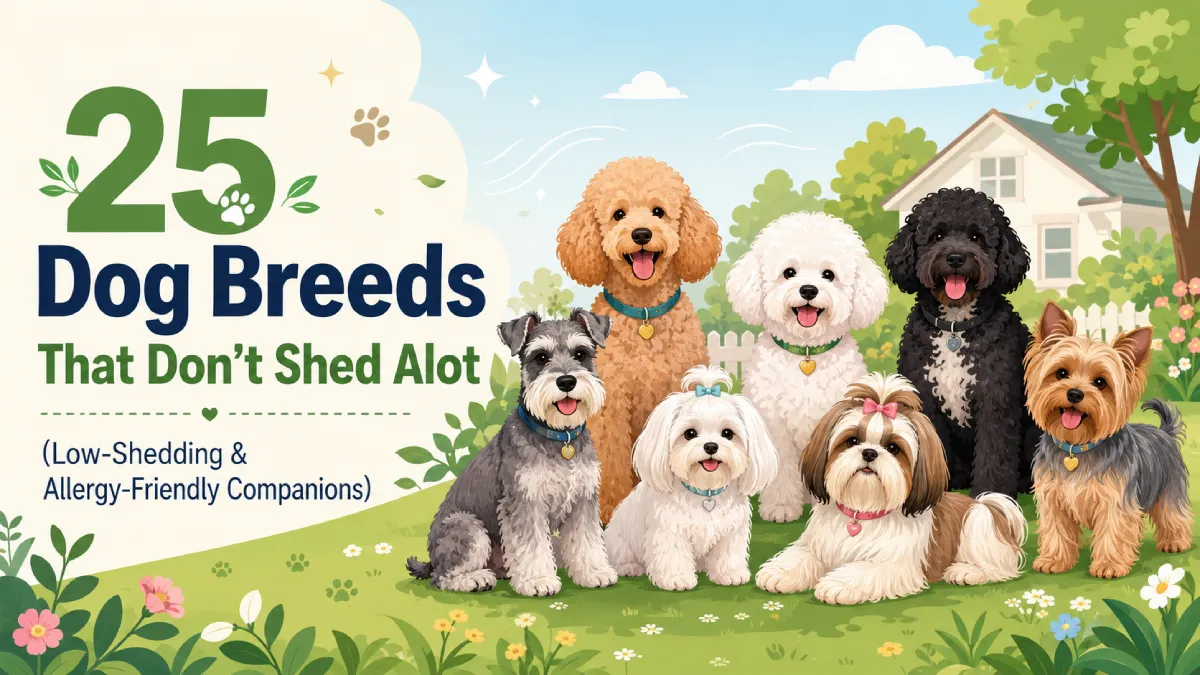
25 Dog Breeds That Don’t Shed Alot (Low-Shedding & Allergy-Friendly Companions)
Finding a canine companion becomes significantly more challenging when household allergies or excessive household hair cleanup pose daily hurdles. Exploring various dog breeds that don’t shed provides an effective solution for families seeking a cleaner living environment without sacrificing canine companionship. Understanding which low shedding dogs match your lifestyle requires looking beyond simple fur length into the complex biology of continuous hair growth and reduced dander production. This guide examines twenty-five distinctive varieties known for minimal fur loss, helping prospective pet parents evaluate coat types, grooming commitments, and daily maintenance needs. By reviewing these characteristics, you can identify a suitable animal that keeps your furniture clean while fitting harmoniously into your daily domestic routine.
Finding the right match requires balancing aesthetic appeal with practical functionality. By reviewing the linguistic roots and cultural significance behind these words, you can confidently assign a moniker that honors your dog’s unique personality.
Understanding Canine Coat Biology and Minimising Shedding
Hair loss in canines is a natural biological process governed by seasonal changes, daylight hours, and individual hormonal cycles. Double-coated breeds experience heavy seasonal blowouts where dense undercoats drop out in clumps. In contrast, low-shedding varieties typically possess single coats or hair structures that grow continuously rather than falling out in large quantities. Understanding these biological differences helps owners manage expectations regarding daily maintenance and home cleanliness.
Canines possessing a single coat lack the dense, insulating undercoat found in northern working breeds. This anatomical distinction means they lose far fewer hairs during seasonal transitions. While all dogs lose some hair through normal breakage, single-coated variants retain loose strands within the surrounding hair shaft until brushed out. This characteristic drastically reduces the amount of loose hair accumulating on carpets, upholstery, and clothing.
Pet Owner Note: Establish a consistent weekly brushing schedule even for low-shedding pets to catch loose hairs before they tangle into painful mats near the skin. Reviewing resources on [how to choose the right puppy] can also help prepare your household for a new arrival.
Small Low Shedding Dogs for Compact Living
Compact companions offer wonderful affection and lively personalities without overwhelming apartment spaces or depositing massive amounts of hair across living areas. These smaller varieties feature unique hair textures that require dedicated grooming but reward owners with immaculate living spaces.
Miniature Poodle
Miniature Poodles possess a dense, curly single coat that traps loose hairs within the curls rather than releasing them into the environment. This intelligent, highly trainable breed adapts effortlessly to urban apartments and country homes alike. Regular clipping prevents matting and keeps their distinctive silhouette neat.
Maltese
Maltese dogs are renowned for their long, silky white hair that resembles human strands rather than traditional fur. Because they lack an undercoat, they drop very few hairs during daily activities. Daily brushing is essential to prevent tangles in their luxurious floor-length coats.
Shih Tzu
Shih Tzus feature a flowing double coat that grows continuously, resulting in minimal stray hairs around the home. Their affectionate, outgoing temperament makes them wonderful family companions. Owners often choose a shorter puppy cut to simplify daily grooming maintenance.
Yorkshire Terrier
Yorkshire Terriers sport fine, silky hair that grows downward without a dense shedding undercoat. Their compact size and spirited personality make them popular choices for urban dwellers. Routine bathing and brushing keep their fine coats clean and free of debris.
Bichon Frise
Bichon Frises exhibit a soft, dense undercoat paired with a coarser curly outer coat that traps loose hairs securely. Their cheerful disposition and hypoallergenic qualities appeal greatly to allergy sufferers. Professional grooming every four to six weeks maintains their signature powder-puff appearance.
Grooming Check: Inspect your small dog’s ears and skin folds during routine brushing sessions to catch moisture buildup or irritation early, supporting overall [puppy health and wellness].
Medium-Sized Low Shedding Dogs With Versatile Traits
Mid-sized companions offer an ideal balance of sturdiness and manageable proportions for active families. These versatile breeds combine high trainability with minimal coat drop, fitting seamlessly into diverse suburban and rural lifestyles.
Miniature Schnauzer
Miniature Schnauzers sport a wiry double coat that sheds minimally when properly clipped or hand-stripped. Their distinct furnishings, including expressive eyebrows and beards, give them a charming, dignified appearance. Regular mental and physical stimulation keeps these clever watchdogs balanced and content.
Soft Coated Wheaten Terrier
Soft Coated Wheaten Terriers exhibit a single, soft, wavy coat that lacks the typical undercoat found in many other terrier breeds. They shed very little, though their silky hair requires daily brushing to prevent stubborn mats. Their joyful, exuberant temperament brings boundless energy to family homes.
Portuguese Water Dog
Portuguese Water Dogs possess a waterproof coat available in curly or wavy single-coat variations. Their webbed feet and high intelligence reflect their historical working heritage alongside fishermen. Regular professional clipping keeps their athletic frames looking neat and manageable.
Tibetan Terrier
Tibetan Terriers feature a double coat that feels remarkably like human hair and sheds very little under normal conditions. Despite their heavy appearance, they drop minimal hair indoors when brushed thoroughly each week. Their gentle, loyal disposition makes them wonderful companions for patient owners.
Bedlington Terrier
Bedlington Terriers resemble little lambs thanks to their crisp, curly coats of mixed hard and soft hair. They shed almost none of their fleece-like hair, making them exceptional choices for allergy-conscious households. Their athletic build allows them to excel in various canine sports.
Vet Check: Active medium-sized breeds require proper joint support and balanced nutrition; consult veterinary professionals regarding appropriate dietary choices to support long-term mobility, following principles outlined in our guide on [positive reinforcement dog training].
Large Low Shedding Dog Breeds With Imposing Presence
For owners desiring a substantial canine companion without the burden of heavy seasonal shedding, several large-scale breeds offer strength, loyalty, and minimal hair loss. These impressive animals combine imposing physical presence with manageable coat maintenance.
Standard Poodle
Standard Poodles combine athletic grace with a continuous-growth curly coat that traps stray hairs efficiently. Their exceptional intelligence and gentle demeanor make them versatile working dogs and affectionate family members. Regular clipping prevents their dense curls from felting into tight mats.
Giant Schnauzer
Giant Schnauzers exhibit a dense, wiry coat that sheds very little when maintained with proper clipping or hand-stripping. Their powerful build and protective instincts require experienced owners committed to firm, consistent training. Routine brushing keeps their working coats clean and debris-free.
Bouvier des Flandres
Bouvier des Flandres feature a harsh, rough double coat that traps loose hair effectively, resulting in minimal indoor shedding. Originally bred for farm work and cart pulling, they possess a calm, fearless disposition. Regular combing prevents mats from forming in their thick facial furnishings.
Airedale Terrier
Airedale Terriers, known as the king of terriers, possess a dense, wiry coat that sheds very little hair. Their courageous yet playful personality makes them wonderful protectors and companions for active families. Professional grooming or hand-stripping maintains their characteristic tan and black wire coat.
Irish Water Spaniel
Irish Water Spaniels sport a crisp, liver-colored curly coat that repels water and sheds minimally. Their webbed toes and clownish personalities make them excellent water retrievers and entertaining household pets. Regular brushing removes dead hair trapped within their tight curls.
Safety Reminder: Large breeds with deep chests, such as Standard Poodles and Bouviers, are prone to gastric torsion; monitor eating speed and avoid vigorous exercise immediately after meals.
Essential Grooming Maintenance for Allergy-Friendly Pets
Maintaining a low-shedding or hypoallergenic coat requires a dedicated grooming routine tailored to specific hair textures. Understanding how to manage continuous-growth coats prevents painful matting and keeps dander levels low.
Brushing Frequency and Mat Prevention: Single-coated and hair-like coats require regular brushing to remove debris and prevent dead hair from tangling into mats against the skin. Establishing a daily or weekly brushing routine strengthens the bond between owner and pet while distributing natural skin oils. Using the correct brush type—such as a slicker brush or metal comb—ensures thorough detangling without damaging the skin.
Professional Clipping and Coat Stripping: Many continuous-growth breeds require professional clipping every four to eight weeks to keep their coats manageable. Hand-stripping, a technique used for wiry terrier coats, removes dead hair from the root rather than cutting it, preserving harsh texture and vibrant color. Regular professional maintenance ensures your pet remains comfortable, clean, and visually stunning throughout the year.
Frequently Asked Questions
- Do completely non-shedding dogs exist? No dog breed is completely non-shedding, as all living mammals with hair experience some degree of normal hair breakage and loss. However, many dog breeds that don’t shed significant amounts of fur retain loose strands within their coats until brushed out, making them ideal for allergy sufferers.
- Are hypoallergenic dogs truly free of all allergens? No dog is 100% allergen-free because all canines produce dander, saliva, and urine proteins that trigger human allergies. Hypoallergenic dog breeds simply produce lower quantities of dander or shed fewer hairs carrying those proteins into the household atmosphere.
- How often should a low-shedding dog be groomed professionally? Most continuous-growth breeds require professional clipping or trimming every four to six weeks to prevent severe matting. Daily home brushing supplements professional care and keeps the coat free of tangles.
- Do small low shedding dogs require less maintenance than large breeds? Not necessarily, as many small companion breeds possess high-maintenance silky coats that tangle easily if neglected. Grooming frequency depends more on coat texture and length than overall body size.
- Can crossbreeds like Labradoodles be guaranteed not to shed? Mixed-breed dogs inherit unpredictable coat genetics from both parent lines, meaning shedding levels can vary widely even within the same litter. Selecting a purebred with a predictable coat history offers more certainty for allergy-conscious owners.
- What is the best brush for single-coated, low-shedding pets? A high-quality slicker brush paired with a stainless steel greyhound comb works exceptionally well for locating and removing hidden tangles near the skin of single-coated dogs.
- How does regular bathing help control household allergies? Frequent bathing washes away accumulated dander, pollen, and saliva proteins trapped in the coat, significantly reducing airborne allergens in the home environment.