Upcycling Old Clothes for Dog Beds and Blankets: Sustainable Sleep Solutions for Your Pet (Eco-Friendly Craft Guide)
Transforming worn-out garments and discarded textiles into comfortable resting quarters provides a wonderful way to minimize household waste while offering your canine companion a cozy retreat. Many eco-conscious handlers embrace upcycling old clothes for dog beds as an affordable, creative alternative to expensive commercial pet furniture. Crafting DIY dog beds from old clothes allows you to infuse familiar human scents into your pet’s sleep space, which naturally soothes anxious animals and encourages deep relaxation. This comprehensive guide details how to select safe fabrics, prepare recycled textiles, and construct durable resting pads and blankets that keep textile waste out of local landfills.
The Environmental and Economic Benefits of Upcycling Pet Textiles
The modern apparel industry generates millions of tons of discarded fabric every year, much of which ends up incinerated or buried in municipal waste sites. Channeling these unwanted garments into sustainable pet bedding crafts reduces raw material demand while cutting household expenses.
Textile Waste Reduction in Modern Households
Every cotton t-shirt, flannel shirt, and wool sweater diverted from your household trash bin represents a tangible victory for zero-waste living. Instead of purchasing newly manufactured pet cushions stuffed with synthetic poly-fill, repurposing existing fabrics closes the loop on textile consumption. This sustainable approach lowers your carbon footprint and demonstrates resourcefulness without sacrificing comfort. When preparing a new sleep space for a young animal, reviewing foundational guidance in our guide on [how to choose the right puppy] helps establish healthy resting routines early.
Familiar Scents and Canine Emotional Security
Dogs possess an extraordinarily acute sense of smell and find immense comfort in the scent profiles of their human family members. Utilizing old garments that carry your familiar aroma creates an immediate sense of safety and emotional grounding for rescue dogs or nervous puppies. This olfactory familiarity reduces separation stress and helps your dog settle into their new sleeping environment much faster.
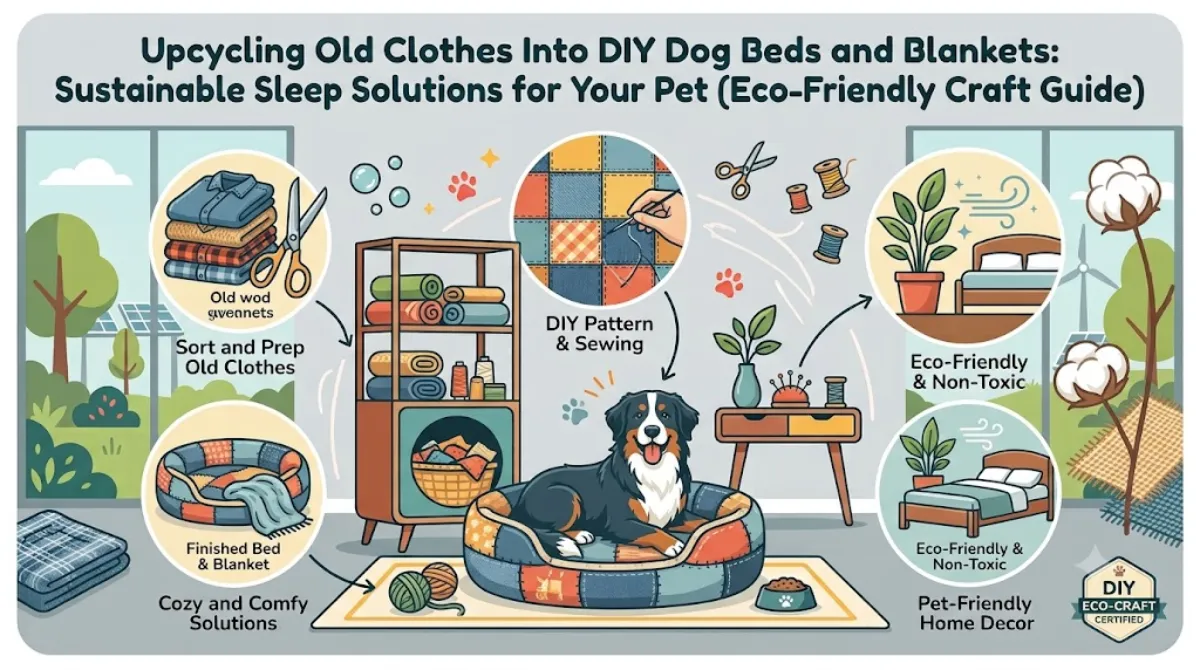
Practical Step: Sort your old garments into piles based on fabric weight and texture, keeping soft cottons separate from heavy denims and coarse wools before starting any crafting project.
Gathering and Preparing Recycled Fabrics Safely
Before stitching or stuffing your pet’s new resting surface, evaluating material safety and sanitation ensures the finished product remains hygienic and comfortable for daily use.
Selecting Safe Textures and Avoiding Toxic Dyes
Not every old garment is suitable for pet bedding, as certain synthetic blends or heavily treated fabrics can irritate sensitive skin or pose ingestion hazards. Choose breathable, natural fibers like cotton, flannel, fleece, and wool whenever possible, avoiding garments featuring heavy metal zippers, rigid plastic buttons, or metallic embellishments that could scratch your dog or break loose. Discard items treated with harsh chemical flame retardants or vintage fabrics carrying unknown stain-repellent coatings.
Laundering and Sanitizing Old Garments Thoroughly
Every piece of clothing collected for upcycling must undergo a rigorous, high-temperature wash cycle using hypoallergenic, fragrance-free detergent to remove residual oils, body soils, and chemical residues. Thorough sanitization eliminates potential allergens and dust mites that could trigger skin rashes or respiratory irritation in your pet. Once washed and dried completely, store the clean textiles in a sealed container until you are ready to begin assembly. For ongoing wellness tracking, review our guide on [puppy health and wellness].
Safety Reminder: Cut away all drawstrings, elastic waistbands, and small metal hardware from garments before letting your dog interact with recycled fabrics to prevent accidental choking hazards.
Step-by-Step Tutorial: Constructing a Simple Envelope Dog Bed
Building a functional, durable cushion using recycled materials requires straightforward sewing techniques and a clear layout plan. This envelope-style design accommodates internal stuffing while remaining easy to launder.
Measuring and Cutting Base Panels
Begin by selecting two large pieces of durable fabric, such as heavy canvas trousers, heavy-duty cotton bedsheets, or sturdy denim panels, cut to match your dog’s specific body dimensions plus seam allowances. Place the two panels with their patterned or outer sides facing inward, pinning the edges securely on three sides. Sew along the pinned perimeter using a heavy-duty sewing machine needle, leaving one open end for turning and stuffing.
Stuffing With Fabric Scraps and Old Sweaters
Turn the stitched fabric casing right-side out through the open end, creating a clean, professional exterior finish. Instead of purchasing virgin polyester filling, shred old cotton t-shirts, fleece pullovers, and worn-out socks into small, uniform strips to serve as internal stuffing. Pack the casing evenly until the bed achieves a supportive, plush density without forming hard lumps. Stitch the final opening closed using a durable ladder stitch. When incorporating training rules around resting boundaries, consult resources on [positive reinforcement dog training].
Pet Owner Note: Layer flat wool sweaters across the bottom interior of the bed casing before adding shredded scraps to create a firm, insulating base layer that supports joint alignment.
Creating Homemade Dog Blankets From Recycled Fabrics
Cozy throws and lightweight covers complement larger cushions perfectly, offering dogs the ability to burrow or adjust their microclimate throughout the day.
The No-Sew Tied Fleece and Knit Technique
If you lack a sewing machine, you can easily craft homemade dog blankets from recycled fabrics using a simple knot-tying method. Cut two matching large rectangles from old fleece jackets or heavy-duty knitted sweaters. Lay the panels directly on top of each other, cut three-inch fringe strips along all four outer edges, and tie the top and bottom fringe strands together in secure double knots.
Patchwork Quilting for Extra Cushioning
For a more artistic and resilient approach, piece together colorful squares cut from flannel shirts and cotton trousers into a patchwork quilt top. Back the patchwork panel with a durable fleece blanket layer, stitch the perimeter with reinforced seams, and turn the blanket right-side out. This quilted construction provides lightweight warmth and stands up well to frequent machine washing. To understand how comfortable bedding influences indoor behavior, explore guidance in [understanding dog behavior].
Maintenance, Washing Protocols, and Hygiene Management
Upcycled textile projects require proper cleaning routines to remain sanitary and odor-free over months of heavy canine use.
Removable Cover Design Strategies: When designing your upcycled cushion, incorporating a zippered opening or overlapping envelope flap allows you to remove the internal stuffing easily before washing the outer casing. Machine-washing the outer shell every two weeks prevents the accumulation of dander, hair oils, and outdoor dirt. Maintaining a clean resting surface protects your dog’s skin and keeps your living space fresh.
Checking for Loose Threads and Hardware Safety: Inspect handmade pet beds regularly for loose stitching, pulled threads, or exposed stuffing that a chewing dog might pull apart and swallow. Trim frayed threads immediately and reinforce weakened seams with a quick hand stitch. Proactive maintenance extends the operational lifespan of your handmade sleep solution significantly.
Vet Check: Schedule a professional veterinary examination if your dog develops skin redness or excessive scratching after resting on a newly introduced upcycled fabric bed.
Frequently Asked Questions
- Are old wool sweaters safe to use for dog bedding? Yes, 100% wool sweaters provide wonderful thermal insulation and natural warmth, provided they are washed in cool water and dried flat to prevent excessive shrinking.
- How do I prevent lumping inside a DIY upcycled dog bed? Shredding old cotton garments into fine, uniform strips rather than stuffing whole shirts inside the casing prevents uneven packing and uncomfortable lumps.
- Can I use old pillows inside an upcycled dog bed cover? Placing old human sleeping pillows or couch cushion inserts inside a sewn recycled fabric envelope creates an instant, supportive cushion core.
- What is the best stitch to use when sewing heavy denim for pets? Utilize a strong polyester upholstery thread and a heavy-duty denim needle (size 90/14 or 100/16) on your sewing machine to pierce multiple layers securely.
- How often should a handmade fabric dog bed be replaced? With proper washing and occasional restuffing with new fabric scraps, a well-constructed upcycled dog bed can last for several years.
- Is it safe to use clothing containing synthetic polyester blends? Polyester blends are durable and quick-drying, but they can retain trapped odors more easily than natural cotton or wool fibers.
Conclusion
Upcycling worn textiles into comfortable sleeping quarters offers a sustainable, rewarding way to provide your canine companion with a personalized rest space. By mastering the art of upcycling old clothes for dog beds, you reduce household textile waste, celebrate zero-waste crafting, and create a cozy haven infused with your comforting scent. Implementing proper sanitization and durable sewing practices ensures your handmade creations withstand daily wear while supporting your pet’s joint health. Take the next practical step today by sorting through your old wardrobe and gathering clean garments to start building a custom sleep surface for your dog, utilizing an upcycled fabric dog bed tutorial to create eco-friendly DIY dog beds that showcase brilliant sustainable pet bedding crafts.