Eco-Friendly Poop Bags: How to Choose Biodegradable Waste Bags That Actually Decompose (Biodegradable Dog Poop Bags)
Every time a dog owner heads out for a daily neighborhood walk, collecting daily waste contributes to a massive global accumulation of single-use plastics. Millions of traditional polyethylene bags end up in landfills or littering natural landscapes, where they persist for centuries. Selecting genuine biodegradable dog poop bags offers a conscious path forward, but navigating the confusing terminology of green manufacturing can challenge even dedicated conservationists. Transitioning to eco-friendly pet waste bags requires looking past deceptive marketing claims to understand how materials break down under real-world conditions. This guide examines the distinct differences between compostable polymers, plant-based starches, and conventional plastics, empowering you to make choices that genuinely protect the environment without sacrificing leak-proof strength during your daily walks.
Finding the right match requires balancing aesthetic appeal with practical functionality. By reviewing the linguistic roots and cultural significance behind these words, you can confidently assign a moniker that honors your dog’s unique personality.
The Environmental Reality of Pet Waste Management
Managing canine waste responsibly is a non-negotiable aspect of municipal health and community stewardship, yet the sheer volume of discarded material poses a staggering environmental challenge. Standard plastic bags used for collection trap waste inside synthetic cocoons that remain intact for hundreds of years.
Plastic Pollution and Traditional Bags
Conventional waste bags are typically manufactured from high-density polyethylene derived from petroleum. When these petroleum-based products are tied shut and tossed into municipal waste streams, they are buried beneath layers of earth inside anaerobic landfills. Deprived of oxygen, sunlight, and microbial activity, even organic waste encased within these synthetic bags fails to break down normally. The proliferation of single-use pet plastics adds millions of tons of non-biodegradable waste to global disposal sites every year.
The Composting Complication with Canine Waste
Unlike herbivore manure, dog feces is categorized as carnivore or omnivorous waste containing high loads of pathogenic bacteria, parasites like roundworms, and environmental contaminants. Putting untreated carnivore waste into standard agricultural compost piles risks contaminating food crops with harmful pathogens. Therefore, even when handlers utilize truly compostable poop bags, the contents themselves require specialized disposal methods to safeguard public health and soil integrity. When establishing sustainable household habits for new animals, reviewing guidance in our guide on [how to choose the right puppy] helps build eco-conscious routines early.
Pet Owner Note: Always seal your waste collection securely and deposit it into designated municipal waste bins rather than leaving bags behind on hiking trails, as natural weathering takes months even for eco-friendly materials.
Decoding Green Claims: Biodegradable Versus Compostable
The retail marketplace overflows with terminology that sounds environmentally responsible but often masks misleading manufacturing practices. Understanding the technical distinctions between biodegradation and industrial composting is vital for conscious consumers.
Understanding ASTM D6400 and Industrial Standards
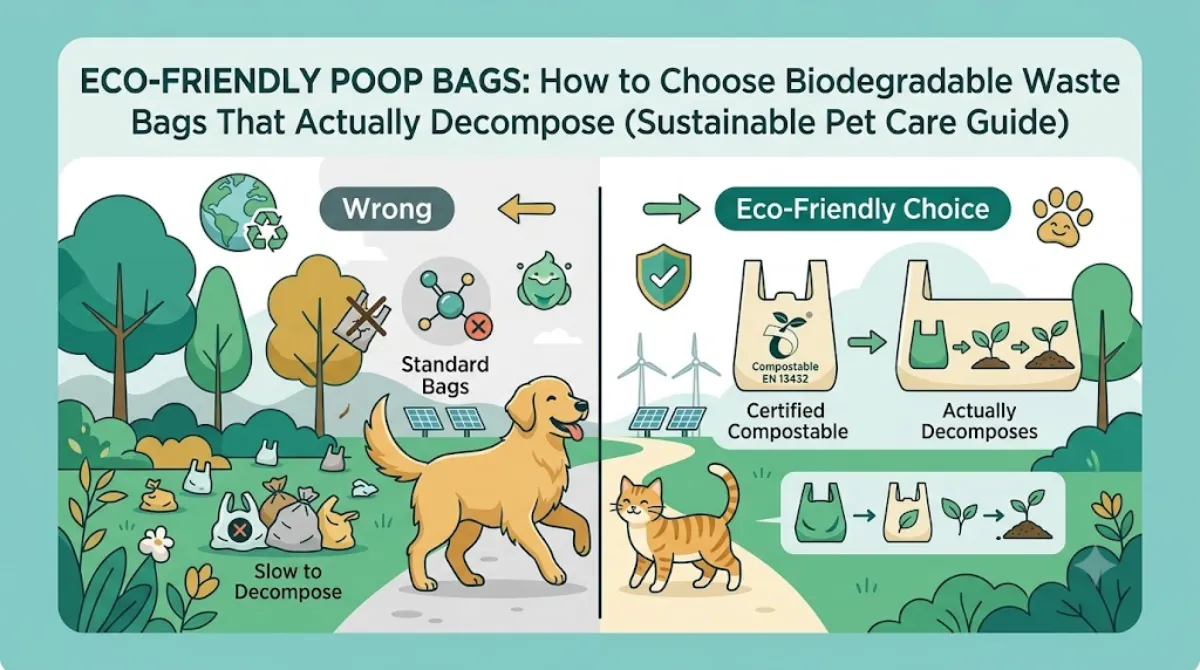
True environmental compliance relies on rigorous, verifiable testing standards rather than vague marketing adjectives. The American Society for Testing and Materials established the ASTM D6400 certification to define exact criteria for plastics designed to compost in municipal aerobic facilities. A bag bearing this certification must break down completely into carbon dioxide, water, and biomass within a specific timeframe, leaving zero toxic residue behind in the soil.
The Pitfalls of Oxo-Degradable Plastics
Many inexpensive green-tinted products labeled as oxo-degradable contain traditional petroleum plastics laced with chemical additives meant to fragment the material faster. When exposed to heat and UV light, these bags shatter into microscopic plastic dust rather than degrading at a molecular level. This process creates invisible microplastics that infiltrate groundwater systems and soil micro-biomes, causing greater ecological harm than intact plastic sheets. True sustainable dog poop bags avoid oxo-additives entirely in favor of organic polymers.
Plant-Based Materials and Starch-Based Innovations
Modern biochemical engineering has transformed renewable agricultural resources into durable, flexible films that mimic the functional performance of petroleum plastics.
Cornstarch, Cassava, and Vegetable Resins
Leading manufacturers derive their film resins from renewable agricultural byproducts, primarily industrial cornstarch, potato starch, and cassava root flour. These plant-derived polymers provide the structural elasticity and puncture resistance required to scoop waste cleanly without tearing. Because they rely on natural starches, these materials break down naturally when exposed to active microbial environments.
Evaluating Thickness and Tear Resistance
A common frustration among pet owners trying out green alternatives is encountering flimsy films that puncture under minimal pressure. Quality plant-based products utilize specialized gauge thickness—measured in microns—to ensure optimal tensile strength. Checking product specifications for heavy-duty thickness ratings prevents messy split incidents during active walks. When training your dog to walk calmly without frantic lunging, consult resources on [positive reinforcement dog training].
Practical Step: Store your plant-based waste bag rolls in a cool, dry cupboard away from direct sunlight and excessive humidity to prevent premature moisture breakdown before use.
Navigating Municipal Disposal and Landfill Realities
A common misconception is that purchasing compostable bags allows owners to bury them in the backyard or toss them into home garden compost heaps. Real-world waste management infrastructure dictates how these materials ultimately break down.
Why Dog Waste Cannot Go Into Home Compost Bins
Backyard compost bins rarely achieve the sustained internal temperatures—typically 135 to 160 degrees Fahrenheit—required to neutralize pathogens present in canine feces. Utilizing household compost for vegetable gardens after introducing dog waste creates severe public health risks regarding food-borne illness transmission. Consequently, home composting is generally discouraged for pet waste regardless of bag composition.
Municipal Composting Facilities and Pathogen Risks
Some progressive municipalities operate commercial composting facilities equipped to process pet waste alongside certified compostable packaging. However, many standard municipal waste systems ban dog waste entirely because processing facilities lack the specialized pathogen-destruction protocols required for carnivore feces. In standard sanitary landfills, even certified compostable bags face anaerobic conditions that slow down decomposition significantly, though they still outperform petroleum plastics over long timelines. For ongoing care and wellness milestones, review our guide on [puppy health and wellness].
Practical Features for Everyday Pet Parents
Selecting an eco-friendly product involves balancing strict environmental standards with practical usability during frantic morning walks.
Leak-Proof Strength and Thickness Gauges: A dependable bag must feature reinforced bottom seals and high-density film layering to contain moisture and unpleasant odors effectively. Look for textured surfaces that improve grip when opening the bag with cold or gloved hands during winter outings. Reliable thickness prevents fingernails from puncturing the film during active scooping motions.
Dispenser Compatibility and Unscented Options: Standard roll dimensions ensure seamless compatibility with most leash-mounted hard plastic dispensers. Furthermore, selecting unscented or naturally scented options—such as mild lavender derived from essential extracts rather than synthetic chemical perfumes—protects your dog’s sensitive olfactory system. For behavioral insights regarding outdoor walks, explore guidance in [understanding dog behavior].
Safety Reminder: Keep unused waste bag rolls stored securely out of reach of puppies and counter-surfing dogs to prevent accidental ingestion and intestinal blockages.
Common Misleading Labeling Practices to Avoid
Greenwashing runs rampant in the pet care industry, with manufacturers capitalizing on consumer desire for earth-conscious alternatives. Recognizing deceptive labeling tactics protects both the environment and your wallet.
Spotting Greenwashing in the Pet Industry
Products featuring earthy green colors, leaf illustrations, and vague terms like “eco-friendly,” “nature-safe,” or “earth-friendly” often contain zero verifiable certifications. If packaging lacks explicit reference to recognized standards like ASTM D6400 or EN 13432, treat the environmental claims with skepticism. True green pet waste management requires transparency regarding material composition, manufacturing origins, and official degradation testing credentials.
Frequently Asked Questions
- Are biodegradable dog poop bags completely safe for the environment? Certified compostable bags break down safely into natural elements without leaving microplastics, provided they reach appropriate composting environments, though sanitary landfill disposal limits their active decomposition speed.
- Can I flush biodegradable poop bags down the household toilet? No, flushing pet waste bags—even those labeled flushable or biodegradable—clogs plumbing systems and overloads municipal wastewater treatment facilities, as pet waste should never enter household plumbing.
- How long do plant-based poop bags take to expire on the shelf? High-quality plant-based bags typically maintain structural integrity for twelve to eighteen months when stored in cool, dry conditions before natural aging and humidity begin weakening the material.
- Do biodegradable waste bags cost significantly more than traditional plastic? While plant-based manufacturing incurs higher production costs than petroleum refining, scaling green manufacturing has narrowed the price gap significantly in recent years.
- What is the difference between oxo-biodegradable and true bioplastics? Oxo-biodegradable bags fragment into tiny plastic pieces using chemical additives, whereas true bioplastics are manufactured from organic starches that degrade completely at a cellular level.
- How can I verify if my local landfill accepts compostable pet waste bags? Check your local municipal waste management website or sanitation department guidelines to see if they process commercial compostable items or standard landfill waste streams.
Conclusion
Choosing sustainable pet supplies plays a meaningful role in reducing our collective environmental footprint while managing daily canine care responsibilities. By selecting certified compostable products and avoiding misleading oxo-degradable plastics, you ensure that your daily cleanups support genuine ecological health. Implementing thoughtful waste habits transforms a mundane chore into a positive act of stewardship for your local community and planet. Take the next practical step today by checking the certification labels on your current waste bag box and upgrading to verified biodegradable waste bags for dogs on your next supply run.