
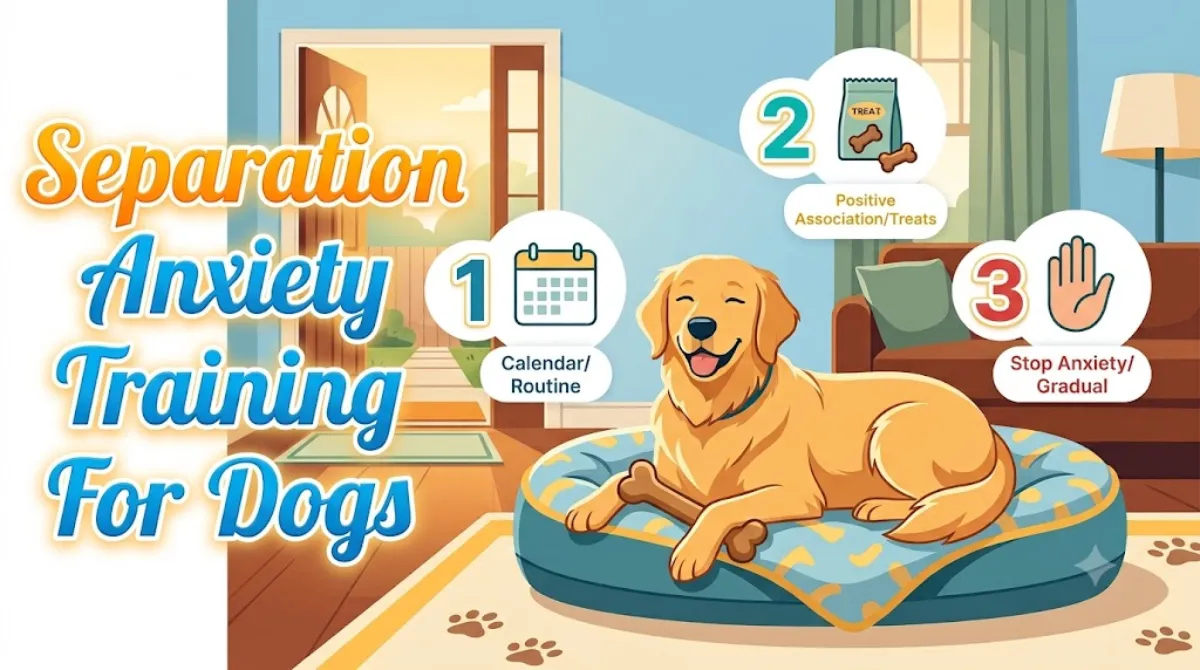
Separation Anxiety in Dogs: Signs and Step-by-Step Training Plan
Few behavioral challenges are as heartbreaking—or as destructive to a household—as watching a beloved companion panic the moment you pick up your car keys or walk toward the front door. Separation anxiety in dogs is a complex, distressing psychological condition that affects millions of pets and their human families. When a dog experiences severe panic upon being left alone, everyday routines transform into sources of intense stress for both the animal and the owner.
Many pet parents struggle to recognize the difference between mischievous boredom and true panic, often misinterpreting behavioral distress as disobedience. Addressing separation anxiety in dogs requires immense patience, systematic desensitization, and a deep understanding of canine emotional regulation. It is vital to understand from the outset that no fixed training schedule can promise to resolve every case; every dog’s neurological makeup, trauma history, and panic threshold are entirely unique. This comprehensive pillar guide explores the physiological markers of separation anxiety, differentiates it from routine boredom, outlines safe desensitization strategies, details a four-week training framework, and highlights when professional medical intervention is necessary.
Separation Anxiety Versus Boredom
Before attempting any behavior modification protocol, you must accurately diagnose whether your dog is suffering from true separation anxiety or simply acting out of everyday boredom. While both conditions can result in a torn-up living room or vocalization, their root causes and emotional signatures are starkly different.
-
Boredom: A bored dog is opportunistic. They seek out entertainment because their environment lacks physical or mental stimulation. If a bored dog chews a couch cushion, they do so because it feels good and helps pass the time. Crucially, a bored dog is emotionally relaxed when you are present and will greet you happily and calmly upon your return without showing signs of lingering terror.
-
Separation Anxiety: Separation anxiety in dogs is not a choice or a display of spite; it is an acute panic disorder. When left alone, an anxious dog’s nervous system floods with stress hormones (cortisol and adrenaline). They are not destroying your home out of anger or playfulness; they are trapped in a state of sheer terror, desperately attempting to escape confinement or reunite with their primary attachment figure.
Signs Before the Owner Leaves (Pre-Departure Anxiety)
Dogs are master observers of human routine. They notice micro-behaviors that signal an impending departure long before you touch the front door handle—such as putting on work shoes, rattling car keys, picking up a purse, or applying makeup.
When a dog suffers from separation anxiety, these environmental cues trigger immediate pre-departure anxiety:
-
Pacing and Following: The dog shadows your every step around the house, watching your hands and feet intently.
-
Whining and Trembling: As you get closer to leaving, the dog begins to whine, tremble, shiver, or drool excessively.
-
Hiding or Fleeing: Some dogs react by running to hide under a bed, in a bathroom, or behind furniture to avoid watching you pack up and leave.
-
Freezing: The dog stiffens into a statue-like posture, locking their joints and tracking your movements with wide, unblinking eyes.
Signs While the Owner Is Away
Once the front door closes, the true extent of separation anxiety in dogs manifests. Because owners are absent during these episodes, pet parents often rely on video monitoring or neighbor reports to uncover what happens.
Destructive Behaviour
Unlike casual chewing, anxiety-driven destruction is highly targeted. An anxious dog focuses their panic on primary exit points—chewing furiously at wooden doorframes, scratching window sills, shredding metal crate bars, or ripping up carpet directly beside the door in a desperate attempt to tunnel out and find you.
Barking and Howling
Vocalizations stemming from separation anxiety are rarely casual barks; they are continuous, frantic, high-pitched howls, yelps, and rhythmic barking that can persist uninterrupted for hours, causing significant friction with neighbors.
Toilet Accidents
A house-trained dog with severe separation anxiety will frequently urinate or defecate indoors within minutes of your departure. This is an involuntary physiological response to panic; adrenaline spikes relax internal sphincters and bypass conscious control.
Pacing and Drooling
Monitored video feeds frequently reveal dogs pacing in tight circles, refusing to lie down, panting heavily in cool rooms, and drooling so profusely that their chest fur and bedding are soaked entirely through.
Using Cameras to Track Behaviour
You cannot manage or treat what you cannot measure. Relying on guesswork leaves you flying blind during behavior modification.
Investing in a reliable indoor pet camera or setting up a secondary smartphone on a streaming app is a non-negotiable first step. A camera allows you to:
-
Establish a Baseline: Measure exactly how many seconds or minutes your dog can remain alone before panic sets in.
-
Identify Triggers: Discover whether your dog panics the second the door closes or if they manage five minutes before the first vocalization begins.
-
Track Progress: Monitor whether your gradual desensitization exercises are expanding your dog’s threshold over time.
Crate Use and Limitations
A common and dangerous mistake made by well-meaning owners is locking an anxious dog inside a wire or plastic crate to “protect the house” while they are away.
For a dog with true separation anxiety, a crate is a disaster. Confining a panicked animal to a small enclosure often escalates their terror into frantic claustrophobia. Anxious dogs frequently attempt to claw and chew their way out of wire crates, resulting in broken teeth, torn nails, lacerated gums, bloody paws, and severe physical trauma. Unless your dog is genuinely crate-trained and views their crate as a safe, voluntary resting den, crating an animal with separation anxiety intensifies their psychological suffering.
Safe Departure Training
Treating separation anxiety in dogs requires dismantling the emotional terror associated with your absence. This is achieved through systematic desensitization.
-
Deconstruct Departure Cues: Your dog has learned to associate your keys, shoes, and coat with the trauma of being left alone. You must break these associations. Pick up your keys and sit right back down on the couch. Put on your work shoes and watch television. Repeat these actions dozens of times a day until your dog no longer reacts to the cues.
-
Desensitize the Threshold: Approach the front door, touch the doorknob, and step back without opening it. Gradually build up to turning the knob, opening the door an inch, opening it wide, and stepping outside for one second before returning calmly.
Gradual Absence Exercises (Systematic Desensitization)
Systematic desensitization means exposing your dog to absences that are so brief they do not trigger panic.
If your dog panics after 30 seconds, your starting training duration must be 15 to 20 seconds.
-
Step outside the door for 15 seconds.
-
Return calmly before the dog begins to whine or pant.
-
Do not make a dramatic, high-energy fuss when you return; keep arrivals emotionally neutral to prevent reinforcing the anxiety cycle.
-
Gradually increase your absence duration from 15 seconds to 30 seconds, then 1 minute, 2 minutes, and 5 minutes, always staying well below your dog’s panic threshold.
Building Independence
Dogs suffering from separation anxiety are often “Velcro dogs” who demand constant physical contact and attention throughout the day. Building independent coping mechanisms is vital.
-
Encourage Autonomous Resting: Teach your dog to settle comfortably on their own bed or mat in a separate room while you move around the house. Use baby gates to create physical boundaries without closing doors completely.
-
Engage Mental Enrichment: Provide puzzle toys, snuffle mats, or long-lasting chews while your dog is resting independently. This teaches them that being alone or occupying space away from you is safe and rewarding.
When Medication May Be Discussed with a Veterinarian
For dogs with severe, debilitating separation anxiety, behavioral training alone is sometimes insufficient because the animal’s baseline cortisol levels remain chronically elevated.
When a dog’s nervous system is locked in constant panic, their brain cannot form new neural pathways or learn during training sessions. In these cases, discussing pharmacological support with a licensed veterinarian or veterinary behaviorist is a compassionate, medically sound step.
Prescribed anti-anxiety medications (such as SSRIs or situational sedatives) do not “drug” your dog into submission; instead, they lower physiological anxiety thresholds, quiet the panicked nervous system, and provide the chemical breathing room necessary for behavioral desensitization to succeed.
When to Contact a Qualified Behaviourist
While mild pre-departure pacing can often be managed with basic independence training, severe separation anxiety requires expert guidance. You should contact a certified professional dog trainer (CPDT-KA) or an applied animal behaviorist (CAAB / DACVB) if:
-
Your dog inflicts physical self-harm (broken teeth, bleeding paws) during absences.
-
Weeks of gradual absence training yield zero improvement in threshold limits.
-
Your dog experiences profound panic that threatens household harmony or neighbor relations.
Common Training Mistakes
-
Rushing the Process: Jumping from a 30-second absence straight to a 30-minute grocery run will trigger an immediate relapse into panic.
-
Making Departures and Arrivals High-Drama: Cooing, baby-talking, and dramatic goodbyes or over-the-top celebratory homecomings amplify your dog’s emotional investment in your presence and absence.
-
Punishing Accidents: Yelling at or punishing a dog for toileting or destroying furniture while you were away causes confusion and deepens anxiety, as the dog cannot connect the punishment to past actions.
-
Relying on Tiredness Alone: Believing that a long morning run will automatically cure separation anxiety. While exercise is healthy, exhaustion does not erase panic disorders.
Four-Week Training Framework
Disclaimer: This structured timeline serves as a generalized educational framework. Because every dog’s neurological makeup and anxiety threshold are unique, this schedule does not guarantee a complete cure.
| Week | Training Focus | Daily Action Steps | Target Benchmark |
| Week 1 | Cue Deconstruction & Baseline Assessment | Set up indoor cameras; pick up keys, wear shoes, and touch doorknobs repeatedly without leaving; keep homecomings neutral. | Dog remains relaxed when pre-departure cues are triggered indoors. |
| Week 2 | Micro-Absences & Threshold Mapping | Practice stepping outside the door for micro-durations (5 to 15 seconds); never let the dog reach the point of whining or panting. | Dog remains calm and quiet during 1-minute departures. |
| Week 3 | Expanding Durations & Independence | Gradually stretch absence durations from 2 minutes up to 10 minutes; build independent resting habits using baby gates indoors. | Dog settles independently for 10 minutes out of sight. |
| Week 4 | Variable Scheduling & Generalization | Introduce unpredictable absence times (ranging from 30 seconds to 15 minutes); vary routine triggers to prevent anticipation. | Dog successfully navigates short, variable absences without physiological distress. |
Frequently Asked Questions
Can separation anxiety in dogs develop suddenly in older dogs?
Yes. Senior dogs can develop separation-related distress due to declining sensory functions (vision or hearing loss) or the onset of Canine Cognitive Dysfunction (dog dementia), which increases vulnerability and confusion when left alone.
Should I get a second dog to cure my dog’s separation anxiety?
Generally, no. Separation anxiety is a panic disorder centered specifically around the absence of human attachment figures, not canine companionship. Adding a second dog often results in two stressed dogs rather than one cured dog.
Do calming pheromone diffusers and CBD actually work?
Pheromone diffusers (like DAP) and veterinary-approved calming supplements can provide mild, supportive relaxation for low-level anxiety, but they are rarely sufficient as standalone treatments for severe separation panic.
How long does it take to cure separation anxiety?
There is no fixed timeline. Mild cases may improve within a few weeks of consistent training, while severe panic disorders can require months of meticulous, daily desensitization work.
Is it okay to leave my dog with a bully stick or peanut-butter toy when I leave?
While distraction items work well for mildly bored dogs, a truly panicked dog with severe separation anxiety will ignore food entirely. Furthermore, giving high-value treats right before leaving can sometimes become a pre-departure warning cue that triggers anxiety.
Conclusion
Navigating separation anxiety in dogs is an emotional and demanding journey that tests the patience of even the most dedicated pet parents. By understanding that anxiety is a panic disorder rather than behavioral disobedience, utilizing cameras to track baseline thresholds, abandoning harmful crating practices, and implementing slow, systematic desensitization, you can help your companion feel secure. Take your next step by setting up an indoor camera, evaluating your dog’s true departure threshold, and starting your desensitization journey today.
Expert Review Note
This article was reviewed and approved by a certified professional dog trainer (CPDT-KA) and a licensed doctor of veterinary medicine (DVM) specializing in clinical canine behavioral medicine.