
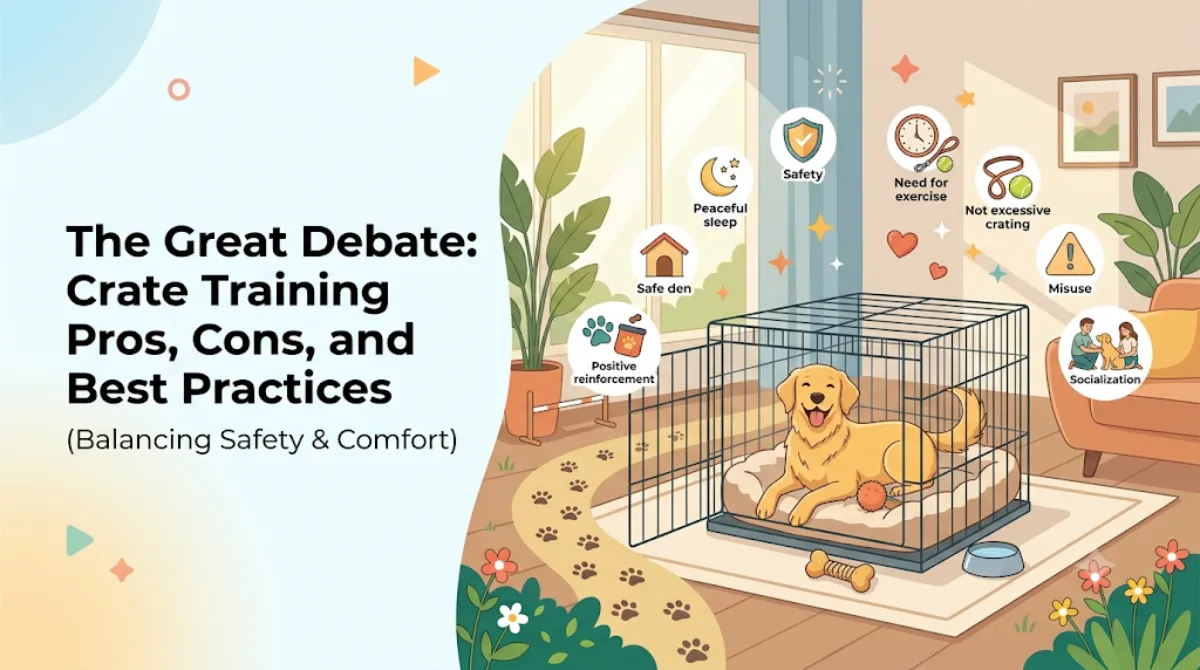
Crate Training Pros And Cons: A Safe Step-by-Step Plan
Bringing a new dog or puppy into your home is an exciting milestone, but it also introduces immediate household management challenges. From preventing destructive chewing while you are away to accelerating nighttime house training, establishing safe boundaries is essential for both human peace of mind and canine safety. Among all modern management tools, the crate stands out as one of the most effective—and most frequently misunderstood—resources available to pet parents.
Evaluating the crate training pros and cons is a crucial first step for any owner. Whether you are learning how to train a dog to do crate training, mastering crate training a puppy, establishing a predictable crate-training schedule, troubleshooting why a dog crying in crate scenarios occur, wondering how long can a dog stay in a crate, or seeking a blueprint for safe crate training, this comprehensive pillar guide covers every facet of the process. Grounded in positive reinforcement and behavioral science, this guide explores the benefits, pitfalls, equipment selection, a step-by-step introduction plan, troubleshooting protocols, and alternatives.
Quick Answer
Crate training is the process of teaching a dog to view a wire, plastic, or fabric crate as a safe, comfortable, personal den. When executed using positive reinforcement and gradual desensitization, a crate serves as an invaluable tool for house training, safe containment, travel, and veterinary recovery. However, crates are management tools, not permanent housing; they must never be used as punishment, and a crated dog should never be subjected to prolonged “cry it out” distress. Success relies on patience, pairing the crate with high-value rewards, and respecting your dog’s individual emotional pace.
What Crate Training Means
At its core, a crate is an enclosed resting space designed to mimic a canine ancestor’s natural instinct to seek out a secure, den-like shelter for sleep and safety. Crate training is not about confinement or punishment; it is about teaching emotional regulation and voluntary security.
In the wild, felines and canines naturally avoid soiling their sleeping quarters. Crate training harnesses this biological cleanliness instinct to accelerate house training, while simultaneously teaching the dog that being enclosed is a safe, relaxed experience. When introduced properly, a dog’s crate becomes their private bedroom—a sanctuary they choose to enter voluntarily whenever they need quiet rest.
Potential Benefits of Crate Training
When approached correctly, crate training unlocks numerous advantages for both dog and owner:
-
Accelerated House Training: Because dogs instinctively avoid eliminating where they sleep, a correctly sized crate prevents unsupervised accidents during the night or while you are briefly away.
-
Safety and Containment: Puppies and adolescent dogs are notorious for chewing electrical cords, swallowing socks, or ingesting toxic items. A crate keeps them safe from household hazards when active supervision is impossible.
-
Stress-Free Travel: Whether visiting the veterinarian, driving across the country, or boarding during emergencies, a crate-trained dog views vehicle transport or unfamiliar hotel rooms as a familiar, secure den.
-
Veterinary Recovery: If an injured or post-surgical dog requires strict cage rest to heal, a crate-trained dog will accept confinement without experiencing panic or self-injury.
Potential Disadvantages and Risks
While powerful, crates carry distinct limitations and potential risks if misused:
-
Misuse as Punishment: If an owner forces a frightened dog into a crate in anger, the crate instantly transforms from a safe den into a claustrophobic prison cell.
-
Risk of Overtraining and Confinement Fatigue: Leaving a dog crated for excessive hours leads to muscle atrophy, elimination distress, frustration, and behavioral deterioration.
-
Panic and Self-Injury: Dogs suffering from severe separation distress can panic inside closed crates, resulting in broken teeth, bloody paw pads, and severe psychological trauma as they attempt to claw their way out.
-
Loss of House Training: If a crate is too large, a puppy may establish a bathroom corner on one side and a sleeping corner on the other, defeating the biological instinct that prevents soiling.
When a Crate May Be Useful
Crates are exceptionally useful during:
-
The initial months of puppyhood when house training and teething are at their peak.
-
Transitioning a newly adopted rescue dog into a calm, predictable routine (explore foundational rescue adjustments in our Separation-anxiety guide).
-
Managing multiple pets when one animal requires feeding separation or medical rest.
-
Providing a safe, quiet refuge during boisterous family gatherings or children’s birthday parties.
When a Crate May Be Inappropriate
Crates are inappropriate when:
-
Used as an all-day substitute for exercise, socialization, and human interaction.
-
Used as a knee-jerk punishment tool for behavioral mistakes made hours earlier.
-
Applied blindly to a dog experiencing severe, panic-driven separation anxiety without addressing the underlying emotional distress.
-
The dog exhibits destructive claustrophobia, unrelenting panic, or self-harm behaviors when the door is latched.
Choosing the Correct Crate Size and Type
Selecting the right equipment ensures your dog feels secure rather than cramped or overwhelmed.
Crate Types
-
Wire Crates: Excellent for home use. They offer maximum ventilation, 360-degree visibility, and easy cleaning. Many come with divider panels, allowing you to buy one large crate for a puppy and adjust its interior space as they grow into an adult.
-
Plastic Varaken/Travel Crates: Preferred by airlines and ideal for dogs that feel more secure in a dark, den-like enclosure with solid walls.
-
Soft-Sided Crates: Lightweight and portable, suitable for travel or crate-trained dogs attending dog sports, though unsuitable for destructive chewers.
Sizing Guidelines
The golden rule of crate sizing is simple: The crate must be large enough for the dog to stand up fully, turn around comfortably in a complete circle, and stretch out flat on their side, but no larger.
If a crate is too large, a puppy will dedicate one end to sleeping and the other end to a bathroom, completely undermining house training.
Choosing a Crate Location
Where you place the crate dictates how quickly your dog accepts it:
-
The Social Hub: During initial training, place the crate in a lively, frequently occupied area of the home—such as the living room or family room. Dogs are social pack animals; isolating a puppy in a dark basement or distant laundry room during training triggers panic and vocalization.
-
Nighttime Placement: For nighttime sleeping during early puppyhood, placing a small wire crate right beside your bed allows you to hear stirring, comfort them easily, and take them outside for midnight bathroom breaks without panic.
Step-by-Step Training Process: Gentle Crate Introduction
Crate training should proceed like a game of voluntary exploration, never like a forced capture. Never push, shove, or drag an unwilling dog into a crate.
1. Introducing the Crate
Leave the crate door permanently open, propped wide so it cannot swing shut unexpectedly. Line the bottom with a comfortable, washable mat or blanket. Toss high-value treats (like small cubes of chicken or cheese) near the doorway, letting your dog walk up, grab the snack, and walk back out freely.
2. Feeding Near or Inside the Crate
Move your dog’s food bowl closer to the crate each day, eventually placing the bowl directly inside the back of the crate. This creates a powerful positive association: the crate is where delicious meals happen.
3. Teaching the Dog to Enter Voluntarily
Toss a toy or treat deep into the crate and use a cheerful cue like “Crate” or “Bed.” When the dog walks inside to retrieve it, mark with a cheerful “Yes!” Allow them to walk right back out immediately. Do not trap them yet; let them learn that entering the crate is entirely their choice and that doors open freely.
4. Closing the Door Briefly
Once your dog enters the crate eagerly for treats:
-
Toss a treat inside, wait for them to settle, and gently close the door for one second.
-
Immediately open the door before they show any sign of stress, and deliver a jackpot treat.
-
Gradually build duration from 1 second to 5 seconds, 15 seconds, 30 seconds, and 1 minute.
5. Increasing Duration and Leaving the Room
Build duration slowly over days. Once your dog can rest calmly inside a closed crate for 5 minutes while you sit nearby:
-
Step out of the room for 5 seconds, then return calmly before any whining starts.
-
Gradually increase your absence time: step out for 30 seconds, 2 minutes, 5 minutes, and 15 minutes.
Managing Schedules and Special Scenarios
Overnight Crate Training
Nighttime training requires balancing bladder capacity with emotional comfort.
-
Establish a final outdoor bathroom break right before bed.
-
Keep lighting dim and interactions quiet to signal that nighttime is for resting.
-
(For structured sleep routines, consult our Puppy sleep schedule guide).
Puppy Crate-Training Schedule
Young puppies cannot hold their bladders for eight hours. As a general rule, a puppy can hold their bladder in hours equal to their age in months plus one (e.g., a 3-month-old puppy can hold it for roughly 4 hours max). Set nighttime alarms to take young puppies outside for quick, boring bathroom breaks.
Adult Rescue-Dog Crate Training
Rescue dogs may carry past trauma associated with confinement or abandonment. Move twice as slowly with rescue dogs, ensuring the crate never triggers claustrophobia. Focus heavily on decompression and reward-based desensitization.
Troubleshooting: Crying, Anxiety, and Potty Management
Dog Crying in the Crate: Toilet Needs Versus Distress
When a dog cries in a crate, you must correctly diagnose the root cause:
-
Toilet Needs: Sharp, urgent, rhythmic whining, often accompanied by scratching at the door and frantic pacing, usually indicates a genuine biological need to eliminate. Take them out on a leash to a boring spot; if they eliminate, praise quietly and return straight to bed.
-
Behavioral Distress: High-pitched howling, frantic pawing, and panic indicate claustrophobia or separation stress.
Crate Training and Separation Anxiety
-
Important Distinction: Explain that dogs experiencing panic or separation distress need a different assessment. If a dog panics the second they are separated from you—whether inside a crate, behind a baby gate, or in a closed room—they are suffering from separation anxiety, not mere dislike of a crate. Forcing a dog with true separation anxiety to stay in a crate will worsen their panic and cause self-injury. These dogs require specialized desensitization protocols.
Crate Training and House Training
Crates are the cornerstone of successful house training. (Master complete protocols in our Puppy potty-training guide). By preventing indoor accidents, the crate teaches the puppy to signal when they need to go outside.
How Long Can a Dog Stay in a Crate?
-
Puppies (8–16 weeks): Maximum 1 to 3 hours during daytime hours.
-
Adult Dogs (6+ months): Maximum 4 to 6 hours during daytime hours (interrupted by bathroom breaks, exercise, and play).
-
Note: Crates should never be used for 8+ hour daytime work shifts. If you work long hours, hire a dog walker or use a puppy pen.
Using Crates During Travel
Crates are essential for vehicle safety. A loose dog in a car is a dangerous projectile during sudden stops and a massive distraction to the driver. Secure a properly sized crate in the back seat or cargo area using seatbelts or tie-downs, and practice short drives to the park so the car ride doesn’t always end at the vet’s office.
Unique Content Asset: Seven-Day Flexible Crate-Introduction Plan
Use this flexible seven-day progression framework. Remember that progress criteria are flexible rather than guaranteed; every dog learns at their own unique emotional pace.
| Training Day | Daily Focus & Objective | Recommended Drills & Protocols | Flexible Advancement Criteria (When to Move On) |
| Day 1 | Positive Association | Feed meals near crate; toss treats inside with door wide open. | Dog enters crate eagerly to inspect food without hesitation. |
| Day 2 | Voluntary Luring | Use cue (“Crate”) to lure dog inside; reward instantly; let them exit freely. | Dog steps fully inside on cue and looks back for a treat. |
| Day 3 | Brief Door Closes | Close door for 1 to 5 seconds while feeding a high-value chew; open before stress occurs. | Dog remains calm while door is gently latched for 10 seconds. |
| Day 4 | Building Indoor Duration | Build duration to 2–5 minutes while handler sits quietly nearby reading a book. | Dog lies down and relaxes inside the closed crate. |
| Day 5 | Stepping Out of Sight | Close door, step out of the room for 10–30 seconds, return calmly, and reward. | Dog stays quiet while handler is out of visual sight briefly. |
| Day 6 | Short Absences | Leave the room for 2 to 5 minutes; practice placing a stuffed, frozen Kong inside. | Dog focuses entirely on the Kong without whining when left alone. |
| Day 7 | Nighttime Crate Trials | Practice overnight sleeping in crate (beside owner’s bed or in quiet room). | Dog settles within 10 minutes and sleeps through the night. |
Common Crate-Training Mistakes to Avoid
-
Using the Crate as Punishment: Never send your dog to the crate angrily. The crate must remain an untouchable safe haven. (For alternative management, utilize a Place command mat).
-
Prolonged “Cry It Out”: Allowing a terrified, panicking dog to scream in a crate for hours damages their mental health and deepens confinement trauma.
-
Leaving Collars or Tags On: Always remove your dog’s collar and tags before placing them in a crate to prevent tags or loops from catching on wire bars and causing accidental choking.
-
Rushing the Timeline: Skipping steps because your dog tolerated 30 seconds of closure on Day 1, leading to sudden panic on Day 3.
When to Stop the Session and Signs of Distress
If your dog displays signs of severe distress—such as heavy panting, excessive drooling, frantic howling, bleeding nails, or vomiting—stop the session immediately. Open the door, let the dog out, and allow them to decompress. Drop back down to easier foundational steps in future sessions, or consult a qualified positive reinforcement trainer if panic persists.
Alternatives to Crates
If your dog cannot tolerate a crate due to past trauma or severe anxiety, several management alternatives exist:
-
Puppy Pens (Playpens): Offer a secure enclosure with enough room for a bed, water bowl, and puppy pads without a restrictive ceiling.
-
Dog-Proofed Rooms (Laundry Rooms / Bathrooms): Secure spaces stripped of hazards, utilizing baby gates.
-
Baby Gates: Limiting roaming access to safe household zones.
Frequently Asked Questions
Is it cruel to crate a dog while at work?
Crating a dog for a full 8-to-9-hour workday is inhumane and detrimental to their physical and mental health. Adult dogs should not be confined for more than 4 to 6 hours without a break.
How do I stop my puppy from crying in the crate at night?
Ensure their biological needs are met (bathroom and feeding), place the crate close to your bed so they feel your presence, and comfort them gently without rewarding frantic panic.
Can I put two dogs in the same crate together?
No. Putting two dogs in a single crate is dangerous. If a sudden fright or resource conflict occurs, they cannot escape each other, which can trigger severe fighting and injury.
Should I cover the crate with a blanket?
Many dogs feel safer and sleep better when a lightweight, breathable blanket covers three sides of the crate, creating a darker, cozier den. Ensure adequate ventilation remains open.
Conclusion
Crate training is a powerful management tool that, when executed with patience, empathy, and positive reinforcement, provides your dog with a lifelong safe haven. By avoiding punishment and prolonged distress, respecting their individual learning pace, and following our structured seven-day plan, you can transform a simple wire box into your dog’s favorite resting place. Take your next step by setting up your crate in a social hub, tossing in a few high-value treats, and starting your positive crate-training journey today!
Expert Review Note
This article was reviewed and approved by a certified professional dog trainer (CPDT-KA) specializing in reward-based canine husbandry, crate acclimation, and positive reinforcement methodology.