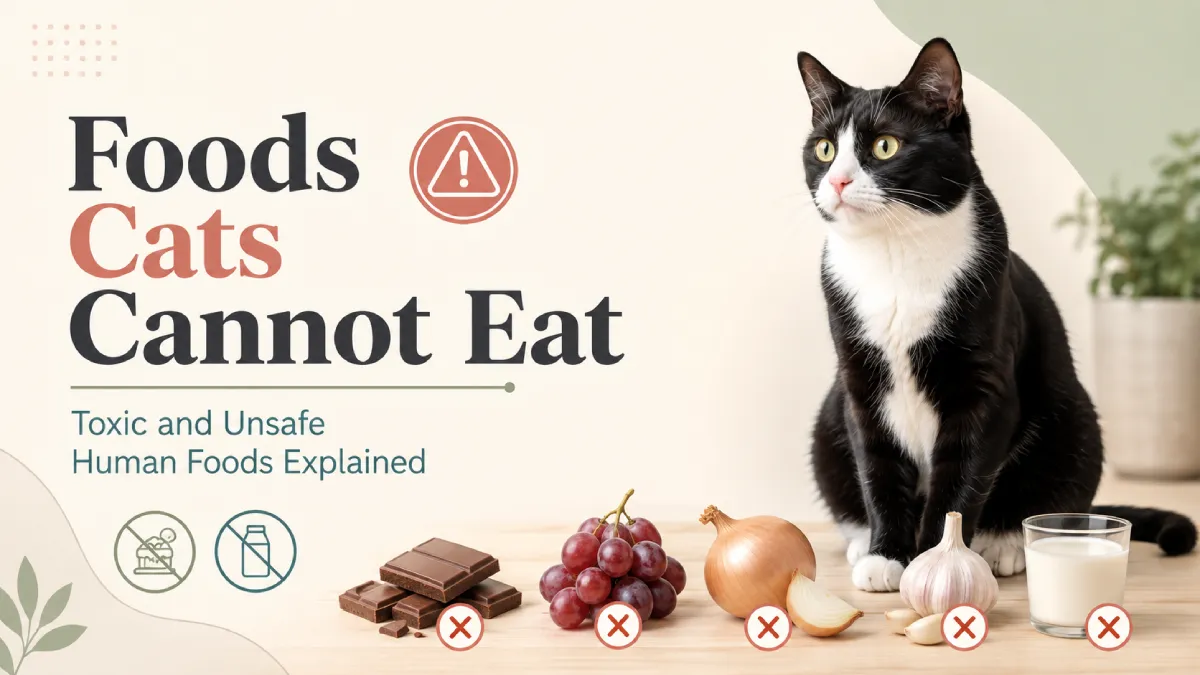
Foods Cats Cannot Eat: Toxic and Unsafe Human Foods Explained
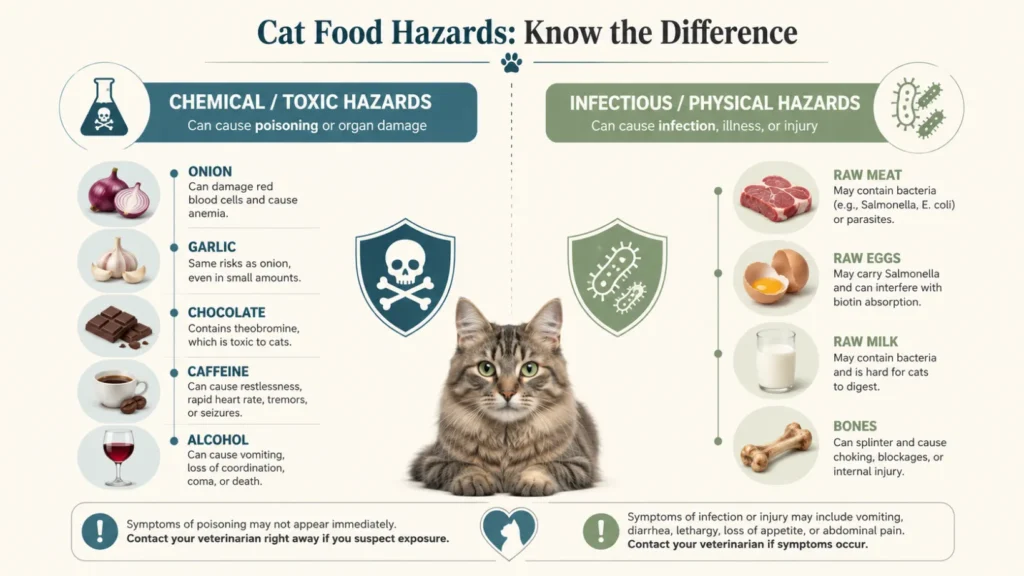
Some human foods can cause genuine poisoning in cats, while others create gastrointestinal, infectious or physical hazards. The distinction matters because chocolate and onion exposure should not be treated the same way as a small lick of ordinary milk.
The highest-priority foods to keep away from cats include onions and garlic, chocolate and caffeine, alcohol and raw yeast dough. Raw animal products also carry infectious-disease risks, while bones and certain food packaging can cause obstruction or injury.
Quick Answer
Do not feed cats onions, garlic, chives, leeks, chocolate, cocoa, caffeinated products, alcohol or raw yeast dough. Avoid raw meat, raw eggs and unpasteurized milk because of infectious-disease risks. Grapes and raisins are best avoided because feline data are limited but concerning. Xylitol should not be intentionally fed, although current veterinary evidence does not show the classic severe xylitol toxicity seen in dogs.
Foods to Keep Away From Cats
| Food | Main Concern | Priority |
|---|---|---|
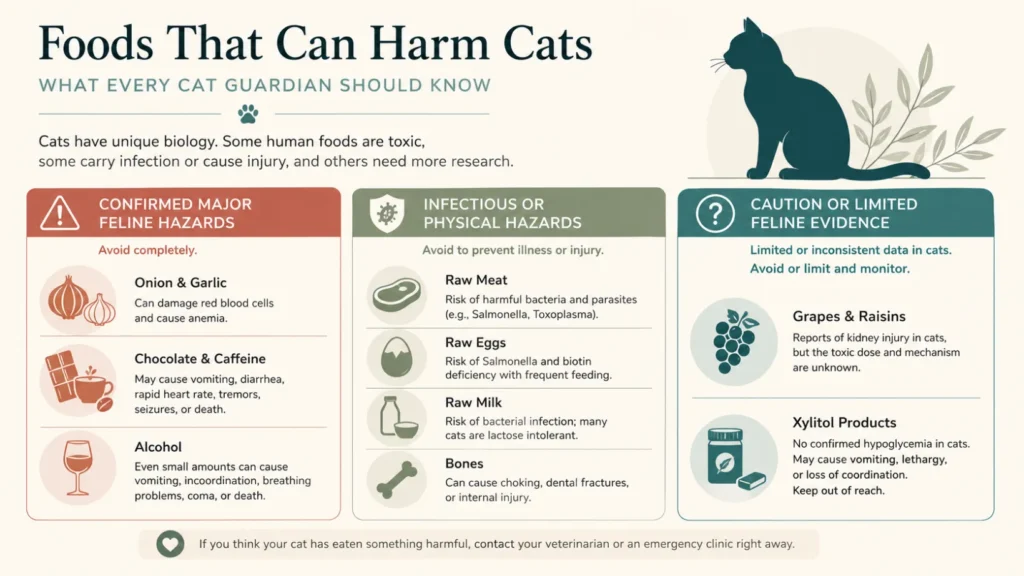
| Onion, garlic, chives, leeks | Red-blood-cell damage and hemolytic anemia | High |
| Chocolate and cocoa | Theobromine/caffeine effects on heart and nervous system | High |
| Coffee, tea, caffeine products | Stimulant toxicity | High |
| Alcohol | Central nervous system and metabolic toxicity | High |
| Raw yeast dough | Expansion plus ethanol production | High |
| Raw meat/raw eggs | Bacterial, parasitic and current viral food-safety concerns | Avoid |
| Unpasteurized milk | Pathogen risk | Avoid |
| Cooked or raw bones | Dental injury, obstruction or gastrointestinal trauma | Avoid |
| Grapes/raisins | Kidney toxicity well documented in dogs; feline evidence limited | Best avoided |
Onions, Garlic, Chives and Leeks
Allium plants can damage feline red blood cells and lead to hemolytic anemia.
Cats can be exposed through:
- fresh onion or garlic
- cooked onion
- dehydrated flakes
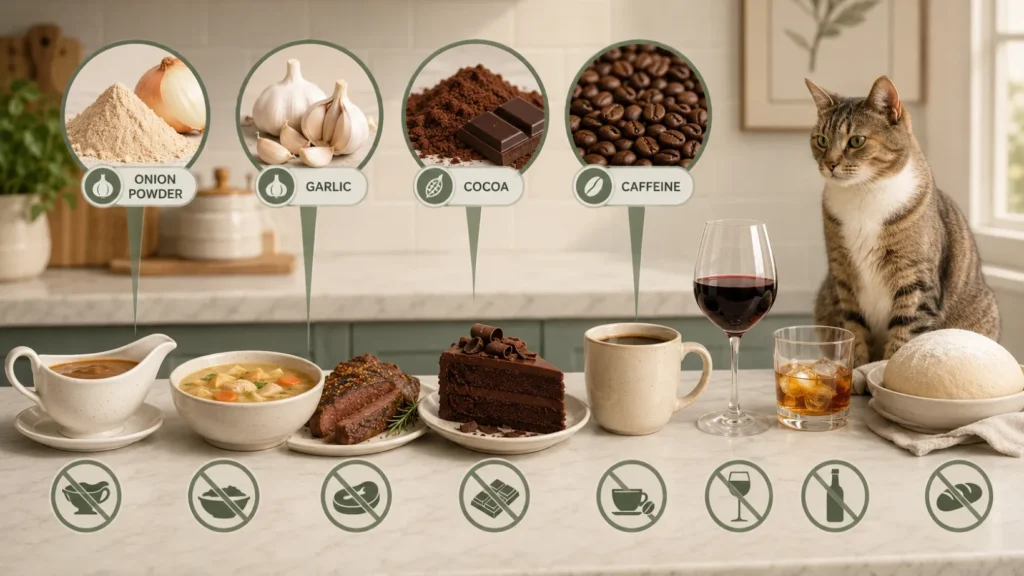
- onion powder
- garlic powder
- soups
- gravies
- seasoning mixes
- prepared meat dishes
Concentrated powders are particularly easy to overlook.
See Can Cats Eat Onions or Garlic?.
Chocolate and Cocoa
Chocolate contains the methylxanthines theobromine and caffeine.
Possible effects include:
- vomiting
- restlessness
- abnormal heart rate
- tremors
- seizures
Cocoa powder and unsweetened baking chocolate contain much more methylxanthine than milk chocolate. White chocolate contains very little, but its fat and sugar still make it inappropriate as a cat treat.
If an exposure has occurred, see Cat Ate Chocolate: What to Do.
Coffee, Tea and Other Caffeine
Caffeine belongs to the same methylxanthine family involved in chocolate toxicity.
Keep cats away from:
- coffee
- coffee beans
- tea bags
- energy drinks
- caffeine tablets
- chocolate-covered coffee beans
Alcohol
Do not offer cats beer, wine, spirits or foods containing meaningful amounts of alcohol.
Alcohol exposure can affect the nervous system, blood glucose and other body functions.
Remember that alcohol may also occur in:
- uncooked alcohol-containing desserts
- fermenting foods
- raw yeast dough
Raw Yeast Dough
Raw bread dough can expand inside the gastrointestinal tract while yeast fermentation produces ethanol.
Both the physical expansion and alcohol production make uncooked yeast dough an important hazard.
Raw Meat
Cats are obligate carnivores, but they do not require meat to be raw.
Raw meat may carry:
- Salmonella
- Campylobacter
- Listeria
- parasites
- other infectious agents
Current H5N1 outbreaks have added another reason to avoid intentionally feeding raw animal products to cats.
Raw Eggs
Raw eggs present microbial food-safety risks.
Repeated feeding of raw egg white also creates an avidin-related biotin concern.
Plain, completely cooked egg is a safer occasional option for appropriate healthy cats.
Raw or Unpasteurized Milk
Unpasteurized milk creates infectious-disease risk.
Ordinary pasteurized cow milk is not usually a classic poison, but many adult cats are lactose-intolerant and can develop gastrointestinal upset.
See Can Cats Drink Milk?.
Bones
Bones are a physical rather than chemical food hazard.
They may contribute to:
- broken teeth
- choking
- esophageal obstruction
- intestinal obstruction
- gastrointestinal injury
Cooked bones can become particularly brittle.
Grapes and Raisins
Grape and raisin kidney toxicity is well established in dogs.
Evidence in cats is much more limited.
Merck describes feline cases as anecdotal rather than a well-characterized cat-specific toxicosis.
Because there is no nutritional reason to feed grapes or raisins to cats and uncertainty remains, keeping them away from cats is sensible.
What About Xylitol?
Xylitol is one area where dog advice is often incorrectly copied into cat articles.
Current Merck guidance states that dogs are the domestic species in which classic xylitol toxicosis has been reported and that cats are not considered at risk for the hypoglycemia or liver injury seen in dogs.
A small controlled study of six cats also did not demonstrate those toxic effects.
That does not make sugar-free products appropriate cat treats. They may contain other harmful ingredients or packaging.
See Is Xylitol Toxic to Cats?.
Macadamia Nuts Are Primarily a Dog Toxicity
Macadamia-nut poisoning is another example of a hazard that is well documented in dogs but not established as a comparable feline toxicosis.
Nuts are still unnecessary for cats and may be fatty, salty or mechanically difficult to eat.
A cat-specific toxic-food guide should not present every canine toxin as equally proven in cats.
Highly Seasoned Human Food
Human leftovers may contain several hazards simultaneously.
Examples include:
- onion powder
- garlic
- alcohol-based sauces
- chocolate
- excessive fat
- bones
Plain food is easier to evaluate than a prepared dish with an unknown ingredient list.
What to Do If Your Cat Ate Something Dangerous
- Remove access to the food.
- Keep the package or ingredient list.
- Record what was eaten.
- Estimate how much may be missing.
- Record the time of exposure.
- Contact your veterinarian or veterinary poison service when a toxic exposure is possible.
Do not induce vomiting at home unless a veterinary professional specifically directs an appropriate treatment.
FAQs
What human food is most dangerous to cats?
True feline hazards include Allium foods such as onion and garlic, chocolate/caffeine, alcohol and other specific toxins. Risk depends on dose and product.
Can cats eat garlic?
No. Garlic can cause oxidative red-blood-cell damage and should not be intentionally fed.
Are grapes poisonous to cats?
The evidence is much stronger in dogs. Feline evidence is limited, but avoiding grapes and raisins is prudent.
Is xylitol toxic to cats?
Current evidence does not show the dog-like hypoglycemia or liver injury associated with xylitol toxicity. However, xylitol-containing products may contain other hazards.
Are raw foods safe for cats?
Raw animal products carry infectious-disease risks and are not required to provide cats with complete nutrition.
Bottom Line
Keep proven feline toxins such as onions, garlic, chocolate, caffeine and alcohol inaccessible, and avoid raw animal products and bones for separate food-safety reasons.
Most importantly, use cat-specific toxicology rather than assuming every food that is dangerous to dogs has exactly the same effect in cats.