

Cat Ate Chocolate: What to Do and Why Chocolate Can Be Dangerous
If your cat ate chocolate, remove the remaining product, identify exactly what type of chocolate was involved and contact your veterinarian or an appropriate veterinary poison service for advice.
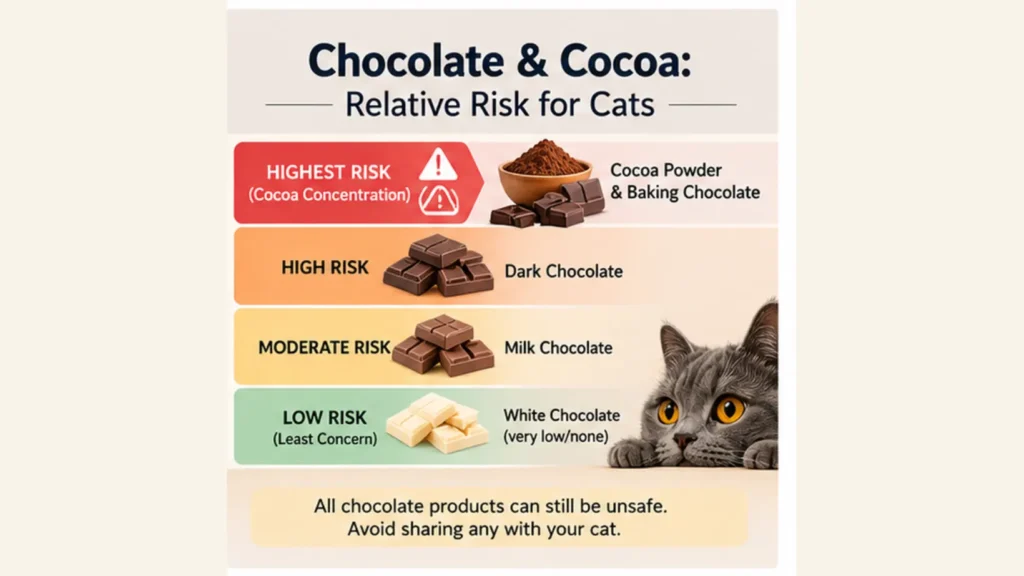
Chocolate contains theobromine and caffeine, compounds that can affect the feline cardiovascular and nervous systems. Dark chocolate, baking chocolate and cocoa powder generally contain much higher concentrations than milk chocolate, so the type and amount matter greatly.
Emergency Answer
Do not wait for symptoms after a potentially significant chocolate exposure. Record your cat’s weight, the type of chocolate, approximately how much was eaten and when it happened, then call a veterinarian. Do not induce vomiting at home or give hydrogen peroxide, salt, milk, activated charcoal or another home remedy unless a veterinary professional specifically directs an appropriate intervention.
Step 1: Remove the Chocolate
Prevent your cat from eating more.
Also check whether the cat may have swallowed:
- wrapper
- foil
- plastic packaging
- paper
Packaging can create a separate gastrointestinal foreign-body problem.
Step 2: Identify the Type
Keep the package.
Useful information includes:
- product name
- percentage of cocoa
- chocolate type
- package weight
- other ingredients
Step 3: Estimate the Amount
You do not need to calculate a toxic dose yourself.
Estimate:
- how much product was originally present
- how much remains
- the maximum amount the cat might have eaten
When uncertain, use the higher plausible estimate when explaining the exposure to the veterinarian.
Step 4: Record the Time
Veterinary management can depend partly on how recently the chocolate was eaten.
Write down:
- known exposure time
- earliest possible time
- latest possible time
Which Chocolate Is Most Concerning?
| Chocolate Type | Relative Methylxanthine Concern |
|---|---|
| Cocoa powder | Very high |
| Unsweetened/baking chocolate | Very high |
| Dark or semisweet chocolate | High |
| Milk chocolate | Lower concentration but still potentially concerning |
| White chocolate | Negligible methylxanthine content, but still fatty/sugary and may contain other ingredients |
Why Dark Chocolate Is More Dangerous
Theobromine and caffeine originate from cocoa.
Chocolate with more cocoa generally contains more methylxanthines.
This means a relatively small amount of baking chocolate or cocoa powder may be more concerning than the same weight of milk chocolate.
Why Chocolate Is Toxic
Theobromine and caffeine stimulate the nervous and cardiovascular systems.
They can contribute to:
- restlessness
- increased heart rate
- abnormal heart rhythms
- increased body temperature
- muscle tremors
- seizures
Signs of Chocolate Poisoning in Cats
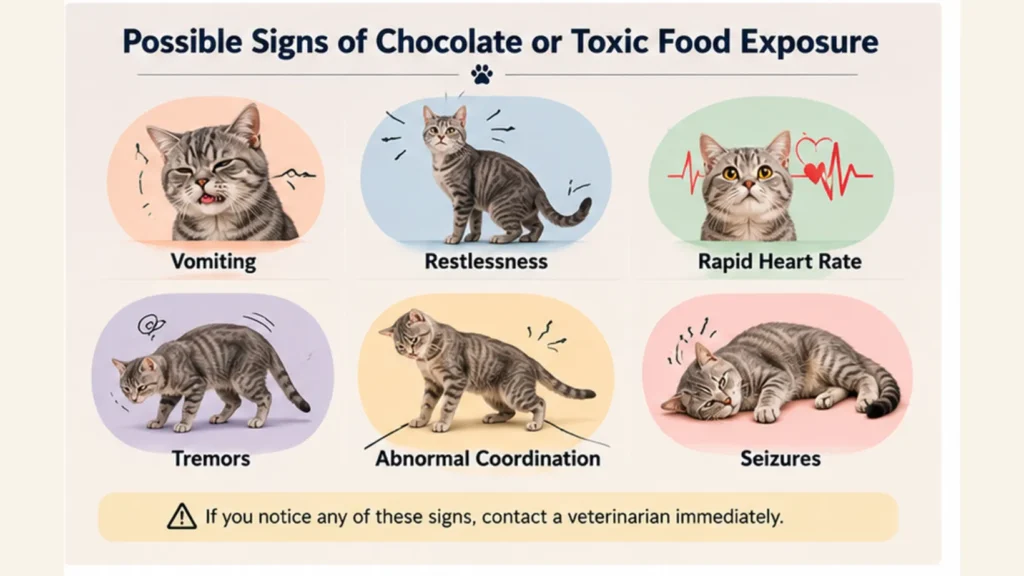
Possible early signs include:
- vomiting
- diarrhea
- increased thirst
- restlessness
- abdominal discomfort
More serious signs may include:
- hyperactivity or agitation
- abnormal coordination
- rapid breathing
- abnormal heart rate or rhythm
- tremors
- seizures
- weakness or collapse
How Long Until Symptoms Appear?
Merck reports that signs of chocolate toxicosis commonly begin within approximately 6–12 hours after ingestion.
That does not mean you should wait six hours to seek advice.
Early veterinary assessment may allow intervention before severe signs develop.
Can Symptoms Last More Than a Day?
Yes.
In severe cases, clinical effects may persist for up to several days because methylxanthines can remain in the body and undergo enterohepatic recycling.
What If My Cat Ate Milk Chocolate?
Milk chocolate contains less theobromine and caffeine than dark or baking chocolate, but risk still depends on:
- amount
- cat’s size
- product formulation
- other ingredients
Contact your veterinarian when the amount is meaningful or uncertain rather than assuming milk chocolate is harmless.
What If My Cat Ate Dark Chocolate?
Dark chocolate deserves greater concern because it contains a higher concentration of methylxanthines.
Contact your veterinarian promptly with the cocoa percentage, amount and cat’s weight.
What If My Cat Ate Baking Chocolate or Cocoa Powder?
These products can contain particularly high methylxanthine concentrations.
Call your veterinarian or emergency veterinary clinic promptly.
What About White Chocolate?
White chocolate contains negligible methylxanthines compared with cocoa-containing chocolates.
However, it can still contain large amounts of:
- fat
- sugar
- dairy ingredients
and may be part of a product containing other hazardous ingredients.
Chocolate Cake, Cookies and Brownies
With a prepared dessert, the complete recipe matters.
Potential additional concerns include:
- cocoa powder
- coffee or espresso
- raisins
- alcohol
- high fat
- packaging
Bring the ingredient list or recipe when possible.
Do Not Induce Vomiting at Home
Do not give hydrogen peroxide to a cat to cause vomiting.
Veterinarians have medications and techniques that may be considered after recent ingestion when clinically appropriate.
The decision depends on:
- time since exposure
- amount
- type of chocolate
- whether symptoms have started
- the cat’s overall condition
Do Not Give Activated Charcoal Yourself
Activated charcoal is sometimes used professionally for selected toxic exposures, but it carries risks and is not appropriate for home administration without veterinary direction.
What the Veterinarian May Do
Depending on the exposure and clinical condition, veterinary care may involve:
- decontamination
- fluid therapy
- heart-rate and rhythm monitoring
- temperature management
- control of tremors or seizures
- electrolyte monitoring
- supportive care
The treatment plan is individualized rather than based only on the word “chocolate.”
Seek Emergency Veterinary Care Immediately If…
- your cat is trembling
- your cat has a seizure
- your cat collapses
- there is severe agitation
- breathing appears difficult or abnormal
- the heart appears to be racing
- a substantial amount of dark, baking chocolate or cocoa may have been eaten
Chocolate Exposure Information Card

| Information | Record |
|---|---|
| Cat’s weight | ________________ |
| Product | ________________ |
| Chocolate type | ________________ |
| Cocoa percentage | ________________ |
| Maximum amount eaten | ________________ |
| Exposure time | ________________ |
| Other ingredients | ________________ |
| Packaging swallowed? | Yes / No / Unsure |
| Symptoms | ________________ |
| Veterinarian contacted | ________________ |
Preventing Chocolate Exposure
Keep chocolate inaccessible rather than relying on the assumption that cats are not interested in sweet foods.
Pay particular attention to:
- baking cupboards
- open handbags
- holiday candy
- desserts cooling on counters
- cocoa powder
- chocolate protein products
- coffee-chocolate products
For broader food safety, see Foods Cats Cannot Eat.
FAQs
Is chocolate poisonous to cats?
Yes. Cats are susceptible to the methylxanthines theobromine and caffeine found in chocolate.
Is dark chocolate worse than milk chocolate?
Generally yes. Dark chocolate contains more cocoa and therefore more methylxanthines by weight than milk chocolate.
Can one lick of chocolate hurt a cat?
Risk depends on the product and amount. A tiny lick is different from eating a piece of dark or baking chocolate, but uncertain exposures should be discussed with a veterinarian.
Should I make my cat vomit?
No. Do not attempt to induce vomiting at home. Contact a veterinary professional.
How quickly do chocolate-poisoning signs appear?
Clinical signs commonly begin within approximately 6–12 hours, but veterinary advice should be sought before symptoms develop after a concerning exposure.
Bottom Line
If your cat ate chocolate, identify the product, amount, time and your cat’s weight and contact a veterinarian. Dark chocolate, baking chocolate and cocoa powder are particularly concerning because their methylxanthine concentrations are much higher.
Do not wait for tremors, seizures or abnormal heart signs and do not attempt home vomiting or other DIY poisoning treatments.