

Cat Boarding Checklist: What to Pack and What the Facility Should Know
Preparing your cat for boarding involves more than packing food and dropping off a carrier. A useful cat boarding checklist should cover the facility itself, health records, medication, feeding instructions, litter preferences, emergency contacts and details about how your cat normally behaves at home.
Start early enough to confirm the boarding facility’s requirements rather than assuming every cattery follows the same rules. Keep your cat’s usual routine as consistent as practical, provide written instructions and tell staff about medical conditions, stress triggers or handling difficulties before arrival. The clearer the handover, the less the boarding team has to guess while you are away.
Quick Answer
For cat boarding, bring the cat in a secure carrier and provide the facility with their usual food, written feeding instructions, prescribed medication, relevant health and vaccination records, veterinary details, your contact information and a backup emergency contact. Pack familiar bedding or litter only if the facility allows it. Before booking, confirm the cattery’s own health, medication, accommodation and personal-item policies.
Choose the Boarding Facility Before You Pack
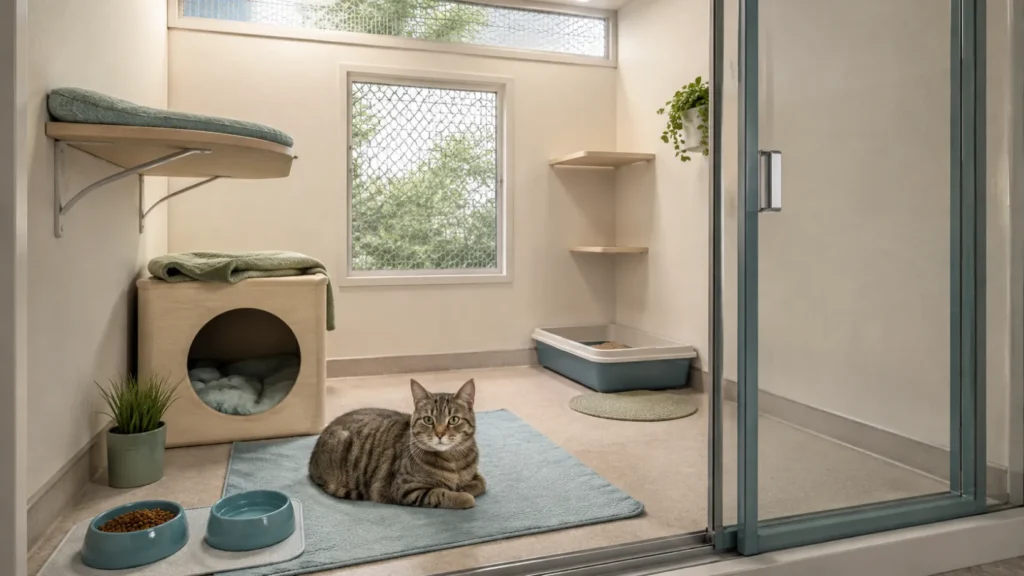
The quality of the facility matters more than how many comfort items you put in the bag.
Where possible, ask to see the accommodation before booking and find out how cats are housed, monitored and handled.
Useful questions include:
- Are cats housed in a separate area from dogs?
- Can cats see or hear boarded dogs?
- Does each enclosure provide a hiding area?
- Is there a perch or elevated resting option?
- Is the litter area separated from food and sleeping areas?
- How often are cats checked?
- How are enclosures cleaned?
- What happens if a cat refuses food?
- What happens if a cat becomes ill?
- Which veterinary clinic or emergency hospital is used?
- Can staff administer my cat’s specific medication?
- Are personal bedding, toys or litter allowed?
- Can cats from the same household stay together if appropriate?
- How will staff contact me during an emergency?
VCA recommends clean, comfortable cat accommodation with hiding and perching opportunities and notes that cat housing should ideally be positioned away from dogs because their sights, sounds and smells may increase anxiety.
Consider Whether Boarding Is the Right Option for Your Cat
Boarding can work well for many cats, but it is not automatically the best arrangement for every individual.
A cat may need a different plan if they:
- become extremely distressed outside the home
- have complex medical needs
- require frequent treatment or monitoring
- are very frail or mobility-limited
- have previously stopped eating during boarding
- cannot safely be handled by unfamiliar people
In those situations, discuss options with your veterinarian and compare boarding with an appropriately qualified in-home caregiver.
Do not assume a cat sitter is always better either. The correct choice depends on the individual cat, home situation and level of care required.
Confirm Health Requirements Early
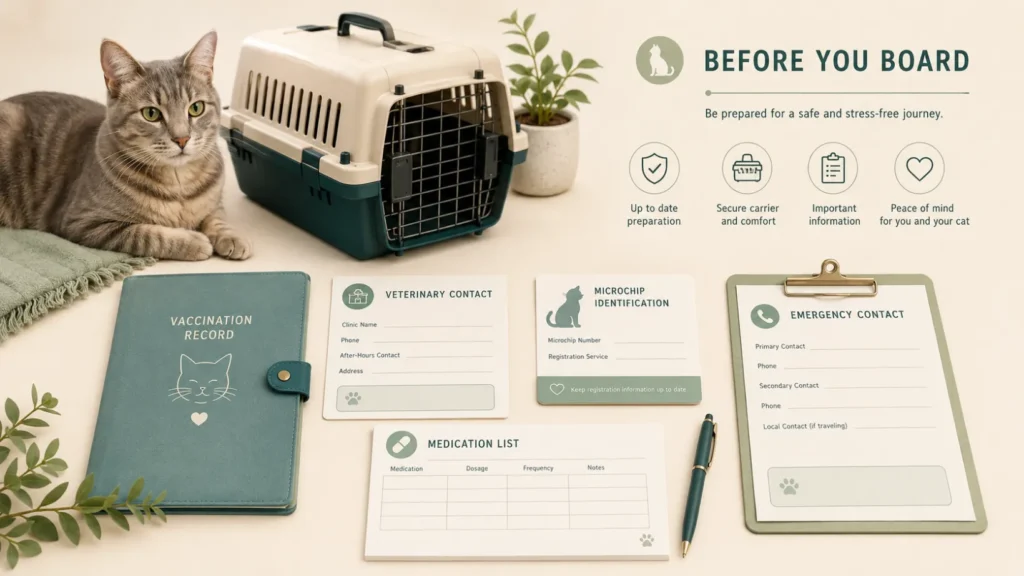
Do not wait until drop-off day to discover that paperwork or veterinary care is missing.
Boarding facilities set their own health-entry policies, and local legal requirements can also apply.
Ask exactly what the facility requires regarding:
- vaccination records
- rabies documentation
- core feline vaccinations
- parasite prevention
- recent illness
- infectious-disease exposure
- health certificates
- testing requirements
Do Not Treat One Vaccine List as Universal
Vaccination requirements vary.
VCA notes that rabies vaccination is commonly required and some facilities may also request proof of other feline vaccinations such as FVRCP or FeLV vaccination depending on their policies.
AAHA/AAFP vaccination guidance also treats boarding as an exposure factor that should be considered when creating an individual vaccination plan.
Your veterinarian should advise what is appropriate for your particular cat rather than changing vaccination schedules solely because of a generic internet checklist.
Tell the Facility About Current Medical Conditions
Do not hide a medical problem because you are worried the booking may be declined.
Staff need to know about relevant conditions so they can determine whether they have the training and facilities to care for the cat safely.
Provide information about:
- current diagnoses
- recent illness or surgery
- allergies
- mobility limitations
- urinary problems
- digestive problems
- seizure history
- diabetes or other conditions requiring scheduled care
- anything currently being monitored by your veterinarian
If the facility cannot provide the required level of care, arrange a more suitable alternative rather than simplifying the instructions.
Prepare a Complete Medication List
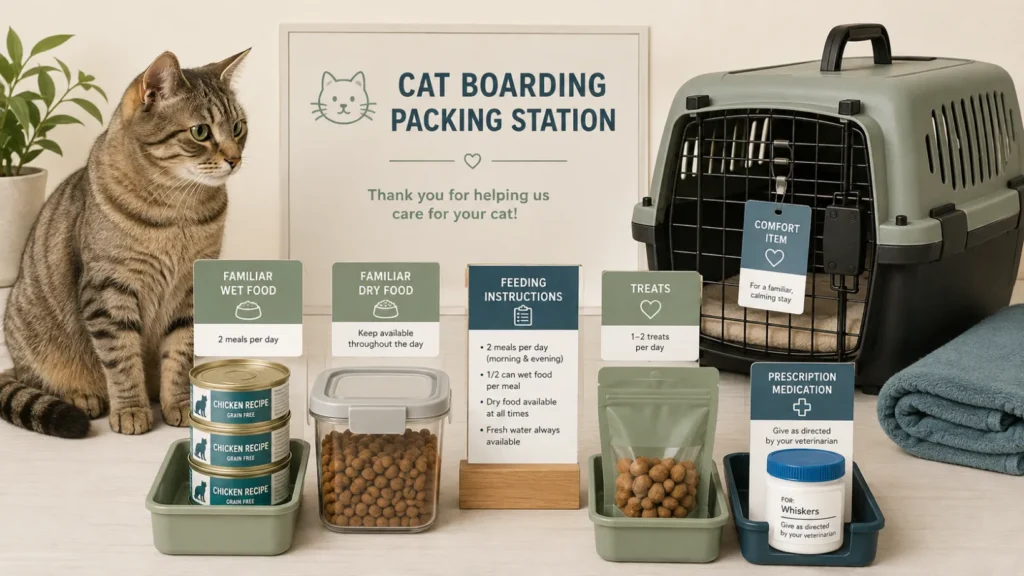
Tell the cattery about every medication the cat is expected to receive during the stay.
For each medication, record:
- medication name
- strength or formulation shown on the prescription label
- amount prescribed by the veterinarian
- administration time
- how it is normally given
- whether refrigeration or other storage is required
- what staff should do if a dose cannot be given
Do not change doses or create new medication instructions specifically for boarding without veterinary direction.
Ask the facility whether prescription medication must arrive in its original labelled container. Many boarding providers have their own medication-handling rules.
Do Not Send Unapproved Sedatives
If your cat becomes highly anxious during boarding or transportation, discuss the problem with your veterinarian before the trip.
Do not send:
- human sedatives
- another animal’s medication
- leftover prescriptions
- unlabelled tablets
- new calming supplements the cat has never used
If prescription anxiety medication is appropriate, your veterinarian can create an individual plan and the boarding facility should confirm that staff can administer it correctly.
Pack Your Cat’s Usual Food
Unless the facility has a different medical reason or policy, keeping the normal diet can reduce unnecessary change during an already unfamiliar stay.
AAHA recommends bringing the pet’s usual food for boarding and enough to cover the stay, with some extra in case plans change.
Label the food clearly.
Provide exact feeding instructions, including:
- food brand and type
- wet, dry or mixed feeding
- amount per meal
- number of meals
- normal meal times
- approved treats
- foods the cat must not receive
Avoid vague instructions such as “feed normally.”
Tell Staff About Appetite Before You Leave
Describe your cat’s usual appetite so staff know what represents a change.
For example:
- Does the cat normally finish meals immediately?
- Do they graze slowly?
- Do they eat better when left alone?
- Do they normally skip breakfast?
- Are they reluctant to eat when stressed?
Ask the facility when they will contact you or a veterinarian if food intake drops.
Do not normalize prolonged food refusal simply because the cat is in an unfamiliar environment.
Explain Water Preferences
Tell staff if your cat has established preferences that meaningfully affect drinking.
Examples may include:
- water bowl rather than fountain
- multiple water locations
- water added to prescribed food
Do not make unnecessary hydration changes immediately before boarding unless your veterinarian has recommended them.
Explain Litter and Toileting Preferences
Ask the facility what litter it normally provides and whether owners may bring their cat’s familiar litter.
Tell staff if your cat:
- uses a particular litter texture
- avoids scented litter
- needs a low-entry box
- requires a particularly large box
- has a history of urinating outside the box
- has constipation or diarrhea being monitored
A change in elimination can be medically relevant, not simply a housekeeping issue.
Tell the Cattery What Your Cat Is Actually Like
Staff need an accurate behavior description.
Avoid writing “friendly” if the cat is friendly only at home with familiar people.
Tell staff if your cat:
- hides around strangers
- hisses when frightened
- swats during handling
- dislikes being picked up
- tries to escape through open doors
- is sensitive around a painful area
- does not tolerate other cats nearby
- needs slow handling
- becomes distressed by loud dogs
This information can help staff avoid unnecessary conflict and recognize normal versus unusual behavior.
Bring Your Cat in a Secure Carrier
Your cat should arrive and leave inside a secure carrier.
Inspect:
- door latches
- zippers
- clips
- ventilation
- carrier base
- handles
before leaving home.
Do not open the carrier in the facility car park.
For a cat that dislikes entering the carrier, work on the problem before boarding using Pawnium’s Cat Carrier Training Guide.
Should You Pack Familiar Bedding?
A small familiar blanket or bed may help some cats because it carries familiar scent, but check the cattery’s rules first.
Some facilities restrict personal items for cleaning, infection-control or safety reasons.
Do not send:
- irreplaceable blankets
- expensive beds
- fragile toys
- items with loose strings
- anything the cat is likely to chew or swallow
Assume any personal item could become soiled, damaged or misplaced.
What About Toys?
If toys are allowed, choose simple familiar items that are safe for the facility to leave with the cat according to its own supervision policy.
Interactive wand toys, strings and similar equipment should not automatically be left unattended.
Ask what enrichment the facility provides rather than packing a large collection of toys.
Update Identification Before Boarding
Check that your contact details are current before leaving your cat anywhere outside the home.
Useful information includes:
- microchip registration
- your telephone number
- backup contact
- veterinary clinic
- carrier identification label
The CDC’s pet boarding information form also includes a microchip field, emphasizing the value of having identification information available during boarding.
Provide Your Veterinarian’s Details
The boarding facility should know how to reach the veterinary team that normally treats your cat.
Provide:
- clinic name
- telephone number
- relevant medical records where appropriate
- after-hours emergency clinic if applicable
If your regular veterinarian will be closed or too far away during the stay, ask the boarding facility which veterinary service it normally uses.
Provide an Emergency Contact Who Can Make Decisions
Do not make yourself the only person who can authorize a decision if you may be unreachable.
Provide a trusted backup contact and clarify:
- their phone number
- whether they may authorize veterinary care
- how you want the facility to contact you first
- any financial or insurance arrangements relevant to emergency treatment
Ask the cattery and your veterinarian how emergency authorization is handled before you travel.
Cat Boarding Handover Sheet
Use this section as a practical one-page summary for the facility.
| Information | Details |
|---|---|
| Cat name | ____________________________ |
| Microchip number | ____________________________ |
| Owner phone | ____________________________ |
| Backup contact | ____________________________ |
| Veterinarian | ____________________________ |
| Emergency clinic | ____________________________ |
| Food | ____________________________ |
| Meal amount | ____________________________ |
| Meal times | ____________________________ |
| Medication | ____________________________ |
| Medication times | ____________________________ |
| Medical conditions | ____________________________ |
| Litter preference | ____________________________ |
| Normal appetite | ____________________________ |
| Handling notes | ____________________________ |
| Stress signals | ____________________________ |
| Emergency authorization notes | ____________________________ |
Printable Cat Boarding Packing Checklist
Health and Paperwork
- ☐ Boarding reservation confirmed
- ☐ Facility requirements checked
- ☐ Required vaccination records supplied
- ☐ Relevant medical records supplied
- ☐ Veterinarian contact details supplied
- ☐ Emergency clinic information supplied where appropriate
- ☐ Backup decision-maker confirmed
- ☐ Microchip/contact details checked
Food
- ☐ Usual food
- ☐ Enough food for the full stay
- ☐ Reasonable extra supply
- ☐ Food clearly labelled
- ☐ Written portion instructions
- ☐ Written feeding times
- ☐ Approved treats if permitted
Medication
- ☐ All required prescription medication
- ☐ Facility has agreed to administer it
- ☐ Medication labelled as required by the facility
- ☐ Written administration instructions
- ☐ Storage requirements explained
- ☐ Plan documented if a dose cannot be given
Comfort and Toileting
- ☐ Secure carrier
- ☐ Familiar bedding if permitted
- ☐ Familiar toy if permitted
- ☐ Litter preference documented
- ☐ Mobility or low-entry litter needs documented
Behaviour
- ☐ Handling preferences explained
- ☐ Hiding behaviour explained
- ☐ Escape tendencies explained
- ☐ Fear or aggression triggers explained
- ☐ Other-cat tolerance explained
- ☐ Dog sensitivity explained
Drop-Off Day
Keep the handover calm and practical.
Before leaving:
- Keep your cat securely inside the carrier.
- Hand over written instructions rather than relying on memory.
- Confirm medications in person.
- Confirm the feeding plan.
- Point out important medical or behavioral information.
- Confirm the emergency contact procedure.
- Ask how the facility will update you if something changes.
A long emotional goodbye is not necessary for the cat’s benefit. Focus on giving staff accurate information and leaving the cat safely contained.
Special Considerations for Senior or Medically Complex Cats
An older cat or a cat with chronic disease may require more than a standard boarding arrangement.
Ask whether the facility can provide:
- prescribed medication at exact required times
- easy-access litter boxes
- non-slip footing
- comfortable warm bedding
- frequent observation
- special feeding
- refrigerated medication if needed
- veterinary monitoring where appropriate
AAHA senior-care guidance specifically notes that caregivers should consider whether boarding staff can administer medications and accommodate the needs of older animals.
What If Your Cat Is Very Anxious About Boarding?
Do not wait until arrival to mention severe stress.
If previous boarding resulted in:
- prolonged food refusal
- persistent hiding
- aggressive handling responses
- repeated attempts to escape
- serious gastrointestinal upset
discuss the next stay with your veterinarian before booking.
A different boarding environment, veterinary boarding, in-home care or a veterinary behavior plan may be more suitable depending on the individual cat.
After Your Cat Comes Home
Return to the familiar home routine and observe your cat rather than introducing several changes immediately.
Check:
- appetite
- drinking
- urination
- stool
- vomiting
- mobility
- grooming
- respiratory signs
- normal social behavior
A Cat Health Check at Home can help you compare these observations with your cat’s normal baseline.
If your cat suddenly begins urinating outside the box after boarding, use Pawnium’s house-soiling guide rather than assuming the behavior is anger or revenge.
When to Contact a Veterinarian After Boarding
Seek veterinary advice if your cat develops concerning or persistent changes after returning home, particularly:
- refusal to eat
- repeated vomiting
- persistent diarrhea
- difficulty breathing
- significant lethargy
- pain
- repeated straining to urinate
- blood in urine or stool
- new coughing, sneezing or significant nasal discharge
- another sudden health or behavior change
Repeated attempts to urinate with little or no urine require urgent veterinary attention.
Cat Boarding Versus Traveling With Your Cat
If you are still deciding whether to board your cat or bring them with you, compare the stress and practical requirements of each option.
For travel preparation, see Traveling With a Cat.
Some cats are more comfortable remaining in a stable boarding or home-care environment, while others cope well with carefully planned travel. There is no single best choice for every cat.
FAQs
What should I pack when boarding my cat?
Pack the cat’s usual food, prescribed medication, health records required by the facility, feeding and medication instructions, veterinary and emergency contacts, and a secure carrier. Familiar bedding, toys or litter should only be brought if the facility allows them.
Do cats need vaccinations before boarding?
Boarding facilities commonly require vaccination documentation, but the exact requirements vary by facility, location and the individual cat. Confirm the cattery’s policy early and discuss the appropriate vaccination plan with your veterinarian rather than relying on one universal list.
Should I bring my cat’s own food to a boarding facility?
Usually, maintaining the familiar diet is preferable when the facility allows it. AAHA recommends bringing a pet’s usual food and enough for the planned stay, with some extra in case the return is delayed. Provide exact portion and schedule instructions.
Should I bring my cat’s litter?
Ask the facility. Some catteries provide one standard litter while others allow owners to supply a familiar type. If your cat has a strong preference or litter-box history, tell staff before booking.
Can a boarding facility give my cat medication?
Some can, but capabilities vary. Confirm that staff can administer your cat’s specific medication at the required times and follow any storage or handling needs. Complex medical care may require veterinary boarding or another arrangement.
What if my cat does not eat while boarding?
Ask the facility before the stay how reduced food intake is monitored and when they contact the owner or veterinarian. Do not assume prolonged refusal is harmless simply because the cat is stressed. Cats with a history of not eating away from home deserve advance veterinary planning.
Bottom Line
A strong cat boarding checklist combines packing with a clear care handover.
Choose the facility carefully, confirm its health and vaccination policies, pack the cat’s familiar food, provide accurate medication instructions and give staff information about normal appetite, litter habits, handling and stress behavior.
Leave veterinary details and an authorized emergency contact, keep your cat securely contained during drop-off and make sure the facility can genuinely provide any special medical or mobility care required.
The goal is not to pack everything your cat owns. It is to give the boarding team the information and permitted supplies they need to keep your cat’s care as safe, predictable and familiar as possible.