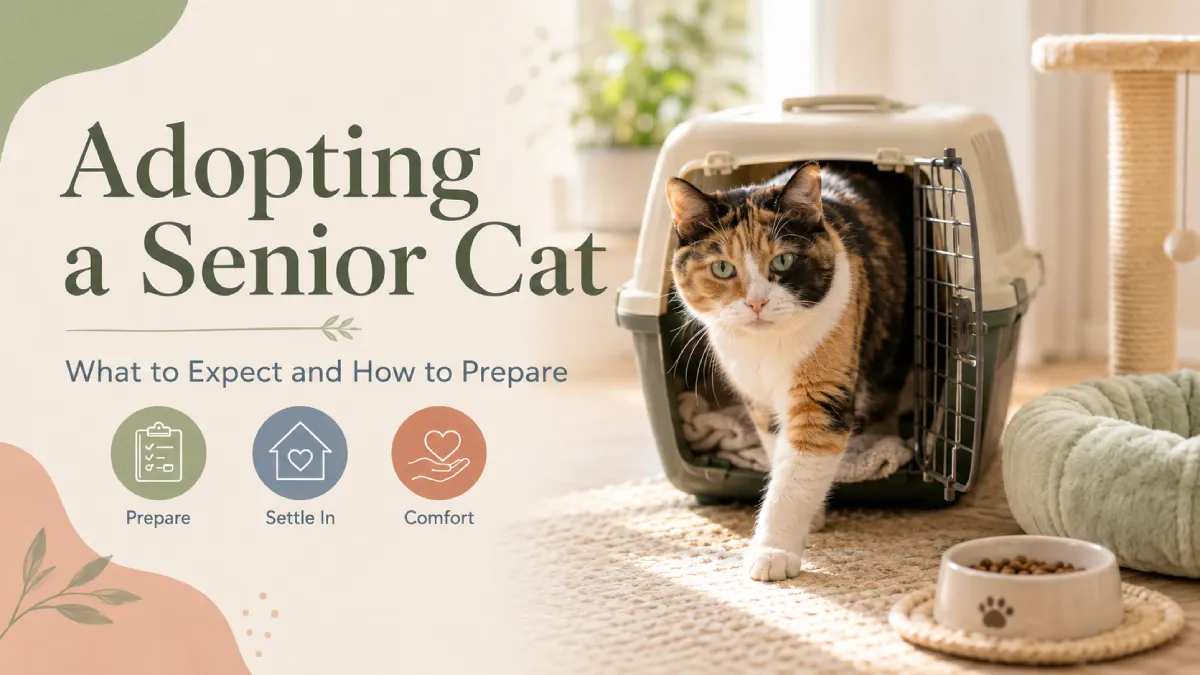
Adopting a Senior Cat: What to Expect and How to Prepare
Adopting a senior cat can be a good fit for a household that wants a companion whose adult temperament may already be easier to observe. Older cats are sometimes overlooked in shelters, but age alone does not tell you how social, playful, independent or medically complex an individual cat will be. The most useful preparation is to learn what is known about that cat, set up easy access to daily resources and plan for veterinary follow-up.
A senior cat may arrive with an established diet, medication, litter preference or mobility limitation, or their history may be incomplete. Prepare for the individual in front of you rather than assuming every older cat is frail. The first goal is a quiet, predictable transition where appetite, toileting, movement and behaviour can be monitored without overwhelming the cat.
Quick Answer
Before adopting an older cat, ask for available medical records, medication details, diet, litter habits, mobility information and behaviour history. Prepare a safe room with easy-access food, water, litter, a warm bed, scratching options and non-slip footing. Keep the first days predictable, schedule an appropriate veterinary visit, and monitor weight, appetite, toileting, mobility and behaviour as the cat settles.
Why Consider an Older Cat?
Senior cats can make excellent companions. Some have established household habits and a more observable adult temperament than a young kitten, which may help adopters understand whether the cat prefers a quiet home, frequent interaction, independent rest or gentle play.
Age should not be treated as a negative diagnosis. A healthy older cat may remain active and engaged, while another may need medication, dental care or mobility support. The adoption decision should be based on the individual cat’s needs and what the household can realistically provide.
Focus on Individual Temperament
Ask shelter or foster staff what the cat is like in everyday situations rather than relying only on labels such as “friendly” or “shy.” Useful observations include:
- whether the cat seeks attention or prefers to initiate contact
- how the cat responds to unfamiliar people
- whether play is still important
- how the cat responds to handling and grooming
- whether the cat appears comfortable around other cats, dogs or children
- what helps the cat settle after a stressful event
Shelter behaviour is not a perfect prediction of home behaviour. A cat may become more social, playful or assertive after feeling secure in a new environment.
Known Versus Unknown History
Some rescue senior cats arrive with detailed veterinary and household information; others have little reliable history. If records are incomplete, avoid assumptions and establish a baseline after adoption by recording appetite, weight, litter-box use, mobility, grooming, sleep and social behaviour.
Ask for Medical Records
Request any available records from the shelter, rescue, foster caregiver or previous veterinary clinic. Useful information can include:
- vaccination history
- microchip details
- previous illnesses or surgery
- laboratory results
- blood-pressure history where available
- dental treatment
- mobility or pain assessments
- current and previous medication
Keep copies for the veterinarian who will provide ongoing care.
Confirm Existing Medications
If the cat currently receives medication, obtain the exact prescription label and administration instructions rather than relying on memory or informal notes.
Ask:
- what the medication is for
- when the last dose was given
- how the cat normally accepts it
- whether monitoring or follow-up testing is due
Do not stop, change or replace prescribed medication simply because the cat has moved homes. Contact the veterinary team if you have questions or the medication cannot be given safely.
Ask About Dental History
Dental disease can affect comfort, eating and grooming. Ask whether the cat has had recent oral examination, dental treatment, extractions or known dental problems.
At home, note new drooling, difficulty chewing, food dropping, mouth sensitivity or a sudden appetite change and discuss these with the veterinarian rather than assuming they are normal effects of ageing.
Understand the Cat’s Current Mobility
Ask what the cat can comfortably do now. Can they jump onto a sofa, use stairs, step into a standard litter box and reach a favourite perch?
If mobility appears reduced, do not assume the cat is simply “old.” Arthritis, pain, muscle loss, neurological disease, vision change and other conditions may contribute. The practical goal is to make the home accessible while the cause is properly assessed.
For a full accessibility plan, see Senior Cat Home Setup.
Keep the Existing Feeding Routine Initially
Ask what food the cat eats, how much is offered, meal frequency and whether a specific diet has a medical purpose. Avoid unnecessary abrupt diet changes during the first days; discuss any needed transition with the veterinary team. Use Senior Cat Feeding Guide for weight, body-condition and muscle monitoring.
Establish a Weight Baseline
Obtain the most recent recorded weight if possible and have the cat weighed during veterinary follow-up. Trends are often more useful than one isolated number.
Unplanned weight loss should not be attributed to age. Likewise, an overweight cat should not be placed on a severe calorie restriction without an individualized feeding plan.
Ask About Grooming Needs
Find out whether the cat tolerates brushing, nail care and handling. Older cats may need more grooming assistance if pain, obesity or reduced flexibility makes self-grooming difficult.
Do not force a painful cat into prolonged grooming positions. New mats, poor coat condition or reduced grooming can be useful health observations.
Learn the Cat’s Litter Preferences
Ask what litter, box style and box location the cat is already using successfully. Familiar toilet arrangements can make the transition easier.
Useful details include:
- covered or uncovered box
- litter type and fragrance
- entry height
- how often the box is cleaned
- whether the cat has ever had house-soiling problems
If the cat has mobility limitations, begin with a low-entry box rather than waiting for accidents to reveal that the existing setup is difficult.
Start With a Quiet Safe Room
Even a confident senior cat benefits from a manageable starting area. A safe room reduces the number of unfamiliar spaces, sounds and routes the cat needs to process at once.
Include:
- food and water placed apart from the litter box
- an easy-entry litter box
- a comfortable bed
- a hiding area
- a scratching surface
- safe toys
- an accessible perch if the cat enjoys height
Let the cat leave the carrier and investigate at their own pace. For the broader settling process, see First Week With a New Cat.
Make Daily Resources Easy to Reach
Place essential resources within comfortable walking distance during the settling period. Avoid making the cat climb stairs for every drink or litter-box visit before you know how easily they move.
Accessibility preserves independence. The cat should be able to eat, drink, toilet, sleep and scratch without needing repeated lifting by a person.
Provide a Low-Entry Litter Box When Needed
A lower entrance can help with arthritis, weakness or reduced flexibility while still allowing room to turn comfortably. If a high-sided box remains easy to use, do not change it automatically; match the setup to observed ability.
Offer a Warm, Comfortable Bed
Older cats may appreciate warm resting areas, particularly if they have reduced body condition or joint discomfort. Use a supportive bed in a draft-free location and make sure the cat can enter and leave easily.
Avoid excessive heat. Any heated pet product should be designed for animal use, used according to its instructions and arranged so the cat can move away from the heat.
Improve Traction on Slippery Floors
Tile, laminate and polished wood can be difficult for a cat with reduced strength or painful joints. Secure rugs or non-slip runners can improve footing along important routes.
Focus first on paths between the cat’s bed, food, water, litter box and favourite social locations.
Keep Scratching Easy to Access
Scratching remains normal in older cats. Offer stable options at comfortable heights and angles; a horizontal or low-incline scratcher may suit a cat that no longer reaches upward easily.
Make the Carrier Part of the Home
A secure carrier is important for veterinary visits and emergencies. If possible, leave it open in a familiar area with comfortable bedding so it is not seen only when travel is about to occur.
Carrier placement should allow easy entry without requiring a painful jump.
Plan the First Veterinary Visit
Arrange ongoing veterinary care soon enough to review the cat’s history, current medication, weight, body and muscle condition, dental health, mobility and any unresolved concerns.
The exact timing depends on the cat’s medical status, available records and current symptoms. A cat with illness, pain, appetite loss, breathing difficulty or another concerning change may need assessment sooner than a healthy cat with recent records.
Review Insurance Before You Need It
If you are considering pet insurance, check age eligibility, waiting periods, reimbursement, deductibles and pre-existing-condition exclusions because terms vary. Insurance is one planning option; for broader ownership expenses, see Cost of Owning a Cat.
Introducing an Older Cat to Existing Cats
Do not place the newcomer directly into the resident cats’ shared space and expect them to work out the relationship.
Use a gradual introduction with separate resources, scent exchange and controlled contact. Older cats may have lower tolerance for persistent chasing or rough play, so individual play and quiet resting areas are important.
Introducing a Senior Cat to a Dog
Assess the dog’s history and chase behaviour. Give the cat dog-free space, escape options and protected resources. Never hold the cat while a dog approaches or allow chasing as a compatibility test; some pairs may require ongoing separation.
Consider the Needs of Children
Teach children that the cat should be allowed to approach, rest and leave without being pursued. A sleeping or hiding cat should not be dragged out for interaction.
Supervise young children and provide the cat with areas that are reliably quiet and inaccessible to rough play.
What to Expect During the First Days
Focus on safety and baseline observation. Some cats explore quickly; others watch or hide longer. Keep household activity manageable and avoid unnecessary visitors, introductions or grooming sessions while the cat settles.
Hiding Can Be Part of Settling In
A newly adopted cat may hide while learning the sounds and routines of the home. Provide safe hiding choices rather than blocking every hiding place.
However, hiding should be considered alongside appetite, toileting, mobility and other behaviour. Persistent withdrawal accompanied by illness signs deserves veterinary attention.
Monitor Appetite Closely
Know what and how much the cat was eating before adoption whenever possible. A new environment can affect appetite, but reduced food intake in an older cat should not simply be dismissed as stress.
If the cat is not eating normally, particularly if they have a medical condition or the change persists, contact the veterinary team. Use Why Is My Cat Not Eating? for the dedicated symptom guidance.
Keep the Routine Predictable
Predictability helps the cat learn when food, play, quiet time and caregiver interaction occur. Try to keep:
- meal timing reasonably consistent
- litter-box locations stable
- resting areas available
- medication routines organized
- major environmental changes limited during early settling
Build Confidence Without Forcing Interaction
Let the cat decide whether to approach. Use food, gentle play or social contact according to what the individual values, and never pull the cat from hiding or repeatedly pick them up to force adaptation.
Provide Age-Appropriate Enrichment
Senior enrichment does not need to involve high-speed chasing or large jumps. Many older cats enjoy slow wand play, food puzzles, scent exploration, target training, window observation, cardboard boxes and social interaction.
Match the activity to mobility and health. See Senior Cat Enrichment for practical options.
Plan for Ongoing Costs
Depending on health, an older cat may need medication, dental care, laboratory monitoring or mobility support. Ask about known ongoing expenses and plan for both routine veterinary care and unexpected illness rather than estimating needs from age alone.
Think About Quality of Life as Ongoing Care
Quality of life includes daily comfort, appetite, hydration, mobility, toileting, grooming, sleep, interaction and favourite activities. Track changes over time and use Senior Cat Quality of Life Checklist to organize veterinary discussions, not to make decisions automatically.
Senior Cat Adoption Preparation Checklist
Before Adoption
| Item | Information to Collect | Done |
|---|---|---|
| Medical history | Conditions, surgery, vaccines, recent tests, veterinary records | ☐ |
| Medication | Name, reason, schedule, last dose, administration routine | ☐ |
| Diet | Food, amount, meal frequency, prescription status if relevant | ☐ |
| Litter preferences | Box style, litter type, entry height, previous accidents | ☐ |
| Mobility | Jumping, stairs, litter entry, preferred resting height | ☐ |
| Behaviour | Handling, play, people, cats, dogs, children, stress responses | ☐ |
Home Setup
| Item | Preparation | Done |
|---|---|---|
| Low-entry litter option | Easy to reach and large enough for comfortable toileting | ☐ |
| Food | Familiar diet ready; feeding area easy to reach | ☐ |
| Water | Accessible water away from litter | ☐ |
| Warm bed | Comfortable, draft-free, easy entry | ☐ |
| Non-slip floor | Secure traction on important routes | ☐ |
| Easy scratching | Stable scratching option at a comfortable angle/height | ☐ |
| Safe room | Quiet starting area with hiding and resting choices | ☐ |
First Weeks
| Item | What to Record | Done |
|---|---|---|
| Veterinary visit | Records reviewed and ongoing plan established | ☐ |
| Weight baseline | Recent measured weight and trend if available | ☐ |
| Appetite | Food amount and any change from previous routine | ☐ |
| Toileting | Urination, stool and litter-box access | ☐ |
| Mobility | Walking, jumping, stairs and access to resources | ☐ |
| Behaviour | Hiding, social interaction, play, sleep and confidence | ☐ |
The checklist is a preparation and observation tool. It does not determine whether an individual cat is medically suitable for adoption or replace veterinary assessment.
FAQs
Is adopting a senior cat harder than adopting a kitten?
Not necessarily. The challenges are different. An older cat may have established habits and a more observable temperament, while some have medical or mobility needs that require additional planning. Match the individual cat’s needs to your household rather than choosing by age alone.
What should I ask before adopting an older cat?
Ask for medical records, medication details, diet, litter preferences, dental history, mobility observations and specific behaviour information around people and other animals. Also ask what routine the cat currently knows.
Should a senior cat see a veterinarian immediately after adoption?
The appropriate timing depends on available records and the cat’s current health. Arrange ongoing veterinary care early enough to establish a baseline, and seek earlier assessment if there are signs of illness, pain, appetite loss or another concerning change.
What should I buy before bringing home a senior cat?
Prepare the familiar food if known, suitable food and water bowls, a comfortable litter box with easy entry, a secure carrier, bedding, scratching options, safe hiding places and traction for slippery floors where needed.
How long does a senior rescue cat take to settle?
There is no universal timetable. Some cats investigate quickly while others need a longer period of quiet observation. Progress should be judged by the individual cat’s appetite, toileting, resting, exploration and willingness to interact rather than a fixed number of days.
Can senior cats still play and learn?
Yes. Many older cats continue to enjoy play, training and environmental exploration. Activities should be adjusted for mobility, sensory changes and health rather than removed simply because the cat is older.
Bottom Line
Adopting a senior cat works best when preparation is based on the individual rather than stereotypes about old age. Gather as much medical and behavioural history as possible, preserve familiar routines initially and make food, water, litter, rest and scratching easy to access.
During the first weeks, establish a veterinary and weight baseline and track appetite, toileting, mobility and normal behaviour. Older cats can remain active, playful and socially engaged; when changes do appear, investigate them rather than assuming age is the diagnosis.