
British Shorthair vs Russian Blue: Size & Temperament
The British Shorthair and Russian Blue can look surprisingly similar when both have blue-gray coats, but they are distinct breeds with different body shapes, eye colors, activity tendencies and breed histories.
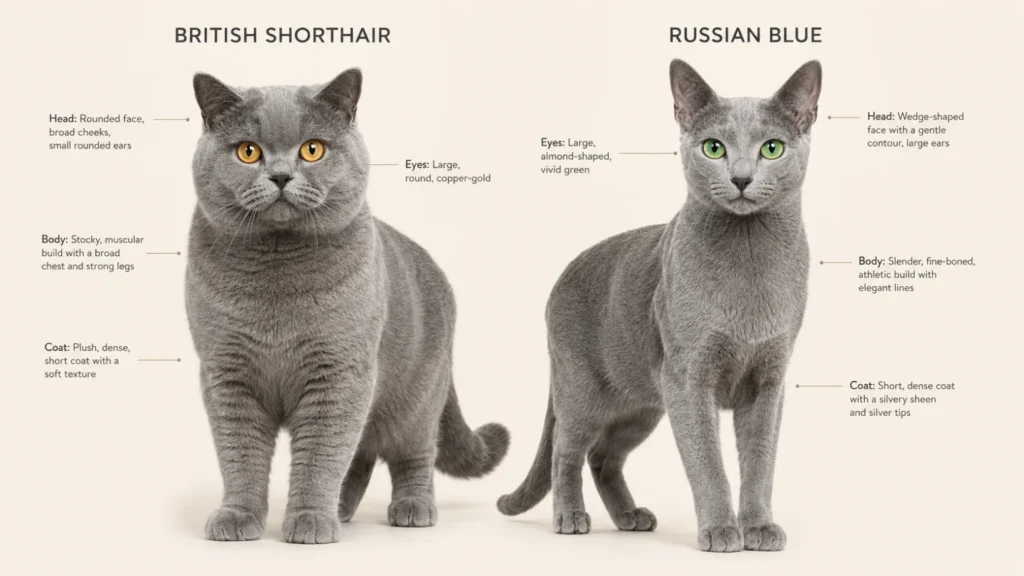
A British Shorthair is generally stockier, rounder and heavier-looking, with a dense plush coat and a calm, relatively undemanding reputation. A Russian Blue is typically more slender and athletic, with a fine-boned body, silver-tipped blue coat and vivid green eyes. Both can make excellent companions, but individual personality, breeder quality, health and early socialization matter more than stereotypes.
Quick Comparison
| Feature | British Shorthair | Russian Blue |
|---|---|---|
| Build | Compact, powerful and stocky | Fine-boned, muscular and graceful |
| Coat | Short and very dense | Short, dense, fine and silver-tipped |
| Colors | Many accepted colors and patterns | Russian Blue is characteristically blue |
| Eyes | Color varies with coat; gold or copper is common in blue cats | Vivid green in the CFA standard |
| Typical personality | Calm, quiet and affectionate | Playful, intelligent, quiet and sometimes reserved initially |
| Activity | Usually moderate | Often somewhat more active and interactive |
| Grooming | Low to moderate | Low |
| Major breed-health considerations | HCM and PKD screening history | No major breed-specific disorder is consistently identified by CFA, but individual health screening still matters |
Appearance
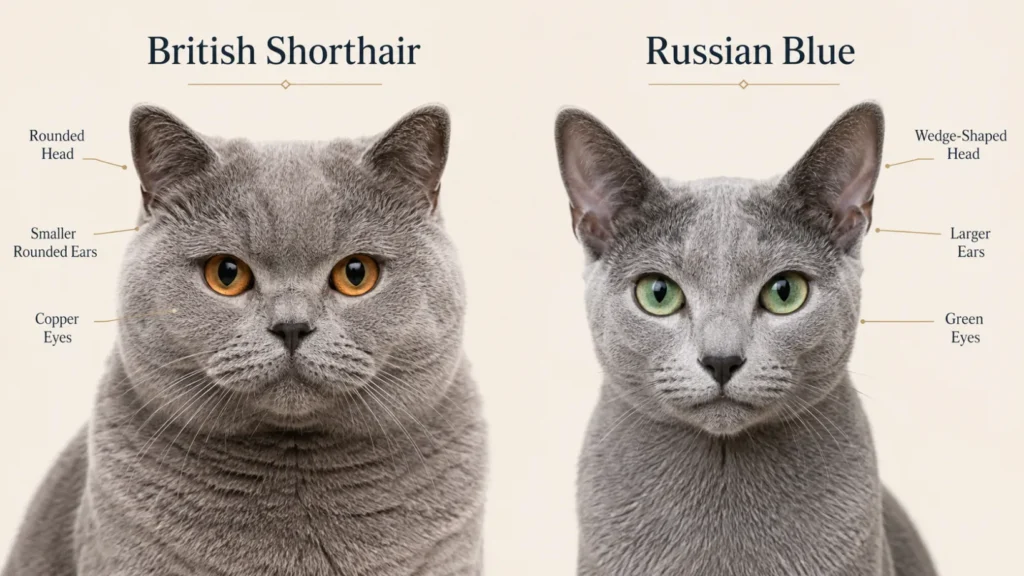
The easiest way to distinguish these breeds is to look beyond coat color.
British Shorthair
The British Shorthair has a compact, substantial body with a broad chest, strong legs, round paws and a large rounded head. The cheeks are full and the overall outline is powerful rather than slender.
The coat is short but exceptionally dense and plush.
Although blue is one of the best-known British Shorthair colors, the breed occurs in many colors and patterns. A gray cat is therefore not automatically either a British Shorthair or a Russian Blue.
Russian Blue
The Russian Blue has a more refined outline. The body is fine-boned but muscular, with longer legs and a graceful appearance.
Its short double coat is dense, fine and blue with distinctive silver tipping that gives the fur a luminous appearance.
Face and Head Shape
British Shorthairs are characterized by roundness: round head, full cheeks, rounded ears and large round eyes.
Russian Blues have a smooth medium wedge-shaped head, larger pointed ears and a more angular facial outline.
This difference is often more useful for identification than coat color alone.
Eye Color
A mature Russian Blue should have vivid green eyes according to the CFA breed standard.
British Shorthair eye color varies according to coat color and pattern. Blue British Shorthairs are particularly associated with gold or copper eyes.
A blue-gray cat with bright green eyes and a slender build is therefore more consistent with the Russian Blue type than the classic blue British Shorthair type.
Size and Body Type
The British Shorthair generally looks heavier because of its broad chest, strong bone and compact proportions.
The Russian Blue can still be muscular, but the body is longer, finer and more athletic-looking.
Do not choose either breed based on a promised adult weight. Sex, genetics, body condition and individual development create substantial variation.
Personality
Breed registries describe both as relatively quiet companion cats, but there are differences in the general breed descriptions.
British Shorthair Personality
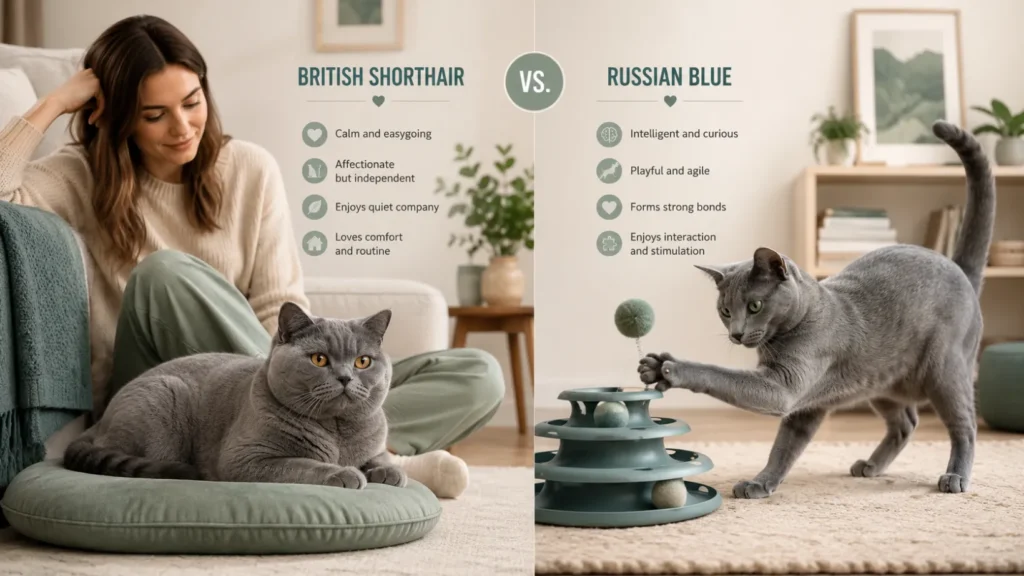
British Shorthairs are commonly described as calm and easygoing. Many enjoy being near their people without demanding constant physical contact.
Some prefer sitting beside a person rather than being carried for long periods.
Russian Blue Personality
CFA describes Russian Blues as intelligent, playful and quiet. Some can initially be reserved with unfamiliar people but become affectionate once comfortable.
They may appreciate predictable routines and interactive play.
These descriptions are tendencies, not guarantees. Early handling, environment and the individual cat’s temperament are extremely important.
Which Breed Is More Affectionate?
Both breeds can form strong bonds with people.
A British Shorthair may show affection by remaining nearby, following household routines or seeking quiet contact.
A Russian Blue may be more interactive with trusted people while being cautious with visitors.
Do not select a kitten solely because a breed article promises a specific level of affection.
Energy and Play
Russian Blues are generally described as playful and intelligent and may appreciate regular interactive play, climbing and problem-solving opportunities.
British Shorthairs can also be playful, particularly when young, but their heavier body type and calm temperament often create a less athletic overall impression.
Both breeds still need:
- daily interactive play
- scratching surfaces
- safe elevated resting places
- hiding options
- food and puzzle enrichment where appropriate
Grooming
British Shorthair
The short coat is relatively easy to care for despite its density. Regular brushing or combing can help remove loose fur, particularly during seasonal shedding.
Russian Blue
The Russian Blue’s dense short coat is also comparatively low maintenance. Gentle grooming can remove loose hair and provide an opportunity to check the skin.
Neither breed should require the intensive daily coat maintenance associated with longhaired breeds such as the Persian.
Do They Shed?
Yes. Both breeds shed.
Their short coats can make grooming easier, but neither is a non-shedding cat.
Are British Shorthairs or Russian Blues Hypoallergenic?
Neither breed should be described as hypoallergenic.
Cat allergy is usually associated with proteins produced by the cat rather than fur length alone. Individual allergic reactions vary, and no pedigree breed can guarantee that an allergic person will tolerate it.
Living With Children
Either breed may live successfully with respectful children.
The important factors are the individual cat’s temperament and whether children understand how to:
- let the cat walk away
- avoid chasing
- avoid rough handling
- leave sleeping and hiding cats alone
No breed should be expected to tolerate unwanted handling simply because it has a calm reputation.
Living With Other Pets
Both breeds can potentially live with other compatible animals when introductions are gradual.
Resident-pet temperament, previous experience, resources and introduction technique matter more than assuming one breed is automatically better with dogs or cats.
British Shorthair Health Considerations
British Shorthairs are generally robust cats, but responsible breeding remains important.
GCCF identifies hypertrophic cardiomyopathy (HCM) as a condition reported in the breed. Unlike some breeds with a known DNA variant, there is currently no single genetic test that rules out all British Shorthair HCM risk.
Polycystic kidney disease (PKD) has also occurred historically in British Shorthairs. DNA testing has helped responsible breeders reduce its prevalence.
Because the breed can have a substantial build and relatively slow metabolism, body condition should also be monitored carefully.
Russian Blue Health Considerations
CFA describes the Russian Blue as a generally healthy natural breed without a well-established breed-specific genetic disorder.
That does not mean every Russian Blue is guaranteed to remain healthy.
Routine preventive veterinary care should still include:
- weight and body-condition monitoring
- dental assessment
- vaccination planning
- parasite prevention appropriate to lifestyle
- age-appropriate blood and urine testing where indicated
Choosing a Responsible Breeder
If buying a pedigree kitten, ask about:
- registration and pedigree documentation
- health screening relevant to the breed
- veterinary records
- how kittens are socialized
- when kittens leave for new homes
- whether you can meet the mother where appropriate
- the breeder’s return or support policy
A responsible breeder should be willing to discuss health limitations rather than claiming that a line is completely free from disease.
British Shorthair vs Russian Blue: Which Should You Choose?
A British Shorthair may suit you if you prefer a solidly built, calm cat with a plush coat and relatively straightforward grooming.
A Russian Blue may suit you if you prefer a more slender, playful, intelligent cat and appreciate the breed’s distinctive silver-blue coat and green eyes.
However, choose the individual cat—not just the breed description. Temperament, health history, socialization and your household environment should make the final decision.
FAQs
Is a Russian Blue the same as a blue British Shorthair?
No. They are separate breeds with different breed standards, body types, head shapes and typical eye colors.
Which is bigger, a British Shorthair or Russian Blue?
British Shorthairs generally appear heavier and stockier, while Russian Blues are more fine-boned and athletic.
Do all British Shorthairs have blue-gray fur?
No. British Shorthairs occur in many accepted colors and patterns.
Do Russian Blues always have green eyes?
Vivid green is the desired adult eye color in the CFA Russian Blue standard. Kitten eye color develops as the cat matures.
Which breed needs more grooming?
Both are relatively low-maintenance shorthaired breeds. The British Shorthair’s extremely dense coat may benefit from additional grooming during shedding periods.
Bottom Line
British Shorthairs and Russian Blues may share a blue-gray appearance, but their structure is quite different. The British Shorthair is rounder, heavier and more compact, while the Russian Blue is fine-boned, graceful and characteristically green-eyed.
Both can make excellent companions when responsibly bred or adopted and provided with appropriate veterinary care, enrichment and respectful handling.