DIY Dog Enrichment Toys: Safe Homemade Games and Puzzle Ideas
DIY Dog Enrichment Toys: Safe Homemade Games and Puzzle Ideas
DIY dog enrichment toys can turn simple household materials into searching, foraging and problem-solving activities, but “homemade” does not mean automatically safe. Cardboard, towels, paper and containers can become swallowing hazards for dogs that shred and ingest material, while food-based puzzles can quietly add a large number of calories.
Choose each activity for the dog in front of you. Size, chewing style, problem-solving approach and supervision all matter. Start with the easiest version, watch how the dog interacts with the material and throw the item away once it becomes damaged enough to create loose pieces or sharp edges.
Quick Answer
Safe DIY enrichment starts with supervision and material choice. Use simple food or toy searches in cardboard boxes, towels or stable household containers only if your dog does not eat those materials. Match object size to the dog, count food toward the daily ration, and stop an activity that causes frantic chewing, guarding, frustration or swallowing.
Safety Before DIY Enrichment
Inspect every material before use. Remove staples, tape, string, sharp edges, plastic film and anything small enough to swallow. Do not build a toy solely because it appears in a social-media video.
Dog Size
An opening that is safe for a small dog may trap a larger muzzle, while a ball appropriate for a large dog may be too big for a small mouth. Choose materials and containers that fit the dog’s body.
Chewing Style
Some dogs gently nose through paper; others immediately tear and eat it. If your dog destroys and swallows the material, choose a different enrichment format rather than relying on supervision to remove pieces fast enough.
Swallowing Risk
Foreign-body obstruction can require emergency surgery. Avoid loose fabric strips, string, plastic caps, bottle rings, rubber bands and small components. Discard damaged homemade puzzles early.
Supervision
Supervision means watching closely enough to intervene before material is swallowed. Being in another room while the dog works on a cardboard puzzle is not active supervision.
Cardboard Search Box
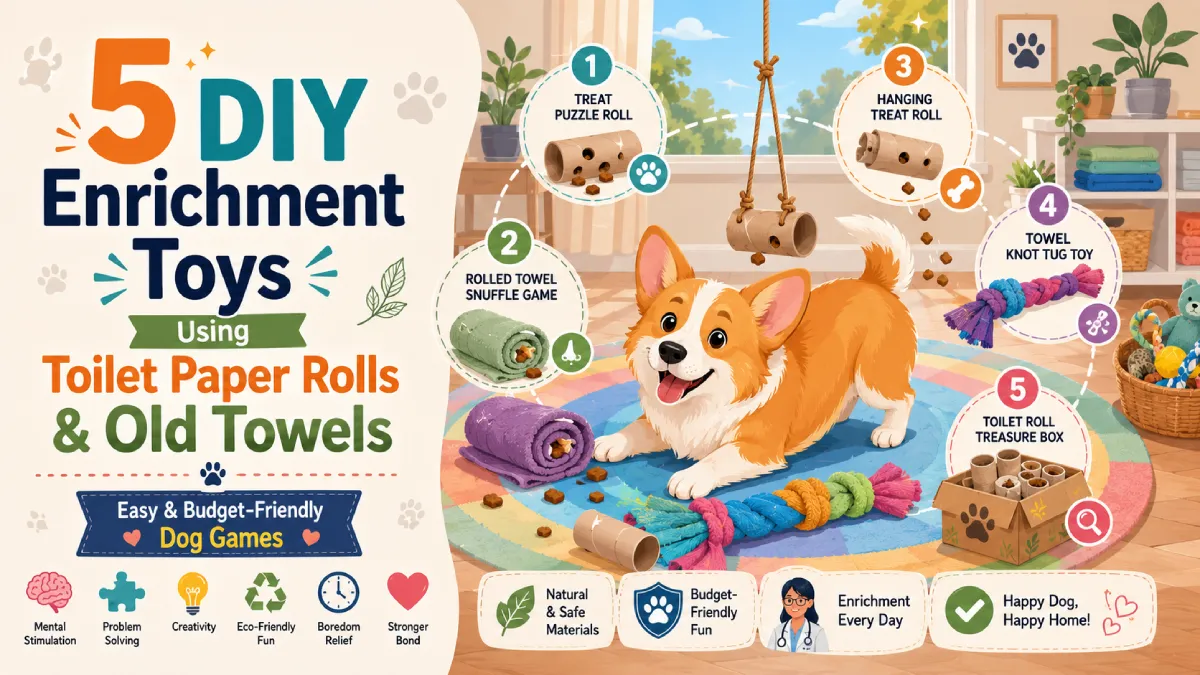
Place part of the dog’s meal in an open box with several loosely crumpled sheets of plain paper. Keep the search easy at first. Remove the box if the dog starts eating cardboard or paper.
Towel Search
Sprinkle a few pieces of food on a flat towel and fold it loosely. The dog noses the fabric open. Do not use this with dogs that chew and ingest towels or have a history of fabric foreign bodies.
Muffin-Tin Puzzle
Place food in several muffin-tin cups and cover some cups with appropriately sized balls or safe objects that cannot be swallowed. Supervise to prevent chewing of the covers.
Treat Boxes
Use several small open boxes, placing food in one or more. This can become a scent search without complicated construction. Avoid taped boxes and packaging with residue from chemicals or unsafe foods.
Paper Foraging
Crumpled plain paper can create a light foraging challenge for dogs that move it with the nose. Dogs that swallow paper need a reusable puzzle instead.
Rolled Towel Games
Place food along a towel and roll it loosely so the dog unrolls rather than tears. Stop if the dog drags, shakes or shreds fabric.
Frozen Enrichment
Freezing appropriate dog food in a durable food toy can extend licking time. Do not freeze household containers that become brittle or sharp. Check ingredients and use a veterinary diet only as directed when the dog has medical restrictions.
Food-Dispensing Ideas
Rather than constantly adding treats, divide the dog’s regular meal between a bowl and enrichment activities. VCA recommends food enrichment as one way to support natural foraging and problem-solving behaviour.
Scent Boxes
Use several open boxes and hide part of a meal in one. Do not add essential oils, perfumes or cleaning products to make the scent stronger. Familiar food or toys provide sufficient target odor.
Toy Rotation
DIY enrichment does not always require construction. Rotating ordinary safe toys can create novelty while limiting clutter.
Non-Food Enrichment
Hide a favorite toy, use a cardboard tunnel only for a dog that will not eat it, practice reward-based tricks or build a simple find-a-person game. Food is only one type of enrichment.
Destructive Chewers
For dogs that destroy household materials quickly, many DIY items are inappropriate. Use durable purpose-designed enrichment or supervised training and scent games instead of trying to “outsmart” powerful chewing with thicker cardboard.
Puppies
Puppies explore with their mouths and may swallow material unexpectedly. Use simple, highly supervised activities and remove objects before pieces become small.
Seniors
Seniors may benefit from low-effort searches and food puzzles placed at comfortable height. Avoid slippery surfaces or activities requiring repeated crouching when mobility is reduced.
Food Calories
Measure the food used in DIY games. A “cheap enrichment” routine can still contribute significant extra energy if every activity uses additional treats.
When to Throw a DIY Toy Away
- pieces are tearing loose
- fabric threads are exposed
- plastic has sharp or cracked edges
- the dog can swallow part of the item
- the object has become heavily soiled
- the dog’s interaction has changed from searching to destructive ingestion
DIY Does Not Need to Be Complicated
The goal is to give the dog an appropriate opportunity to search, manipulate or solve—not to build an elaborate puzzle. A safe scatter search may be more useful than a complicated homemade object.
Related Pawnium Guides
Materials to Avoid in Homemade Toys
Avoid string, yarn, elastic bands, staples, metal clips, loose tape, bottle caps, brittle plastic, foam pieces and any component small enough to swallow. These items can create choking, gastrointestinal obstruction or mouth injury.
Cardboard Safety
Plain clean cardboard can work for a dog that noses and paws at boxes without eating them. Remove labels, staples, tape and food residue. Discard boxes that become soggy, shredded into swallowable pieces or contaminated with unknown substances.
Towel and Fabric Safety
Use intact fabric without loose threads. Dogs with a history of swallowing socks, towels or bedding should not use fabric puzzles. Stop the game when the dog shifts from unrolling or searching to tearing and ingesting material.
Plastic Container Safety
Household plastic is not automatically food-safe or chew-safe. Thin containers can crack into sharp pieces, and lids or rings can be swallowed. Prefer stable purpose-designed food toys when the dog is likely to bite the container.
Food-Safe Surfaces
Use clean materials that have not stored chemicals, detergents, medications or toxic food. Do not repurpose pesticide boxes, cleaning-product tubs or garage containers for food enrichment.
How to Supervise Properly
Watch the dog’s mouth and interaction, not just whether the puzzle still appears intact. Intervene when material begins tearing loose, the dog attempts to swallow pieces or frustration turns into destructive chewing. Remove the activity calmly rather than chasing the dog for parts.
Multi-Dog Resource Guarding
Homemade food puzzles should generally be separated when dogs compete over resources. A large cardboard search shared by several dogs can create conflict because food locations are unpredictable. Give each dog its own space and collect materials before bringing dogs back together.
Size-Matching Examples
A muffin-tin cover should be too large for the dog to swallow. Openings should not trap the muzzle or paw. A cardboard box should be large enough for easy investigation rather than forcing the dog’s head into a tight hole.
Hygiene and Cleanup
Discard damp paper and cardboard after use. Wash reusable food-contact items thoroughly. Moist food left in fabric or cardboard can spoil, so do not save heavily soiled homemade puzzles for another day.
Reusable Versus Disposable Enrichment
Disposable cardboard can be useful for gentle dogs, while durable washable toys may be more suitable for frequent food use. The cheapest option is not always the safest or most practical after cleanup and replacement are considered.
Alternatives for Dogs That Eat DIY Materials
- scatter food on a clean safe surface
- hide a durable familiar toy
- practice reward-based tricks
- use a sniff walk
- teach find-a-person games
- use veterinarian-approved durable commercial food toys
DIY Enrichment Without Food
Rotate safe toys, build a search for a familiar object, create a low-risk scent trail or use cardboard as a visual barrier only if the dog ignores it as a chew target. Food does not need to be present in every activity.
Frozen Activities Need Material Safety Too
Freezing changes texture. Some containers become brittle, and hard frozen food may be inappropriate for dogs with dental disease. Use products designed for freezing or veterinary-approved feeding methods instead of improvising with breakable household plastic.
Do Not Make Puzzle Difficulty a Competition
A harder puzzle is not automatically more enriching. If the dog becomes frustrated, simplify the task. The goal is successful foraging and problem solving, not proving the dog can defeat an elaborate construction.
When to Stop DIY and Buy a Purpose-Designed Product
If the dog consistently destroys homemade materials, a professionally manufactured enrichment product selected for the dog’s size and chewing style may be safer. Even commercial products still require inspection and appropriate supervision.
Do Not Use String-Based DIY Toys
Long string, yarn, ribbon and elastic can be swallowed or become wrapped around the mouth or limbs. Avoid homemade bottle-on-a-string, braided fabric with loose ends or hanging-food designs unless the materials and construction have been specifically assessed for the individual dog.
Watch the Dog After the Food Is Gone
Many dogs interact safely while food remains but begin chewing the container afterward. End the session when the task is complete rather than leaving the empty item available by default.
DIY Enrichment for Dogs on Restricted Diets
Use the prescribed food or approved ingredients. Peanut butter, cheese and commercial treats are not automatically compatible with weight-loss plans, pancreatitis histories, allergies or elimination diets.
Keep Difficulty Appropriate
If a dog cannot access the reward, make the setup easier. Do not tape boxes shut or create tight openings that require destructive force. The dog should solve the puzzle through searching and manipulation, not by consuming the container.
Make a Disposal Plan Before Starting
Keep a bin or collection bag nearby so damaged paper, cardboard and food residue are removed immediately. This is especially useful in multi-dog homes where another dog may later find and swallow discarded material.
Introduce One New DIY Item at a Time
Supervise the first several uses so you learn whether the dog noses, paws, shreds, guards or swallows the material. A design that looks safe on paper may be unsuitable for a particular chewing style.
Do Not Use Household Chemicals to Add Smell
Perfume, essential oils, cleaning sprays and concentrated flavor extracts are unnecessary for enrichment and may create toxic or irritating exposure. Familiar food and toys already provide enough scent for search games.
Photograph the Setup Before the Dog Starts
A quick photo can help you remember which components were present if a piece later appears missing. This is especially useful with multi-part homemade puzzles where swallowed material may not be immediately obvious.
Keep a few simple proven activities instead of constantly building new ones. Repetition is acceptable when the dog still enjoys the game and uses it safely. The best homemade enrichment is often the design you can supervise, clean and discard easily.
Before reusing a homemade item, inspect every seam, edge and component again. Damage can be subtle after the first session, and an item that was appropriate yesterday may become a swallowing hazard after repeated chewing or washing.
Original Practical Tool
| Activity | Supervision | Chewing risk | Swallowing risk | Food calories | Difficulty | Suitable for |
|---|---|---|---|---|---|---|
| Open cardboard search box | Close | Moderate for chewers | Paper/cardboard possible | Use meal ration | Easy | Dogs that do not ingest cardboard |
| Loose towel search | Close | Moderate | Fabric possible | Use meal ration | Easy | Gentle fabric users |
| Muffin-tin search | Close | Depends on covers | Cover objects must be too large to swallow | Use meal ration | Easy–moderate | Food-motivated dogs |
| Toy hide-and-seek | Normal | Depends on toy | Depends on toy | None required | Easy–moderate | Toy-motivated dogs |
| Scent boxes | Close | Moderate | Cardboard possible | Use meal ration | Moderate | Dogs that search rather than shred |
No homemade activity is “100% safe.” Match the material, size and supervision to the individual dog.
FAQs
Are cardboard enrichment toys safe for dogs?
They can be suitable for dogs that do not eat cardboard or paper, but supervision is needed and they are not universally safe.
Can I make enrichment toys from plastic bottles?
Plastic bottles can create sharp edges, caps and swallowing hazards, so they are not a default recommendation for every dog.
What is the easiest homemade dog puzzle?
An open box or simple scatter search using part of the dog’s meal is often easier and safer than a complicated construction.
How do I make DIY enrichment for a destructive chewer?
Often the safest answer is not to use disposable household materials. Choose durable purpose-designed items or non-object scent/training games.
Do enrichment treats count as calories?
Yes. Food used in puzzles and training contributes to daily intake.