Senior Cat Vet Checkup: What to Bring and Ask
A senior veterinary appointment is more useful when the veterinarian can compare current findings with what has changed at home. Weight, appetite, drinking, urination, stool, mobility, sleep, grooming and behaviour may shift slowly enough that they are difficult to summarise accurately from memory.
A senior cat vet checkup should therefore begin before you leave home. Bring medication and food information, previous records when relevant, weight trends and short videos of movement or unusual behaviour. The veterinarian can then tailor examination and screening to the individual cat rather than applying one identical testing schedule to every animal over a certain age.
Quick Answer
Before a senior cat veterinary checkup, bring an up-to-date medication and supplement list, food details, previous records, weight history and useful home videos. Record appetite, water, urination, stool, vomiting, mobility, sleep and behaviour changes. Ask about weight and muscle trends, pain, dental health, blood pressure and an individualized screening plan based on your cat’s history and examination.
Why Senior Exams Matter
AAHA senior-care and feline life-stage guidance emphasizes early detection of disease and careful assessment of pain, mobility, nutrition and quality of life. Cats can hide illness effectively, so subtle home changes may be clinically important.
Senior status increases the value of comparison over time; it does not mean every visit should follow exactly the same protocol.
Bring Previous Records
If your veterinarian does not already have the full history, bring records of major diagnoses, surgeries, laboratory testing, imaging and vaccination or preventive care where relevant.
Longitudinal information helps the team distinguish a one-time abnormal result from a developing trend.
Bring a Medication List
List every prescription medication with its current instructions and timing. Include topical products and intermittent medicines, not only daily tablets.
Note whether administration has become difficult or whether you have noticed changes after starting a treatment.
Include Supplements
Tell the veterinarian about joint products, vitamins, calming products, probiotics or other supplements. “Natural” does not mean irrelevant to medication safety or disease.
Bring the exact product name or a photograph of the label when possible.
Bring Food Information
Record the brand, product, flavour or formulation, wet/dry format, approximate amount fed, treats and any prescription diet.
If you recently changed food, note when and why.
Track Weight History
Bring recent home weights if you have them. A trend can reveal gradual loss or gain that is difficult to see visually.
Do not rely on weight alone; body condition and muscle condition add important context.
Report Appetite Changes
Note increased hunger, reduced intake, slower eating, food dropping, texture avoidance or frequent walking away from meals.
Appetite is especially useful when interpreted with weight and dental signs.
Report Water Changes
Tell the veterinarian if the cat appears to drink more, visits bowls more often or seeks unusual water sources.
Do not restrict water before the appointment.
Record Urination
Note increased urine volume, more frequent box visits, house-soiling, straining or blood. If several cats share boxes, explain how certain you are about which cat is producing the change.
Record Stool
Persistent diarrhea, constipation, straining, unusually hard stool or changes in frequency can guide gastrointestinal and hydration assessment.
Record Vomiting
Write down frequency, timing in relation to meals and any associated appetite or weight change. Repeated vomiting should not be dismissed as normal for an older cat.
Mobility
Describe changes in walking, getting up after rest, activity or preferred routes. Functional detail is more useful than simply saying “slower.”
See Senior Cat Mobility for observations to record.
Jumping
Note whether the cat jumps as high, as often and as confidently as before. Reduced jumping can be an arthritis or pain clue even when there is no obvious limp.
Sleep
Report a major increase in sleep, nighttime waking, restlessness or altered sleep location. Include whether pain, drinking, urination or vocalisation occurs during the night.
Vocalisation
Record new or increased vocalisation, especially nighttime episodes. Mention hearing changes, anxiety, appetite, pain and whether the cat seems disoriented.
Grooming
Tell the veterinarian about matting, reduced grooming, overgrooming or difficulty reaching the back or hindquarters. Grooming changes can reflect pain, mobility, obesity, skin disease or systemic illness.
Behaviour
Record hiding, irritability, clinginess, disorientation, altered interaction, anxiety or new conflict with other pets. Sudden behaviour change can be a medical clue.
Vision
Report bumping into objects, hesitation in dim light, new startle responses or difficulty locating resources. Sudden blindness needs urgent assessment rather than waiting for a routine checkup.
Hearing
Note reduced response to familiar sounds or increased vocal volume. Ear disease, sleep, attention and cognitive change can affect responsiveness too.
Dental Symptoms
Bring up bad breath, drooling, food dropping, chewing changes, facial sensitivity or reduced interest in hard textures.
Dental pain can affect nutrition and behaviour.
Bring Home Videos
Videos can show the cat walking, jumping, using stairs or entering the litter box in the familiar home environment. They may also capture unusual wandering or behaviour that does not occur in the clinic.
Do not stage difficult activities for filming.
Physical Examination
The senior feline wellness exam is individualized but commonly includes a complete physical examination and discussion of changes in history. AAHA/AAFP emphasizes close attention to oral, abdominal, ophthalmic, cardiorespiratory and musculoskeletal findings in mature and senior cats.
Weight
Current weight should be compared with previous measurements. Ask whether the trend is meaningful rather than focusing only on whether today’s number falls inside a broad range.
Body Condition
Body condition assesses fat stores. Ask your veterinarian whether the cat is under, over or close to ideal condition and what trend matters.
Muscle Condition
Muscle condition should be evaluated separately from body fat. An overweight cat can still lose significant muscle.
Dental Assessment
An oral examination can identify visible disease, but some dental problems require additional diagnostics or a dedicated dental procedure to evaluate fully.
Musculoskeletal Assessment
AAHA/AAFP highlights detailed pain and musculoskeletal assessment because osteoarthritis is important and underdiagnosed in cats.
Tell the veterinarian which activities have changed at home.
Blood Pressure
Blood-pressure measurement may be appropriate as part of senior screening or when conditions such as kidney disease, hyperthyroidism or eye changes raise concern.
Ask whether it is indicated for your cat rather than assuming one schedule applies to all patients.
Laboratory Testing
Senior screening may include blood tests based on age, history, physical findings, risk and existing disease. The panel should be tailored rather than copied from a generic online list.
Urine Testing
Urinalysis can provide information about urine concentration, inflammation, glucose, protein and other findings. It is particularly relevant when drinking, urination or house-soiling has changed.
Thyroid Testing Where Clinically Appropriate
Hyperthyroidism is an important older-cat disease, so thyroid testing may be included in senior assessment depending on age, signs, history and the veterinarian’s plan.
Weight loss with increased appetite or restlessness is useful context to report.
Screening Plans Should Be Individual
AAHA senior-care guidelines provide frameworks for testing, but they also emphasize individualization. A healthy senior with stable records and a cat with chronic kidney disease require different follow-up.
Ask what each proposed test is intended to detect and how often it should be repeated for your cat.
Questions to Ask
- Has my cat’s weight trend changed?
- How is body condition?
- Is there muscle loss?
- Do you see signs of pain or arthritis?
- How is dental health?
- Is blood pressure indicated?
- Which laboratory or urine tests are appropriate now?
- Do food or calories need adjustment?
- Should I change anything at home for mobility or litter access?
- What changes should prompt an earlier recheck?
Keep Longitudinal Records
Save weight, laboratory, blood-pressure and medication history where you can refer back to them. Trends often become more useful than isolated values.
Use Senior Cat Care Guide for monthly home monitoring.
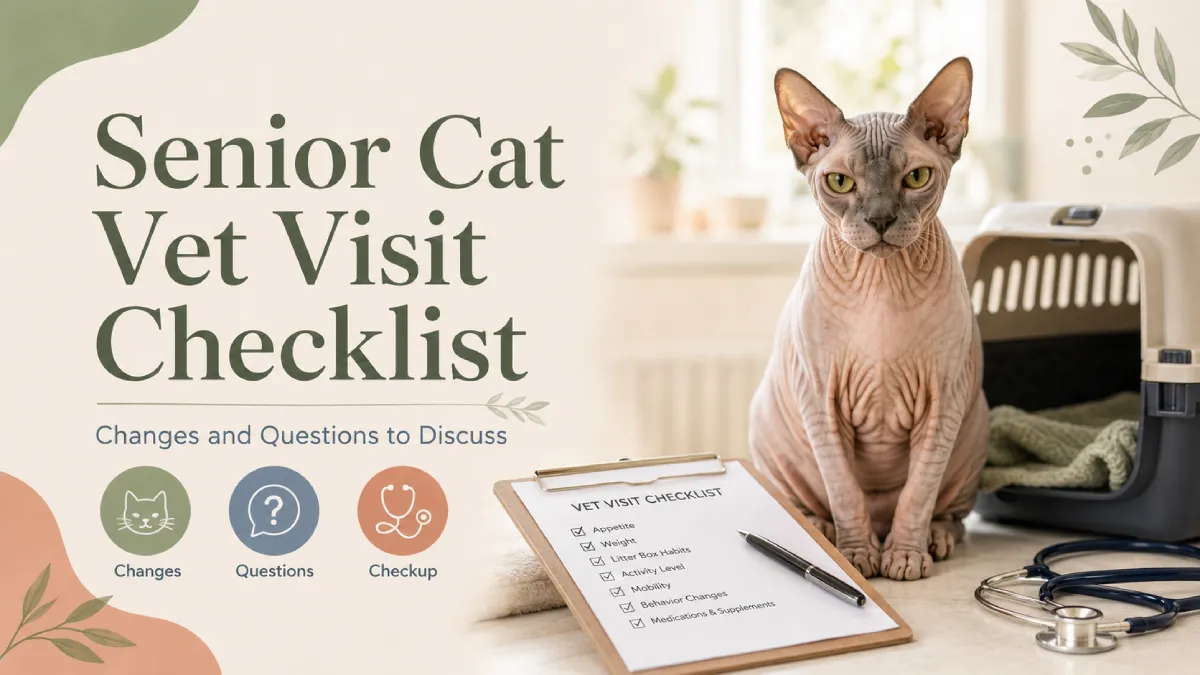
Before the Vet Visit Checklist
Bring
- ☐ Medication list
- ☐ Supplement list
- ☐ Food details
- ☐ Previous records if needed
- ☐ Home videos
- ☐ Weight history
Record
- ☐ Appetite
- ☐ Water
- ☐ Urination
- ☐ Stool
- ☐ Vomiting
- ☐ Mobility and jumping
- ☐ Sleep and vocalisation
- ☐ Grooming and behaviour
Ask
- ☐ Weight trend
- ☐ Body and muscle condition
- ☐ Pain / arthritis
- ☐ Dental health
- ☐ Blood pressure
- ☐ Individual screening plan
Ask How the Screening Plan Is Being Individualised
Instead of asking only whether a particular test is “required for seniors,” ask what your veterinarian is trying to detect in your cat and how age, history, examination findings, medication and previous results change the plan.
Useful questions include:
- Which changes in the history are most important?
- Has weight, body condition or muscle condition changed?
- Does mobility suggest a pain assessment is needed?
- What laboratory or blood-pressure screening is appropriate now?
- How will current medication affect monitoring?
- When should a particular finding be rechecked?
Bring Trends Rather Than Isolated Impressions
A sequence of measured weights, dates of vomiting, a water-intake change, or videos showing how the cat climbs stairs can be more useful than a vague description such as “getting old.” Longitudinal records help the veterinary team distinguish stable habits from progressive change.
Keep copies of important results so future appointments can compare values over time, especially if care is shared between clinics.
Note What Has Not Changed
Stable information is useful too. If appetite, water intake, litter use and activity remain normal but jumping has declined, tell the veterinarian that pattern rather than reporting only the problem. Knowing which functions are preserved can help focus the history and interpret the significance of one change.
Prepare a Short Priority List
If several issues have accumulated, write the two or three most important concerns at the top of your notes. Include when each began and whether it is getting worse. This helps make sure subtle mobility, dental or behavioural changes are not forgotten during a busy appointment.
Bring the carrier and travel plan into preparation too. If transport is stressful, tell the clinic in advance and ask about cat-friendly arrival arrangements that are appropriate for your cat.
Keep those notes for follow-up comparison.
FAQs
How often should a senior cat have a checkup?
Senior cats often benefit from more frequent monitoring than younger adults, but the exact schedule should be individualized according to age, health, previous findings and disease risk.
Does every senior cat need blood tests?
Laboratory screening is commonly useful in senior care, but the exact panel and frequency should be tailored. Ask your veterinarian what is appropriate for your cat and why.
Should I bring a urine sample?
Only if your veterinary clinic instructs you on how to collect and transport one appropriately. The clinic may prefer to obtain a sample directly.
Why should I bring videos?
Cats may hide mobility or behaviour changes in the clinic. Short home videos can show normal walking, jumping, stairs or unusual behaviour in the environment where the problem occurs.
What should I tell the vet about food?
Bring the exact product, amount, meal schedule, treats and any prescription diet. Also report appetite or chewing changes.
What is the most important question to ask?
Ask what has changed compared with previous visits and which findings should be monitored at home. Senior care is strongest when the veterinarian and caregiver track trends together.
Bottom Line
A good older-cat checkup combines what you observe at home with what the veterinary team finds in the clinic. Bring specific information instead of relying on memory.
There is no one-size-fits-all senior test panel. The useful plan is the one tailored to your cat’s age, history, physical findings, medications, disease risk and previous results.