
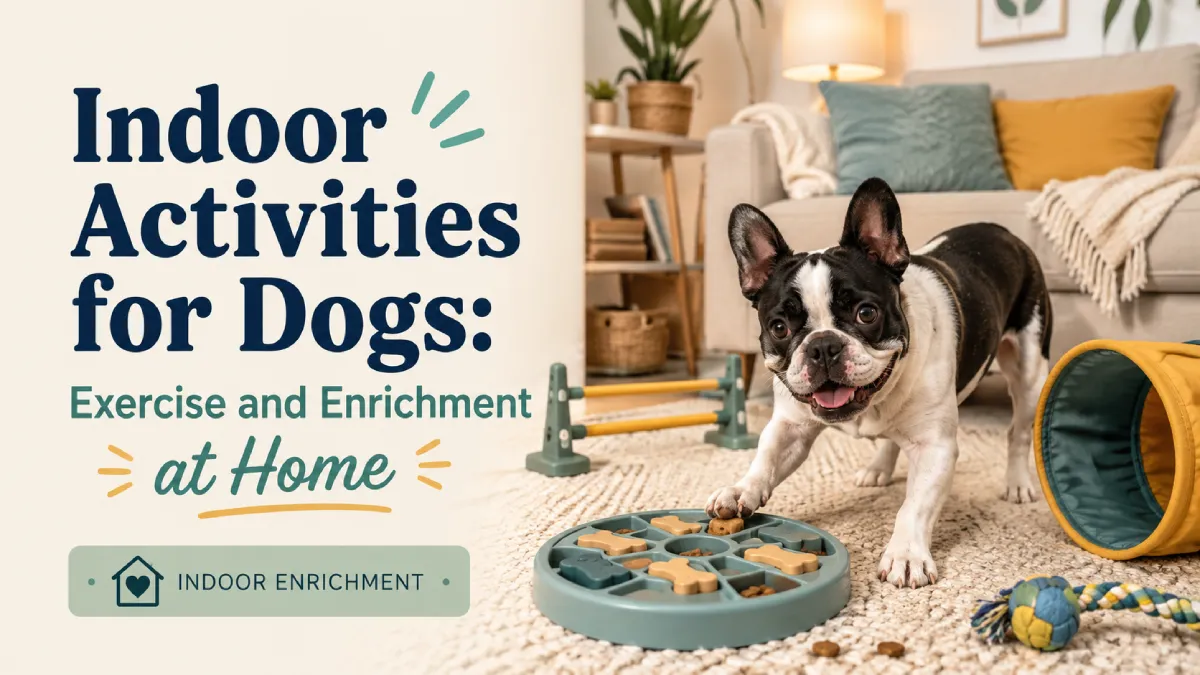
Indoor Activities for Dogs: Exercise & Enrichment at Home
Indoor days do not have to mean either boredom or nonstop high-energy play. Useful indoor activities for dogs include scent searches, reward-based training, controlled tug, hide-and-seek, food puzzles, chewing, licking and simple movement games. The right choice depends on available space, traction, the dog’s age, size, mobility, chewing style and how much supervision you can provide.
Indoor exercise should also be scaled to the environment. Slippery floors, tight corners and furniture can turn fast fetch or jumping games into unnecessary injury risks. A safer plan mixes low-impact movement with mental and sensory enrichment.
Quick Answer
Choose indoor activities that fit the dog and the room. Use scent searches, short training sessions, hide-and-seek, food puzzles, controlled tug, chewing or licking, and low-impact obstacle work where appropriate. Check floor traction, swallowing risk, food calories and supervision before starting, and avoid turning a small indoor space into a sprinting course.
Why Indoor Days Still Need Variety
Rain, heat, poor air quality, injury recovery or apartment living can reduce outdoor options. Variety matters because several short forms of engagement can meet different needs better than repeating one intense game for a long period.
Safety Before Starting
Clear fragile items, electrical cords and small objects. Consider how the dog moves when excited and where they might slip, collide or land. A safe activity for a small calm dog may not be suitable for a large dog that launches into furniture.
Floor Traction
Tile, laminate and polished wood can be slippery during rapid turns. Use non-slip rugs or choose low-speed activities when traction is poor. Seniors and dogs with orthopedic conditions may need more extensive surface modification.
Available Space
Use the room you actually have. Hallways may work for calm searching, while a small living room may suit training or a food puzzle. High-speed fetch and jumping are poor choices when the dog cannot stop or turn safely.
Hide and Seek
Hide-and-seek can combine social interaction, recall and scenting. Start where the dog can find you easily. Blue Cross recommends avoiding excessive difficulty that causes panic or frustration.
Treat Searches and Scent Games
Hide pieces of the dog’s normal food in obvious places, then gradually increase difficulty. Keep searches away from household chemicals, medications and unsafe food. Use Scent Games for Dogs for a progression.
Training and Trick Training
Reward-based training can provide mental engagement with little space. Practice targeting, object names, position changes, polite door behaviour or simple tricks. AVSAB recommends reward-based methods rather than aversive tools or physical punishment.
Controlled Tug
Tug can work indoors when there is enough clear space and the dog can pause or release. Keep feet on secure flooring and avoid violent twisting or lifting the dog by the toy.
Controlled Fetch
If fetch is used indoors, shorten the distance and reduce speed. Rolling a toy along the floor or sending the dog after a toy that has stopped can reduce some of the abrupt turning associated with repeated high-speed throws.
Puzzle Feeders and Snuffle Mats
Start simple. The dog should understand how to access the food without becoming frantic. Check the toy for wear and supervise a dog that may tear and ingest fabric, rubber or plastic.
Stuffed Food Toys
Stuffed toys can extend meal time and provide licking or chewing. Choose appropriate size and durability, and use part of the normal food ration rather than treating every enrichment session as extra calories.
Chewing and Lick Mats
These may support quiet engagement for some dogs. Do not leave a chew or lick mat unsupervised simply because it is marketed for dogs. Check swallowing risk, material, allergies and whether the dog destroys the item.
Toy Rotation
Put away some toys and reintroduce them later instead of leaving everything available all the time. Rotation can create novelty without continually purchasing new items.
Cardboard Search Boxes
A cardboard box with crumpled paper and hidden food can be useful for dogs that investigate gently. It is unsuitable for a dog that eats cardboard or paper. Supervise the first sessions and remove the setup if the dog begins swallowing material.
Indoor Obstacle Courses
Use low, stable and non-slip objects. Think stepping around cones, walking over a flat mat or moving between furniture, not high jumping. Puppies, seniors and dogs with joint conditions need particular caution.
Mobility-Limited Dogs
Enrichment can continue even when physical exercise is restricted. Nose targeting, simple searches at floor height, grooming, calm food puzzles and stationary training may be options, but follow veterinary rehabilitation restrictions.
Puppies
Puppies benefit from short, varied sessions and safe exploration. Avoid repetitive jumping or fast slippery-floor games. Use simple searches, handling practice and easy training instead.
Senior Dogs
Senior dogs may enjoy scent work, food searches and gentle training even when vigorous play becomes uncomfortable. Improve traction and place activities where the dog can reach them without repeated stairs or jumping.
Apartment Dogs
Apartment size does not prevent enrichment. Quiet scent work, mat training, food puzzles and trick training can be effective without disturbing neighbours. Outdoor walks remain useful for toileting and environmental exploration when appropriate.
High-Drive Dogs
A high-drive dog does not need every indoor game to be intense. Combine skill training and searching with settle work, chewing or calm observation. See Managing a High-Drive Dog.
Dogs on Exercise Restriction
Do not assume “mental only” means medically safe. A food puzzle that rolls under furniture can cause repeated lunging; a scent trail may encourage stairs. Match the activity to the actual restriction given by the veterinarian.
Calorie Management
Food used in training, snuffle mats and stuffed toys counts toward daily intake. Measure enrichment food before the session or take it from the meal allowance.
Choking and Swallowing Hazards
Remove pieces small enough to swallow. Inspect toys, towels, cardboard and food devices for damage. Dogs that ingest non-food material need a different activity rather than a more durable version of the same risky setup.
Destructive Chewers
Destructive chewers need tightly supervised choices. Avoid assuming homemade puzzles are cheaper and therefore harmless. Use DIY Dog Enrichment Toys for a material-by-material safety approach.
Signs the Activity Is Too Intense
Pause when the dog is repeatedly slipping, panting excessively for the environment, becoming frantic, unable to disengage or showing unusual fatigue. Lameness, weakness, collapse or breathing difficulty require veterinary attention.
Rainy-Day Routine Example
A practical rainy-day mix might include a short toilet walk, a scent search using part of breakfast, a reward-based training session, rest, a calm chew or lick activity, and another outdoor opportunity when weather allows. The aim is variety rather than constant entertainment.
Create Different Indoor Activity Zones
If space allows, separate high-engagement activities from quiet ones. A hallway may be used for a simple search, one corner for a food puzzle and a mat or bed for calm settle work. Distinct contexts can make it easier for the dog to understand whether the current activity is active or quiet.
Warm Up Before Fast Indoor Play
A dog that has been sleeping for several hours should not move immediately into repeated explosive turns on a slippery floor. Begin with easy walking, simple training or low-speed play before more dynamic movement. Keep the highest-impact activities for spaces with sufficient traction and room.
Cool Down After Active Indoor Sessions
End high-energy play with a slower activity rather than stopping only after the dog is frantic. A few minutes of sniffing, easy cues or calm movement can make the transition to rest clearer. Water should remain available.
Multi-Dog Indoor Enrichment
Dogs sharing a home do not need to perform every activity together. Food puzzles, chews and highly valued toys may be safer in separate rooms, especially where there is any history of guarding or stealing.
Separate sessions can also prevent one confident dog from solving every puzzle while the other dog simply follows.
Indoor Activities for Dogs With Food Allergies
Use the dog’s approved food rather than introducing random enrichment treats. During an elimination diet, even a small flavored chew or smear of human food can interfere with the trial. Ask the veterinary team what is permitted.
Quiet Activities During Visitors or Household Noise
A planned safe area can be useful when visitors, repairs or deliveries make the home busy. Some dogs may choose a food toy, chew or scent activity in a separate room; others need distance and rest without extra tasks. Do not force interaction with guests as enrichment.
Safe Indoor Obstacle Examples
- walking around cones or household markers
- stepping onto a non-slip mat
- moving slowly between two pieces of furniture with adequate space
- nose targeting from one safe position to another
- walking over a very low stable pole only when physically appropriate
Avoid improvised high jumps, unstable chairs, slippery cushions and narrow elevated surfaces.
Activities That Need Close Supervision
Towels, cardboard, food puzzles, chews and stuffed toys should not automatically be left with every dog. A dog may use an item appropriately for ten minutes and begin destroying it after the food is gone. Supervision decisions should be based on the dog’s actual behaviour with the item.
When Indoor Exercise Is Not Enough
Indoor work can be extremely useful during temporary bad weather or medical restrictions, but many healthy dogs still benefit from outdoor toileting, natural sniffing, varied surfaces and environmental exploration. Once conditions allow, return to an appropriately balanced indoor-outdoor routine.
Indoor Routine for a High-Arousal Dog
A dog that becomes wild indoors may not need more speed. Try a sequence of easy scent search, short reward-based training, rest and a calm chew rather than repeated hallway fetch. Track whether the dog can settle afterward.
Indoor Routine for a Senior Dog
Use stable footing, low search locations and short sessions. Avoid repeatedly asking a senior to sit, lie down and stand if those transitions are uncomfortable. Scent work and cooperative handling can provide engagement with less joint load.
Cleanliness and Food Safety
Wash reusable food toys and bowls according to manufacturer instructions and discard porous homemade materials that become soiled. Food enrichment left at room temperature should be managed safely, particularly when using moist or perishable ingredients.
What to Do if the Dog Becomes Frustrated
Reduce difficulty or change the activity. Repeated barking, biting the puzzle, frantic scratching or giving up can mean the task is too hard or simply not enjoyable. Enrichment should create opportunities for success, not a test the dog must pass.
Choose Activities by the Dog’s Motivation
A food-motivated dog may engage readily with searches, while a toy-driven dog may prefer controlled tug or finding a familiar object. Social dogs may enjoy short training with a person. Do not keep increasing a food puzzle’s difficulty when the dog simply prefers another form of interaction.
Stop Before Safety Deteriorates
Indoor activity should end when the dog becomes too aroused to move safely, repeatedly slips, starts swallowing materials or cannot disengage. A shorter successful session is more useful than continuing until the room, toy or dog becomes unsafe.
Make the Environment Easier Before Making the Game Harder
If a dog is struggling indoors, reduce distractions, move to a larger clear space or simplify the puzzle before adding more movement. The room itself is part of the activity design. Safe footing and predictable boundaries are more important than novelty.
Balance Indoor Activity With Rest
Do not schedule puzzle after puzzle simply because outdoor time is limited. Indoor days still need undisturbed sleep and quiet periods. A dog that becomes increasingly mouthy or frantic may need less stimulation, not another game.
Original Practical Tool
| Input | Choose/record | What it changes |
|---|---|---|
| Space available | Small / Medium / Large | Controls speed and movement options. |
| Age | Puppy / Adult / Senior | Changes impact, attention span and mobility. |
| Dog size | Small / Medium / Large | Changes object size and collision risk. |
| Mobility | Normal / Limited / Vet-restricted | Choose low-impact or stationary activities. |
| Motivation | Food / Toy / Social / Scent | Select an activity the dog actually values. |
| Quiet activity needed? | Yes / No | Choose sniffing, licking, chewing or training. |
| Supervision available? | Full / Limited | Avoid materials that need active monitoring. |
| Desired intensity | Low / Moderate | Avoid high-speed indoor exercise in tight spaces. |
FAQs
What can I do with my dog indoors on a rainy day?
Use a mix of scent searches, training, food puzzles, controlled play and calm enrichment while still providing outdoor toileting when safe.
How can I exercise a dog in a small apartment?
Focus on short training, scent work, low-speed movement and purposeful outdoor walks rather than indoor sprinting.
Are cardboard enrichment boxes safe for dogs?
Only for dogs that investigate without swallowing cardboard or paper, and supervision is appropriate. They are not universally safe.
Can indoor games replace a walk?
They can supplement or temporarily replace some activity when weather or health limits outdoor time, but toileting and environmental exploration still matter.
How do I entertain a dog on exercise restriction?
Ask the veterinarian which movements are allowed, then use compatible scent, training or food activities that do not violate the restriction.