Common Mistakes When Grooming Poodle Mixes: How to Avoid Matting & Coat Damage (Doodle Grooming Guide)
Owning a Poodle crossbreed brings endless joy, but maintaining their unique coat requires navigating complex textures that trap loose shedding fur and outdoor debris with alarming speed. Many handlers struggle with common poodle mix grooming mistakes that inadvertently turn soft locks into severe, painful felting against the skin. Learning the foundational mechanics of grooming poodle mixes ensures you can preserve your dog’s dermal health and coat beauty without resorting to distressing emergency shave-downs. This manual explores the structural genetics of hybrid coats, highlights frequent tool errors, and outlines professional maintenance strategies. By understanding proper brushing mechanics and moisture control, you can protect your dog’s skin integrity and prevent painful matting before it starts.
Finding the right match requires balancing aesthetic appeal with practical functionality. By reviewing the linguistic roots and cultural significance behind these words, you can confidently assign a moniker that honors your dog’s unique personality.
Understanding the Unique Doodle Coat Structure
Poodle crosses inherit a fascinating genetic combination of coat characteristics from their parent breeds, which frequently results in unpredictable textures that change over time. Recognizing how these distinct hair types interact is the first step toward effective coat management.
Single Versus Combined Coat Genetics
Purebred Poodles possess a continuous-growing single coat of hair that rarely sheds, whereas breeds like Golden Retrievers or Labrador Retrievers feature double coats with seasonal undercoat blowouts. When these genetics combine, hybrid offspring often inherit a high-density fleece or wool coat that traps dead undercoat hairs beneath curling outer curls. Because this trapped fur cannot escape naturally, it weaves itself around living hairs as the dog moves, forming tight knots that tighten rapidly against the skin surface.
The Dangers of Surface Brushing Only
A frequent error among pet parents is running a slicker brush lightly across the outer surface of the coat while ignoring the dense under-layers. This superficial grooming creates a false sense of security, smoothing the top layer of curls while leaving hidden mats festering directly against the epidermis. Over time, these neglected under-knots compound into heavy pelts that restrict blood circulation and pull painfully on the skin. Achieving true cleanliness requires moving past surface grooming to examine the coat section by section. For foundational advice on bringing home young crossbreeds, review our guide on [how to choose the right puppy].
Common Pitfalls in At-Home Maintenance
At-home grooming requires precise technique and appropriate equipment; skipping foundational steps or utilizing incorrect tools often exacerbates coat damage.
Bathing a Matted Coat (The Water Lock Error)
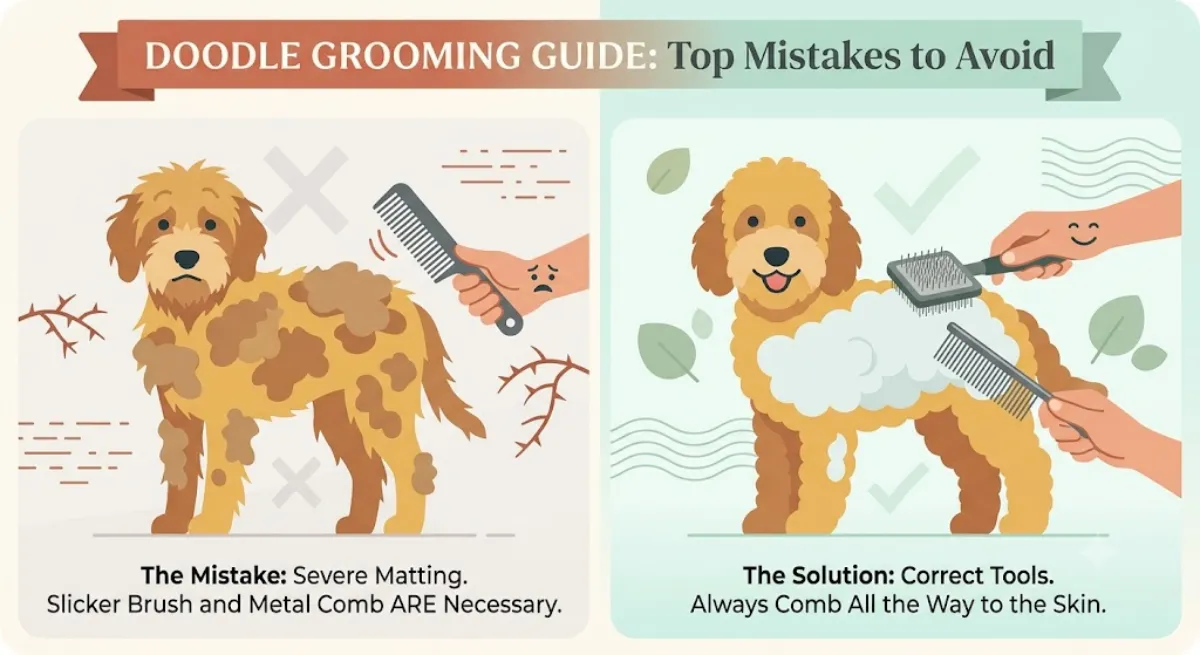
One of the most destructive mistakes owners make is bathing a matted dog without brushing them thoroughly first. Water and shampoo cause existing tangles to swell and tighten further, locking the knots into a solid felted mat that becomes nearly impossible to untangle without professional clipping. Always ensure every knot is completely combed out before introducing moisture to the coat.
Inappropriate Tool Selection and Soft Brushes
Using a soft human hairbrush or an undersized pin brush on a dense hybrid coat is completely ineffective for reaching the skin. These gentle tools glide over dense curls without penetrating to the roots, allowing knots to accumulate unseen. Utilizing professional-grade tools designed specifically for hybrid textures is essential for effective coat management.
Practical Step: Run a wide-toothed comb through your dog’s coat before every bath to guarantee zero hidden tangles exist before water touches their fur.
Mastering Professional Line Brushing Techniques
Professional groomers rely on a systematic method known as line brushing to ensure every square inch of skin is inspected and cleared of debris.
Step-by-Step Metal Greyhound Comb Testing
Line brushing involves parting the hair with one hand to expose a clean line of skin, then using a slicker brush to work downward from the roots outward in small sections. Once a section is brushed smooth, pass a metal greyhound comb through the same area to verify that no hidden snags remain. If the comb catches on any resistance, return to the slicker brush and repeat the process until the comb glides effortlessly from skin to tip.
Working From Roots to Ends on Hybrid Textures
When brushing dense curls, always anchor the hair near the base with your fingers to prevent pulling directly against the skin, which can cause discomfort. Work gently from the roots outward rather than starting at the tips and dragging tangles tighter. This patient approach prevents hair breakage and keeps grooming sessions a positive experience. For ongoing wellness tracking milestones, review our guide on [puppy health and wellness].
Ear Care and Hygiene Misconceptions
Hybrid ear canals present unique maintenance challenges due to the combination of floppy leather flaps and internal hair growth that restricts air circulation.
Navigating Hair Growth Inside the Ear Canal
Many owners receive conflicting advice regarding whether hair growing inside a dog’s ear canal should be plucked regularly. Modern veterinary dermatology suggests that routine, unnecessary plucking can cause micro-trauma and inflammation within the delicate ear canal, predisposing the animal to painful infections. Instead, keeping the outer ear leather clean and trimming long exterior hair safely avoids unnecessary internal irritation.
Moisture Trapping and Yeast Risks
Floppy ears combined with dense surrounding fur create a dark, warm environment that traps moisture after swimming or bathing. Accumulated moisture promotes the rapid proliferation of yeast and bacteria inside the ear canal. Gently drying the inner ear flaps immediately after water exposure prevents these uncomfortable infections. When shaping positive cooperative behaviors for grooming, consult resources on [positive reinforcement dog training].
Safety Reminder: Never insert cotton swabs or sharp instruments deep into your dog’s ear canal, as this can rupture the eardrum or push debris further inward.
Managing Coat Transitions During Puppy-to-Adult Changes
Between six and fourteen months of age, hybrid puppies undergo a massive hormonal transition where their soft baby fleece transitions into an adult coat.
The High-Risk Adolescence Matting Window
During this coat transition phase, dead puppy hair sheds out while adult curls emerge, intertwining rapidly to form severe mats almost overnight. Many owners are shocked to discover that their previously low-maintenance puppy has suddenly developed stubborn felted knots across their flanks and armpits. Doubling brushing frequency during this critical developmental window prevents permanent pelting.
Professional Grooming Schedules and Shave-Downs
Establishing a regular maintenance schedule—visiting a professional groomer every six to eight weeks—keeps hybrid coats manageable between DIY sessions. If severe matting does occur during the adolescent coat change, accepting a humane shave-down is often the kindest option for the dog. Forcing an animal to endure hours of painful de-matting creates lifelong grooming trauma and damages fragile skin. To understand how coat care routines influence overall demeanor, explore guidance in [understanding dog behavior].
Frequently Asked Questions
- How often should I brush my doodle to prevent matting completely? High-density hybrid coats require thorough line brushing at least three to four times a week, while dogs with looser wavy coats may manage with every other day.
- Why does my dog get matted immediately behind their harness? Friction from tight collars or continuous harness wear flattens and twists curly hair strands together, making chest and underarm areas prime locations for tight mats.
- Can cornstarch help remove stubborn dog mats at home? Working a small pinch of cornstarch into a dry knot can help lubricate and loosen tangled hair fibers, making it easier to tease apart gently with a metal comb.
- What is the difference between a slicker brush and a pin brush? A slicker brush features fine, angled wire pins designed to grip and remove trapped undercoat, whereas a pin brush is primarily used for superficial smoothing of straight or long coats.
- Should I use a conditioner during baths for my Poodle mix? Yes, using a high-quality pet conditioner helps hydrate hybrid hair strands, reduce static electricity, and minimize future tangling during drying.
- Why do groomers sometimes have to shave matted dogs short? When mats become tightly felted against the skin, they restrict blood flow and pull painfully, making humane shaving the only safe option to prevent skin lacerations.
Conclusion
Maintaining a Poodle crossbreed’s coat requires dedication, correct equipment, and an understanding of hybrid hair genetics. Avoiding common pitfalls like surface-only brushing and bathing matted fur protects your dog from painful skin damage and expensive veterinary interventions. By implementing consistent line brushing techniques and maintaining professional grooming schedules, you ensure your companion stays comfortable, healthy, and stylish. Take the next practical step today by auditing your current grooming toolkit and adding a professional metal greyhound comb to your daily routine, avoiding DIY doodle grooming errors while learning how to brush a doodle coat, mastering professional poodle mix grooming tips, and actively preventing matting in doodle dogs.