
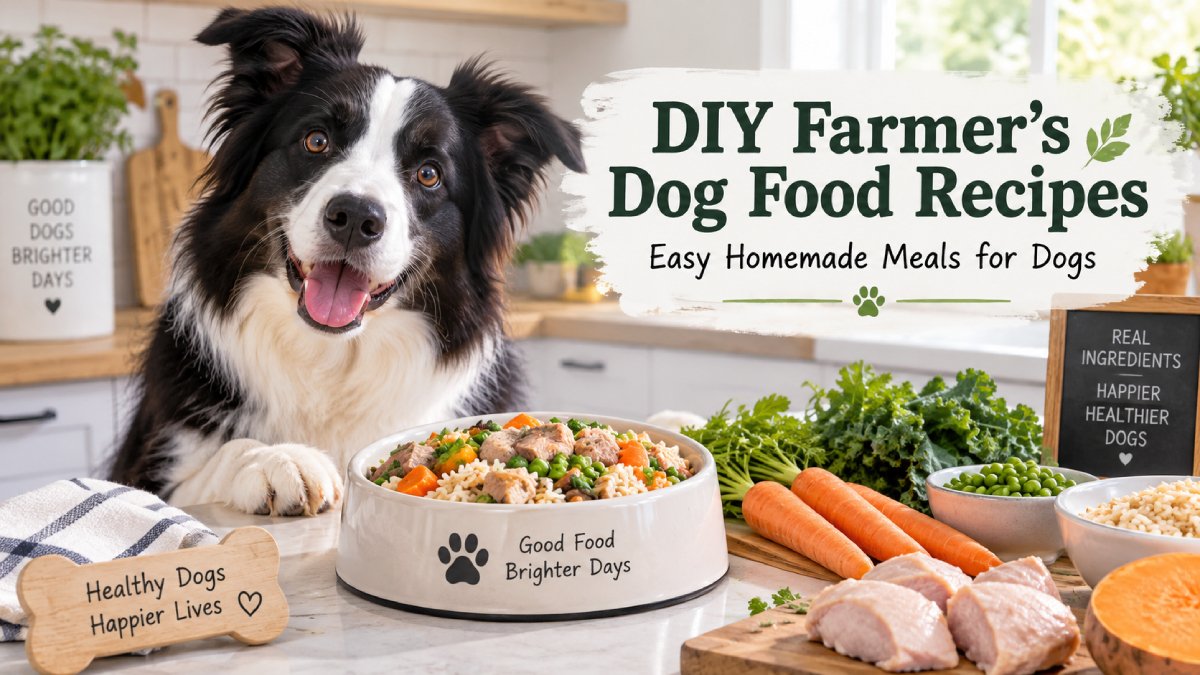
DIY Farmer’s Dog Food Recipes: Easy Homemade Meals for Dogs
If you like the idea of fresh, gently cooked dog food, it is natural to wonder whether you can prepare a similar style of meal at home. DIY Farmer’s Dog-style recipes usually combine cooked meat, dog-safe vegetables, a carbohydrate source, and added fat in a moist, easy-to-portion format. The cooking itself can be simple. The nutritional balancing is the part that deserves the most attention.
What Makes a Fresh Homemade Dog Meal Different?
Fresh dog food is generally cooked at moderate temperatures, served moist, and stored refrigerated or frozen. Many dogs enjoy this texture, and owners often like being able to see the ingredients. But a bowl containing meat, rice, and vegetables can look wholesome while still being low in calcium, essential fatty acids, trace minerals, or certain vitamins.
That is why the recipes below are best treated as fresh-food ideas rather than guaranteed complete diets. They can be useful as short-term toppers for healthy adult dogs when they stay within the treat/topper portion of the daily diet.
Recipe 1: Chicken, Rice, Carrot and Green Bean Bowl
Ingredients
- 1 pound boneless, skinless chicken breast or thigh
- 1 cup cooked brown or white rice
- 1/2 cup finely chopped carrots
- 1/2 cup chopped green beans
- 1 tablespoon olive oil, optional for healthy dogs needing extra calories
Method
- Cook the chicken thoroughly without onion, garlic, heavy seasoning, or sauces.
- Steam or simmer the vegetables until tender.
- Chop or shred the chicken into dog-appropriate pieces.
- Combine with the cooked rice and vegetables. Let the mixture cool before serving.
This combination is mild and easy to portion. Do not assume it is nutritionally complete for long-term feeding without a properly formulated vitamin-mineral and calcium plan.
Recipe 2: Turkey, Sweet Potato and Zucchini Mix
Ingredients
- 1 pound lean ground turkey
- 1 large sweet potato, peeled and cooked
- 1 cup finely chopped zucchini
- 1/2 cup peas, optional
Method
- Cook the ground turkey in a skillet until no pink remains. Drain excess fat if needed.
- Steam the zucchini and peas until soft.
- Mash the cooked sweet potato.
- Mix everything together and cool completely before portioning.
This moist mixture works well as a spoonable topper. Dogs that require low-fat diets should not have recipe changes made without veterinary guidance.
Recipe 3: Beef, Oats and Pumpkin Fresh Bowl
Ingredients
- 1 pound lean ground beef
- 1 cup cooked plain oats
- 3/4 cup plain pumpkin puree
- 1/2 cup chopped spinach
Method
- Cook the beef thoroughly and drain excess grease.
- Cook the oats in water without salt, sugar, milk, or flavoring.
- Lightly steam and finely chop the spinach.
- Mix the beef, oats, pumpkin, and spinach. Cool before serving.
Pumpkin helps create the soft texture many people associate with fresh dog food. Use plain puree rather than pie filling.
Recipe 4: Salmon, Quinoa and Broccoli Topper
Ingredients
- 12 ounces boneless salmon
- 1 cup cooked quinoa
- 1/2 cup finely chopped broccoli florets
- 1/2 cup chopped carrots
Method
- Bake or poach the salmon until fully cooked. Check carefully for bones.
- Cook quinoa in plain water and let it cool slightly.
- Steam the vegetables until soft.
- Flake the salmon and combine all ingredients.
Fish can add useful fatty acids, but serving sizes and fat content still matter. For dogs with pancreatitis or other medical conditions, follow your veterinarian’s feeding plan.
Ingredients to Keep Out of Homemade Dog Food
Avoid onion, garlic, chives, grapes, raisins, chocolate, macadamia nuts, alcohol, and foods sweetened with xylitol. Also avoid cooked bones because they can splinter. Rich gravies, heavily salted meats, and spicy sauces are unnecessary and may upset a dog’s stomach.
When buying peanut butter, broth, pumpkin, or other packaged ingredients, check the label. A product that looks plain can still contain sweeteners, onion, garlic, or high amounts of sodium.
How to Make Homemade Meals More Practical
Batch cooking is the easiest approach. Prepare one protein, one carbohydrate, and one or two vegetables, then portion the cooled food into meal-sized containers. Keep a few portions in the refrigerator and freeze the rest. Label each container with the recipe and date so you do not end up guessing later.
For toppers, freeze the mixture in silicone trays and transfer the frozen portions to a freezer bag. Small cubes are convenient because they can be thawed one at a time.
Storage
Refrigerate cooked homemade dog food promptly in sealed containers and use it within a few days. Frozen portions can be kept longer and thawed in the refrigerator. Do not repeatedly warm and cool the same portion, and discard food that has been left out too long or develops an unusual smell or texture.
How Much Should You Feed?
There is no universal homemade-food serving size. Two dogs of the same weight may need different calories because of age, body condition, activity, neuter status, and health. If you are using these recipes only as toppers, keep the amount small enough that the dog’s complete commercial food still provides the large majority of daily nutrition.
For a fully homemade diet, do not rely on cup-based internet estimates alone. A veterinary nutritionist can calculate calories, protein, fat, calcium, phosphorus, vitamins, minerals, and supplements precisely.
Frequently Asked Questions
Can I feed these recipes every day?
They can be used as occasional fresh toppers for many healthy dogs, but they should not automatically be treated as complete daily diets. Long-term homemade feeding requires careful formulation.
Do homemade dog meals need calcium?
Complete homemade diets usually require a correctly calculated calcium source and other nutrients. The amount must be matched to the total recipe, so avoid guessing.
Can I use frozen vegetables?
Yes, plain frozen dog-safe vegetables can be convenient. Avoid seasoned mixes, sauces, onion, and garlic.
Is raw meat better than cooked meat?
This guide uses cooked ingredients because cooking lowers many food-safety risks. If you are considering a raw diet, discuss the risks and nutritional formulation with your veterinarian.
How to Transition to More Fresh Food
If your dog normally eats dry or canned food, do not suddenly replace a large portion of the bowl with a new homemade mixture. Start with a small spoonful and watch stool quality, appetite, itching, and overall comfort. If everything remains normal, you can gradually increase the topper amount while still keeping the complete diet as the nutritional foundation.
A gradual approach also makes it easier to identify which ingredient caused a problem if your dog develops loose stool or gas. Introducing four or five unfamiliar foods at once makes troubleshooting much harder.
Why Homemade Diets Need More Than Meat and Vegetables
Dogs need specific amounts and ratios of nutrients, not just whole-food ingredients. Meat is naturally high in phosphorus but comparatively low in calcium, so a meat-heavy homemade diet can become imbalanced over time. Essential fatty acids, iodine, copper, zinc, vitamin D, vitamin E, and other micronutrients can also be difficult to supply consistently without a calculated formula.
This is why a complete homemade recipe often includes a precisely measured supplement or mineral source. Adding a random multivitamin is not the same thing as balancing the recipe because products vary and excesses can be harmful as well as deficiencies.
Meal-Prep Tips for Busy Weeks
Use a kitchen scale if you are following a professionally formulated recipe. Cook proteins in bulk, cool them quickly, and portion ingredients before freezing. Label containers with the date and recipe name, especially if you rotate chicken, turkey, beef, or fish. Keeping a simple feeding log can also help you notice whether a particular combination agrees with your dog.
When reheating, warm only the portion you are serving. Dogs do not need steaming-hot food, and repeated heating and cooling can reduce food safety.
Final Thoughts
Fresh homemade dog food can be simple to prepare, but balanced nutrition is more complicated than combining healthy-looking ingredients. Use these Farmer’s Dog-style meals as inspiration for occasional fresh additions, and get a professionally formulated recipe if homemade food will become your dog’s primary diet. That gives you the freshness you want without sacrificing nutritional completeness.