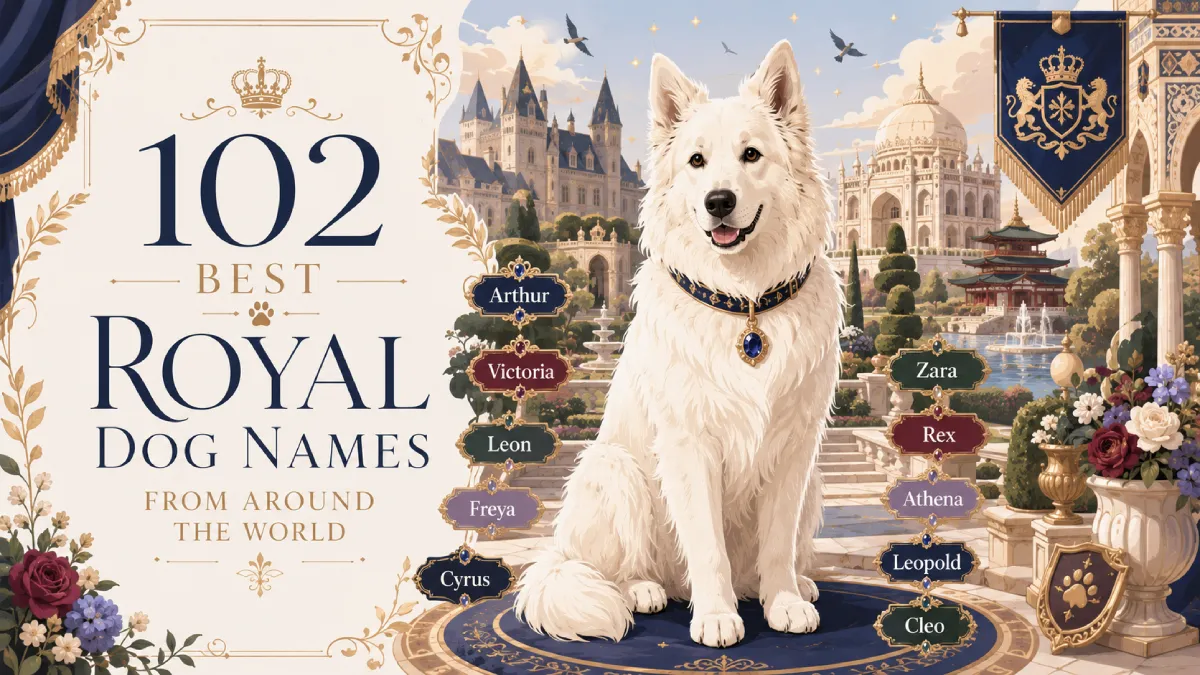
102 Best Royal Dog Names From Around The World (Regal, Elegant & Majestic)
Choosing an elite moniker for a newly adopted puppy or established companion offers a unique opportunity to elevate their daily presence with historic weight. Pet parents drawn to classical history often find that selecting royal dog names establishes a distinguished atmosphere that commands quiet respect in any household. Navigating this vast landscape requires understanding how cultural lineages and linguistic cadence intersect. This resource explores precisely 102 distinct options designed to match various temperaments and physical statures, featuring choices rooted in ancient monarchies. By reviewing the etymological heritage behind these selections, you can assign a moniker that celebrates your pet’s noble disposition. Understanding these historical roots ensures your final choice is both authentic and well-suited, helping you discover some of the finest regal dog names available for your new household member.
Finding the right match requires balancing aesthetic appeal with practical functionality. By reviewing the linguistic roots and cultural significance behind these words, you can confidently assign a moniker that honors your dog’s unique personality.
The Influence of Aristocratic Heritage on Pet Identification
Canine communication relies heavily on the auditory signals provided by their owners. Experienced trainers and behaviorists emphasize that dogs respond most reliably to sharp, clear sounds that cut through ambient noise. When selecting aristocratic dog names, consider how the phonetics of a specific title—such as the crisp consonants found in Germanic sovereign titles or the open vowels of French royalty—affect how your canine companion processes auditory input. A name that is phonetically distinct helps your pet identify when you are speaking directly to them rather than another household member or environmental stimulus, facilitating more efficient obedience sessions.
Beyond the mechanics of training, choosing a name rooted in monarchical history connects your pet to a broader artistic and cultural narrative. These monikers often reflect virtues like strength, high-born grace, sovereignty, or leadership. By selecting a descriptor that carries a specific historic meaning, you are integrating your pet into your daily life with an intentionality that enhances your bond.
Practical Step: Say your top choice aloud in various tones—softly for quiet indoor moments and firmly for outdoor recall—to confirm that the phonetic rhythm feels natural in everyday conversation.
Curating Royal Dog Names for Stately Male Canines
Masculine identifiers drawn from ancient monarchies and imperial dynasties project a commanding, self-assured presence. These robust selections combine legendary status with rare linguistic roots, offering an authoritative label for confident companions.
Essential Characteristics of Kingly Dog Names
- Arthur — Legendary British king associated with chivalry and the sword in the stone. A strong, classic choice.
- Alexander — Named after Alexander the Great, the historic Macedonian king. Bold and expansive.
- Charlemagne — Meaning “Charles the Great,” founder of the Carolingian Empire. Imposing and historic.
- Cyrus — Founder of the Achaemenid Persian Empire. Authoritative and deep.
- Edward — A traditional name borne by numerous English monarchs. Sturdy and dependable.
- Ferdinand — Historic Spanish and Habsburg royal name meaning bold voyager. Regal and rhythmic.
- George — A staple of British royalty representing agriculture and steadfastness. Classic and clean.
- Henry — Bearing centuries of English royal heritage. Unpretentious yet elite.
- Ivan — Associated with Russian tsars, meaning gracious gift. Sharp and striking.
- James — Classic Scottish and English royal name. Refined and timeless.
Queenly and Sovereign Monikers for Distinguished Females
Feminine identifiers capture the majesty, poise, and cultural influence of history’s greatest empresses and ruling queens. These selections bring an air of refined grace and enduring prestige to any companion.
Empresses and Historic Matriarchs
- Victoria — British queen who defined an entire era of global influence. Stately and classic.
- Elizabeth — Associated with formidable English monarchs of supreme poise. Timeless.
- Catherine — Borne by Russia’s great imperial empress. Strong and sophisticated.
- Cleopatra — The last active ruler of the Ptolemaic Kingdom of Egypt. Dramatic and exotic.
- Isabella — Historic Spanish queen who funded global exploration. Melodic and vibrant.
- Eleanor — Medieval queen of France and England. Poetic and historic.
- Matilda — Powerful medieval English queen and claimant to the throne. Resilient.
- Nefertiti — Egyptian queen renowned for her striking beauty and power. Ethereal.
- Zenobia — Third-century Queen of the Palmyrene Empire in Syria. Fierce and rare.
- Boudicca — Celtic queen who led an uprising against Roman occupation. Warrior spirit.
Aristocratic Dog Names Rooted in European Lineages
European aristocracy extends far beyond crowned monarchs, encompassing dukes, counts, barons, and ancient land-owning dynasties that shaped continental culture.
Dukes, Duchesses, and Continental Titles
- Baron — A member of the lowest order of the British nobility. Rugged yet formal.
- Count — A European nobleman equal in rank to an English earl. Short and crisp.
- Duke — A monarch ruling a duchy or a nobleman of highest rank. Strong and authoritative.
- Earl — A British nobleman ranking above a viscount. Traditional and grounded.
- Marquess — A nobleman ranking above an earl and below a duke. Distinguished.
- Prince — The son of a monarch or a sovereign ruler of a principality. Noble.
- Viscount — A European nobleman ranking between a count and a baron. Sophisticated.
- Duchess — The wife or widow of a duke, or a female ruler of a duchy. Elegant.
- Countess — The wife or widow of a count or earldom holder. Refined.
- Baroness — A female member of the lowest order of nobility. Poised.
Vet Check: Maintaining a healthy weight is vital for all dogs, especially active breeds exploring outdoor environments.
Luxury Puppy Names From Ancient Eastern Dynasties
Asian imperial courts developed intricate systems of courtly etiquette, poetic arts, and sovereign titles that offer a mesmerizing alternative to Western nomenclature.
Imperial Courts and Asian Sovereigns
- Emperor — The supreme sovereign of an empire. Unapologetically grand.
- Sultan — A Muslim sovereign holding supreme political and religious authority. Exotic.
- Shah — A title given to the emperors, kings, and lords of Iran. Short and sharp.
- Maharaja — A great king or ruler in Indian princely states. Expansive.
- Rani — A Hindu queen or a raja’s wife. Compact and melodious.
- Khan — A title of Mongolian and Turkic origin denoting a ruler or leader. Sturdy.
- Ming — Historic Chinese imperial dynasty known for porcelain and artistic refinement. Crisp.
- Qing — The last imperial dynasty of China, meaning clear or luminous. Elegant.
- Han — Historic Chinese dynasty associated with foundational cultural identity. Solid.
- Tang — Golden age Chinese dynasty celebrated for poetry and art. Punchy.
Modern Elite Identifiers and Concise Noble Titles
For owners seeking luxury puppy names that sound streamlined, contemporary, and effortlessly upscale, these final selections offer sophisticated brevity.
- Regis — Latin origin meaning royal. Clean and sharp.
- Rex — Latin origin meaning king. Short and powerful.
- Regina — Latin origin meaning queen. Elegant and melodic.
- Noble — Having or showing fine personal qualities or high moral principles. Direct.
- Elite — Representing the best or most superior members of a group. Chic.
- Grand — Magnificent and imposing in appearance, size, or style. Stately.
- Peer — A member of the nobility in Britain. Clean and minimalist.
- Court — The assembly of people around a monarch. Structured.
- Realm — A kingdom or domain. Expansive and poetic.
- Sovereign — A supreme ruler, especially a monarch. Majestic.
Daily Care Tip: Elegant names pair well with organized routines; establish a consistent daily feeding and grooming schedule to keep your pet looking and feeling their absolute best.
Frequently Asked Questions
- Are royal dog names difficult for puppies to learn during obedience training? No. Dogs respond primarily to phonetic clarity, pitch variation, and vocal frequency rather than the historical prestige or length of the word.
- How do I ensure my pet’s elite title is recorded correctly on veterinary paperwork? When registering your pet at a clinic, ensure the spelling matches your official preference, especially for complex historic names like Charlemagne or Maximilian.
- Can aristocratic monikers be used for both dogs and cats? Yes. Many sovereign and noble terms work wonderfully across multiple species, making them ideal for multi-pet households.
- What makes a dog name truly regal? A truly majestic moniker usually combines smooth vowel transitions with deep historical or linguistic ties to historical dynasties, monarchies, or elite titles.
- Should I avoid titles that resemble standard household commands? Yes. It is always wise to steer clear of unusual words that sound identical to or rhyme with common obedience cues like “sit,” “stay,” “no,” or “come.”
- How long does it take for a rescue pet to adapt to a new royal identifier? Most rescue animals adapt to a new title within seven to fourteen days when owners consistently pair the sound with positive reinforcement.