Human Medications Toxic to Cats: Drug Safety Guide
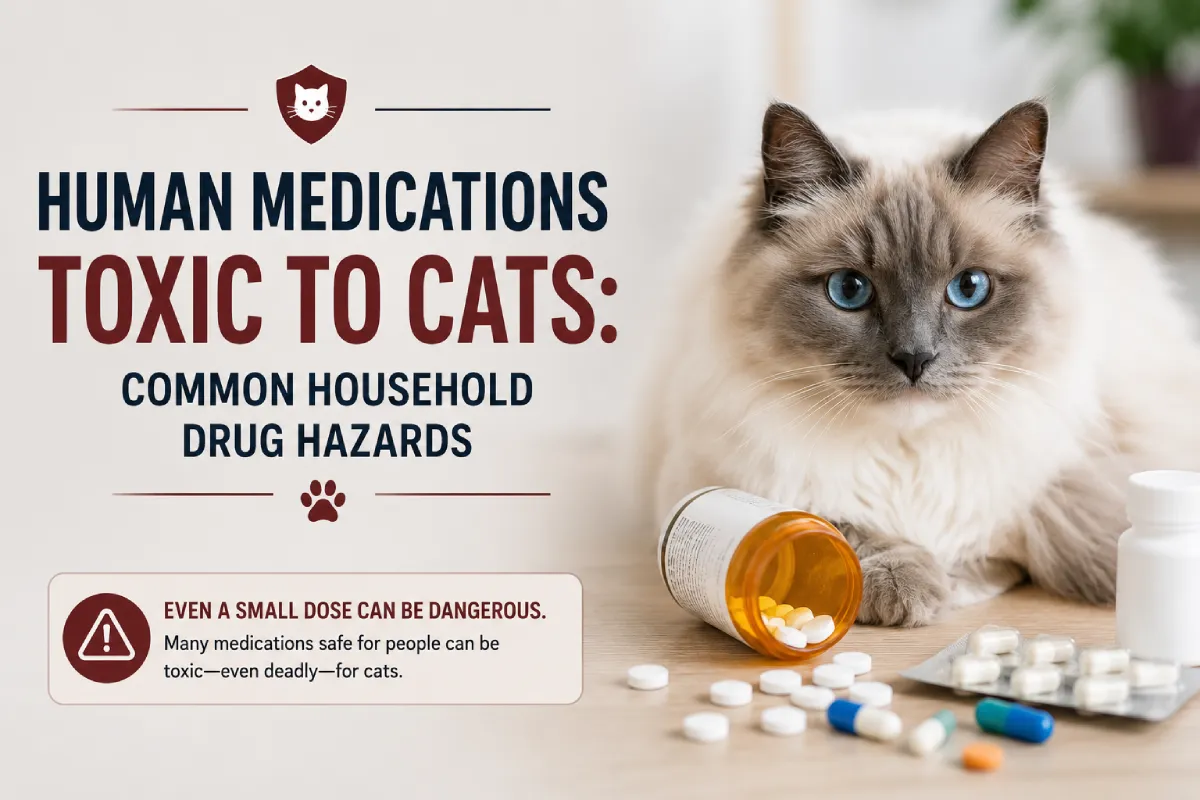
Many human medications can cause serious poisoning in cats. Exposure does not always involve an owner intentionally giving a tablet: cats may swallow a pill dropped on the floor, chew a medication container, lick medicated skin or groom a topical drug transferred onto their coat.
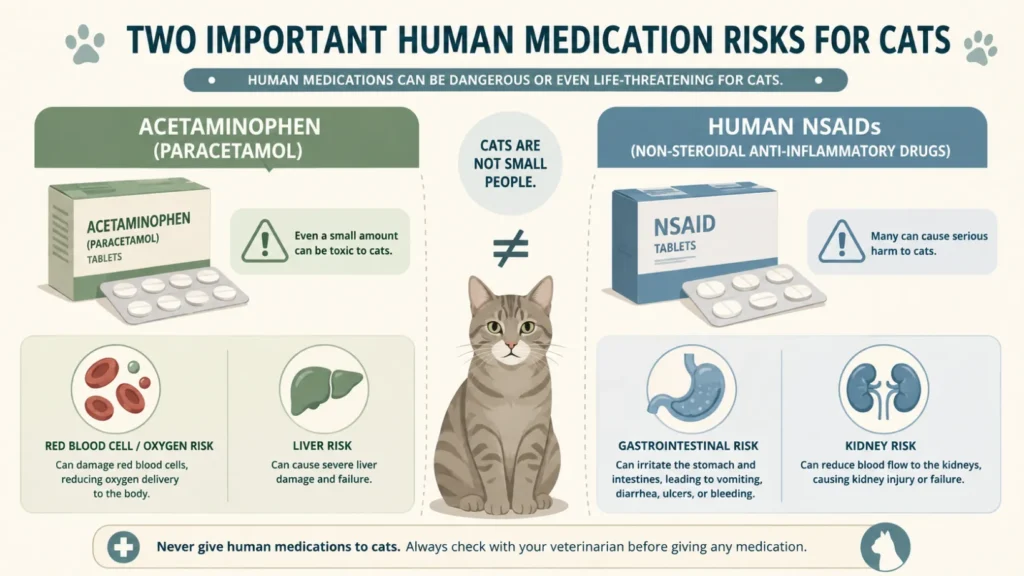
Acetaminophen/paracetamol is particularly dangerous because cats cannot metabolize it safely in the same way humans do. Human NSAIDs such as ibuprofen and naproxen can also cause serious gastrointestinal and kidney injury. If your cat has swallowed an unknown medication or a known high-risk drug, contact a veterinarian or veterinary poison service promptly rather than waiting for symptoms.
Immediate Answer
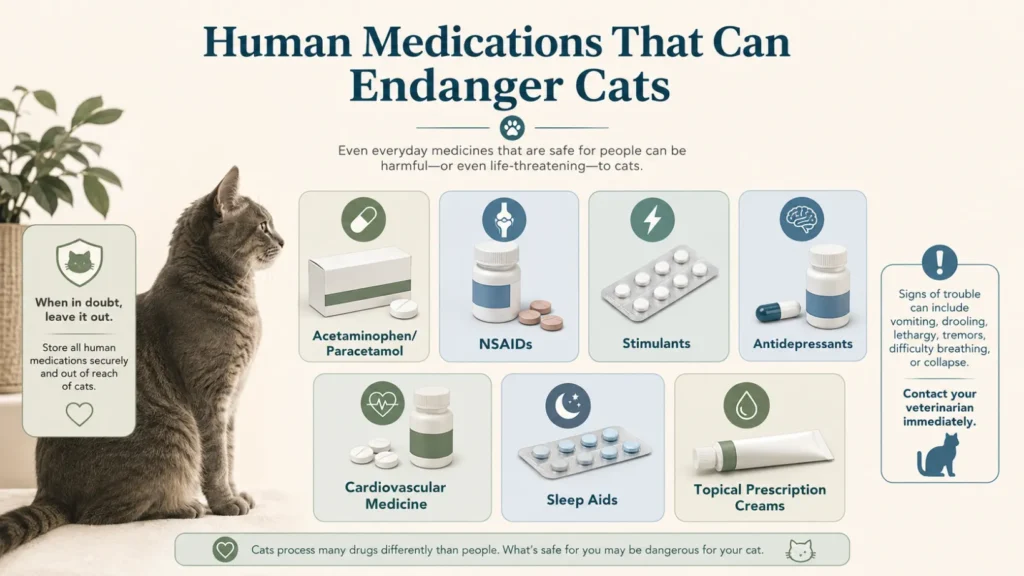
Never give a cat a human medication unless a veterinarian has specifically prescribed or instructed that medication for that cat. Acetaminophen/paracetamol, ibuprofen, naproxen, stimulants, some antidepressants, cardiovascular drugs and topical medications can all cause serious poisoning. Keep the package, record the strength and amount missing, and seek veterinary advice after a suspected exposure.
Why Human Medicines Can Be Dangerous to Cats
Cats are not small humans or small dogs.
Differences in:
- liver metabolism
- kidney elimination
- drug absorption
- body size
- enzyme activity
can make an ordinary human dose dangerously inappropriate for a cat.
Acetaminophen / Paracetamol
Acetaminophen deserves the strongest warning.
Cats have limited ability to safely metabolize the drug. Toxic metabolites can damage red blood cells and interfere with oxygen transport while also causing liver injury.
Possible signs include:
- weakness
- lethargy
- vomiting
- difficulty breathing
- facial or paw swelling
- brownish or muddy-coloured gums
- bluish discoloration
- reduced appetite
Do not give acetaminophen or paracetamol to a cat as a home painkiller.
Human NSAIDs: Ibuprofen, Naproxen and Similar Drugs
Human nonsteroidal anti-inflammatory drugs can damage:
- the stomach and intestines
- the kidneys
- sometimes the liver
Common human NSAIDs include:
- ibuprofen
- naproxen
- aspirin
- diclofenac
- celecoxib
- ketoprofen
Some drugs from these broad classes may be used by veterinarians in specific circumstances, but that does not make an owner’s human product appropriate for home use.
Ibuprofen
Do not administer human ibuprofen to your cat.
Accidental ingestion can cause gastrointestinal ulceration and kidney injury depending on the amount and circumstances.
Naproxen
Merck notes that cats may be particularly susceptible to naproxen toxicity because of their limited ability to process the drug.
Suspected ingestion deserves prompt veterinary advice.
Antidepressants
Antidepressants include several different medication classes, and overdose effects differ between drugs.
Potential signs can include:
- vomiting
- agitation
- marked sedation
- abnormal coordination
- tremors
- seizures
- changes in heart rate or blood pressure
Do not assume all antidepressants have the same toxicity profile.
ADHD and Stimulant Medications
Stimulant medications can affect the cardiovascular and nervous systems.
Possible signs after significant exposure may include:
- agitation
- abnormal behaviour
- rapid heart rate
- increased blood pressure
- increased body temperature
- tremors
- seizures
Extended-release formulations can change the timing of signs.
Heart and Blood-Pressure Medication
Human cardiovascular medicines include many unrelated drug classes, such as:
- beta blockers
- calcium-channel blockers
- ACE inhibitors
- angiotensin-receptor blockers
- diuretics
The exact product must be identified because the potential effects and treatment differ substantially.
Sleep Aids and Sedatives
Sleep medications may cause:
- sedation
- weakness
- poor coordination
- abnormal excitement in some cases
- respiratory depression
A cat that looks merely sleepy after swallowing a human sedative should not automatically be assumed safe.
Cold, Flu and Decongestant Products
Combination cold medicines are particularly difficult to assess because one tablet can contain several active ingredients.
Always record the complete ingredient panel.
Do not evaluate a combination product only by its brand name.
Topical Human Medications Can Also Poison Cats
A cat does not need to swallow a tablet to be exposed to medication.
Exposure can occur when a cat:
- licks medicated human skin
- brushes against a treated area and grooms
- walks through spilled cream
- chews a medication tube
- licks a used applicator
Topical Flurbiprofen
FDA has documented serious illnesses and deaths in cats from household exposure to prescription topical pain medications containing flurbiprofen.
The medication had been applied to people rather than intentionally given to their cats.
If you use a topical prescription pain cream:
- wash your hands after application
- prevent the cat from licking treated skin
- keep contaminated clothing or applicators inaccessible
Fluorouracil / 5-FU
Topical fluorouracil is a human prescription medication used for certain skin conditions.
FDA warns that pets can become severely ill or die after chewing the tube or licking treated skin.
FDA has not documented confirmed feline cases in the same way as canine cases, but cats are expected to be highly sensitive and veterinary toxicology sources regard feline ingestion as extremely serious.
Suspected exposure requires immediate veterinary contact.
Vitamins and Supplements Can Also Cause Problems
The words “vitamin,” “natural” or “supplement” do not guarantee feline safety.
Human products may contain:
- highly concentrated vitamins
- minerals
- alpha-lipoic acid
- caffeine
- herbal active ingredients
- multiple combined ingredients
Keep supplements in the same secure storage used for prescription medicines.
Common Ways Cats Access Human Medicine
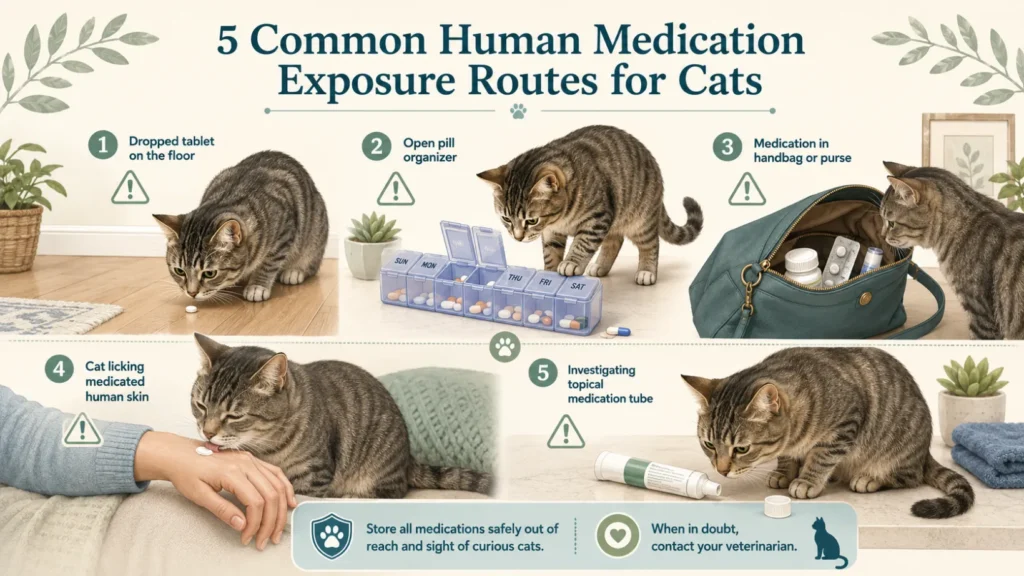
Dropped Tablets
A tablet can roll under furniture and remain accessible after the owner believes it was lost.
Pill Organizers
Weekly organizers are not pet-proof and may release several different medicines if opened or knocked over.
Handbags and Backpacks
Visitors may unknowingly leave medication inside an open bag on the floor.
Bedside Tables
Nightstands commonly hold painkillers, sleep aids, heart medication and supplements within climbing distance.
Medicated Skin
Cats that lick owners or sleep against treated skin may encounter topical prescription drugs.
What to Do If Your Cat Ate Human Medication
- Remove access to remaining medication.
- Identify the exact product.
- Record the active ingredient.
- Record tablet or liquid strength.
- Count how much may be missing.
- Record the exposure time.
- Keep the package.
- Contact your veterinarian or veterinary poison service promptly.
Do Not Calculate a Homemade Cat Dose
Do not use a human dose calculator and reduce it according to your cat’s weight.
Species differences mean that simple weight conversion does not establish safety.
Do Not Induce Vomiting at Home
Do not give:
- hydrogen peroxide
- salt
- mustard
- oil
- another medication intended to counteract the exposure
Veterinary decontamination decisions depend on the exact drug, formulation, timing and the cat’s condition.
When Emergency Veterinary Care Is Necessary
Seek immediate professional care after known high-risk exposure or if your cat develops:
- difficulty breathing
- facial swelling
- collapse
- severe weakness
- tremors
- seizures
- marked agitation
- profound sedation
- abnormal coordination
- repeated vomiting
For the broader poisoning response process, see Cat Poisoning Emergency.
Medication Exposure Information Card
| Information | Record |
|---|---|
| Medication name | ________ |
| Active ingredient | ________ |
| Strength | ________ |
| Form | Tablet / Capsule / Liquid / Cream / Gel / Other |
| Amount missing | ________ |
| Exposure route | Swallowed / Licked / Skin-fur contact / Unknown |
| Time | ________ |
| Cat weight | ________ |
| Symptoms | ________ |
| Veterinary contact | ________ |
Preventing Medication Poisoning
- Store human medication inside closed cabinets.
- Store human and veterinary medications separately.
- Do not leave doses on bedside tables.
- Secure pill organizers.
- Pick up dropped tablets immediately.
- Keep handbags containing medicine inaccessible.
- Wash hands after applying topical medication.
- Prevent cats from licking medicated human skin.
- Dispose of contaminated tissues and applicators securely.
FAQs
Can one human pill poison a cat?
Potentially. Risk depends on the medication, strength and cat. Some drugs have very narrow feline safety margins, so identify the product and contact a veterinary professional.
Can I give my cat Tylenol or paracetamol?
No. Owners should not administer acetaminophen/paracetamol to cats. Cats are highly susceptible to potentially fatal toxicity.
Is ibuprofen safe for cats?
Human ibuprofen should not be used as an at-home feline pain medicine. Accidental ingestion may cause gastrointestinal and kidney injury.
Can my cat be poisoned by medication on my skin?
Yes. FDA has documented serious feline exposures associated with topical human pain medication, and other topical drugs can also be dangerous.
What if I do not know which pill my cat swallowed?
Collect every possible medication container nearby and contact a veterinarian or poison service. An unidentified tablet should not be treated as harmless.
Should I make my cat vomit after swallowing medication?
No. Do not induce vomiting without specific veterinary instruction.