
Cat Breeds: Size, Temperament, Coat and Lifestyle Guide
Choosing between cat breeds is easier when you start with the life you can realistically offer rather than the cat whose appearance catches your attention first. Breed information can help you anticipate general size, coat type, grooming workload, activity and some behavioural tendencies, but it cannot tell you exactly how an individual cat will behave. Early experience, health, environment and the cat’s own temperament still matter.
Use this guide to narrow your options by lifestyle. Then evaluate the individual kitten or adult cat. The goal is not to identify one universal “best cat breed,” but to find a good match between the cat’s needs, your household and the care you can sustain for years.
Purebred, Pedigree and Mixed-Breed Terminology
The language around different types of cats can become confusing.
A pedigree is essentially a record of ancestry. Cat registries use parent and registration information to document lineage, and organisations such as CFA can issue certified pedigrees when the required ancestral records are available. A pedigree therefore documents family history; it is not proof that an individual cat will be healthy or have a particular personality.
“Purebred” is commonly used for a cat whose ancestry belongs to a recognised breed, while registries maintain written breed standards describing the physical characteristics of the breeds they recognise. Exact recognition and terminology can differ between registries, so avoid treating one registry’s breed list as the only possible classification system.
Mixed-breed or random-bred cats can vary enormously. TICA’s Household Cat category includes random-bred cats, some cats with partial pedigree ancestry and some pedigreed cats that are not entered as a pedigree show breed. Coat length, size and personality can vary widely within this population.
None of these labels tells you whether a particular cat will fit your home.
Why Individual Personality Still Matters
Breed tendencies are useful for creating a shortlist, but they should not become predictions.
A Siamese may come from a breed widely associated with social and vocal behaviour, but that does not guarantee how much one particular Siamese will vocalise. A Ragdoll is not guaranteed to enjoy being held. A British Shorthair is not guaranteed to be independent, and a Maine Coon is not automatically comfortable with every child or dog. Breed, environment and individual experience all contribute to behaviour.
This becomes especially useful when adopting an adult. An adult cat’s current preferences and behaviour can often be observed more directly than a young kitten’s future personality can be predicted. Rescue staff may already know whether a cat enjoys handling, seeks attention, prefers quiet surroundings or has previously lived with other pets.
Choose by Lifestyle, Not Appearance Alone
Before browsing popular cat breeds, make a practical household checklist.
Ask yourself:
- How much interactive play can I provide?
- How long will the cat routinely be alone?
- Would frequent vocalisation bother anyone?
- Am I genuinely prepared for daily coat care?
- Are there children in the home?
- Are there resident cats or dogs?
- Can I provide climbing and vertical territory?
- Do I want a highly interactive cat or one comfortable with more personal space?
- Can I budget for appropriate veterinary care and any relevant breed-specific screening?
Indoor cats need opportunities for play, predatory-type behaviour, safe resting areas, vertical territory and other essential environmental resources. More active or socially demanding individuals can therefore require considerably more daily involvement than their appearance suggests.
A visually striking Bengal may be a poor match for someone wanting minimal daily enrichment. A heavily coated Persian may be unsuitable for someone who dislikes frequent grooming. Conversely, an owner who actively wants those commitments may enjoy them.
Small, Medium and Larger Cat Breeds
Cat breeds by size are best treated as broad categories rather than exact guarantees. Sex, genetics, body structure and individual development all create variation within a breed.
Smaller to Medium Breeds
Devon Rex cats sit around the smaller-to-medium end of this Batch 16 group. TICA describes adult Devons as medium-sized, with males generally larger than females. Despite their modest size, they are people-oriented and active, illustrating an important point: small cat does not mean low-energy cat.
Medium Breeds
Abyssinians, Siamese, Russian Blues and Sphynx are broadly medium-sized cats in their respective registry descriptions. Their lifestyle requirements differ substantially, however. Abyssinians are highly active; Siamese cats are athletic and highly social; Russian Blues combine playfulness with more willingness to spend time alone; Sphynx are typically active and strongly people-oriented.
This is why size alone is a poor selection tool.
Medium-Large and Larger Breeds
British Shorthairs are medium-to-large and sturdily built, while Birmans are described as medium-to-large. Ragdolls and Maine Coons occupy the larger end of this group.
Larger cats also change practical equipment requirements. A large cat needs a litter box, carrier, resting area and scratching or climbing equipment that actually accommodates its body comfortably.
Coat Type and Grooming
Short-Haired Breeds
Short-haired Batch 16 examples include:
- Abyssinian
- Bengal
- British Shorthair
- Russian Blue
- Siamese
Short hair often reduces combing workload, but coat density still matters. Russian Blues have dense short coats and TICA recommends regular brushing or combing. British Shorthairs also have thick, plush coats. The Siamese coat is much closer lying.
So “short-haired” should not automatically become “requires no grooming.”
Long-Haired and Semi-Long-Haired Breeds
Examples include:
- Persian
- Maine Coon
- Ragdoll
- Birman
The coat-care differences within this group are significant.
A Birman’s semi-long coat has a comparatively low tendency to mat and TICA describes weekly combing as useful. Ragdolls also generally benefit from weekly combing. Maine Coon coat texture can vary substantially: some coats are relatively silky while others require much more frequent combing.
Persians sit at the higher-maintenance end of this comparison because maintaining the long, dense coat is a major part of ownership.
Lower-Maintenance Coat Considerations
If coat brushing is a major selection factor, breeds such as the Abyssinian, short-haired Bengal, Siamese, Russian Blue, British Shorthair and Devon Rex may require less routine coat work than a Persian or some Maine Coons. TICA specifically describes relatively low coat-care needs for breeds such as the Devon Rex and short-haired Bengal.
But lower coat maintenance does not mean lower overall care.
Every cat still requires nail monitoring, dental care, skin and body checks and veterinary care.
Hairless Does Not Mean Maintenance-Free
The Sphynx is the clearest example of why appearance can mislead owners.
Although the breed appears hairless, a very fine down may be present, and regular cleaning remains part of the breed’s care because the skin is not protected by a conventional coat.
A Sphynx therefore should not be selected on the assumption:
no hair = no grooming.
Higher-Grooming Breeds
The Persian represents the clearest high-grooming commitment in this Batch 16 group. Maine Coon grooming can also become substantial depending on the individual coat, while Ragdolls and Birmans generally sit between these extremes.
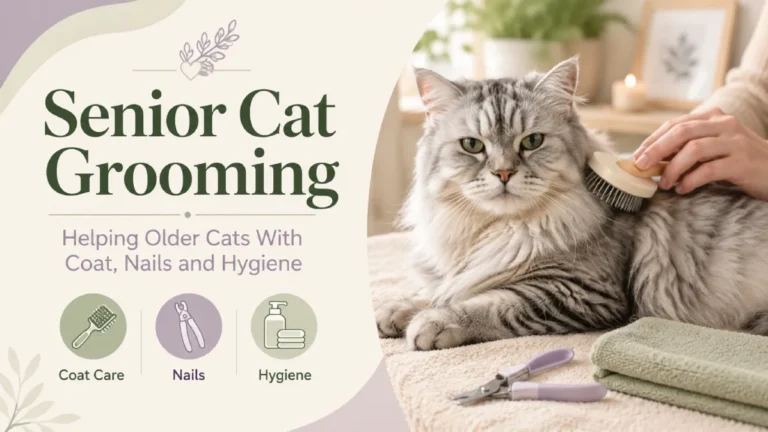
For the overall coat, nails, ears, teeth and hygiene routine, use Pawnium’s Cat Grooming Guide.
Cat Breeds by Personality and Activity
Active Breeds
Among the breeds in this hub, the Abyssinian, Bengal and Siamese are strong examples of cats for owners who actively want play and enrichment.
Abyssinians are described by TICA as extremely active, curious and strongly interested in climbing and elevated locations.
Bengals are high-energy cats that commonly benefit from climbing, interactive play, puzzle opportunities and training.
Siamese cats combine athletic activity with a high need for interaction and mental stimulation.
Sphynx also trend toward high activity and curiosity.
For these cats, enrichment is not simply buying toys and leaving them on the floor. The home needs usable opportunities to climb, play, explore, scratch and interact.
Lower-Key Companion Tendencies
At the quieter end of the activity spectrum, Persians are generally more placid, while British Shorthairs are relatively low-key and Ragdolls typically trend calmer than breeds such as the Bengal or Siamese. All three still need regular play and activity.
“Calm” should never be translated into:
needs no enrichment.
A less athletic cat still needs opportunities to play, scratch, explore and make choices.
Vocal Breeds and Quieter Tendencies
More Vocal Tendencies
The Siamese is the clearest example in this group of a breed with a higher vocal tendency. TICA describes the breed as famously communicative and strongly interactive with people.
Bengals also use a variety of vocalisations, although how frequently an individual vocalises can vary.
Russian Blues are a useful reminder not to rely on stereotypes: TICA describes them as generally quiet while also noting that many become quite conversational with familiar people.
Quieter Tendencies
Persians, British Shorthairs, Birmans and Ragdolls generally trend quieter than the Siamese.
Use quieter tendency, not silent breed.
Social Breeds and More Independent Tendencies
Highly Social Tendencies
Siamese, Sphynx, Birman, Devon Rex and Maine Coon breed descriptions all place considerable emphasis on interaction with people.
This can make them appealing to someone seeking an involved companion.
However, “social” does not guarantee:
- enjoying being carried
- liking unfamiliar visitors
- wanting constant lap contact
- accepting every other pet
Those are individual preferences.
More Independent Tendencies
British Shorthairs generally have a more independent streak and may be content to remain near their owners without demanding constant physical contact. Russian Blues can also combine close bonds with their family with a greater willingness to spend time alone.
Independent cats still need social interaction and enrichment.
For broader interpretation of feline personality, interaction and household behaviour, use Cat Behavior Explained.
Cats for Apartments
There is no useful rule that says:
small cat = apartment cat.
Apartment suitability depends much more on whether the environment can meet the cat’s behavioural and physical needs. Indoor cats need safe resting locations, appropriate resources, play and vertical territory.
A Russian Blue may fit apartment life well when its play and environmental needs are met; TICA specifically notes apartment suitability in its breed profile.
A Bengal can also live indoors, but providing sufficient climbing, activity and mental stimulation is a much bigger commitment.
Large breeds such as Maine Coons and Ragdolls add another consideration: even a calm cat needs enough physical room for appropriately sized litter boxes, carriers, resting areas and climbing equipment.
The better question is:
Can my apartment meet this individual cat’s needs?
Cats for Busy Households
“Busy” can describe very different situations.
A home where people are frequently present may suit a highly social cat. A home where everyone is routinely away for long periods is different.
Siamese cats are particularly oriented toward interaction, while British Shorthairs tend to be more comfortable amusing themselves for periods without constant attention. Russian Blues may also tolerate alone time while remaining affectionate when their people return.
If schedule compatibility matters more than obtaining a specific breed, an adult rescue cat whose current social needs are already understood may offer a more predictable match than choosing a kitten primarily from a breed description.
Cats Around Children
No breed should be called a perfect family cat.
Cats Protection recommends considering the individual cat’s confidence, handling tolerance, reactions to noise and overall personality when matching a cat with children. Even within the same breed, one cat may enjoy an active family home while another finds it stressful.
Breed profiles do describe Maine Coons, Ragdolls, Birmans and several other breeds as often socially compatible with children, but this remains a tendency rather than a guarantee.
Children also need to learn to:
- handle cats gently
- leave sleeping cats alone
- avoid chasing
- allow the cat to walk away
- respect hiding and resting areas
Choose the individual, not simply the breed label.
Cats Living With Other Cats
A social breed is not guaranteed to want another cat.
Intercat tension can be subtle, and veterinary behavioural guidance emphasises the importance of individual relationships, resource access and careful introductions in multi-cat homes.
Some Siamese, Birmans, Maine Coons, Devon Rexes and other socially oriented breeds may live successfully with other cats, but that does not mean a resident cat automatically needs a companion.
Consider:
resident cat personality + newcomer personality + environment + introduction process
before:
breed + breed.
Cats Living With Dogs
The dog’s behaviour is just as important as the cat’s breed.
Cats Protection recommends considering how the resident dog already responds to cats and using an appropriate introduction rather than assuming two species will simply adapt.
A confident Maine Coon is not automatically safe with a dog that persistently chases cats.
Likewise, a cautious mixed-breed cat may coexist successfully with a calm, cat-experienced dog.
Breed information can contribute to the decision, but it should never replace evaluating both animals.
First-Time Cat Owners
There is no single list of best cat breeds for beginners.
One first-time owner may find a British Shorthair manageable because they prefer a relatively lower-key cat and modest coat care. Another may find a highly social Siamese ideal because frequent interaction is exactly what they want. A third may happily manage a Persian’s grooming but dislike the activity level of a Bengal.
For a first cat, ask:
- Can I maintain this coat?
- Can I meet this activity level?
- Am I comfortable with the likely social needs?
- Can I tolerate the vocal tendency?
- Do I have appropriate space and equipment?
- Am I prepared for breed-specific health screening and veterinary care?
- Does the actual cat’s temperament suit me?
That produces a much stronger match than searching for one universal beginner breed.
Grooming Commitment
Coat care lasts for the cat’s lifetime.
Do not choose a high-grooming breed on the assumption that enthusiasm during the first few months will automatically continue for years.
A Persian requires a very different commitment from a Siamese. A Maine Coon may need substantially more combing than a Birman depending on coat texture, while a Sphynx replaces conventional brushing with specialised skin and hygiene care.
Include grooming time when calculating whether the breed fits your routine.
Enrichment Commitment
Activity is another long-term cost—in time rather than only money.
Highly active and intelligent cats need opportunities to use those traits. Feline welfare guidance specifically emphasises play, predatory-type activity, safe territory and vertical space for indoor cats.
For an active breed, plan for:
- interactive play
- climbing
- scratching
- puzzle opportunities
- exploration
- observation points
- toy rotation
- regular social interaction
An Abyssinian climbing furniture or a Bengal constantly investigating its environment should not automatically be treated as badly behaved simply for displaying a high activity drive. Their environment needs to provide appropriate outlets.
Health-Screening Considerations
Pedigree ancestry does not mean a cat is free of inherited health risk.
Some breeds have recognised hereditary conditions for which DNA testing or other screening may be available. CFA notes that genetic tests are particularly useful for well-characterised single-gene disorders, while more complex or polygenic conditions cannot necessarily be ruled out by a simple DNA panel. Testing options and databases also change as new information becomes available.
Therefore, do not ask a breeder only:
“Are the parents health tested?”
Ask:
“Which health tests are recommended for this breed, which tests were performed on each parent, and can I see the results?”
Some screening is DNA-based; other conditions may require examination, imaging or another form of veterinary assessment. Breed-specific recommendations should be checked when the cat is being acquired rather than copied indefinitely from an old internet list.
Questions to Ask a Responsible Breeder
A responsible breeder discussion should go well beyond coat colour and purchase price.
Useful questions include:
- Which breed-specific health tests were performed on the parents?
- Can I see the actual health and genetic records?
- How were the kittens raised and socialised?
- What is the personality of this specific kitten?
- What veterinary care has already been completed?
- What diet and litter is the kitten currently using?
- What does the written contract cover?
- What is the breeder’s return policy if placement does not work?
- Can the breeder provide registration and pedigree information?
- Can I see the mother and the environment where the kittens are being raised?
TICA advises buyers to request sire and dam health/genetic records, investigate breeder credibility, review written contracts and ask about return policies. CFA similarly recommends asking about the individual kitten’s personality, health history, upbringing and ongoing care.
A breeder who avoids reasonable health questions or refuses to provide records deserves additional scrutiny.
Adoption and Rescue
Choosing a cat breed does not require buying a pedigreed kitten.
Rescues may have:
- mixed-breed kittens
- adult domestic shorthairs
- long-haired mixed-breed cats
- seniors
- occasionally pedigree or breed-type cats
One advantage of adopting an adult is that its established behaviour may already be easier to assess. Rescue staff may know whether the cat prefers quiet homes, seeks frequent attention, tolerates children or has experience with other animals.
If you bring home a kitten, Pawnium’s First Week With a New Kitten can carry the settling-in process rather than repeating it on this breed pillar.
Let Individual Temperament Make the Final Decision
After researching size, coat and common cat breeds by personality, return to the actual cat.
Observe or ask about:
- confidence around unfamiliar people
- interest in play
- handling tolerance
- reaction to novelty
- desire for physical contact
- history with children
- history with other cats
- history with dogs
- comfort being alone
- current health and grooming needs
Cats Protection specifically emphasises matching the individual cat’s personality and needs to the home rather than relying on breed alone.
The simplest rule for this entire cat breed guide is:
Use breed to build the shortlist. Use the individual cat to make the final match.
Breed Comparison Directory
This pillar should serve as the navigation centre for the entire Pawnium Batch 16 breed cluster.
Individual Breed Guides
Large and semi-longhaired
- Maine Coon size, temperament, grooming and care
- Ragdoll Cat: Temperament, Size, Grooming and Care Guide — exact permalink still needs confirmation
Long-haired companion breeds
- Persian Cat guide — exact permalink needs confirmation
- Birman Cat guide — exact permalink needs confirmation
Active and interactive breeds
- Bengal Cat guide — exact permalink needs confirmation
- Siamese Cat guide — exact permalink needs confirmation
- Abyssinian Cat guide — exact permalink needs confirmation
Short-haired companion breeds
- British Shorthair Cat guide — exact permalink needs confirmation
- Russian Blue Cat guide — exact permalink needs confirmation
Distinctive coat and skin-care breeds
- Devon Rex Cat guide — exact permalink needs confirmation
- Sphynx Cat guide — exact permalink needs confirmation
The accessible Batch 16 record confirms this 11-breed structure, but it does not contain the definitive URL list for those children.
Breed Comparison Articles
Known comparison targets in the current cluster include:
- Maine Coon vs Ragdoll
- Maine Coon vs Norwegian Forest Cat
The definitive list of all Batch 16 comparison titles and slugs is not recoverable from the available Pawnium library record, so I would not fabricate additional URLs. The existing cluster notes explicitly require the pillar to link to every comparison once its exact permalink is confirmed.
FAQs
What is the best cat breed for a first-time owner?
There is no universal best breed. A first-time owner’s lifestyle matters more: grooming tolerance, activity expectations, social needs, vocal tolerance, space and health-care commitment should all be considered before selecting an individual cat.
Which cat breeds tend to be more social?
Siamese, Sphynx, Birman, Devon Rex and Maine Coon breed profiles generally describe strong people orientation, but social behaviour varies by individual. Do not assume that a socially oriented breed automatically enjoys being carried, living with another cat or meeting strangers.
Which cat breeds may suit apartment living?
There is no automatic apartment breed. Activity, available vertical space, interactive play, social needs and equipment size matter more than floor area alone. Russian Blues are one example specifically described as adaptable to apartment living, while more active breeds may need significantly more enrichment.
Are long-haired cats always harder to groom?
No. Coat structure matters as much as length. Persian coats require substantial care, whereas Birmans have semi-long coats with a lower tendency to mat and generally lighter combing requirements. Maine Coon coat workload can vary considerably between individuals.
Are any cat breeds hypoallergenic?
No cat breed should be described as truly hypoallergenic. ACAAI states that all cats produce allergens and that studies have not shown cats to be hypoallergenic; hair length is also not a reliable indicator of allergen levels.
Is a pedigree cat better than a mixed-breed cat?
No. A pedigree documents ancestry; it does not make a cat inherently healthier, friendlier or better suited to your household. Mixed-breed cats can vary widely, and the individual cat’s personality and care needs remain more important to the final match.