
Cat Grooming Guide: Brushing, Nails, Teeth, Ears and Coat Care
Cats do much of their own grooming, but that does not mean every cat can manage every aspect of coat and hygiene care without help. A practical cat grooming guide should account for coat length, shedding, age, body condition, mobility, nail growth, oral care and the individual cat’s tolerance for handling.
For some short-haired adults, owner-assisted coat care may be simple. Long-haired cats, seniors and cats that cannot easily reach parts of their body may need much more help. Grooming also gives owners a useful chance to notice mats, lumps, skin irritation, painful areas and changes from normal—but it is not a substitute for veterinary treatment of skin, dental, ear or other medical problems.
Quick Answer
A good home grooming routine combines brushing or combing, skin and mat checks, nail care, dental care, ear and eye observation, paw checks and bathing only when needed. Coat length and life stage determine how much assistance is necessary. Keep sessions short and cooperative, and investigate new matting, overgrooming, hair loss, pain or loss of normal self-grooming rather than treating those changes as cosmetic problems.
Do Cats Actually Need Help Grooming?
Many healthy adult cats maintain much of their coat themselves. Owner-assisted grooming still has several useful functions.
Brushing can:
- remove loose hair
- reduce the amount of loose fur swallowed during self-grooming
- help locate tangles or mats
- let you inspect the skin
- remove some debris
- make changes in coat condition easier to notice
Cornell specifically notes that regular brushing or combing helps maintain the coat, allows owners to monitor the skin and reduces the amount of loose hair the cat ingests.
The amount of help needed varies considerably.
Routine Coat Care
This includes ordinary maintenance such as brushing loose fur, preventing tangles and inspecting the skin.
Cosmetic Grooming
This might include trimming coat for appearance or bathing a healthy cat primarily for cosmetic reasons. It is not automatically necessary for health.
Medical Grooming
This includes problems such as:
- painful or extensive mats
- inflamed skin
- abnormal hair loss
- medicated bathing
- persistent ear discharge
- painful dental disease
- wounds
- excessive self-grooming
Those situations may require veterinary diagnosis or treatment rather than simply more grooming.
Cornell notes that redness, swelling, hair loss, scaling, bumps and excessive licking or scratching can accompany feline skin disease, and visual appearance alone does not establish the cause.
Why Grooming Needs Vary
The ideal cat grooming routine depends on more than whether the cat is technically short- or long-haired.
Consider:
- coat length and density
- amount of undercoat
- shedding
- tendency to tangle
- age
- body condition
- flexibility
- arthritis or other mobility problems
- oral pain
- previous grooming experience
- indoor versus outdoor lifestyle
- individual tolerance for brushing and handling
A schedule should therefore be treated as a starting framework, not a rigid rule.
Short-Haired Cats
Many healthy short-haired cats require relatively little coat assistance.
For many, a thorough brush around once a week is a practical starting point, with extra attention when shedding increases. Cats Protection similarly suggests that short coats may need roughly weekly grooming, while VCA notes that short coats generally require less frequent brushing than long coats.
Use grooming time to check:
- coat shine and texture
- dandruff or scaling
- fleas or flea dirt
- lumps
- scabs
- sensitive areas
- excessive loose hair
A short coat can hide skin disease just as easily as a long one.
Medium-Haired Cats
Medium coats vary widely.
A cat with a dense undercoat may need considerably more grooming than another cat whose hair is only moderately longer than a typical short coat.
A reasonable approach is to brush and comb often enough that a comb continues to pass through the coat without tangles developing, paying extra attention to:
- behind the ears
- armpits
- chest
- belly
- groin
- backs of the legs
If small tangles repeatedly appear between sessions, increase the frequency rather than waiting for them to become mats.
Long-Haired Cats
Grooming a long-haired cat usually requires much more consistency.
VCA and Cats Protection both recommend daily brushing or combing for many long-haired cats because their coats can tangle and mat easily. Common trouble areas include behind the ears, under the forelegs and around the hindquarters.
The objective is not aggressive removal of large amounts of coat. It is to prevent small tangles from progressing into tight mats.
If a mat is large, close to the skin or painful, do not attack it with scissors. Cat skin can be pulled into a mat and accidentally cut. VCA specifically advises against using scissors for mat removal and recommends professional or veterinary help for extensive matting.
Senior Cats Often Need More Hands-On Help
Ageing can change grooming ability even when the coat itself has not changed.
Senior cats may become:
- less flexible
- less willing to twist
- less active
- more sensitive to handling
- less able to groom hard-to-reach areas
Cornell notes that older cats may need increased grooming assistance if normal self-grooming declines and that sudden deterioration in grooming can itself indicate a health problem.
Pay particular attention to the:
- lower back
- rump
- hips
- belly
- hind legs
- nail length
Be gentle around joints. A cat that suddenly resists brushing over its back or hips may be uncomfortable rather than “difficult.”
Overweight Cats May Struggle to Reach Their Hindquarters
Body condition can directly affect grooming access.
An overweight cat may be unable to comfortably reach:
- the lower back
- rump
- genital region
- base of the tail
VCA specifically identifies obesity as one reason cats may develop mats in areas they cannot effectively reach.
Help with coat maintenance, but do not treat the dirty or matted coat as the whole problem. Weight management and possible associated health concerns deserve separate attention.
Cats With Mobility Limitations
Arthritis, injury or other mobility problems can make twisting and reaching painful.
Watch for:
- abrupt decline in grooming
- mats developing in one region
- reluctance to lift a leg
- reduced jumping
- sensitivity around the spine or hips
- oily or unkempt areas the cat previously kept clean
A mobility problem may first appear as a grooming problem.
Cornell specifically warns that reduced grooming in older cats can accompany pain or declining mobility.
Kittens: Focus on Learning Before Grooming Becomes Necessary
Kitten grooming should be as much about future cooperation as immediate coat maintenance.
Cats Protection recommends introducing grooming tools gradually, allowing the kitten to investigate them first, and building up short sessions with praise or treats. If the kitten struggles or becomes distressed, stop and return to an easier step later.
Early practice can include:
- touching paws briefly
- lifting an ear flap
- looking at the mouth
- one or two brush strokes
- touching a comb to the coat
- standing on a grooming mat
There is no benefit in completing a full grooming session if the kitten learns that grooming predicts restraint and fear.
Brushing: The Core of Cat Coat Care
Brushing is useful for almost every haired cat.
Work gently in the direction the coat naturally lies. Focus first on areas the cat comfortably accepts.
Regular brushing helps remove loose hair and gives you repeated opportunities to examine the skin. Cornell also notes that removing loose hair reduces the amount swallowed during self-grooming, which can help reduce hairball formation.
Do not keep brushing one area simply because hair continues coming out. Stop if the skin becomes irritated or the cat shows discomfort.
When a Comb Is More Useful Than a Brush
A brush can make the surface of a long coat look neat while hidden tangles remain underneath.
A long-toothed metal comb can be useful for medium and long coats because it helps determine whether the coat is actually tangle-free. VCA recommends long-toothed metal combs or similar tools for removing loose fur and smoothing minor tangles in longer coats.
A useful sequence is:
- loosen surface fur gently with the preferred brush
- comb through small sections
- stop when resistance is encountered
- work a minor tangle slowly rather than pulling through it
Removing Loose Undercoat
Cats with substantial undercoat may shed large amounts of fine fur.
An undercoat comb can sometimes help during heavier shedding periods, but more aggressive does not automatically mean better.
Use enough grooming to remove coat that is already loose without repeatedly scraping the skin or stripping healthy coat.
If you are unsure which tool suits the coat, a veterinarian or experienced cat groomer can help match the tool to the individual cat.
Turn Every Coat Session Into a Skin Check
Part the fur in several areas as you groom.
Look for:
- redness
- flakes
- crusts
- scabs
- wounds
- parasites
- bald patches
- lumps or bumps
- oily areas
- unusual odour
- painful spots
Brushing is useful for finding these changes; it does not diagnose them.
Cornell lists excessive licking, scratching, redness, swelling, alopecia, scaling and skin lumps among signs associated with feline skin disease.
Check for Mats Before They Become Painful
Mats form when loose and attached hairs tangle together and progressively tighten.
Pay special attention to:
- behind the ears
- armpits
- chest
- collar area
- groin
- belly
- backs of the thighs
A small loose tangle may sometimes be gently combed out. Tight, extensive or painful mats deserve professional help.
Do not use scissors underneath a mat.
Nail Care
Nails should be checked regularly rather than trimmed according to one fixed calendar.
Cornell notes that routine claw trimming can reduce the chance of excessively sharp claws and help prevent a nail from growing into the paw pad. Older cats may need particular attention because they may use scratching surfaces less effectively.
Check for:
- excessive curvature
- snagging
- split nails
- claws approaching the pad
- redness
- swelling
- pain
- broken claws
If you are not confident about identifying the quick or clipping safely, ask a veterinary nurse or veterinarian for a demonstration.
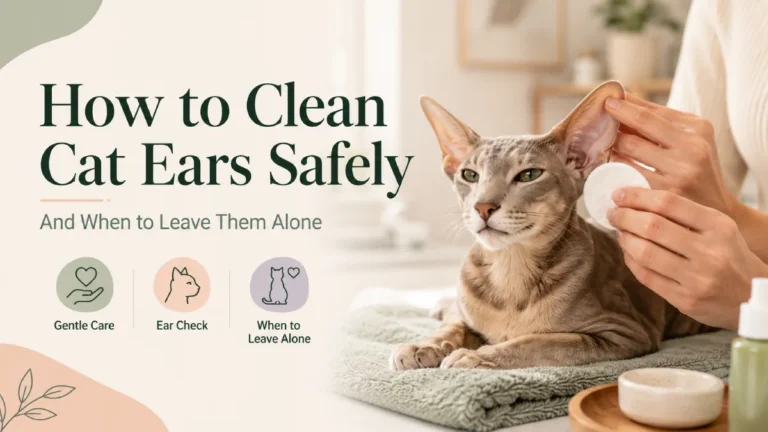
Ear Care: Inspect Regularly, Clean Only When Needed
Ear care does not mean every healthy cat needs routine ear cleaning.
VCA notes that most cats with healthy ears do not need regular cleaning and that over-cleaning can irritate the ear canal.
During grooming, look at the visible ear for:
- redness
- swelling
- discharge
- unusual wax
- odour
- persistent scratching
- head shaking
- pain when the ear is touched
If the ear looks painful, inflamed or abnormal, seek veterinary advice before cleaning.
Avoid inserting cotton swabs deeply into the ear canal. They can push debris further in or cause trauma.
Dental Care Belongs in the Grooming Routine
A clean coat does not compensate for painful teeth.
AAHA states that daily tooth brushing is the most effective home method for reducing plaque accumulation and recommends pet-specific toothpaste rather than human toothpaste.
Introduce oral care gradually.
A cat may first learn to accept:
- face touching
- lip lifting
- touching the outside of the teeth
- a cat toothbrush
- pet-safe toothpaste
- eventually brief brushing
Stop and arrange veterinary assessment if you find:
- red or bleeding gums
- severe bad breath
- drooling
- obvious mouth pain
- difficulty eating
- food dropping
- avoidance of hard food
Home tooth brushing helps control plaque; it does not treat established painful dental disease.
Eye-Area Hygiene
Most cats do not need elaborate cosmetic eye cleaning.
If a small amount of dried material appears around otherwise comfortable eyes, it can generally be gently wiped from the surrounding fur using a clean damp pad or soft cloth.
Persistent tearing or discharge is different.
Redness, squinting, swelling, thick discharge, cloudiness or apparent eye pain can accompany eye disease and should not be managed purely as a grooming problem.
Avoid cosmetic products containing substances that could irritate the eye, and do not use peroxide around the eyes.
Most Healthy Cats Rarely Need Baths
Routine bathing is often unnecessary.
VCA notes that most healthy adult cats groom themselves effectively and rarely require bathing. Needs change with age, lifestyle and health status.
Bathing may become relevant when:
- the coat is contaminated
- the cat cannot keep itself clean
- veterinary treatment requires a medicated shampoo
- a specific hygiene issue cannot be managed by brushing or wiping
Use products intended for cats rather than human shampoo.
If a potentially toxic substance is on the coat, contact a veterinarian for advice rather than allowing the cat to lick it off or experimenting with household cleaners.
Check the Paws While You Check the Nails
A grooming session is a convenient time to look at the paws.
Check:
- pads
- spaces between toes
- nail beds
- broken claws
- swelling
- debris
- cuts
- areas the cat persistently licks
A painful paw problem needs medical assessment rather than cosmetic trimming.
Litter Hygiene Is Part of the Wider Hygiene System
The litter box is not technically a grooming tool, but poor litter hygiene can interfere with overall cleanliness and comfort.
Cornell advises removing feces and clumps daily from clumping litter and cleaning boxes regularly enough that they remain dry and clean.
Long-haired cats may occasionally collect litter or fecal material around the hindquarters. If this happens repeatedly, look beyond cleaning the fur and consider:
- stool consistency
- mobility
- body weight
- box size
- coat matting
Repeated contamination can signal a broader problem.
A Basic Cat Grooming Tool Kit
You do not need a drawer full of specialised equipment.
Depending on your cat, useful tools may include:
- soft brush or grooming mitt
- longer-toothed comb
- appropriate undercoat tool
- cat nail clippers
- cat toothbrush
- cat-specific toothpaste
- clean soft cloths or cotton pads
- treats or another preferred reward
- non-slip grooming mat
For long coats, a comb is particularly useful for checking whether grooming has reached through the coat rather than only smoothing the top layer.
Avoid assuming the most expensive tool will be the one your cat tolerates best.
Introduce Grooming Tools Gradually
When learning how to groom a cat, begin before the brush ever travels through the whole coat.
A simple progression is:
- place the tool nearby
- allow the cat to investigate
- reward relaxed interest
- briefly touch the tool to the body
- make one gentle grooming stroke
- reward
- finish
Then gradually increase what the cat comfortably accepts.
Cats Protection recommends this type of gradual introduction for kittens, while current FelineVMA cooperative-care guidance supports teaching cats to participate willingly rather than relying on force.
Cooperative Handling Is Better Than Wrestling
Cooperative care means teaching a cat to voluntarily participate in routine care.
This might eventually include:
- presenting a paw
- standing on a particular mat
- allowing an ear check
- accepting brief mouth handling
- remaining in position for brushing
FelineVMA notes that cooperative care can reduce reliance on physical restraint and minimise fear and defensive responses.
Not every home-grooming task needs formal training, but the principle is valuable:
ask rather than force whenever possible.
Keep Early Grooming Sessions Short
A complete head-to-tail session is not the goal when the cat is still learning.
It is often better to accomplish:
three comfortable brush strokes
than:
ten minutes of increasingly stressful grooming.
You can divide grooming across the week:
- coat today
- paws another day
- mouth practice later
- ear observation during relaxed petting
Reward Calm Participation
Use whatever genuinely motivates the individual cat.
That might be:
- a small food reward
- play
- petting
- access to a favourite activity
- verbal praise paired with another reward
FelineVMA emphasises that rewards should be individualised and delivered promptly after the desired behaviour.
Know When to Stop
Stop or reduce the intensity if the cat:
- repeatedly tries to leave
- freezes
- becomes increasingly tense
- flattens or rotates the ears back
- lashes the tail
- growls
- hisses
- swats
- bites
- becomes painful when one area is touched
Do not continue merely because one side of the cat is still unbrushed.
If the response seems linked to pain rather than simple dislike, arrange veterinary assessment.
When Professional Grooming May Help
A skilled cat groomer can be useful when:
- a long coat requires more maintenance than the owner can safely provide
- minor tangles recur despite appropriate home care
- the cat needs clipping that is difficult to perform safely at home
- nail care cannot be completed safely
- the owner needs help choosing tools
Extensive or painful matting may require veterinary involvement, particularly when the underlying skin is inflamed or the cat requires pain relief or sedation for safe removal.
When a Veterinarian Should Evaluate the Grooming Problem
Grooming becomes a medical question when you notice a meaningful change from normal.
Arrange veterinary assessment for:
- sudden loss of normal self-grooming
- new persistent overgrooming
- bald patches
- sores or broken skin
- heavy scaling or crusting
- persistent itching
- painful mats
- foul-smelling or inflamed skin
- repeated ear discharge or head shaking
- painful eyes or persistent discharge
- dental pain
- ingrown nails
- unexplained change in coat quality
- sudden grooming intolerance
- mats developing because the cat cannot move normally
Cornell specifically warns that excessive licking can accompany itching or pain, while declining grooming in older cats can also signal underlying disease or mobility problems.
For broader baseline monitoring, Pawnium’s Cat Health Check at Home already covers changes in coat, grooming, mobility, appetite and other health trends. That page is confirmed as Pawnium’s preventive monitoring hub.
Example Weekly Cat Grooming Routine
This is a flexible example rather than a prescription for every cat.
Throughout the Week
Short-haired adult
- brush once or as needed
- glance over skin and coat
- check paws/nails when convenient
- practise a brief oral-care routine
Medium-haired adult
- brush/comb several times according to tangling and shedding
- check armpits, belly and hindquarters
- inspect for early mats
Long-haired adult
- brush and comb most days or daily if that is what keeps the coat tangle-free
- pay special attention to friction areas
- inspect skin beneath the coat
Senior or mobility-limited cat
- check difficult-to-reach coat areas regularly
- inspect nail length
- keep sessions gentle
- note any pain or loss of flexibility
Example Monthly Review
Once a month, step back from individual grooming sessions and ask:
- Is the coat condition changing?
- Are mats appearing more often?
- Is shedding different from normal?
- Is the cat grooming itself more or less?
- Are nails becoming overgrown?
- Has oral care become harder?
- Are ears staying clean and comfortable?
- Is eye discharge becoming recurrent?
- Is the cat more sensitive to handling?
- Has body weight or mobility changed?
A monthly review is about detecting trends, not saving every grooming task for one day.
Printable Grooming Schedule
Use a simple checkbox system:
Week of: __________
- ☐ Coat brushed/combed as needed
- ☐ Skin inspected
- ☐ Mat-prone areas checked
- ☐ Nails inspected
- ☐ Paws checked
- ☐ Teeth brushed / oral routine completed
- ☐ Ears visually checked
- ☐ Eye area checked
- ☐ Litter area maintained
- ☐ Grooming tolerance noted
- ☐ New lump, pain, hair loss or skin change recorded
Changes noticed:
____________________________
Veterinary follow-up needed:
Yes / No / Unsure
The detailed coat- and life-stage schedule appears in the original content asset below.
FAQs
How often should I groom my cat?
It depends on coat length, shedding, age and self-grooming ability. Many short-haired cats can start with roughly weekly brushing, while long-haired cats commonly need daily coat attention to prevent tangles. Seniors and cats with mobility or weight problems may need additional help.
Does my indoor cat still need grooming?
Yes, potentially. Indoor cats still shed, develop mats, grow nails and can develop dental or skin problems. The amount of coat assistance varies, but grooming also provides a useful opportunity to observe changes in skin, coat and body condition.
Should I brush my cat every day?
Daily brushing is particularly useful for many long-haired cats and during periods of heavy shedding. A healthy short-haired cat may not require daily brushing. Base frequency on how quickly loose coat, tangles or mats develop rather than forcing one schedule on every cat.
Why has my cat suddenly stopped grooming?
Reduced grooming can occur when a cat is painful, ill, overweight or unable to reach part of the body comfortably. A sudden decline deserves veterinary consideration, particularly in a senior cat or when mobility, appetite or behaviour has also changed.
Can I cut mats out of my cat’s fur with scissors?
Avoid scissors. Mats can pull the thin skin upward, making accidental cuts surprisingly easy. Minor tangles may sometimes be combed out, but extensive, tight or painful mats should be handled by a veterinarian or qualified groomer.
Does grooming prevent hairballs?
Brushing removes loose hair before the cat swallows it and can therefore reduce ingested fur and hairball formation. It cannot guarantee that a cat will never develop a hairball, and repeated retching or vomiting should not automatically be assumed to be a harmless hairball.