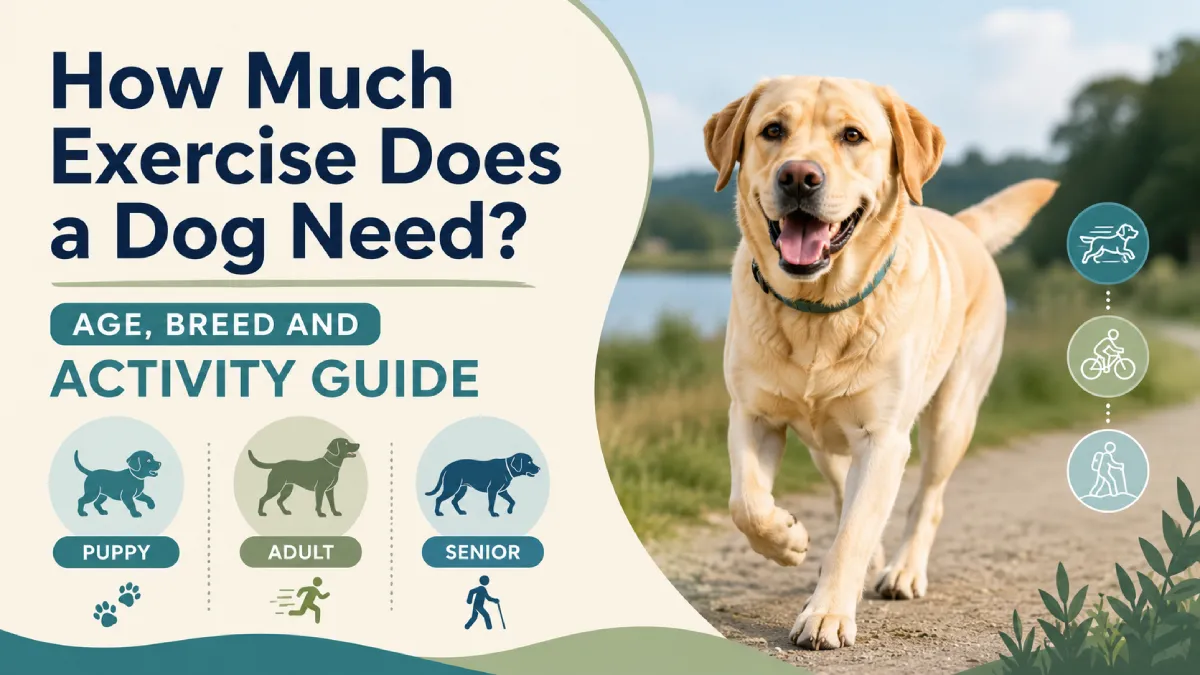
How Much Exercise Does a Dog Need? Age & Activity Guide
How much exercise a dog needs cannot be reduced to one daily number. Age, body size, breed tendencies, fitness, body condition, health, temperament, weather and the type of activity all change what is appropriate. A relaxed sniff walk, fast repetitive fetch and a steep hike can place very different demands on the same dog.
AAHA recommends exercise and mental stimulation that are appropriate for the individual dog’s age, breed and temperament. That is a better starting point than internet formulas that assign every dog a fixed number of minutes. The practical goal is to build a routine that supports fitness and behaviour while allowing comfortable recovery.
Quick Answer
There is no universal exercise requirement for every dog. Build daily activity around your dog’s life stage, health, fitness, size, airway anatomy, body condition, preferences and recovery. Combine physical activity with sniffing, training and other enrichment, then adjust the plan when your dog shows persistent fatigue, stiffness, reluctance to move or difficulty recovering.
Why There Is No Universal Exercise Number
Two dogs of the same breed and weight may have different activity needs. One may be a fit young adult accustomed to hiking, while the other may be overweight, recently adopted, recovering from illness or simply less interested in vigorous movement. A single target such as “60 minutes a day” ignores those differences.
Exercise also has a training effect. A dog that regularly runs can become fitter and capable of more work, so continually adding intense activity can create an endurance athlete without necessarily improving calmness at home. Balanced routines therefore include exploration, learning, sleep and recovery as well as movement.
Factors That Change Dog Exercise Needs
Age and Life Stage
Puppies are developing coordination, bones, joints and social skills. Adolescents often have substantial energy but may still lack self-regulation. Healthy adults can usually tolerate more structured conditioning, while senior dogs may benefit from shorter, more comfortable sessions adapted to mobility and medical changes. Life stages overlap, so age alone should not determine the plan.
Breed Tendencies and Individual Preference
Breed history can suggest likely interests. Herding, retrieving, scenting, guarding and terrier-type behaviours may influence what a dog finds rewarding. AAHA notes that breed-specific tendencies can matter, while individual variation within a breed can be substantial. A dog does not need to enjoy an activity simply because it is common for the breed.
Adult Size and Body Condition
Size affects biomechanics, but it does not create a reliable minutes-per-kilogram formula. Body condition matters because excess body fat increases physical and heat load, while an underconditioned or poorly muscled dog may fatigue sooner. Veterinary assessment is appropriate before a major exercise increase in an overweight or deconditioned dog.
Fitness Level
Fitness is activity-specific. A dog used to neighborhood walks is not automatically prepared for a long mountain hike or repeated sprinting. Increase new forms of exercise gradually and watch the dog’s recovery on the same day and the following day rather than judging only excitement during the activity.
Temperament and Motivation
Some dogs stop when tired; others remain intensely focused on a ball, trail or job. Sporting and working dogs may continue despite rising heat or fatigue. High motivation should not be interpreted as proof that the body is ready for unlimited repetitions.
Health and Medical Restrictions
Arthritis, heart disease, respiratory disease, neurologic problems, recent surgery and other conditions can alter safe activity. Exercise can be valuable in many medical plans, but the type, intensity and progression should match veterinary guidance rather than a generic internet schedule.
Exercise by Life Stage
Puppies
Do not use the “five minutes per month of age” rule as a universal scientific prescription. Puppy activity should consider developmental stage, breed and expected size, surface, repetitive impact, free play, fatigue and recovery. Self-directed exploration and short training sessions often provide useful activity without turning every outing into endurance work.
Adolescent Dogs
Adolescence can bring a combination of physical capability and inconsistent impulse control. These dogs may benefit from a mix of walks, sniffing, reward-based training, appropriate play and structured rest instead of repeatedly increasing high-intensity exercise whenever behaviour becomes difficult.
Healthy Adult Dogs
Adults can often participate in the widest range of activities, including hiking, running, swimming, retrieval, tug and dog sports when appropriately conditioned. The best mix depends on the dog’s interests and physical status. Monitor enthusiasm, movement quality and post-activity recovery rather than chasing distance records.
Senior Dogs
Senior status does not mean a dog should stop moving. Comfortable activity can support mobility, routine and engagement, but pace and terrain may need adjustment. AAHA recommends monitoring mobility and activity because changes can be early clues of orthopedic disease or osteoarthritis.
Size and Conformation Considerations
Small dogs are not automatically low-energy, and giant dogs are not automatically suited to long repetitive exercise. Larger bodies can experience greater mechanical load, while very small dogs may need route and surface choices that fit their stride and environmental exposure.
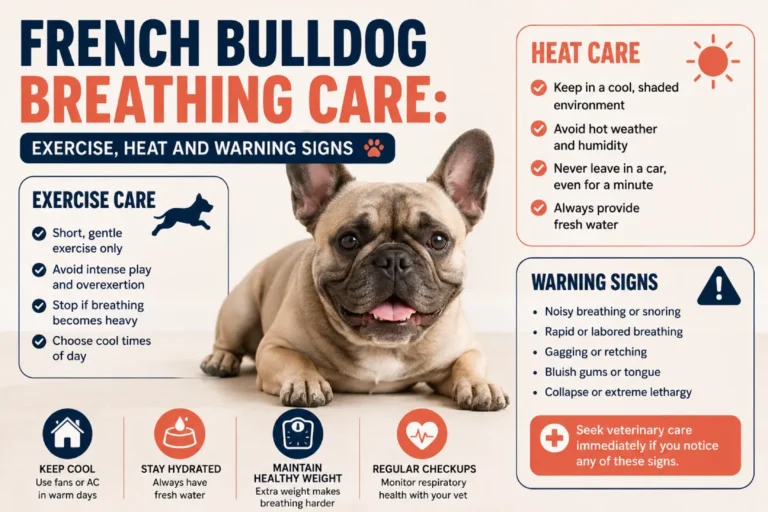
Brachycephalic dogs require particular caution. UC Davis notes that short-nosed dogs may have airway obstruction, exercise intolerance and greater difficulty cooling in hot or humid weather. Conditioning cannot remove structural airway limitations. Noisy or difficult breathing should not be dismissed as “normal for the breed.”
Working, High-Drive and Lower-Energy Dogs
Working and sport dogs often benefit from task-oriented outlets such as scent work, retrieval, obedience, controlled tug or other activities related to their individual interests. A high-drive dog usually needs more than physical exhaustion; predictable routines, cognitive work and calm behaviour skills are also important.
Lower-energy dogs still need opportunities to move, sniff and interact. The appropriate routine may simply emphasize gentler or shorter activities. A dog that suddenly becomes much less active than its normal baseline should be assessed for pain or illness rather than labelled lazy.
Different Activities Place Different Demands on the Body
Walking and Sniff Walks
Walking can serve toileting, exercise, exploration, training and social exposure. A slow sniff-focused outing may cover little distance but provide substantial sensory engagement. For more detail, see Dog Walking Schedule and Sniff Walks for Dogs.
Running and Hiking
Running and hiking can be valuable for appropriately conditioned dogs, but sudden increases in distance, speed or terrain raise the risk of fatigue and soreness. Route surface, elevation, weather, paw condition and access to water all matter. Dogs with medical restrictions need individualized veterinary advice.
Fetch and Tug
Fetch can involve repeated sprinting, sharp turns and sudden stops. Blue Cross cautions that repetitive fetch can place stress on the body, especially when a dog continues playing beyond sensible limits. Tug can be a controlled interactive game when the dog can pause, release and re-engage without escalating into unsafe arousal.
Swimming
Swimming is not automatically low-risk or suitable for every dog. Consider swimming ability, water temperature, current, water quality, access and exit points, fatigue and medical limitations. Use appropriate supervision and do not assume a dog will stop before becoming exhausted.
Training, Scent Work and Food Enrichment
Exercise planning should include mental work. Training, searching and foraging can engage the dog without adding the same repetitive physical load as running. Use Dog Enrichment Ideas to build a broader routine rather than relying on one activity.
Physical Exercise Versus Enrichment
Physical movement and enrichment overlap but are not identical. A fast run primarily challenges cardiovascular and musculoskeletal systems, while a scent search may emphasize sensory processing and problem solving. Many dogs benefit from both.
VCA describes enrichment as positive mental and physical stimulation tailored to the dog’s preferences, breed tendencies and abilities. A balanced day can therefore include movement, exploration, social interaction, training and quiet recovery rather than one long workout.
Signs the Current Activity Level May Be Working
- the dog moves comfortably during the activity
- recovers breathing and behaviour normally for that individual
- shows no persistent stiffness or lameness afterward
- maintains normal appetite and sleep
- can disengage and settle after activity
- remains willing to participate on future days
Signs the Dog May Need a Different Activity Mix
Restlessness, barking or destructive behaviour do not prove a dog simply needs more exercise. Anxiety, frustration, pain, adolescence, lack of sleep, overstimulation and learned behaviour can look similar. If the routine is physically intense but the dog still cannot settle, adding sniffing, training, calm enrichment and recovery may be more useful than simply running farther.
Signs of Too Much Exercise
Slow down or stop when a dog is lagging, repeatedly refusing to continue, moving abnormally, becoming unusually fatigued or showing stiffness. Significant lameness, collapse, confusion, severe weakness or breathing difficulty need prompt veterinary attention. See Signs of Overexercise in Dogs for a fuller safety guide.
Recovery and Rest Are Part of the Plan
Dogs adapt to exercise during recovery as well as during activity. A recovery day does not have to mean complete inactivity; it may include a comfortable sniff walk, short training, chewing or gentle exploration. The appropriate balance depends on intensity, fitness, age and health.
Use Do Dogs Need Rest Days? to build recovery into an active routine.
Weather Changes What Is Safe
Hot and Humid Conditions
Do not use one universal temperature cutoff. Risk is affected by humidity, direct sun, surface temperature, coat, body condition, airway anatomy, intensity and acclimatization. Cornell identifies heavy panting, drooling, weakness, confusion, vomiting, seizures and collapse among heatstroke signs. Severe breathing difficulty, altered awareness or collapse is an emergency.
Cold Conditions
Cold tolerance also varies. Small dogs, thin-coated dogs, very young or old dogs and dogs with medical conditions may become uncomfortable sooner. Ice, road salt and frozen surfaces can affect paws and traction, while deep snow can sharply increase physical effort.
Exercise After Meals
There is no one meal-to-exercise interval that suits every dog and activity. Large meals followed by intense exercise are commonly avoided in dogs at risk for gastric dilatation-volvulus, but individual feeding and activity advice should come from the veterinary team when a dog has specific risk factors.
When Veterinary Guidance Is Appropriate
Ask a veterinarian before making a major activity increase when your dog has heart or lung disease, arthritis, obesity, recent injury or surgery, neurologic disease, repeated exercise intolerance or a brachycephalic airway problem. A sudden reduction in stamina also deserves assessment because it may reflect a medical change rather than poor motivation.
Sample Daily Routine Patterns
| Dog profile | Example activity mix |
|---|---|
| Healthy adult companion | Toilet outing, purposeful walk, sniffing, short training, play, quiet time and sleep. |
| High-drive adult | Structured physical work plus scent work, skill training, free exploration, calm enrichment and planned recovery. |
| Senior with reduced mobility | Comfortable short walks, low-impact sniffing, gentle training or food search, frequent rest and mobility monitoring. |
| Hot-weather day | Cooler-time outdoor activity plus indoor scent work, training and calm enrichment. |
These are patterns rather than minute prescriptions. Adjust them to the individual dog and veterinary restrictions.
Internal Links
- Dog Walking Schedule
- Dog Enrichment Ideas
- Sniff Walks for Dogs
- Do Dogs Need Rest Days?
- Signs of Overexercise in Dogs
- Managing a High-Drive Dog
How to Increase an Exercise Plan Safely
Start from what the dog already does comfortably rather than from an online target. Record the current walking, play, running or sport routine for several ordinary days, including how the dog moves during activity and how they recover afterward. That baseline is more useful than comparing the dog with a breed average.
When adding activity, change one major variable at a time. For example, increase distance before also increasing speed and elevation. A dog that tolerates a longer flat walk may not be ready for the same distance on steep terrain. Gradual progression also makes it easier to identify which change caused soreness or excessive fatigue.
Use Recovery as Feedback
The dog’s response after exercise is part of the exercise plan. Note whether breathing returns toward normal, whether the dog can settle, how they move after resting and how they feel the following morning. A dog that is enthusiastic during activity but stiff later may have exceeded a comfortable workload.
Recovery also helps distinguish a demanding but appropriate session from an excessive one. A familiar hike that produces normal rest and normal movement the next day is different from an outing followed by persistent stiffness, reluctance to climb stairs or unusual fatigue.
Body Condition and Muscle Condition Matter
Body weight alone does not describe physical readiness. Two dogs at the same weight may have different body-fat and muscle levels. AAHA life-stage guidance includes body-condition and muscle-condition assessment as part of preventive care because both affect health and mobility.
If a dog is overweight, under-muscled or has recently lost condition, use veterinary guidance when increasing exercise. The goal should be sustainable conditioning, not trying to create a large calorie deficit through sudden intense activity.
Surface and Terrain Change the Workload
Grass, pavement, sand, hills, stairs, snow and uneven trails challenge the body differently. Deep sand and snow can make a short distance physically demanding, while hot pavement can injure paws. Slippery surfaces can increase strain during fast turns or play.
When introducing a new surface, shorten the first sessions and check paw pads and gait afterward. Dogs accustomed to flat sidewalks may need gradual exposure before long rocky hikes.
Day-to-Day Variation Can Be Useful
A balanced week does not need seven identical days. One day might emphasize a brisk walk, another a sniff-focused outing, another training and gentle play, with lighter recovery after more strenuous exercise. Variation can reduce repetitive loading while still providing movement and enrichment.
High-drive dogs can particularly benefit from this approach because changing the type of work prevents the routine from becoming a competition to add more speed or distance.
Returning to Exercise After Illness or Inactivity
Do not assume a dog can resume the previous routine immediately after surgery, illness, prolonged crate rest or several inactive weeks. Fitness declines and medical restrictions may remain even when the dog appears eager.
Follow the veterinary return-to-activity plan where one exists. If there is no formal plan but the dog has been inactive for a substantial period, begin below the previous workload and progress according to comfort and recovery.
Common Exercise Planning Mistakes
- Using breed alone: breed tendencies can guide activity ideas but cannot prescribe exact duration.
- Using excitement as proof of readiness: highly motivated dogs may continue despite fatigue.
- Adding exercise for every behaviour problem: restlessness can also reflect anxiety, pain, poor sleep or overstimulation.
- Ignoring recovery: what happens later that day and the next morning matters.
- Changing too much at once: simultaneous increases in speed, distance and terrain make overload more likely.
- Skipping weather adjustments: heat, humidity, cold and surface conditions can make a familiar route much harder.
A Two-Week Activity Review
For two weeks, record the type of activity, approximate intensity, weather, recovery and any stiffness or behaviour changes. Do not use the record to calculate a precise exercise quota. Use it to identify patterns: perhaps the dog recovers well from long sniff walks but becomes sore after repeated fetch, or settles better after training and exploration than after hard running.
This kind of pattern-based review can make a veterinary or rehabilitation discussion more specific because you can describe what the dog actually does and how the body responds.
Seek Urgent Veterinary Care If…
Stop activity and seek urgent care for collapse, severe breathing difficulty, altered awareness, seizures or marked weakness. These signs can occur with heatstroke and other serious medical problems and should not be managed by simply allowing the dog to “rest it off.”
Original Practical Tool
| Assessment field | Owner notes |
|---|---|
| Dog age/life stage | ________________ |
| Breed/type and adult size | ________________ |
| Current weight/body condition | ________________ |
| Current fitness level | Low / Moderate / Well-conditioned / Unsure |
| Medical or veterinary restrictions | ________________ |
| Favourite activities | ________________ |
| Current activity mix | ________________ |
| Typical recovery time | ________________ |
| Behaviour after activity | Settles / Remains highly aroused / Unusually tired / Other |
| Climate/weather factors | ________________ |
How to use it: use these observations to discuss suitable activity categories and progression with your veterinarian. It is not a calculator that outputs an exact number of minutes.
FAQs
Does every dog need an hour of exercise a day?
No. A fixed daily number ignores age, fitness, health, size, conformation, weather and the type of activity. Build the routine around the individual dog.
How do I know if my dog needs more exercise?
Look at the whole routine and behaviour. Restlessness alone is not proof of underexercise; boredom, anxiety, pain, adolescence, poor sleep or overstimulation may also contribute.
Can mental stimulation replace walks?
Mental work is valuable but is not automatically a complete substitute for physical movement, toileting and environmental exploration. The balance depends on the dog.
Should puppies be exercised less than adult dogs?
Puppies need activity, but it should suit development and avoid treating repetitive forced exercise as the goal. Use the dedicated puppy exercise plan rather than a universal age formula.
What if my dog is exhausted after walks?
Repeated excessive fatigue, stiffness, lagging, lameness or slow recovery suggests the routine should be reassessed. Severe weakness, collapse or breathing difficulty needs urgent veterinary care.