
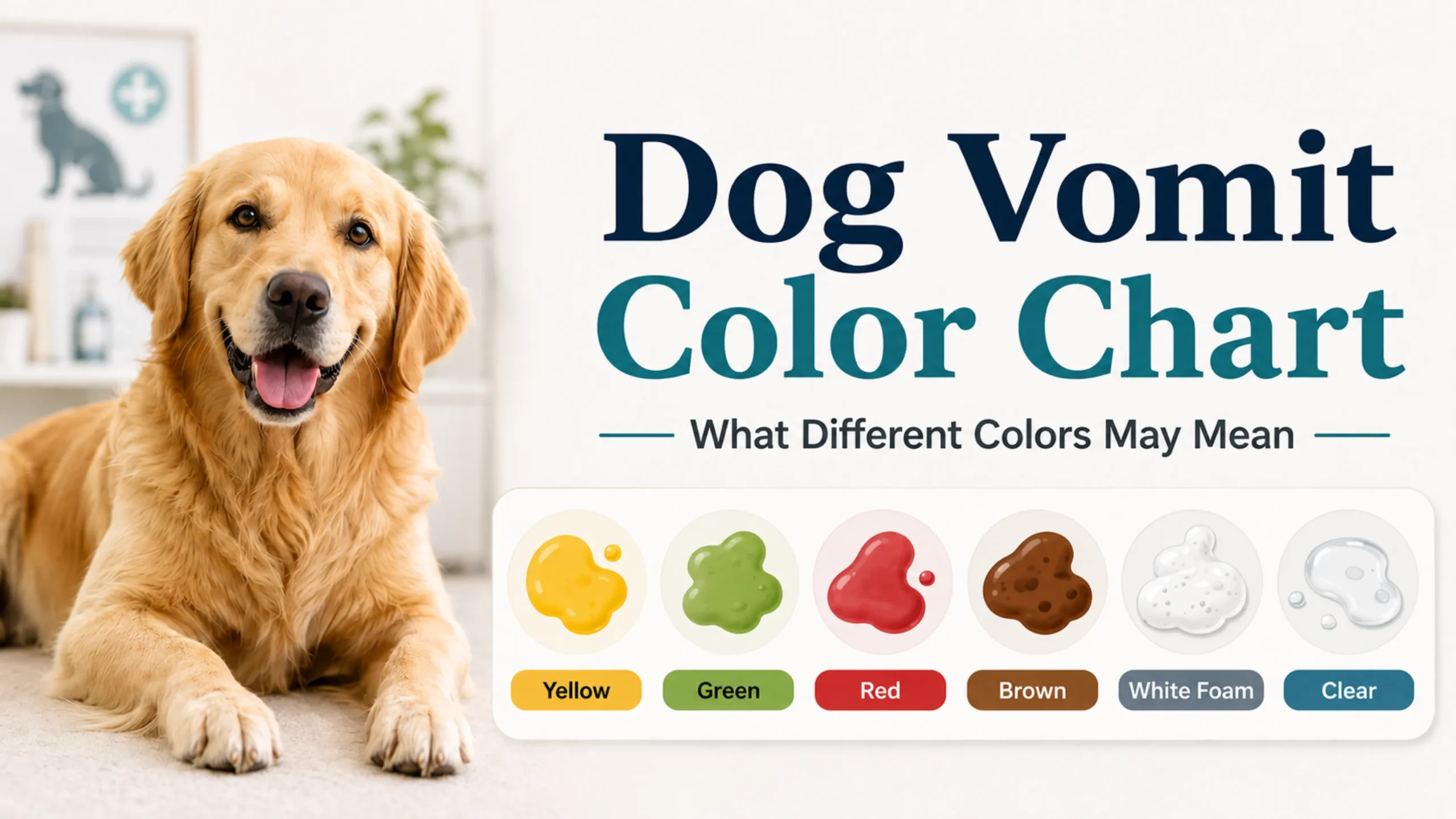
Dog Vomit Color Chart: What Different Colors May Mean
Dog vomit can appear clear, white and foamy, yellow, green, brown, red, pink or very dark. Its appearance can provide useful information about what may be mixed with the stomach contents, but colour alone cannot explain why a dog is vomiting.
This dog vomit color chart is designed to help you describe what you are seeing and decide what else to monitor. Frequency, appetite, behaviour, hydration, abdominal discomfort, diarrhoea and possible exposure to toxins or foreign objects can be more important than colour because vomiting occurs with many gastrointestinal and systemic conditions.
Immediate Answer
Different vomit colours may reflect food, water, saliva, bile, grass, blood or something a dog swallowed. Colour does not provide a diagnosis. An isolated episode in an otherwise comfortable dog is different from repeated vomiting accompanied by lethargy, blood, abdominal pain, inability to keep water down, toxin exposure or repeated unsuccessful retching.
Vomiting Versus Regurgitation
Vomiting and regurgitation may look similar after the material is on the floor, but they are different processes.
Vomiting is active. A dog may become nauseated, salivate, retch and use noticeable abdominal contractions before expelling stomach or upper-intestinal contents.
Regurgitation is usually passive. Food or fluid may suddenly come back up without obvious abdominal effort. Regurgitated food is often undigested and may sometimes retain a cylindrical shape from the oesophagus.
This distinction matters because repeated regurgitation can direct a veterinarian toward oesophageal problems rather than the causes usually investigated with true vomiting.
If you cannot tell which is happening, a short video of an episode may help your veterinarian distinguish the two processes.
Why Colour Alone Cannot Diagnose the Cause
Vomiting is a clinical sign rather than a disease.
Possible causes include disorders involving the digestive system as well as kidney or liver disease, pancreatitis, irritating substances, toxins and other illnesses. Swallowed objects can also obstruct the gastrointestinal tract and cause vomiting.
Two dogs can therefore produce vomit that looks almost identical while having very different underlying problems.
When evaluating an episode, consider:
- how many times your dog has vomited
- how long the problem has continued
- whether food or water stays down
- appetite
- energy level
- diarrhoea
- abdominal discomfort or swelling
- suspected blood
- possible dehydration
- recent dietary changes
- possible access to rubbish, plants, chemicals or medications
- whether a toy, bone, cloth or other object could have been swallowed
- existing medical conditions
Think of appearance as one piece of information rather than an at-home diagnostic test.
Dog Vomit Colour Chart
Important: Colour does not provide a diagnosis. The chart below is intended to help you record what you see and decide which additional signs may warrant veterinary attention.
| Colour | Appearance | Possible explanations | Other signs to observe | Recommended action |
|---|---|---|---|---|
| Clear | Watery or transparent fluid | Water, saliva or gastric fluid may be present | Repeated episodes, inability to keep water down, lethargy | Monitor if isolated and dog is otherwise normal; contact veterinarian if repeated |
| White | Foam, froth or bubbles | Saliva, stomach fluid and air can create foam | Repeated dry retching, pain, abdominal swelling | Monitor an isolated episode; seek urgent veterinary assessment for swollen abdomen with repeated unproductive retching |
| Yellow | Yellow fluid or foam | Bile may be visible, particularly after other stomach contents have emptied | Frequency, appetite, diarrhoea, lethargy, pain | Monitor an isolated episode; contact veterinarian if recurrent or accompanied by illness |
| Green | Green or yellow-green material | Bile, grass or another swallowed green substance may affect colour | Possible plant or toxin exposure, pain, repeated vomiting | Contact veterinarian if unexplained, recurrent or accompanied by illness |
| Brown | Brown liquid or partially digested material | Food, dirt or other swallowed material may look brown | Foreign-body exposure, pain, appetite loss, repeated vomiting | Contact veterinarian if recurrent or accompanied by other signs |
| Red | Red streaks, spots or fluid | Fresh blood is one possibility; red food or material can also alter colour | Continued bleeding, weakness, pale gums | Contact veterinarian promptly if blood is suspected |
| Pink | Pale pink fluid or foam | Small amounts of blood mixed with fluid are possible; swallowed material may also change colour | Increasing redness, repeated vomiting, weakness | Contact veterinarian if blood is suspected |
| Very dark or black | Dark material, especially coffee-ground-like particles | Digested blood is an important possibility when material resembles coffee grounds | Weakness, pain, pale gums, continued vomiting | Contact veterinarian promptly; urgent assessment may be appropriate depending on other signs |
| Undigested food | Recognisable pieces of food | May occur with vomiting; passive return may instead be regurgitation | Timing after eating, abdominal effort, repeated episodes | Monitor isolated event; contact veterinarian if recurrent |
| Mucus | Slippery, clear, white or stringy material | Gastric secretions may accompany vomiting | Diarrhoea, blood, appetite changes, recurrence | Monitor or contact veterinarian depending on other signs |
| Grass | Grass mixed with food, fluid or foam | Grass was swallowed, but this does not establish why vomiting occurred | Repeated vomiting, appetite loss, discomfort | Monitor isolated event; contact veterinarian if recurrent |
| Foreign material | Cloth, plastic, toy pieces, string, bones or other non-food items | A swallowed foreign object may be present | Pain, appetite loss, repeated vomiting, lethargy | Contact veterinarian promptly because gastrointestinal obstruction may need to be ruled out |
Do not treat the action column as a diagnosis system. A dog can require urgent care even when the vomit itself looks relatively ordinary if serious accompanying signs are present.
Clear Vomit
Clear material may contain water, saliva or gastric fluid. The transparent appearance does not tell you whether the problem is minor or medically important.
Repeated vomiting matters because continued fluid loss can contribute to dehydration and electrolyte abnormalities.
If your dog repeatedly vomits after drinking or cannot keep water down, contact your veterinarian. Pawnium’s dog dehydration signs guide can provide additional information about changes to monitor while veterinary advice is arranged.
White Foam
White foam dog vomit may contain saliva and stomach fluid mixed with air. Frothy vomit can occur with gastrointestinal upset and is not specific to one condition.
Pay more attention to what the dog is doing than to the foam itself.
Repeated attempts to vomit while producing little or nothing are very different from one episode of foamy vomit. If unproductive retching occurs with a swollen or painful abdomen, restlessness or weakness, seek urgent veterinary assessment because these are recognised signs of gastric dilatation-volvulus, or GDV.
Yellow Vomit
Yellow dog vomit often contains bile, but that does not mean an empty stomach is always the explanation.
Yellowish bile may become visible after other stomach contents have already been emptied during vomiting. Gastrointestinal inflammation can also produce vomiting containing foamy yellow bile.
The important question is therefore not simply whether your dog is vomiting bile, but what is happening alongside it.
An isolated episode in a comfortable dog differs from recurrent yellow vomiting accompanied by diarrhoea, appetite loss, abdominal discomfort or lethargy.
If your dog’s appetite has also changed, see Pawnium’s why your dog is not eating guide for related signs worth monitoring.
Green Vomit
Green dog vomit may contain bile, grass or another green substance that was swallowed. Appearance alone cannot distinguish between these possibilities.
Consider what your dog could recently have accessed. Plants, garden substances, household chemicals and discarded foods can all become relevant when vomiting develops after an ingestion.
If toxin exposure is possible, contact a veterinarian rather than waiting for the vomit colour to provide more clues. FDA guidance recommends veterinary contact when a pet has ingested something potentially dangerous.
Pawnium’s foods dogs cannot eat resource can also help owners identify potentially hazardous food exposures.
Brown Vomit
Brown dog vomit should not automatically be described as faecal material.
Partially digested food, soil or another swallowed substance may look brown. The appearance alone cannot determine whether intestinal contents or an obstruction are involved.
What matters more is whether brown vomiting occurs repeatedly or alongside appetite loss, abdominal pain, dehydration or lethargy. These are among the signs reported with gastrointestinal foreign-body obstruction.
If you know or suspect that your dog swallowed an object, contact a veterinarian promptly.
Red Vomit
Red dog vomit may contain fresh blood, although foods, colouring or another recently swallowed red material can sometimes produce a similar appearance.
Do not attempt to determine the source of suspected blood from colour alone.
Veterinary assessment is appropriate when blood appears to be present, especially if vomiting repeats or your dog also becomes weak, lethargic, painful or generally unwell.
Pink Vomit
Pink material may occur when a small amount of red material becomes diluted in clear fluid or foam.
Blood is one possible explanation, but colour by itself cannot confirm that blood is present. If practical, take a photograph for your veterinarian.
Contact your veterinarian if pink material repeatedly appears, becomes increasingly red or occurs alongside other signs of illness.
Dark or Black Material
Not every dark piece of vomit represents bleeding. Food and other swallowed material can naturally be dark.
However, very dark granular material that resembles coffee grounds deserves veterinary attention because partially digested blood can produce this appearance. Cornell specifically advises veterinary assessment for blood or material with a coffee-ground consistency in vomit.
Black dog vomit should therefore be evaluated in context. The coffee-ground appearance, repeated vomiting, abdominal pain, weakness or other signs of illness are more informative than darkness alone.
Undigested Food
Recognisable food can appear in vomit, but undigested food that returns soon after eating may sometimes represent regurgitation instead.
Watch the event itself.
Vomiting typically involves abdominal contractions and effort. Regurgitation occurs more passively and often happens soon after eating or drinking.
Repeated episodes after meals deserve veterinary investigation regardless of which process appears more likely.
Mucus
Mucus may make vomit appear slippery, stringy or gelatinous.
This finding is nonspecific. Instead of assigning a cause to mucus, note whether it occurs with food, bile, diarrhoea, blood, appetite changes or repeated episodes.
Persistent or recurrent vomiting should be discussed with your veterinarian even when the material itself does not look alarming.
Grass in Vomit
Finding grass in vomit confirms that grass was swallowed; it does not explain why the dog vomited.
Some dogs may have isolated vomiting episodes involving grass, but repeated vomiting should not continually be dismissed because grass is visible. Cornell notes that infrequent vomiting after grass ingestion may be isolated, whereas recurrent vomiting can indicate a problem requiring investigation.
Monitor appetite, energy and recurrence rather than focusing only on the presence of plant material.
Foreign Material
Pieces of fabric, plastic, toys, string, bones or other non-food material are important findings.
A swallowed object can become lodged in the stomach or intestines and cause a partial or complete gastrointestinal obstruction. Common signs include vomiting, appetite loss, abdominal pain, diarrhoea, dehydration and lethargy.
Do not assume that seeing one piece of an object in the vomit means everything swallowed has been expelled.
If foreign-body ingestion is known or strongly suspected, contact a veterinarian promptly. Gastrointestinal obstructions can require urgent treatment, including surgery.
Vomiting Once Versus Repeatedly
Frequency can change the significance of vomiting.
One isolated episode in an otherwise comfortable dog may be less concerning than vomiting that repeatedly returns. Ongoing vomiting may be associated with weakness, lethargy, dehydration and electrolyte imbalance.
Contact your veterinarian if episodes continue, become more frequent or begin occurring with other signs of illness.
Vomiting After Eating
When food comes back up shortly after a meal, watch how it happens.
Material that returns passively without abdominal contractions may be regurgitated rather than vomited. Repeated regurgitation can indicate problems involving the oesophagus and needs veterinary investigation.
Recurrent vomiting after eating, difficulty swallowing, weight loss, pain or inability to retain meals should also be discussed with a veterinarian.
Vomiting After Drinking
A dog that repeatedly vomits after drinking may struggle to replace fluids being lost through vomiting.
Do not use a blanket rule that removes access to water whenever a dog vomits. Merck notes that vomiting can cause dehydration and that withholding water can worsen fluid deficits unless supplemental fluids are being provided.
Ask your veterinarian how food and water should be managed in your dog’s specific situation, particularly when vomiting continues.
Vomiting With Diarrhoea
Vomiting and diarrhoea occurring together increase fluid loss.
Both signs may occur with gastroenteritis, but they are not limited to one disease and can appear with other illnesses.
Persistent vomiting or diarrhoea may lead to dehydration and weakness, particularly in puppies and elderly pets.
Once urgent problems have been ruled out and veterinary guidance supports home feeding, Pawnium’s what to feed a dog with diarrhoea guide can provide additional dietary information.
Vomiting With Lethargy
Significant lethargy changes the picture.
A dog that vomits once and immediately returns to normal is different from one that becomes unusually weak, inactive or reluctant to move.
Lethargy accompanies several conditions that can cause vomiting, including gastrointestinal foreign-body obstruction, and veterinary sources recommend seeking care when vomiting occurs alongside lethargy or other systemic signs.
Vomiting With Abdominal Swelling
A swollen abdomen combined with vomiting or attempted vomiting requires particular caution.
GDV occurs when the stomach becomes distended and twists. It is a life-threatening emergency requiring immediate veterinary treatment.
Signs may include:
- a bloated or painful abdomen
- repeated attempts to vomit without producing material
- excessive drooling
- restlessness or pacing
- weakness or collapse
- pale gums
Do not wait for actual vomit to appear if a dog has these signs.
Vomiting With Repeated Retching
Repeated unproductive retching means the dog repeatedly tries to vomit but produces little or nothing.
When this occurs with abdominal enlargement or obvious distress, seek urgent veterinary assessment. Nonproductive retching and a bloated or painful abdomen are recognised signs of GDV.
The urgency comes from the accompanying clinical pattern, not from vomit colour.
Puppy Vomiting
Persistent vomiting deserves particular attention in puppies.
Ongoing vomiting or diarrhoea can cause dehydration and weakness, which AAHA notes can be especially dangerous for young animals.
Young dogs also commonly swallow inappropriate objects, so foreign-body exposure should be considered when a puppy suddenly begins vomiting, stops eating or develops abdominal discomfort.
Contact a veterinarian promptly if a puppy:
- vomits repeatedly
- becomes markedly lethargic
- develops persistent diarrhoea
- cannot keep fluids down
- appears painful
- may have swallowed a foreign object
- may have consumed something toxic
Senior-Dog Vomiting
Age alone cannot identify the cause of vomiting, but persistent vomiting in an older dog should not simply be attributed to ageing or a sensitive stomach.
Older pets can become weak and dehydrated with ongoing vomiting or diarrhoea. AAHA identifies persistent gastrointestinal fluid loss as particularly concerning in elderly animals as well as puppies.
Existing diseases and medications may also affect how a veterinarian assesses a new vomiting episode.
What Owners Should Record
A detailed history often gives your veterinarian more useful information than colour alone.
Record:
- When vomiting started
- How many episodes occurred
- Time of each episode
- Whether retching or abdominal heaving occurred
- Colour and general appearance
- Approximate amount
- Food, water, foam, grass, mucus or blood present
- Any foreign material
- Time and contents of the last meal
- Recent diet or treat changes
- Appetite
- Water intake
- Whether water stays down
- Diarrhoea or stool changes
- Energy level
- Abdominal discomfort or swelling
- Possible access to rubbish, plants or chemicals
- Possible access to human medication
- Possible foreign-object ingestion
- Current medicines and known health conditions
Take a clear photograph if practical. A video can be useful if you are unsure whether the episode is vomiting or regurgitation.
If poisoning may be involved, keep the packaging or product label available when contacting your veterinarian.
What Owners Should Not Give Without Veterinary Advice
The appropriate treatment for vomiting depends on the underlying cause and the individual dog.
Unless your veterinarian specifically advises otherwise:
- do not give human anti-nausea medication
- do not give human painkillers
- do not give leftover prescription medication
- do not force-feed
- do not apply the same fasting routine to every vomiting dog
- do not broadly restrict water
- do not induce vomiting after suspected poisoning without professional guidance
Human medicines can be harmful to pets, and FDA specifically advises against giving medicines intended for people or another pet unless directed by a veterinarian.
Inducing vomiting is also inappropriate after some poison exposures because bringing certain substances back through the oesophagus can create additional injury or aspiration risk.
Contact your veterinarian promptly when vomiting may follow ingestion of something dangerous.
Relevant Pawnium resources include:
- foods dogs cannot eat
- what to do if your dog ate chocolate
- what to do if your dog ate grapes
- xylitol poisoning in dogs
Xylitol deserves particular urgency. FDA advises contacting a veterinarian, emergency clinic or animal poison-control centre immediately if a dog may have eaten a xylitol-containing product.
When to Contact a Veterinarian
Contact your veterinarian when:
- vomiting repeatedly occurs
- vomiting keeps returning
- food or water repeatedly comes back up
- blood may be present
- material resembles coffee grounds
- vomiting occurs with persistent diarrhoea
- appetite falls significantly
- your dog becomes lethargic
- abdominal pain develops
- dehydration is suspected
- a puppy or senior dog repeatedly vomits
- foreign-object ingestion is possible
- toxin exposure is possible
- your dog has another medical condition that may complicate vomiting
Blood in vomit, lethargy, abdominal pain, diarrhoea and dehydration are among the signs veterinary references identify as reasons to seek veterinary care.
Emergency Warning Signs
Seek Urgent Veterinary Assessment If…
Seek urgent veterinary care if your dog has:
- repeated unsuccessful attempts to vomit
- a swollen or painful abdomen with dry retching
- collapse
- profound weakness
- difficulty breathing
- suspected significant gastrointestinal bleeding
- serious or rapidly worsening illness
- known or strongly suspected dangerous toxin ingestion
- suspected gastrointestinal obstruction
- seizures or major changes in responsiveness
Repeated nonproductive retching with a bloated abdomen is especially important because it is a recognised presentation of GDV, a condition requiring immediate medical and surgical intervention.
Foreign-body obstruction can also become life-threatening and commonly causes vomiting alongside signs such as appetite loss, abdominal pain, dehydration and lethargy.
Do not delay urgent veterinary assessment while trying to match the vomit to a particular colour online.
FAQs
Does yellow dog vomit always mean an empty stomach?
No. Yellow material often contains bile, and bile may become visible after other stomach contents have emptied, but colour alone cannot establish why vomiting occurred. Recurrent episodes or vomiting accompanied by appetite loss, diarrhoea, lethargy or pain warrant veterinary advice.
Is brown dog vomit always faecal material?
No. Brown material may be partially digested food, soil or something else a dog swallowed. The colour cannot confirm faecal material or intestinal obstruction. Repeated vomiting accompanied by abdominal pain, appetite loss or suspected foreign-object ingestion requires veterinary assessment.
What does coffee-ground-like vomit mean in dogs?
Material resembling coffee grounds can represent digested blood and should be discussed promptly with a veterinarian. This is different from ordinary food that simply happens to be dark brown or black.
Should I stop giving my dog water after vomiting?
Do not automatically remove water from every vomiting dog. Continued vomiting can cause dehydration, and withholding water can worsen fluid deficits. Ask your veterinarian how fluids should be offered in your dog’s particular situation.
Why does my dog bring up undigested food shortly after eating?
The episode may be vomiting or regurgitation. Regurgitation is generally passive and commonly occurs shortly after eating or drinking, whereas vomiting involves abdominal effort. Recurrent episodes need veterinary assessment.
When is vomiting an emergency in dogs?
Vomiting or attempted vomiting becomes particularly urgent when accompanied by a swollen painful abdomen and repeated dry retching, collapse, severe weakness, suspected dangerous toxin exposure, possible gastrointestinal obstruction or substantial bleeding