
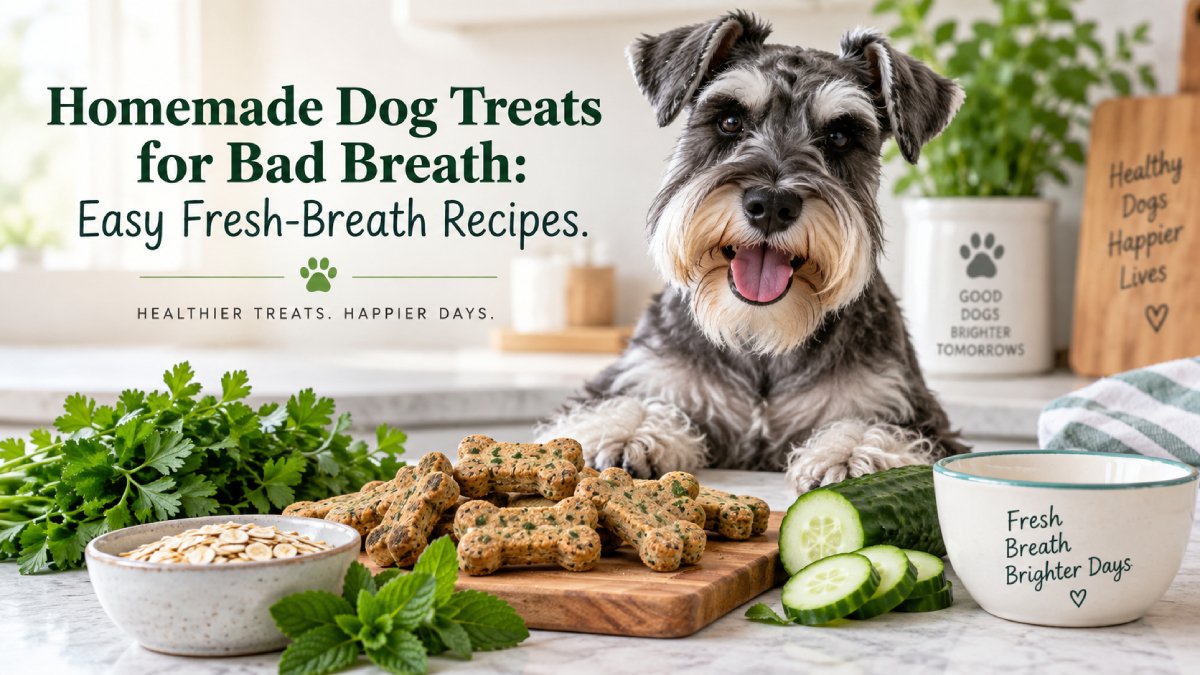
Homemade Dog Treats for Bad Breath: Easy Fresh-Breath Recipes
Homemade fresh-breath dog treats can make snack time smell a little nicer, especially when they include small amounts of dog-safe parsley or mint. They can be a useful addition to a dental-care routine, but they are not a cure for persistent bad breath. Ongoing odor can come from plaque, gum disease, broken teeth, infection, digestive problems, or other health issues, so a veterinary dental check is important when bad breath is strong, new, or persistent.
Why Dogs Get Bad Breath
The most common reason is buildup around the teeth and gums. Food particles and bacteria can contribute to plaque, tartar, and gum inflammation. Chewing certain textures may help mechanically, but nothing replaces tooth brushing and professional veterinary dental care when needed.
Sudden foul breath can also be a warning sign, particularly if it appears with drooling, difficulty eating, facial swelling, vomiting, weight loss, or changes in thirst and urination. In those situations, skip home remedies and contact your veterinarian.
Recipe 1: Parsley Pumpkin Breath Biscuits
Ingredients
- 1 cup plain pumpkin puree
- 2 cups oat flour
- 1 egg
- 1 tablespoon finely chopped fresh curly parsley
Instructions
- Preheat the oven to 350°F (175°C).
- Mix the pumpkin and egg.
- Stir in the parsley and oat flour until a workable dough forms.
- Roll the dough and cut into small biscuits.
- Bake for 25 to 30 minutes, then cool completely.
Use ordinary culinary parsley in a small amount. Do not use concentrated essential oils or herbal extracts in homemade dog treats.
Recipe 2: Minty Banana Oat Bites
Ingredients
- 1 ripe banana
- 1 1/2 cups rolled oats
- 1 teaspoon very finely chopped fresh mint
Mash the banana, mix in the oats and mint, and form small flattened bites. Bake at 325°F (165°C) for around 20 to 25 minutes. Refrigerate after cooling because these remain fairly soft.
Use a tiny amount of fresh culinary mint, not peppermint oil or other essential oils. Dogs have a much smaller margin for concentrated products than humans do.
Recipe 3: Frozen Yogurt Parsley Drops
Ingredients
- 1 cup plain unsweetened yogurt
- 1 tablespoon finely chopped fresh parsley
- 2 tablespoons plain pumpkin puree
Stir the ingredients together, spoon the mixture into small silicone molds, and freeze until solid. Offer one small frozen drop at a time. These are best for dogs that tolerate dairy well. If dairy causes loose stool or gas, choose a dairy-free recipe instead.
Recipe 4: Apple Parsley Crunch Squares
Ingredients
- 1/2 cup unsweetened applesauce
- 2 cups oat flour
- 1 egg
- 1 tablespoon finely chopped parsley
Mix, roll thin, cut into squares, and bake at 325°F (165°C) until dry. Lower the heat and dry longer for a crunchier texture. Use applesauce with no xylitol or added sugar.
Do Fresh-Breath Treats Actually Clean Teeth?
Homemade treats may briefly change mouth odor, but they are not a substitute for brushing. Soft treats provide almost no mechanical cleaning. Crunchy homemade biscuits can create some chewing action, but they are not designed or tested like veterinary dental products.
For daily care, use a dog toothbrush or finger brush with toothpaste made specifically for dogs. Human toothpaste is not designed to be swallowed by pets.
A Simple At-Home Dental Routine
- Introduce tooth brushing gradually and keep sessions short.
- Use dog toothpaste, never human toothpaste.
- Lift the lip and focus on the outside surfaces of the teeth where plaque commonly collects.
- Use veterinarian-recommended dental chews or products if brushing is difficult.
- Schedule veterinary dental checks as recommended for your dog.
Ingredients to Avoid in Fresh-Breath Dog Treats
Do not add xylitol, sugar-free mint products, mouthwash, toothpaste for humans, concentrated peppermint oil, tea tree oil, onion, garlic, or other strong flavoring oils. A product that freshens human breath can be inappropriate or dangerous for dogs.
Storage
Keep soft baked treats refrigerated and use them within several days. Frozen yogurt bites should stay frozen until serving. Dry biscuits may keep longer, but any homemade treat can spoil. Freeze extra batches rather than keeping a large supply at room temperature.
When Bad Breath Needs a Vet Visit
Arrange a veterinary exam if bad breath is persistent, suddenly much worse, or accompanied by red gums, bleeding, drooling, pawing at the mouth, loose teeth, reduced appetite, swelling, vomiting, weight loss, or major changes in drinking or urination. A treat cannot fix an infected tooth or systemic illness.
Frequently Asked Questions
Is parsley safe for dogs?
Small culinary amounts of common fresh parsley are often used in dog treats. Avoid concentrated extracts and large quantities, and ask your veterinarian if your dog has a medical condition or is pregnant.
Can dogs eat mint?
A very small amount of fresh culinary mint may be used in treats, but concentrated mint oils are not interchangeable with fresh leaves. Essential oils should not be added to homemade dog snacks.
Will pumpkin help bad breath?
Pumpkin mainly acts as a dog-friendly recipe base. It does not treat dental disease. Its value here is texture and flavor rather than breath treatment.
How often can I give fresh-breath treats?
Use them as you would any other treat: in small amounts that fit within your dog’s overall calorie intake.
Brushing Matters More Than Breath-Masking Ingredients
A pleasant-smelling herb can temporarily change odor, but plaque remains on the tooth surface unless it is physically removed. Regular brushing is the most direct home method for reducing plaque. Start slowly by allowing your dog to taste dog toothpaste, then touch the lips and gums before introducing a brush.
Many dogs need several short sessions before they tolerate full brushing. Reward calm behavior, keep the experience brief, and stop before your dog becomes frustrated.
What Healthy Dog Breath Should Smell Like
A dog’s mouth will never smell like mint gum, and that should not be the goal. Mild food odor can be normal. What deserves attention is a strong rotten, metallic, unusually sweet, ammonia-like, or suddenly changed smell—especially when paired with other symptoms.
Choosing Treat Texture for Dental Safety
Extremely hard homemade biscuits are not automatically better for teeth. A treat that is hard enough to risk tooth fracture is not a good dental strategy. If your dog is an aggressive chewer or has damaged teeth, ask your veterinarian which chew textures are appropriate.
For senior dogs or dogs with dental disease, soft fresh-breath treats may be easier to eat, but the underlying dental problem still needs professional assessment.
How to Introduce Herbs Safely
Start with the smallest amount in the recipe rather than increasing herbs for a stronger smell. Dogs are much more sensitive to concentrated flavors than people, and more is not better. Use fresh culinary leaves that you can identify confidently, wash them, chop them finely, and mix them evenly through the dough.
If your dog has never eaten the ingredient before, offer only a small treat the first time and watch for vomiting, diarrhea, itching, or other unexpected reactions.
Fresh Water Also Matters
Keep your dog’s water bowl clean and refill it with fresh water daily. Food residue and saliva can build up on bowls and contribute to unpleasant smells around mealtime. Washing food and water bowls regularly is a simple hygiene habit that supports overall oral care.
Final Thoughts
Homemade dog treats for bad breath can be simple and pleasant, especially with a little fresh parsley or mint. Use them as a snack alongside regular tooth brushing and veterinary dental care, not as a replacement. If your dog’s breath stays unpleasant despite basic care, have the mouth checked so the real cause can be addressed.