
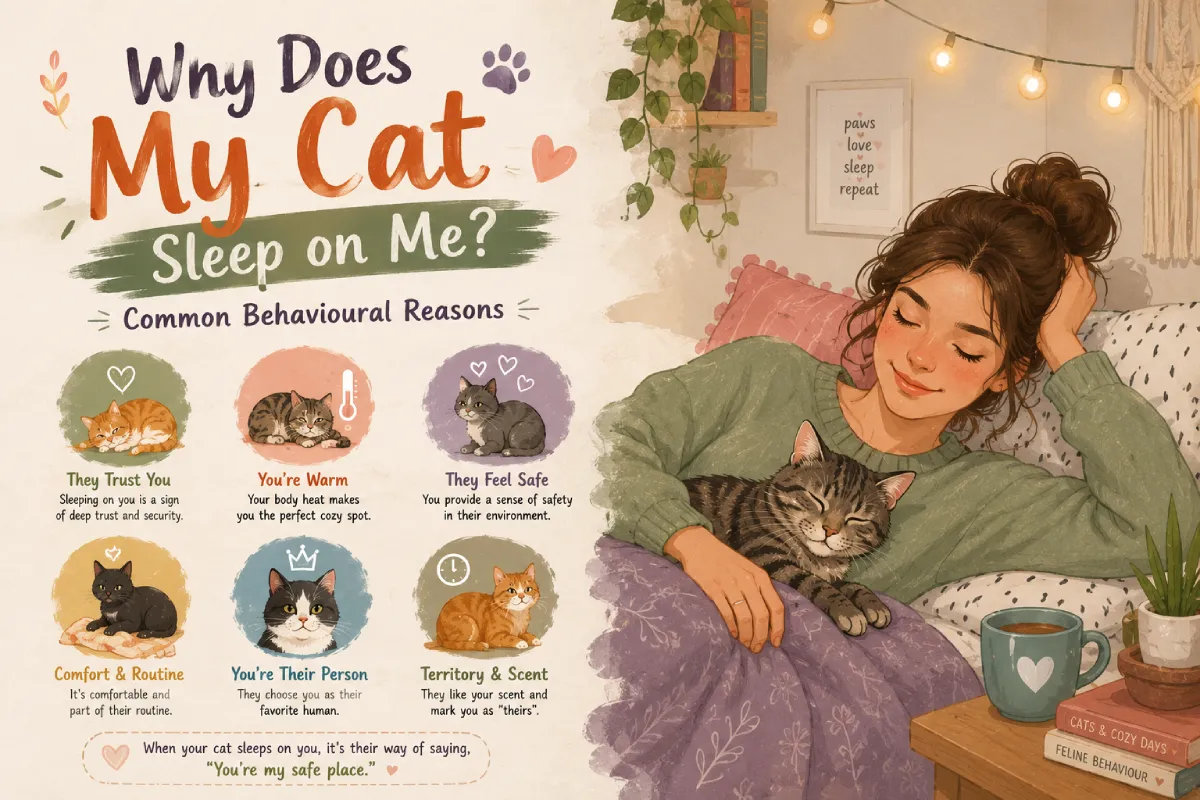
Why Does My Cat Sleep on Me? Common Behavioural Reasons
Few domestic experiences rival the quiet comfort of winding down at the end of a long day, only to have your feline companion curl up tightly across your chest, drape themselves over your legs, or nestle against your pillow. While having a heavy, purring cat anchor you to the mattress can occasionally make shifting positions difficult, it is widely considered one of the ultimate stamps of feline approval. If you have ever looked down at your sleeping companion and wondered why does my cat sleep on me, you are exploring a complex intersection of instinct, biology, and deep emotional bonding.
Pet parents frequently search for answers regarding why a cat sleeps on my chest, why a cat sleeps on my legs, why a cat sleeps near my head, or general motivations behind why a cat sleeps on owner and why cats sleep with people. Far from being a random choice of resting real estate, where and how your cat chooses to sleep reveals a tremendous amount about their internal comfort levels, their evolutionary heritage, and their attachment to you. This comprehensive pillar guide explores every behavioral, thermal, and psychological driver behind why cats make human bodies their preferred bed.
Direct Answer
When a cat chooses to sleep directly on your body, they are engaging in an instinctive behavior driven by a combination of thermoregulation, vulnerability management, social bonding, and scent marking. Because sleeping is the most vulnerable state in a cat’s daily cycle, choosing to spend those hours resting on or against a human proves that the cat feels entirely safe, secure, and deeply bonded to you. Human bodies radiate body heat, emit steady rhythmic breathing, and carry a familiar, comforting scent, making you the ultimate living, breathing resting sanctuary.
Warmth and Thermoregulation
Canines and felines possess different baseline metabolic temperatures than humans. While a human’s normal resting body temperature sits around 37°C (98.6°F), a healthy cat’s internal body temperature is naturally higher, averaging between 38.1°C and 39.2°C (100.5°F to 102.5°F).
-
The Constant Search for Heat: Because of their higher thermal baseline, cats are biological heat-seekers. They spend much of their day seeking out microclimates that conserve body warmth without expending metabolic energy.
-
The Living Radiator: Human torsos, heads, and legs radiate continuous body heat through the night. By curling up on your body, your cat utilizes you as a natural, living radiator, maintaining their optimal core temperature effortlessly during sleep.
Comfort and Physical Support
Cats are legendary connoisseurs of comfortable resting spots. They seek out surfaces that conform to their bodies, provide cushioning, and offer stable support.
An unmoving human body provides a soft, warm, contoured mattress. Unlike a hard floor or even a structured cat bed, a sleeping human offers a gently rising and falling surface (thanks to respiration) that mimics the secure, cozy feeling of huddling with littermates in a nest.
Security and Vulnerability Management
In the wild, felines occupy a fascinating evolutionary niche: they are apex predators, but they are also small enough to be targeted by larger predators. This means that during deep sleep, even domestic cats retain an acute ancestral awareness of their own vulnerability.
When a cat chooses to sleep on top of you, they are prioritizing safety. By resting on your body, they gain an early-warning radar system. If anyone or anything approaches the bed, your movements, heartbeat, and breathing shifts will alert the cat instantly. Sleeping on you is an expression of absolute trust; they are placing their safety in your keeping while they close their eyes.
Social Bonding and Trust
Felines are frequently misunderstood as solitary creatures, but domestic cats are deeply social animals capable of profound attachment.
In cat colonies, trusted cats sleep piled on top of or pressed directly against one another in what behavioral scientists call “contact resting.” This physical touch reinforces social harmony, lowers cortisol (stress hormone) levels, and triggers mutual oxytocin release. When your cat sleeps on you, they are treating you as a core member of their social group, mirroring the affectionate huddling they would share with feline family members.
Familiar Scent and Pheromone Blending
Cats experience the world primarily through their sense of smell. Scent is their primary currency for identifying territory, family, and safety.
Your skin, hair, and clothing carry a concentrated signature of your personal scent. When a cat sleeps on you, they are surrounding themselves with a familiar aroma that represents security. Furthermore, cats possess specialized scent-glands located on their cheeks, lips, paws, and base of their tail. As they knead, rest, and sleep on your body, they deposit their own facial pheromones onto you, effectively blending your scent with theirs to declare: “This human and this space belong to our shared territory.”
Habit and Routine
Cats are creatures of strict habit. They thrive on predictability and circadian consistency.
If your cat crawled onto your lap or chest as a tiny kitten and received gentle petting, warmth, and praise, their brain recorded that experience as a deeply positive routine. As they grow into adulthood, repeating that nightly ritual becomes hardwired into their daily schedule. Sleeping on you is simply what they have always done, and predictability brings them immense psychological comfort.
Why Cats Choose Specific Sleeping Locations on the Human Body
Where your cat chooses to park their weight on your body is rarely accidental. Each anatomical location serves a specific thermal or behavioral purpose.
Why Cats Sleep on the Chest
The chest is one of the most common and intimate sleeping spots for cats.
-
The Heartbeat and Respiration: Your chest rises and falls with every breath, and your heart beats with a steady, rhythmic thrum. This mimics the heartbeat of a mother cat that kittens huddled against during early life.
-
Maximum Warmth: The torso radiates an immense amount of core body heat, making the chest a cozy, high-value thermal zone.
Why Cats Sleep on the Legs
If your cat curls up across your shins, knees, or feet, they are opting for a slightly more independent resting zone.
-
The Watchtower Position: Sleeping on the legs or feet allows the cat to remain close to your scent and warmth while keeping their face pointed toward the bedroom door. It is an ideal spot for a cat that wants comfort without sacrificing their hyper-vigilant watch over the room’s entrance.
-
Freedom of Movement: It also gives the cat a quick escape route if someone moves abruptly or wakes up.
Why Cats Sleep Near the Head
Many owners wake up to find a cat curled directly on their pillow or pressed against the crown of their head.
-
Heat Retention: Human heads lose body heat rapidly (especially through the hair and scalp), making the pillow top an inviting thermal hotspot.
-
Maximal Scent Proximity: Your hair holds your shampoo and personal scent more intensely than clothing, providing an aromatic anchor.
-
Supreme Trust: Sleeping right by your face demonstrates the highest tier of trust, as your head is the most expressive and active part of your body.
Why Cats Sleep on the Stomach
Resting on your stomach offers a cushioned, hammock-like experience. As you breathe, your abdomen rises and falls in a gentle rocking motion that lulls the cat into deep REM sleep. Furthermore, stomach-sleeping offers direct access to your hands for pre-sleep petting.
Why Cats Sleep Beside Rather Than On the Owner
Some cats prefer pressing their flank against your thigh, arm, or back rather than lying directly on top of you.
-
Mobility and Comfort: These cats enjoy the shared warmth and bonding of contact resting, but prefer a flat mattress surface where they can stretch out fully without sliding off a moving human body.
Unique Content Asset: Sleeping-Location Chart
Use this diagnostic reference matrix to understand what your cat’s chosen sleeping location reveals about their motivations:
| Sleeping Location on Human | Primary Thermal Motivation | Behavioral & Emotional Meaning | Preferred Cat Personality |
| Chest / Torso | High core body heat absorption | Ultimate trust; seeking heartbeat/respiration rhythm | Deeply bonded, affectionate, secure cats |
| Pillow / Near Head | Escaping cold air; hair scent | High intimacy; wanting maximum scent proximity | Confident, very attached companions |
| Legs / Knees | Moderate warmth; open space | Balanced closeness with a quick escape route | Independent yet affectionate cats |
| Feet / Ankles | Minor warmth; doorway watch | Maintaining connection while monitoring room entry | Cautious or easily disturbed sleepers |
| Beside Owner (Flank) | Shared body heat; mattress stability | Contact resting without restricted movement | Sociable cats who value physical comfort |
| Under Blankets | Microclimate heat retention | Seeking absolute security, den-like darkness, and warmth | Shy, anxious, or cold-sensitive cats |
Age-Specific Sleeping Behaviours
A cat’s sleeping preferences evolve across their lifespan, influenced by developmental stages and physical aging.
Kitten Sleeping Behaviour
Kittens are notorious for climbing right onto your face, neck, or chest to sleep.
-
The Littermate Reflex: In a litter, kittens sleep in tightly intertwined piles to conserve body heat and maintain physical contact. When separated from their littermates, a human substitute becomes their living nest.
-
Exhaustion Crashes: Kittens play with reckless abandon until their energy instantly depletes, causing them to drop asleep wherever they happen to be climbing—frequently right on top of you.
Senior Cat Sleeping Behaviour
As cats enter their senior years (ages 10+), their sleeping habits shift toward comfort and physical relief.
-
Joint Comfort: Older cats frequently develop arthritis, making hard floors or stiff beds painful. A soft human mattress provides orthopedic relief.
-
Geriatric Clinging: Senior cats experiencing cognitive decline, sensory loss (fading vision or hearing), or age-related anxiety often become exceptionally clingy, seeking out their human’s body for reassurance and safety through the night.
Is Sleeping on an Owner a Sign of Dominance?
For decades, outdated pet training literature propagated the myth that dogs and cats who sleep on furniture, walk ahead of owners, or rest on top of humans are attempting to assert “dominance” and establish themselves as the alpha of the household.
Modern feline behavioral science has thoroughly debunked the dominance myth.
-
Cats do not view human-animal relationships through a political lens of social power struggles or pack hierarchy.
-
When your cat sleeps on you, they are not plotting a hostile takeover of your bed. They are seeking warmth, safety, comfort, and affection. Viewing normal, loving canine or feline behavior through a suspicious lens of dominance damages the mutual trust built between pet and owner.
When Sudden Clinginess May Be Concerning
While affectionate sleeping habits are generally wonderful, pet parents should remain observant of sudden, dramatic behavioral shifts.
-
Underlying Pain: If a cat that never slept on your bed suddenly starts clinging to you obsessively, refusing to move, they may be experiencing chronic pain (such as spinal arthritis or organ discomfort) and seeking your body heat for physical relief.
-
Systemic Illness or Fever: Cats experiencing low-grade systemic illness or hormonal imbalances may seek out human warmth to regulate their body temperature.
-
Environmental Anxiety: Sudden clinginess can also be a stress response to household disruptions, such as a recent move, new pets, or construction noise. If sudden clinging is accompanied by lethargy, changes in appetite, or litter box issues, schedule a veterinary checkup.
Sleep Safety for People and Cats
Sharing your bed with a sleeping cat is deeply comforting, but maintaining basic hygiene and safety ensures a restful night for everyone:
-
Parasite Prevention: Ensure your cat is on a strict, veterinarian-approved flea, tick, and deworming preventive protocol, as sleeping in close contact exposes you to potential parasites.
-
Allergen Management: If you suffer from mild cat allergies, wash your bedding weekly in hot water and brush your cat regularly to reduce dander accumulation.
-
Preventing Accidental Injury: Be mindful of your sleeping movements. If you are a restless sleeper who tosses and turns violently, sleeping with a tiny kitten or fragile senior cat poses a risk of accidental crushing; providing a cozy decoy bed nearby may be safer.
Creating an Alternative Sleeping Area
There may be times when you need uninterrupted sleep—such as recovering from an illness or managing a restless cat that paws at your face at 4:00 AM. Encouraging alternative resting spots requires creating spaces that rival your body heat:
-
Heated Pet Beds: Invest in a low-wattage, veterinary-approved self-warming cat bed or thermal pad that reflects your cat’s body heat back to them.
-
Sunny Perches: Place a comfortable cat tree or window hammock where morning sunbeams flood the room, enticing them away from your mattress during dawn hours.
-
Worn Clothing Decoy: Place an unwashed t-shirt bearing your scent inside their designated alternative bed to make it smell like you.
How to Discourage the Behaviour Gently
If your cat’s nighttime gymnastics, kneading on bare skin, or waking you up at dawn has become too disruptive, you can discourage the behavior without damaging your emotional bond:
-
Never Punish: Yelling, pushing your cat away aggressively, or spraying them with water creates fear and damages trust. The cat will not understand why you are angry; they will only learn to fear your hands.
-
Redirect Calmly: Each time your cat climbs onto your chest during sleep time, gently and silently lift them off and place them onto their cozy alternative bed right beside yours.
-
Reward the Decoy: The moment your cat settles into their own bed, drop a high-value treat or offer quiet praise.
-
Close the Bedroom Door: If gentle redirection fails and sleep deprivation persists, closing your bedroom door at night—while ensuring your cat has access to food, water, and litter elsewhere in the house—is a valid boundary. Expect a few nights of vocal protesting before they adjust to the new routine.
Frequently Asked Questions
Why does my cat sleep on my chest instead of anywhere else on the bed?
Your chest offers maximum core body heat, the soothing rhythm of your breathing, and the comforting thump of your heartbeat, mimicking the safety of a mother cat.
Is it a sign of affection when a cat sleeps on me?
Yes. Sleeping is a cat’s most vulnerable state. Choosing to rest directly on your body proves they feel completely safe, secure, and deeply bonded to you.
Can a cat sleeping on me be a sign of dominance?
No. The dominance myth has been debunked. Cats do not view sleeping on humans as a power struggle; it is driven entirely by warmth, security, comfort, and affection.
Why did my cat suddenly stop sleeping on me?
Cats’ preferences shift with weather changes (they seek cooler floors in summer and warm beds in winter), aging joint pain, or minor shifts in household routines. It is rarely a sign of diminished affection.
How do I get my cat to stop sleeping on my face at night?
Gently and consistently lift them off your face and place them onto a cozy bed beside you every time they climb up, rewarding them when they stay in their designated spot.
Conclusion
When your cat climbs onto your body to sleep, they are offering you one of the highest compliments in the animal kingdom. They are trading their independence for your warmth, choosing your heartbeat as their lullaby, and trusting you with their safety during their most vulnerable hours. By understanding the thermal, psychological, and evolutionary reasons why cats sleep on owners, you can appreciate this nightly ritual for the profound act of love that it is. Take your next step by appreciating your cat’s chosen sleeping spot tonight, honoring their trust, and enjoying the peaceful purrs of your devoted companion!