Human Foods Dogs Can Eat: Safe Options, Portions and Preparation
Few moments match the eager, hopeful expression of a dog sitting patiently by the kitchen counter while you prepare dinner. Sharing a bite of your snack can feel like a wonderful way to bond and show affection. However, while many whole foods from our kitchens make delicious, nutritious treats for dogs, the human diet also contains countless ingredients that can cause severe gastrointestinal distress, poisoning, or long-term health complications.
Navigating what is safe requires moving past guesswork and understanding the distinct differences between canine and human nutritional biology. Serving as our primary safe-food reference pillar, this comprehensive guide covers everything you need to know about human foods dogs can eat. Whether you are looking for foods dogs can eat, researching safe human food for dogs, discovering what human food can dogs eat, selecting dog-safe fruits or dog-safe vegetables, or identifying healthy human foods for dogs, this evidence-based, veterinary-reviewed resource ensures every treat you share is both safe and beneficial.
Quick Answer
Many whole human foods—including plain lean meats, select fruits like apples and blueberries, vegetables such as carrots and green beans, and grains like rice and oats—make safe, healthy treats for dogs when prepared plainly and served in moderation. However, human foods must never exceed 10% of your dog’s total daily caloric intake, and they can never replace a complete and balanced commercial dog food. Always remove hazardous parts like seeds, pits, rinds, and bones, avoid all seasoning, oils, butter, and toxic additives (such as onions, garlic, and artificial sweeteners), and tailor portion sizes to your individual dog’s size, weight, and health status.
Important Serving-Size Disclaimer & Portions
Critical Instruction: Do not provide one serving size for every dog. Portions vary by size, health and total diet.
There is no universal “one-size-fits-all” portion when sharing human food. A single baby carrot given as a snack represents a tiny, negligible calorie addition for a 90-pound Labrador Retriever, but that exact same carrot represents a massive caloric and sugar load for a 5-pound Chihuahua.
-
Size and Weight: Treats must always be scaled relative to your dog’s body mass.
-
Health Status: Dogs managing chronic conditions—such as pancreatitis, diabetes, kidney disease, or obesity—require strict dietary controls where even a single bite of fruit or cheese can trigger a medical emergency.
-
Total Diet: Every calorie from a human food snack must be accounted for within your dog’s daily energy allowance to prevent weight gain.
Human Food Versus Complete Dog Food
One of the most dangerous misconceptions in pet care is treating human food as a direct substitute or dietary equivalent to commercial dog food.
-
Complete and Balanced Nutrition: Commercial dog foods formulated to AAFCO standards are meticulously engineered to deliver precise, balanced ratios of essential amino acids, fatty acids, vitamins, minerals, and trace elements.
-
The Role of Human Food: Human foods are supplementary treats. Even the healthiest vegetable or lean meat lacks the comprehensive micronutrient matrix of a formulated diet. Do not describe human foods as replacements for complete dog food. Furthermore, do not label a food healthy simply because it contains one useful nutrient (e.g., offering excessive fruit because it contains Vitamin C, while ignoring the high sugar content). Avoid making unsupported claims about foods treating disease.
How Treats Affect Daily Calories and the 10% Rule
Treats—including all safe human foods—are the leading driver of unexpected canine obesity. Veterinary nutritionists enforce a strict golden rule: Treats and human food snacks must never exceed 10% of your dog’s total daily caloric intake. The remaining 90% of their daily calories must come from their complete and balanced maintenance diet. If your dog consumes 1,000 calories a day, no more than 100 calories should come from snacks, fruit, or vegetables combined.
Safe Preparation Principles: Plain Versus Seasoned Food
How you prepare human food is just as important as the food itself.
-
The Golden Rule of Prep: Serve human food plain.
-
What to Avoid: Never share human food prepared with cooking oils, butter, salt, pepper, sugar, or savory spices. Items like cooked steak or chicken seasoned with garlic powder, onion powder, or heavy sodium can cause severe toxic reactions or acute inflammation of the pancreas. Always set aside a plain, unseasoned portion before you add seasonings or oils to your own cooking.
Safe Fruits for Dogs
Fruits make refreshing, vitamin-rich treats when prepared correctly. Always wash fruits thoroughly and remove hazardous parts.
1. Apples
Apples are rich in vitamins A and C and dietary fiber. (Explore complete feeding details in our Existing apple article). Prep: Wash, core, and remove all seeds and the stem entirely. Slice into manageable pieces.
2. Bananas
Bananas are packed with potassium, vitamins, and biotin, though they are high in natural sugars and should be fed in moderation. (Review detailed guidelines in our Bananas guide). Prep: Peel completely; discard the fibrous peel.
3. Blueberries
Blueberries are nutritional powerhouses loaded with antioxidant phytochemicals that combat cellular aging. (Learn more in our Existing blueberry article). Prep: Wash and serve fresh or frozen as small, crunchy treats.
4. Mango
Mangoes provide vitamins A, B6, C, and E. (Read our Existing mango article). Prep: Peel the tough skin and remove the hard inner pit completely, as the pit is a severe choking and intestinal obstruction hazard.
5. Watermelon
Watermelon is exceptionally hydrating and low in calories during summer months. (Explore refresh protocols in our Watermelon guide). Prep: Remove the green rind and all black seeds before slicing the pink flesh.
6. Strawberries
Strawberries contain Vitamin C and an enzyme that can help whiten teeth naturally. Prep: Wash and remove the green stem and leafy top.
7. Pears
Pears offer copper, vitamins C and K, and fiber. Prep: Core and remove all seeds and the central woody stem, as pear seeds contain trace cyanide compounds.
Safe Vegetables for Dogs
Vegetables provide low-calorie crunch, essential minerals, and dietary fiber.
-
Carrots: Excellent for dental chewing and rich in beta-carotene. Serve raw baby carrots or cooked, unseasoned carrot slices.
-
Cucumbers: Over 95% water, making them ultra-low-calorie snacks ideal for overweight dogs. Peel if waxed.
-
Celery: Provides vitamins A, C, and K, plus breath-freshening properties. Cut stalks into small, bite-sized pieces to prevent choking on stringy fibers.
-
Cabbage: Packed with antioxidants and digestive fiber. Serve plain, cooked, or finely shredded in small amounts to prevent excessive gas.
-
Green Beans: Steamed, boiled, or raw plain green beans make fantastic, low-calorie volume snacks for weight-loss programs.
-
Sweet Potato: Highly digestible, fiber-rich carbohydrate source. Prep: Must be peeled and thoroughly cooked (baked or boiled) with zero added butter or sugar. Never feed raw sweet potato.
-
Pumpkin: Plain, 100% pure canned pumpkin (not pie filling containing sugar and spices) is legendary for soothing both canine diarrhea and constipation.
Safe Grains and Starches
Grains and starches supply clean, digestible energy when cooked plainly.
-
Plain Rice: White or brown rice, boiled plain with zero salt or butter, is a veterinary staple for settling upset stomachs. (Explore detailed uses in our Rice guide).
-
Plain Oats: Rolled or steel-cut oats cooked in plain water provide soluble fiber, making them a great option for dogs with sensitive digestion.
-
Plain Cooked Potato: Regular white potatoes must be peeled and thoroughly cooked (baked or boiled) with zero skins, eyes, or butter. Never feed raw potatoes, as they contain solanine.
Safe Proteins
Plain, lean cooked meats provide high-biological-value amino acids.
-
Cooked Eggs: Scrambled or hard-boiled plain eggs with zero oil, butter, or salt are exceptionally nutritious and easy to digest. (Review benefits in our Existing egg article).
-
Plain Cooked Chicken: Skinless, boneless chicken breast, boiled or baked with zero seasoning.
-
Plain Cooked Turkey: Lean, boneless, skinless turkey meat with zero seasonings, onion marinades, or cooked bones.
-
Plain Lean Beef: Lean ground beef or steak, cooked thoroughly and drained of excess rendered fat.
Fish Considerations
Fish can be a fantastic source of protein and anti-inflammatory Omega-3 fatty acids (EPA/DHA), supporting skin and joint health.
-
Safety Rules: Fish must be fully cooked (never feed raw fish due to parasite and bacterial risks) and completely deboned. Tiny fish bones easily puncture the esophagus or stomach lining. Safe options include plain, cooked salmon, whitefish, or sardines packed in water with zero added salt.
Dairy Considerations
Canine dairy digestion varies widely. While puppies produce ample lactase to digest mother’s milk, adult dogs often lose this enzyme, making high-lactose dairy products (like whole milk or ice cream) a trigger for gas and diarrhea.
-
Plain Yoghurt: Plain, unsweetened Greek yogurt contains live active cultures and probiotics that support gut health. (Explore details in our Existing yoghurt article). Avoid all yoghurts containing artificial sweeteners.
-
Cheese: Low-fat cheeses (like mozzarella or cottage cheese) served in tiny cubes make great training rewards. (Read our Cheese guide). Avoid high-fat or mold-ripened cheeses.
-
Peanut Butter: A favorite canine treat, but you must read labels with extreme vigilance. (Review safety rules in our Peanut butter guide). Peanut butter must never contain Xylitol (artificial sweetener), which is rapidly fatal to dogs. Choose natural, unsalted, sugar-free peanut butter containing only peanuts.
Herbs and Spices
While heavily seasoned human dishes are dangerous, certain culinary herbs and spices offer safe culinary variety or mild health benefits in tiny amounts. (Explore safe options in our Existing herbs and spices article). Safe additions include fresh parsley (for breath), turmeric (in micro-doses for anti-inflammatory support under veterinary guidance), and basil. Always avoid all members of the Allium family (onions, garlic, chives, leeks) and high-sodium spice rubs.
Foods Safe Only in Small Amounts and Foods Not Worth the Risk
-
Safe Only in Small Amounts: Foods like plain cheese, cooked grains, or rich fruits should be strictly portioned. Overindulgence leads rapidly to digestive upset or weight gain.
-
Not Worth the Risk: Highly processed snack foods (chips, crackers, pretzels) offer zero nutritional value, dangerous sodium loads, and hidden chemical seasonings. If in doubt, leave it out.
Preparation Hazards: What to Remove and Avoid
Before sharing any whole food, eliminate these critical preparation hazards:
-
Seeds, Pits, and Rinds: Apple seeds, peach pits, avocado pits, and hard melon rinds cause intestinal blockages or release toxic compounds.
-
Bones: Never feed cooked bones of any kind. Cooking makes bones brittle, causing them to splinter into razor-sharp shards that pierce the stomach or intestines.
-
High-Fat and High-Salt Foods: Greasy scraps trigger acute pancreatitis. High sodium causes dehydration and electrolyte imbalances.
-
Sugar-Free Products: Any item containing Xylitol (or artificial sweeteners ending in “-itol”) must be kept completely out of reach.
Signs a Food Caused Digestive Upset and When to Contact a Vet
If your dog consumes a new human food or overindulges, monitor them for 24 hours for signs of digestive upset:
-
Vomiting or dry heaving.
-
Watery diarrhea or soft stools.
-
Excessive flatulence or audible abdominal gurgling.
-
Lethargy, restlessness, or hunched posture indicating abdominal pain.
When to Contact a Veterinarian
Contact your veterinarian immediately if your dog displays persistent vomiting, bloody diarrhea, extreme lethargy, known ingestion of a toxic food (like chocolate or xylitol), or signs of severe abdominal pain.
Unique Content Asset: Searchable Human-Food Safety Table
Use this comprehensive reference matrix to evaluate human foods, check safety status, review preparation rules, and identify main concerns:
| Food Item | Safety Status | Preparation Rules | Parts to Remove | Suggested Serving Category | Main Concern | Existing Pawnium Guide |
| Apples | Safe | Washed, sliced plain | Core, stems, and seeds | Fruit treat | Sugar content / seed hazard | Apple Guide |
| Bananas | Safe | Peeled, sliced plain | Peel | Fruit treat | High natural sugar | Banana Guide |
| Blueberries | Safe | Washed plain | None | Antioxidant snack | Choking hazard in tiny pups | Blueberry Guide |
| Mango | Safe | Peeled, flesh sliced | Skin and hard inner pit | Fruit treat | Pit obstruction / sugar | Mango Guide |
| Watermelon | Safe | Flesh cubed plain | Rind and black seeds | Hydrating snack | Rind causes blockage | Watermelon Guide |
| Carrots | Safe | Raw or steamed plain | Greens / tops | Crunchy vegetable | Choking risk if unchopped | N/A |
| Cucumbers | Safe | Washed, sliced plain | Waxy peel (optional) | Low-calorie snack | Excess water / loose stool | N/A |
| Green Beans | Safe | Steamed, boiled, or raw | Ends | Volume snack | None if plain | N/A |
| Sweet Potato | Safe | Peeled, thoroughly cooked | Skin and raw flesh | Carbohydrate treat | High starch if overfed | N/A |
| Pumpkin | Safe | 100% pure canned plain | N/A | Digestive supplement | Ensure no pie spice/sugar | N/A |
| Plain Rice | Safe | Boiled plain in water | N/A | Bland diet staple | Lacks complete balance | Rice Guide |
| Cooked Eggs | Safe | Scrambled or boiled plain | Shell | Protein treat | Excess fat if buttered | Egg Guide |
| Chicken | Safe | Boiled or baked, skinless | Bones and skin | Lean protein treat | Salmonella risk if raw | N/A |
| Plain Yoghurt | Safe | Unsweetened, plain Greek | N/A | Probiotic treat | Lactose intolerance | Yoghurt Guide |
| Cheese | Caution | Low-fat cubes, small amounts | Mold rinds | Training reward | High fat and sodium | Cheese Guide |
| Peanut Butter | Caution | Natural, unsalted, Xylitol-free | N/A | Enrichment treat | High calories / Xylitol | Peanut Butter Guide |
| Herbs (Parsley) | Safe | Fresh, minced in micro-doses | Stems | Breath freshener | Overuse causes irritation | Herbs Guide |
| Onions/Garlic | UNSAFE | NEVER FEED | Entire vegetable | TOXIC | Destroys red blood cells | Onions Guide |
| Chocolate | UNSAFE | NEVER FEED | Entire product | TOXIC | Theobromine poisoning | Chocolate Guide |
| Grapes/Raisins | UNSAFE | NEVER FEED | Entire fruit | TOXIC | Acute kidney failure | Grapes Guide |
| Xylitol | UNSAFE | NEVER FEED | Entire product | TOXIC | Fatal insulin surge | Xylitol Guide |
Frequently Asked Questions
Can human food replace my dog’s regular commercial dog food?
No. Human foods are supplementary treats and lack the precise, comprehensive balance of essential vitamins, minerals, and amino acids found in complete and balanced commercial dog food.
How much human food can I safely give my dog every day?
All treats and human foods combined must never exceed 10% of your dog’s total daily caloric intake, with the remaining 90% coming from their complete maintenance diet. Portion sizes must scale according to your dog’s weight.
What are the most dangerous human foods to avoid?
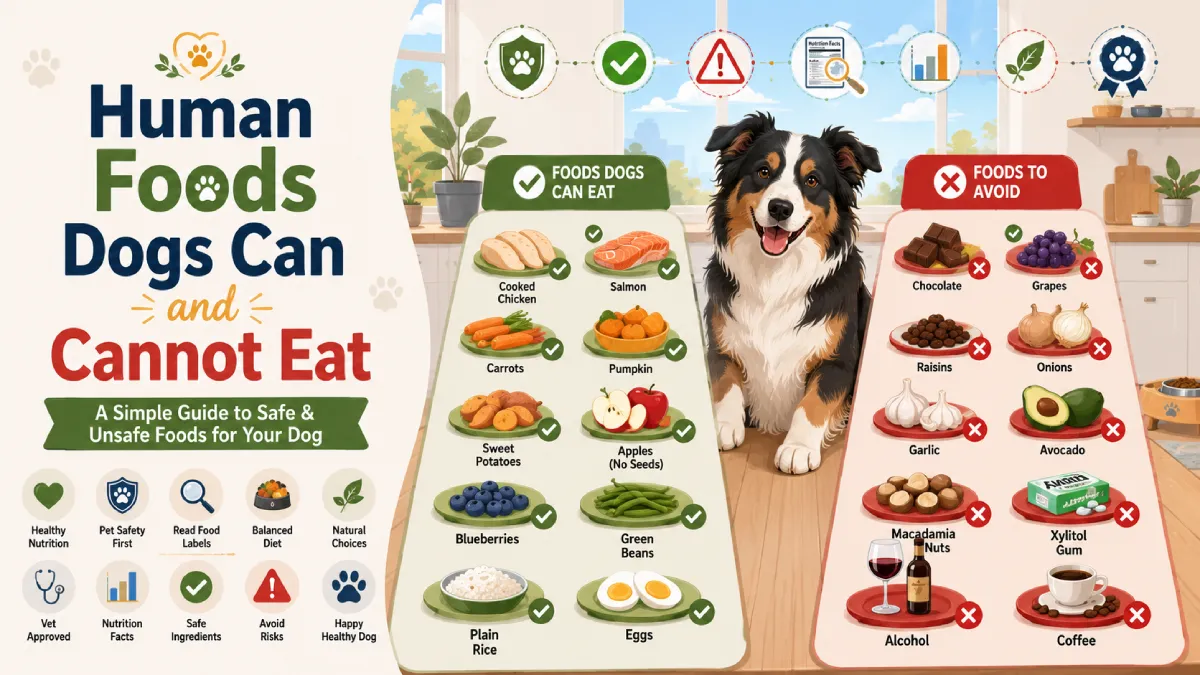
Foods containing Xylitol (artificial sweetener), chocolate, grapes, raisins, macadamia nuts, onions, garlic, alcohol, and cooked bones are profoundly dangerous and must never be fed to dogs. (Review our dedicated pillar on Foods dogs cannot eat).
Can I share cooked meat seasoned with garlic and onion powder?
Never. Garlic and onion powder are concentrated forms of Allium toxins, which destroy canine red blood cells and cause severe hemolytic anemia. All human meat given to dogs must be completely plain and unseasoned.
Expert Review Note
This comprehensive guide on safe human foods, portion management, nutritional boundaries, and preparation hazards was reviewed and approved by a licensed doctor of veterinary medicine (DVM) and a board-certified veterinary nutrition specialist.