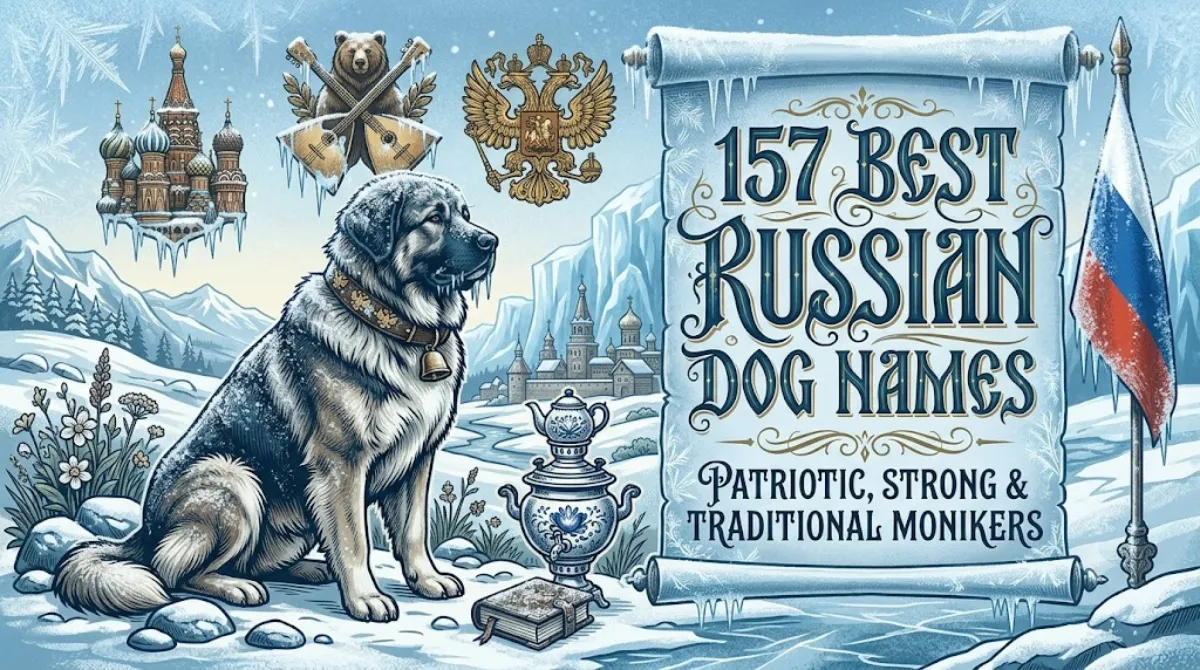
157 Best Russian Dog Names With Meanings (Slavic, Strong & Cultural Monikers)
Phonetic Resonance and Slavic Heritage in Canine Naming
Canine communication relies heavily on the auditory signals provided by handlers and owners. Experienced trainers and behaviorists emphasize that dogs respond most reliably to sharp, clear sounds that cut through ambient noise. When evaluating slavic dog names, considering how specific linguistic structures affect how a canine companion processes auditory input is essential. A name that is phonetically distinct helps pets identify when handlers speak directly to them rather than another household member or environmental stimulus.
Optimizing Recall with Crisp Consonants
The linguistic heritage behind Eurasian monikers offers unique acoustic properties that make them exceptionally practical for obedience training. Many terms feature crisp consonants combined with open vowels, which travel exceptionally well across open outdoor spaces during recall drills. Furthermore, exploring regional cultural tags connects animals to centuries of rich human history, honoring loyalty, leadership, and companionship. Selecting a descriptor that carries a specific semantic meaning integrates pets into daily routines with an intentionality that enhances companionship.
Practical Step: Say your top choice aloud in various tones—softly for quiet indoor moments and firmly for outdoor recall—to confirm that the phonetic rhythm feels natural in everyday conversation. Reviewing resources on how to choose the right puppy can also help prepare a household for a new arrival.
Traditional Male Russian Dog Names Rooted in History
Masculine identifiers drawn from historical vocabulary, literary figures, and robust Slavic heritage project a commanding yet approachable presence. These selections offer substantial depth for loyal male dogs.
Classic Monikers for Strong Companions
When exploring male russian dog names, pet owners often look for terms that embody courage, steadfastness, and protective instinct without relying on aggressive clichés.
- Boris — Meaning “fighter or warrior.” Sturdy, strong, and historic.
- Dmitri — Meaning “earth lover.” Grounded and dependable.
- Ivan — Meaning “God is gracious.” A classic staple of Slavic culture.
- Mikhail — Meaning “who is like God.” Regal and traditional.
- Nikolai — Meaning “victory of the people.” Crisp and distinguished.
- Pavel — Meaning “small or humble.” Endearing and classic.
- Vladimir — Meaning “ruler of the world.” Imposing and historic.
- Yuri — Meaning “farmer or worker.” Friendly and brief.
- Alexei — Meaning “defender.” Sleek and noble.
- Anatoly — Meaning “sunrise.” Bright and radiant.
- Artem — Meaning “safe or butcher.” Sharp and modern.
- Denis — Meaning “follower of Dionysus.” Energetic and lively.
- Fedor — Meaning “gift of God.” Traditional and solid.
- Gleb — Meaning “soil or block of land.” Sturdy and unique.
- Igor — Meaning “warrior of peace.” Bold and resilient.
- Kirill — Meaning “lord or master.” Crisp and authoritative.
- Maxim — Meaning “greatest.” Punchy and popular.
- Oleg — Meaning “holy or sacred.” Historic and concise.
- Roman — Meaning “citizen of Rome.” Strong and timeless.
- Sergei — Meaning “servant protector.” Refined and steady.
- Stepan — Meaning “crown or garland.” Clean and classic.
- Vadim — Meaning “ruling or attractive.” Sleek and distinct.
- Viktor — Meaning “conqueror.” Bold and successful.
- Vitali — Meaning “full of life.” Energetic and warm.
- Yakov — Meaning “supplanter.” Historic and traditional.
- Timur — Meaning “iron.” Unyielding and strong.
- Ruslan — Meaning “lion.” Courageous and majestic.
- Svyatoslav — Meaning “holy glory.” Grand and epic.
- Vsevolod — Meaning “ruler of everything.” Imposing and vast.
- Stanislav — Meaning “one who achieves glory.” Resolute.
Graceful and Melodic Female Russian Dog Names
Feminine identifiers blend melodic vowel structures with meanings rooted in nature, grace, and timeless beauty, creating sophisticated titles for female companions.
Elegant Monikers Emphasizing Poise
Searching for female russian dog names reveals options that celebrate natural beauty, celestial wonder, and historic charm.
- Anastasia — Meaning “resurrection.” Graceful, elegant, and timeless.
- Ekaterina — Meaning “pure.” Regal and historic.
- Irina — Meaning “peace.” Serene and calm.
- Katerina — Meaning “pure.” Sleek and melodic.
- Marina — Meaning “of the sea.” Fluid and oceanic.
- Nadezhda — Meaning “hope.” Positive and inspiring.
- Olga — Meaning “holy or blessed.” Traditional and strong.
- Svetlana — Meaning “star or luminous.” Bright and radiant.
- Tatiana — Meaning “queen or fairy princess.” Poised.
- Vera — Meaning “faith.” Grounded and honest.
- Alina — Meaning “bright or fair.” Crisp and modern.
- Daria — Meaning “possessor of goodness.” Sophisticated.
- Elena — Meaning “shining light.” Ethereal and glowing.
- Galina — Meaning “calm or healer.” Gentle and soothing.
- Kira — Meaning “sun or mistress.” Radiant and sharp.
- Larisa — Meaning “citadel.” Secure and refined.
- Mila — Meaning “gracious or dear.” Sleek and affectionate.
- Nina — Meaning “grace or dream.” Brief and sweet.
- Polina — Meaning “little.” Endearing and classic.
- Sofia — Meaning “wisdom.” Refined and calm.
- Yulia — Meaning “youthful.” Soft and flowing.
- Zoya — Meaning “life.” Vibrant and alive.
- Agata — Meaning “good.” Simple and kind.
- Alyona — Meaning “bright torch.” Luminous.
- Evgenia — Meaning “well-born.” Noble and historic.
- Faina — Meaning “shining.” Radiant and bright.
- Glafira — Meaning “polished or elegant.” Refined.
- Inna — Meaning “strong water.” Fluid and swift.
- Lada — Meaning Slavic goddess of beauty. Harmonious.
- Nika — Meaning “victory.” Bouncy and athletic.
Vet Check: Schedule an initial wellness examination within the first week of adoption to establish baseline health metrics and ensure your pet’s vaccination schedule is aligned with recommendations found in guidance on puppy health and wellness.
Winter-Inspired and Frost-Touched Monikers
The chilly landscapes, snowy expanses, and seasonal weather patterns of Eastern Europe provide breathtaking options for adventurous companions.
Atmospheric Terms for Cold-Weather Breeds
These titles reflect the crisp air, elevation, and vast landscapes associated with northern environments.
- Sneg — Meaning “snow.” Crisp and pristine.
- Zima — Meaning “winter.” Cold, striking, and seasonal.
- Moroz — Meaning “frost.” Sharp and bracing.
- Buran — Meaning “blizzard.” Powerful and rushing.
- Metel — Meaning “snowstorm.” Energetic and wild.
- Kholod — Meaning “cold.” Minimalist and sharp.
- Led — Meaning “ice.” Hard and slick.
- Sever — Meaning “north.” Compass direction and rugged.
- Taiga — Meaning subarctic evergreen forest. Wilderness-oriented.
- Sibir — Referring to Siberia. Vast and expansive.
- Ural — Named after the mineral-rich mountain range. Sturdy.
- Baikal — Named after the deep ancient lake. Deep and clear.
- Volga — Named after the great river. Flowing and grand.
- Amur — Named after the eastern river. Broad and free.
- Don — Named after the southern waterway. Solid.
- Oka — Named after the central river. Short and crisp.
- Neva — Named after the St. Petersburg river. Serene.
- Ladoga — Named after the largest European lake. Expansive.
- Onega — Named after the northern lake. Tranquil.
- Altai — Named after the golden mountains. Majestic.
- Caucasus — Named after the high mountain range. Imposing.
- Sayans — Named after the southern Siberian mountains. Rugged.
- Yamal — Meaning “end of the land.” Remote and bold.
- Chukot — Named after the far northeastern region. Wild.
- Kama — Named after the major western river. Smooth.
- Kuban — Named after the southern agricultural region. Fertile.
- Terek — Named after the fast-flowing mountain river. Swift.
- Irtysh — Named after the great Siberian river. Deep.
- Yenisey — Named after the mighty river system. Powerful.
- Lena — Named after the great eastern river. Flowing and sleek.
Safety Reminder: Cold-weather breeds with thick double coats require regular brushing during seasonal shedding phases to prevent matting and maintain skin health.
Sled Dog and Working Breed Call Signs
Working dogs developed for pulling sleds, guarding property, and enduring harsh climates require monikers that honor physical stamina, intelligence, and unwavering vigilance.
Working Heritage Tags for High-Energy Canines
When exploring unique russian dog names, owners frequently look for monikers that reflect working capability, endurance, and sharp focus.
- Bely — Meaning “white.” Perfect for light-coated dogs.
- Cherny — Meaning “black.” Sleek and dark.
- Ryzhik — Meaning “ginger or redhead.” Warm-toned.
- Sery — Meaning “gray.” Cool-toned and neutral.
- Krap — Meaning “spotted.” Unique and textured.
- Volk — Meaning “wolf.” Wild and ancestral.
- Medved — Meaning “bear.” Massive and strong.
- Lis — Meaning “fox.” Clever and agile.
- Bars — Meaning “snow leopard.” Swift and stealthy.
- Orel — Meaning “eagle.” Sharp-eyed and soaring.
- Sokol — Meaning “falcon.” Precise and fast.
- Buntar — Meaning “rebel.” Independent.
- Grom — Meaning “thunder.” Loud and powerful.
- Molniya — Meaning “lightning.” Fast and electric.
- Uragan — Meaning “hurricane.” Rushing and fierce.
- Shtorm — Meaning “storm.” Turbulent and bold.
- Vityaz — Meaning “knight or warrior.” Brave.
- Boyar — Meaning old Russian nobleman. Aristocratic.
- Tsars — Meaning emperor or monarch. Sovereign.
- Knyaz — Meaning prince. Noble and elite.
- Ataman — Meaning Cossack leader. Commanding.
- Cossack — Meaning free warrior horseman. Rugged.
- Strela — Meaning “arrow.” Swift and precise.
- Pushem — Meaning fluffy. Soft and endearing.
- Zver — Meaning wild beast. Fierce and strong.
- Skif — Meaning Scythian nomad. Historic.
- Voin — Meaning soldier. Disciplined.
- Strazh — Meaning guard or sentinel. Watchful.
- Krepost — Meaning fortress. Imposing.
- Bogatyr — Meaning epic folk hero or knight. Legendary.
Daily Care Tip: Establishing a consistent daily routine helps new dogs feel secure, especially when pairing feeding times with positive reinforcement training; learn more about understanding dog behavior to support your pet’s transition.
Unique Slavic Folklore and Mythological Tags
Folklore, ancient legends, and mythical entities from Slavic tradition offer enchanting monikers for companion animals with mysterious or spirited personalities.
Mythic Figures and Legendary Spirits
These choices introduce magical depth and historical wonder to a pet’s identity.
- Perun — Slavic god of thunder and lightning. Mighty.
- Svarog — Slavic god of fire and celestial smithing. Creative.
- Dazhbog — Slavic god of sunlight and wealth. Radiant.
- Veles — Underworld god of earth, waters, and magic. Deep.
- Morana — Goddess of winter and rebirth. Ethereal.
- Simargl — Winged guardian dog deity. Mythic and protective.
- Domovoy — Household guardian spirit. Loyal and domestic.
- Leshy — Guardian spirit of the forest. Wild.
- Rusalka — Water spirit or nymph. Fluid and graceful.
- Alkonost — Mythical paradise bird with a human face. Musical.
- Gamayun — Prophetic bird of wisdom. Wise.
- Sirin — Mythical bird of song and joy. Melodic.
- Bayun — Mythological magical cat. Quirky.
- Indrik — Mythical gigantic underground beast. Massive.
- Koschei — Immortal folklore sorcerer. Intriguing.
- Sadko — Legendary merchant musician. Artistic.
- Dobrynya — Epic knight hero of folklore. Valiant.
- Alyosha — Youngest heroic knight of epics. Brave.
- Ilya — Epic hero Ilya Muromets of immense strength. Sturdy.
- Mikula — Legendary heroic plowman. Grounded.
Monosyllabic Call Signs for Modern Recall Training
For pet parents seeking compact monikers that streamline recall training, short syllables derived from Slavic roots provide excellent utility.
Short Roots for Rapid Recall
These modern selections maintain cultural depth while offering the acoustic efficiency required by professional trainers during active obedience sessions.
- Bex — Crisp and modern with a sharp finish.
- Dax — Short and punchy for fast puppies.
- Falk — Sharp-eyed and swift.
- Gis — Brief and distinct.
- Hof — Grounded and solid.
- Jens — Friendly sound.
- Korn — Earthy and agricultural.
- Lutz — Compact and strong.
- Malu — Soft-sounding yet clear.
- Nils — Crisp.
- Rux — Edgy and modern.
- Sven — Clean and classic.
- Uwe — Authoritative.
- Zev — Edgy yet concise.
- Ash — Earthy and straightforward.
- Bud — Approachable.
- Ace — Timeless choice for high achievement.
Quick Action: Practice brief recall sessions twice daily using high-value rewards, reinforcing prompt responses when your dog hears their chosen call sign.
Frequently Asked Questions
Are Russian dog names difficult for puppies to learn during obedience training?
No. Dogs respond primarily to phonetic clarity, pitch variation, and vocal frequency rather than the cultural origin or length of the word. A crisp term like Ivan, Kira, or Max is exceptionally easy for a canine to master, provided training sessions remain consistent and are paired with positive reinforcement.
How do I ensure my pet’s cultural title is recorded correctly on veterinary paperwork?
When registering a pet at a clinic, ensure the spelling matches your official preference, especially for transliterated terms like Nadezhda or Svyatoslav, to prevent administrative clerical errors in their medical files.
Can Slavic monikers be used for both dogs and cats?
Yes. Many traditional and modern terms work wonderfully across multiple species, making them ideal for multi-pet households looking for a cohesive naming style.
What makes a Russian dog name truly authentic?
A truly significant moniker usually combines smooth vowel transitions with deep historical, linguistic, or cultural ties that convey natural dignity and emotional resonance.
Should I avoid titles that resemble standard household commands?
Yes. It is always wise to steer clear of unusual words that sound identical to or rhyme with common obedience cues like “sit,” “stay,” “no,” or “come” to prevent accidental confusion during multi-step training exercises.
How long does it take for a rescue pet to adapt to a new bilingual identifier?
Most rescue animals adapt to a new title within seven to fourteen days when owners consistently pair the sound with high-value treats, affectionate petting, and regular daily obedience drills using techniques detailed in guidance on positive reinforcement dog training.
Conclusion
Finding the ideal moniker for a canine companion offers a wonderful opportunity to celebrate their individual presence in a home through intentionality and cultural appreciation. By exploring these 157 russian dog names, pet parents uncover a diverse collection of traditional, winter-inspired, mythological, and crisp monikers that rise above conventional naming trends. Selecting a title with deep etymological resonance creates an immediate bond of identity that highlights an animal’s exceptional character. Taking time to test favorite choices during daily routines sets the stage for a lifetime of shared adventures and genuine connection. Take the next step by practicing your top candidate during your dog’s next indoor training session.