Microchipping Cats: How It Works & Registration Guide
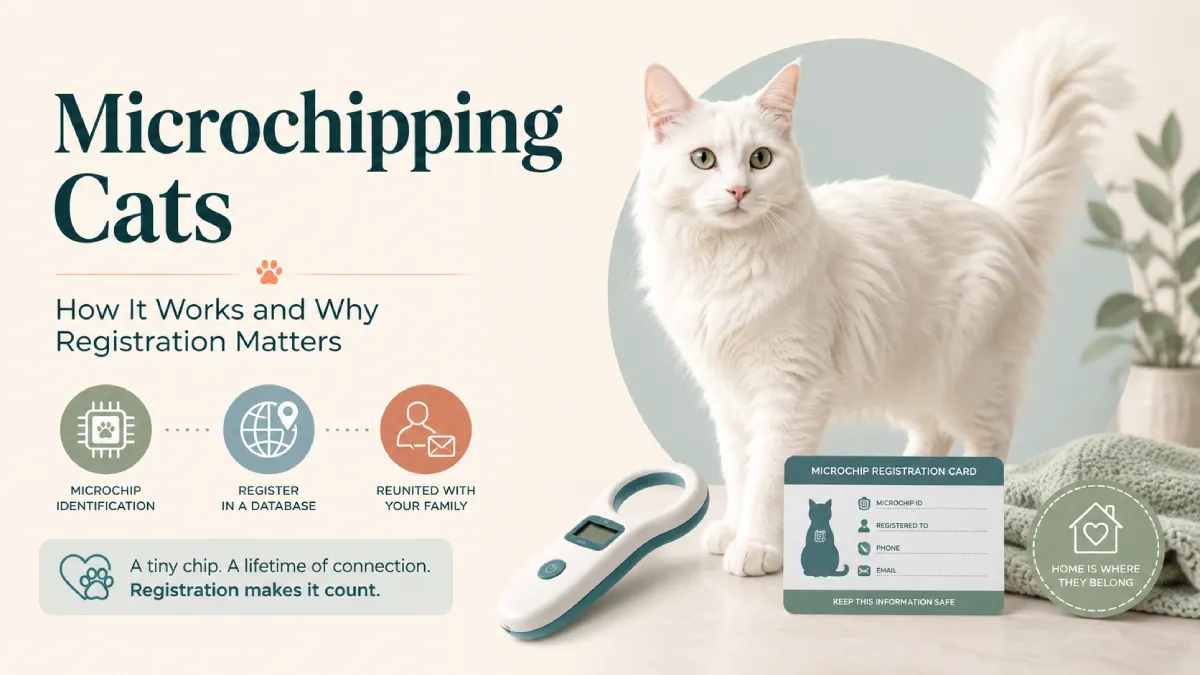
A microchip gives a cat permanent identification, but it is not a GPS tracker. The small radio-frequency identification device stores a unique number that can be read by a compatible scanner. That number must connect to an up-to-date registry record for the chip to help reunite a lost cat with the correct caregiver.
Direct answer
Microchipping is recommended for cats regardless of whether they live indoors or go outside. Implantation is quick and does not require major surgery, but the job is not finished until the chip is registered with current owner details. FelineVMA also recommends periodic scanning at veterinary visits to verify function and contact information.
What a microchip is
A pet microchip is a tiny passive RFID transponder implanted under the skin. When a compatible scanner passes over the chip, radio energy activates it and the scanner displays the identification number.
What a microchip is not
A standard implanted microchip is not a GPS device, live location tracker or battery-powered beacon. It cannot show a cat’s position on a map. Someone must physically find the cat and scan the chip.
Implantation
Microchip implantation is typically performed by a veterinarian or trained professional using a needle designed for the chip. FelineVMA notes that respectful handling and distraction can reduce stress, and implantation may also be combined with another procedure requiring sedation or anaesthesia when appropriate.
Does implantation require surgery?
Routine microchip placement does not require a surgical incision. The chip is implanted under the skin through a needle. If a cat is highly fearful, the team can plan cat-friendly handling rather than assuming restraint should be escalated.
Registration
Record the microchip number and identify the registry associated with it. Registration should link the number to the caregiver’s current phone, address and other contact information. An implanted but unregistered chip may lead a finder to a dead end.
Why registration matters
The scanner displays a number, not the owner’s name. A shelter or clinic uses the number to identify the registry and retrieve contact details. Incorrect or outdated data can delay reunification.
Updating phone numbers, addresses and ownership transfer
Update the registry whenever you move, change phone numbers or transfer ownership. Do not wait until the cat is missing. Confirm that any transfer has actually been completed rather than assuming paperwork submitted by another person was processed.
Scanning
A veterinarian or shelter scans the cat to locate the microchip and read its number. FelineVMA recommends scanning during veterinary visits to verify functionality and confirm that stored contact information remains accurate.
Indoor cats
Indoor cats can escape through doors, damaged screens, moving-house incidents, fires or emergencies. Permanent identification remains useful even for cats that are never intentionally allowed outdoors.
Outdoor cats and visible identification
Outdoor-access cats benefit from microchipping because collars can be lost. A breakaway collar with visible identification can provide faster contact when appropriate, while the microchip acts as permanent backup identification.
Travelling and moving house
Before travel or a move, check the registry and update the destination or new address as soon as appropriate. Some international travel systems also specify ISO-compliant chips or particular timing between microchip placement and vaccination documentation. Verify destination rules early.
Lost-cat recovery
Microchipping improves the chance that a found cat can be identified, but it does not replace active searching. If your cat is missing, use Pawnium’s Lost Cat Guide and report the chip as missing with the registry where available.
International travel standards
FelineVMA supports ISO-standard microchips and scanners capable of detecting multiple frequencies. International entry rules can be more specific, so check the destination’s official animal-import requirements rather than relying on the chip brand alone.
How the microchip number leads back to an owner
When a shelter or veterinary clinic scans a found cat, the scanner displays the chip number. Staff then use a registry lookup service to identify which database holds that number and contact the registry for owner details. If the registry record is missing or obsolete, the process may stop even though the chip works perfectly.
Why implantation and registration are separate tasks
Some chips are registered by the implanting clinic or shelter, while others require owner confirmation. Ask before leaving the appointment whether registration is complete and which registry should be contacted for future updates. Do not assume payment for implantation automatically created a current owner record.
What happens if the chip has old information?
A finder may reach a disconnected phone number or previous address. Registries can sometimes use secondary contacts, clinic records or previous owner information to continue the search, but recovery is faster when the owner updates details before the cat goes missing.
Ownership transfer
When adopting or rehoming a cat, confirm that the registry has transferred ownership rather than only updating a phone number. Keep adoption or transfer documents in case the registry requires proof. A microchip does not itself settle every legal ownership dispute, but accurate registration supports identification.
Why chips should be scanned repeatedly
Scanning confirms that the chip can be detected and that the number matches the medical record. Chips can migrate from the original implantation area, so trained staff scan broadly around the shoulders and body when necessary. Periodic checks reduce the chance that a problem is first discovered during an emergency.
Microchip plus visible ID
A visible tag allows a neighbour to call immediately without taking the cat to a scanner. A microchip provides permanent backup if the collar is lost. For cats that tolerate a collar, a properly fitted breakaway collar and microchip can complement each other.
Microchips during travel
International movement can require a particular microchip standard and may require the chip to be implanted and read before a qualifying rabies vaccination is documented. The order of steps matters for some destinations, so verify official import rules months in advance where possible.
Microchips during disasters and evacuation
Emergency evacuations separate animals from homes unexpectedly. Keep the chip number in a phone note or emergency-kit document, and ensure the registry has a backup contact who is unlikely to be affected by the same local emergency.
Lost-Cat Identification Record
- ☐ Recent clear photos stored
- ☐ Microchip number stored
- ☐ Registry and login/contact method recorded
- ☐ Primary phone current
- ☐ Backup contact current
- ☐ Veterinary clinic has the chip number
- ☐ Visible ID used where appropriate
What happens when a lost cat is scanned
A veterinary clinic, shelter or other organization with a compatible scanner passes it over the cat and reads the chip’s identification number. That number is then used to identify the registry or database where owner contact information may be stored.
The chip itself does not contain a map of the cat’s location. Its value depends on someone finding the cat, scanning them and being able to reach the registered owner.
Why registration failures cause preventable problems
A microchip can be functioning perfectly while still failing to reunite a cat with an owner if the chip was never registered or the contact information is obsolete. Keep the registry name, chip number and login or update process somewhere accessible.
After implantation, confirm that registration is complete rather than assuming the veterinary clinic automatically completed every database step on your behalf.
Update the record immediately after a move
Moving house is one of the times identification matters most because cats can escape from unfamiliar surroundings. Update the address and telephone numbers before or immediately after the move and verify the change with the registry.
For settling and escape prevention, see Moving House With a Cat.
Update ownership when a cat is rehomed
A microchip record should reflect the current responsible owner. Rescue adoption, private rehoming, divorce or another transfer may require formal registry steps rather than simply changing a phone number.
Ask the registry what documentation is needed. Keeping outdated ownership information can delay reunification or create confusion during an emergency.
Why veterinary scanning is useful even when the number is known
FelineVMA recommends checking microchip identification at veterinary visits. Scanning confirms that the chip can be detected and that the number in the medical record matches the implanted device.
If a chip cannot be found immediately, the veterinary team can scan systematically and decide whether further investigation or re-implantation is appropriate.
Microchip plus collar identification
A breakaway collar with a visible identification tag can allow a neighbour to contact you without a scanner, while the microchip provides permanent identification if the collar is lost. The two methods can complement rather than replace each other.
Use only a collar that is appropriate and safely fitted for the individual cat. An indoor cat can still benefit from visible identification because accidental escapes happen.
Microchips and travel documents
International pet travel may require a microchip that meets specified technical standards and may require the chip to be implanted or scanned in relation to vaccination and certification dates. Requirements vary by destination.
Do not assume that any domestic microchip automatically satisfies every country’s import rules. Check the official destination requirements early and make sure the chip number is recorded exactly on veterinary documents.
For general preparation, see Traveling With a Cat.
Microchips during emergencies and disasters
Evacuations, house fires and severe weather can separate cats from owners even when the cat never normally goes outdoors. Keep the microchip number and registry information with your emergency records so you can report the cat missing quickly.
What to do if your cat goes missing
Report the cat missing to the microchip registry and verify that the contact numbers are current, but do not rely on the chip alone. Search the immediate area, alert neighbours, contact local shelters and veterinary clinics, and use other evidence-based lost-cat search methods.
Use What to Do If Your Cat Gets Lost for the full recovery process.
Microchip Maintenance Checklist
| Task | Status |
|---|---|
| Chip implanted | Yes / No |
| Microchip number recorded | ____________ |
| Registry identified | ____________ |
| Registration complete | Yes / No |
| Phone number correct | Yes / No |
| Address correct | Yes / No |
| Emergency contact correct | Yes / No |
| Ownership details correct | Yes / No |
| Chip scanned at recent vet visit | Date: ____________ |
FAQs
Does a cat microchip have GPS?
No. Standard pet microchips are passive identification devices and do not provide live location tracking.
Do indoor cats need microchips?
FelineVMA recommends microchip identification regardless of lifestyle because indoor cats can still escape or become displaced.
Does a microchip work if I never register it?
The number can still be scanned, but reunification may fail if no current owner record is linked to it.
Should a microchip be checked after moving?
Yes. Update the registry with the new address and phone number, then have the chip scanned periodically at veterinary visits.
Can a collar replace a microchip?
Visible identification can be helpful, but collars can be lost. A microchip provides permanent backup identification.