
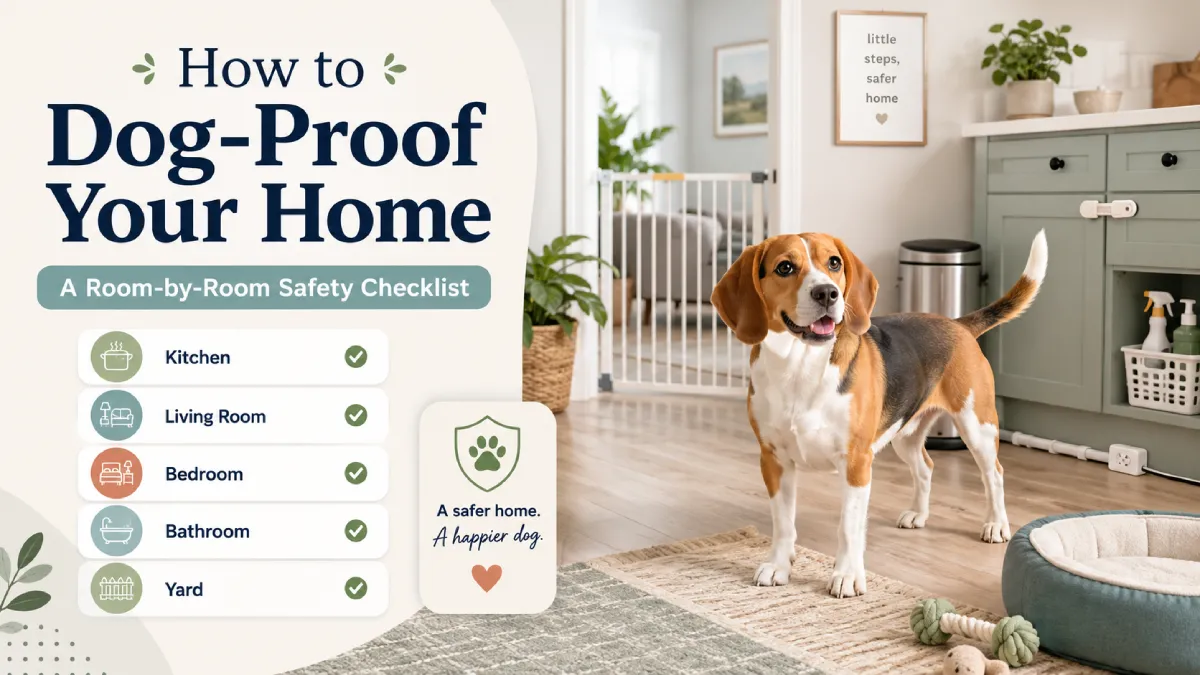
How to Dog Proof Your Home: A Room-by-Room Safety Checklist
Learning how to dog proof your home means looking at ordinary rooms from a dog’s height and curiosity level. Medicines on a bedside table, chewing gum in a handbag, batteries inside a remote, accessible rubbish, electrical cables, poisonous plants and garden chemicals can all become hazards when a dog can reach them. Puppies often need stricter management because chewing and exploration are intense, while senior dogs may need changes that reduce falls and improve mobility. The safest approach is not one big clean-up before adoption, but a room-by-room setup followed by regular safety checks as your dog’s habits and abilities change.
Quick Answer
To dog-proof a home, remove or secure anything the dog could swallow, chew, knock over, escape through or become poisoned by. Lock away medicines and chemicals, protect electrical cables, secure food and rubbish, identify toxic plants, check windows and balconies, inspect fences and gates, and give puppies or new dogs controlled access until you understand their behaviour.
Dog-Proofing vs Puppy-Proofing
The principles are similar, but a puppy-proof house usually needs tighter controls. Young dogs are more likely to investigate with their mouths, chew unfamiliar objects and squeeze into areas an adult dog may ignore. AAHA specifically recommends removing clothes, shoes and toys, securing rubbish and accessible cupboards, stabilising objects that could fall and using gates to create controlled puppy zones.
An adult dog still needs a safe home. A newly adopted adult may counter-surf, raid bins or chew objects despite having lived successfully elsewhere, so increase access only after observing the individual dog.
Living Room
Start at floor level.
Remove coins, children’s toys, game pieces, remotes, loose batteries and decorative objects small enough to swallow. Secure unstable lamps or furniture, keep candles and fireplaces inaccessible, and route electrical cables behind furniture or through cord protectors. AAHA specifically includes electrical cords, unstable décor and accessible small objects among home hazards worth addressing.
Check sofa cushions and side tables for chewing gum, medicines, snack wrappers and food.
Kitchen
A dog-proof kitchen needs secure food storage and a rubbish bin the dog cannot open.
Keep food off accessible counters and close pantry or cupboard doors. FDA lists chocolate, grapes and raisins, onions, garlic, macadamia nuts, caffeine, raw yeast dough and xylitol-containing products among potentially dangerous items for pets.
Dishwasher detergent, cleaning products and sharp utensils also belong behind secure doors. Do not assume pushing something to the back of a low cupboard is enough for a determined dog.
Bathroom
The bathroom often combines medicines, cleaners and small swallowable items in one place.
Keep prescription and over-the-counter medicines in secure storage rather than on counters or bedside-style shelving. Dental products may also deserve attention because some human toothpastes, mouthwashes and other products can contain xylitol.
Secure razors, floss, cotton swabs and small hygiene products, and keep toilet or drain-cleaning chemicals inaccessible.
Bedroom
Check bedside tables, handbags and clothing pockets.
Medication, sugar-free gum and other small objects are often carried into bedrooms even when the kitchen itself is secure. FDA notes that xylitol can occur in gum, mints, medicines, supplements, mouthwash and toothpaste.
Put jewellery, hair ties, earplugs and batteries from small electronics somewhere the dog cannot reach. Keep dirty laundry contained if your dog steals socks or underwear.
Laundry Room
Store detergent, fabric-care products, stain removers and cleaning concentrates behind a secured door or cupboard.
Merck notes that some detergents and corrosive household products can injure tissue when ingested, while EPA advises keeping cleaners in their original containers and inaccessible to pets.
Also check behind machines for dropped socks, dryer sheets and exposed wiring.
Home Office
An office may contain several hazards that are easy to overlook:
- charging cables
- power strips
- staples
- paper clips
- batteries
- printer supplies
- medication in a desk drawer
- snacks or chewing gum
Move cables out of reach, close drawers and keep the floor clear. Electrical-cord chewing can cause serious oral burns and electrical injury.
Electrical Cords
Do not rely on repeatedly telling a puppy to leave cables alone.
Hide, elevate or cover accessible cords and unplug unnecessary ones. AAHA recommends cord protectors or routing cables behind furniture because chewing can cause shock, burns and fire risk.
If a dog bites a live electrical cable, switch off the electrical source before approaching when necessary for human safety and seek veterinary care even if the visible injury initially appears small; electrical injuries can have serious internal effects.
Batteries
Treat batteries as a high-priority hazard, including batteries hidden inside remote controls, toys, watches and other devices.
Chewed alkaline batteries can release corrosive material that burns the mouth and gastrointestinal tract. Button batteries can also lodge in the oesophagus and cause tissue damage even without obvious leakage.
Store spare batteries securely and replace damaged battery covers on household devices. Suspected battery ingestion requires prompt veterinary advice.
Small Objects
Anything small enough to fit comfortably in a dog’s mouth deserves attention.
Examples include children’s toys, coins, jewellery, screws, earplugs and craft supplies. Objects do not have to be poisonous to cause harm; swallowed material can become a gastrointestinal foreign body. AAHA’s canine safety guidance specifically includes potential foreign bodies as a home hazard.
Get into the habit of scanning the floor before giving a puppy free access.
Medication
Keep all medication out of reach, including veterinary medication.
FDA warns against giving dogs human medicines unless specifically directed by a veterinarian and notes that several commonly used human drugs can be harmful to pets. ASPCA also recommends closed, inaccessible storage for prescription and over-the-counter medications.
A child-resistant cap is not dog-proof if the entire bottle can be chewed.
Human Food
Do not create one generic rule that human food is either all safe or all dangerous.
Instead, make inaccessible storage the default and learn the specific foods your household uses. FDA highlights chocolate, grapes and raisins, onions, garlic, macadamia nuts, caffeine, xylitol and raw yeast products among important hazards.
Link this section naturally to Pawnium’s Foods Dogs Cannot Eat article.
Xylitol Deserves Extra Attention
Xylitol can appear in products beyond sweets, including gum, toothpaste, mouthwash, some nut butters, medicines and supplements. FDA advises contacting a veterinarian or emergency clinic immediately when xylitol ingestion is suspected because it can cause severe hypoglycaemia and other serious effects in dogs.
Use Pawnium’s dedicated Xylitol Poisoning guide for the deeper emergency explanation.
Cleaning Products
Keep cleaners in secure storage and follow their labels.
ASPCA notes that household cleaning products vary widely in risk, with concentrated or corrosive products capable of causing significant injury. EPA recommends keeping products in original containers because the label contains safe-use, storage and first-aid information.
Keep dogs away from spills and treated areas for as long as the product label requires.
Bins and Rubbish
Use a bin with a secure lid or keep rubbish behind a closed cupboard or door.
Dogs Trust specifically recommends clearing harmful food from worktops and securing bins. Rubbish can combine toxic foods, bones, wrappers and other swallowable objects in one tempting location.
Do not assume a bin is safe simply because the dog ignored it yesterday.
Shoes and Clothing
Shoes are mainly an expensive inconvenience until pieces, laces or components are swallowed.
AAHA specifically recommends putting away shoes and clothing when puppy-proofing. Socks and other fabric also deserve secure storage when a dog has a history of swallowing non-food objects.
Offer appropriate chew items rather than leaving footwear within reach and repeatedly correcting the dog.
Houseplants
Identify every indoor and outdoor plant by its actual species.
ASPCA maintains a large dog-specific database of toxic and non-toxic plants. Common household plants on its toxic list include pothos, dieffenbachia, philodendron, aloe, sago-type cycads and many others.
Do not assume placing a toxic plant on a low shelf is sufficient. Remove it or place it somewhere the dog truly cannot access.
Link detailed identification to Pawnium’s Poisonous Plants guide.
Windows
Open windows can present an escape or fall risk, especially when furniture allows the dog to climb close to them.
Dogs Trust advises blocking access to windows that do not have a secure opening restriction, particularly in flats or homes above ground level.
Check screens carefully; they should not be treated as guaranteed dog barriers unless designed and secured for that purpose.
Balconies
A balcony is only dog-accessible when it is genuinely secure.
Dogs Trust specifically warns about windows and balconies in flats and recommends blocking balcony access where the area is not completely safe.
Consider gaps, climbable furniture, railings and the possibility of the dog reacting to birds or activity below.
Stairs
Healthy adult dogs may use stairs without difficulty, but puppies, senior dogs and dogs with mobility problems may need management.
AAHA recommends barriers where appropriate and better traction for senior dogs, including rugs or mats on slippery flooring and reducing unnecessary stair use when mobility declines.
Use a securely installed gate rather than an improvised barrier that can collapse.
Doors
The front door is an escape point, not just an entrance.
Use household rules so the dog cannot rush through while deliveries or visitors enter. Barriers or gates can create a second layer of security during busy periods. AAHA recommends barriers near frequently opened doors and keeping identification current in case a pet escapes.
This becomes especially important during the first week with a new dog, before the dog understands the home and routine.
Garden
Walk the garden slowly from the dog’s height.
Look for:
- poisonous plants
- sharp objects
- open water hazards
- accessible compost or rubbish
- chemicals
- gaps under structures
- unstable garden furniture
- escape routes
AAHA includes toxic plants, sharp objects, bodies of water and wildlife among environmental risks owners should assess.
Fencing
Inspect the entire fence line rather than assuming a fenced garden is secure.
Look underneath for digging gaps and around corners, sheds and gates for openings. VCA specifically advises checking yards for holes under fencing or other places a puppy could escape.
The appropriate fence depends on the individual dog’s size, climbing ability and behaviour.
Gates
A gate is only useful when everyone closes it.
Check hinges, latches and gaps underneath. If children or visitors regularly use the gate, consider a setup that reduces the chance of accidental opening.
Dogs Trust recommends sturdy locks on doors and garden gates as part of making a home secure for a dog.
Fertilisers
Store fertilisers where dogs cannot reach or tear open the bag.
ASPCA notes that fertilisers can cause gastrointestinal irritation and that some products contain additional insecticides or additives; large exposures may be more serious.
Do not assume “organic” automatically means harmless. Follow the actual product label before allowing a dog back onto treated ground.
Pesticides
Keep pesticide concentrates locked away and follow the label during and after use.
EPA advises removing pets from treatment areas and keeping them away until the product has dried or for whatever interval the label specifies. Products should remain in their original labelled containers.
If a lawn service applies products, ask what was used and what pet re-entry instructions apply.
Tools
Put away nails, screws, blades, garden tools and repair materials immediately after use.
VCA notes that loose nails and screws can cause injury or be swallowed, while paints, chemicals and building materials also need to be kept inaccessible during home repairs.
A garden shed or workshop should not become an unsupervised dog play area.
Garage
Treat the garage as a high-control area.
It may contain batteries, pesticides, fertiliser, automotive products, tools and other substances that do not belong within reach of a dog. EPA advises locked storage for pesticides, and Merck identifies batteries and corrosive household chemicals as significant hazards.
Where practical, keep the dog out of the garage unless supervised.
Vehicle-Access Areas
Separate the dog when cars are entering or leaving driveways and garages.
AAHA’s canine safety guidance includes vehicle risks and recommends appropriate confinement and control in the home, yard and car.
A door from the house into a garage should be treated as another potential escape route.
Multi-Pet Households
Dog-proofing needs to consider what one pet can access on behalf of another.
Cat food, litter areas, small pet enclosures, medications and toys may need separate zones. A large dog may also knock over barriers that work perfectly for a smaller resident pet.
Use gates, closed doors and pet-specific safe areas rather than assuming every resource should be shared.
Senior-Dog Adaptations
Dog-proofing changes as mobility, vision or hearing decline.
AAHA recommends improving traction with rugs or mats, using ramps or steps where appropriate, reducing unnecessary stair use and identifying hazards such as stairs or pools that may become more difficult for an older dog to navigate.
Keep routes to beds, food, water and the garden clear.
Link this section to Pawnium’s Senior-Dog Home Setup article.
New-Puppy Adaptations
For a puppy, reduce the amount of the home that is available at once.
Use gates or a puppy-safe room, move electrical cords, medicines, toxic plants and small objects completely out of reach, and secure cupboards and rubbish. AAHA and VCA both recommend controlled puppy zones and proactive removal of chewable hazards.
Use Pawnium’s Essential Puppy Shopping List for equipment rather than duplicating shopping recommendations here.
Escape Prevention
Think in layers:
- secure doors
- reliable gates
- intact fencing
- leash or appropriate restraint during transitions
- current identification
No single layer is perfect. AAHA specifically recommends appropriate confinement and control in the home and yard as part of preventive safety.
Identification Preparation
A microchip is most useful when the correct registry can contact the current owner.
AAHA recommends microchipping plus current collar identification, keeping registry contact information updated and having the chip scanned periodically to confirm that it can still be detected.
Check identification before moving home, travelling or bringing home a newly adopted dog.
Monthly Home-Safety Audit
A safe home changes.
Once a month, walk through the house and garden and check:
- new medicines or foods
- damaged cable covers
- remote controls with loose battery compartments
- new plants
- fence gaps
- gate latches
- chemicals brought into the garage
- changes in your dog’s mobility
- new puppy behaviours such as counter-surfing
- expired ID-tag information
AAHA’s life-stage guidance emphasises reassessing hazards as a dog’s age, mobility and lifestyle change.
If Your Dog Gets Into Something Dangerous
Do not wait for symptoms after a known or strongly suspected toxic exposure.
Contact your veterinarian or an animal poison-control service with the product packaging or ingredient list available. ASPCA advises immediate professional guidance for suspected toxin exposures rather than using its general household-poison information as a treatment guide.
Do not induce vomiting or give a home remedy unless a veterinary professional specifically instructs you to do so for that exposure.
FAQs
What should I dog-proof first?
Start with high-consequence hazards: medications, human food, cleaners, electrical cords, batteries, small swallowable objects and escape points. Then inspect every room and outdoor area systematically.
Is puppy-proofing different from dog-proofing?
The hazards overlap, but puppies usually need more restricted access because chewing, swallowing objects and exploration are common concerns. Gates and puppy-safe zones allow owners to expand access gradually.
Which room is most dangerous for dogs?
There is no universal answer. Kitchens contain food and rubbish, bathrooms contain medicines and cleaners, offices contain cords and batteries, while garages combine chemicals, tools and escape access. The safer strategy is a complete room-by-room audit.
Are childproof cupboard locks enough for dogs?
They can help, but effectiveness depends on the dog and the hardware. Hazardous substances should be stored somewhere the individual dog cannot access rather than relying on one type of closure alone. EPA recommends keeping pesticide and cleaning products securely out of pets’ reach.
Should toxic plants simply be placed higher up?
Only if the location truly prevents access. A dog may reach plants by climbing furniture or knocking over stands. Removing the toxic plant or placing it in a genuinely inaccessible area is safer. Use ASPCA’s species-specific plant database to verify the plant first.
How often should I check my home for dog hazards?
There is no veterinary rule requiring one exact interval, but a monthly practical audit is useful, with additional checks whenever you move, adopt a new dog, bring home a puppy, renovate, change garden products or notice changes in a senior dog’s mobility. AAHA recommends adapting the environment as life stage and abilities change.