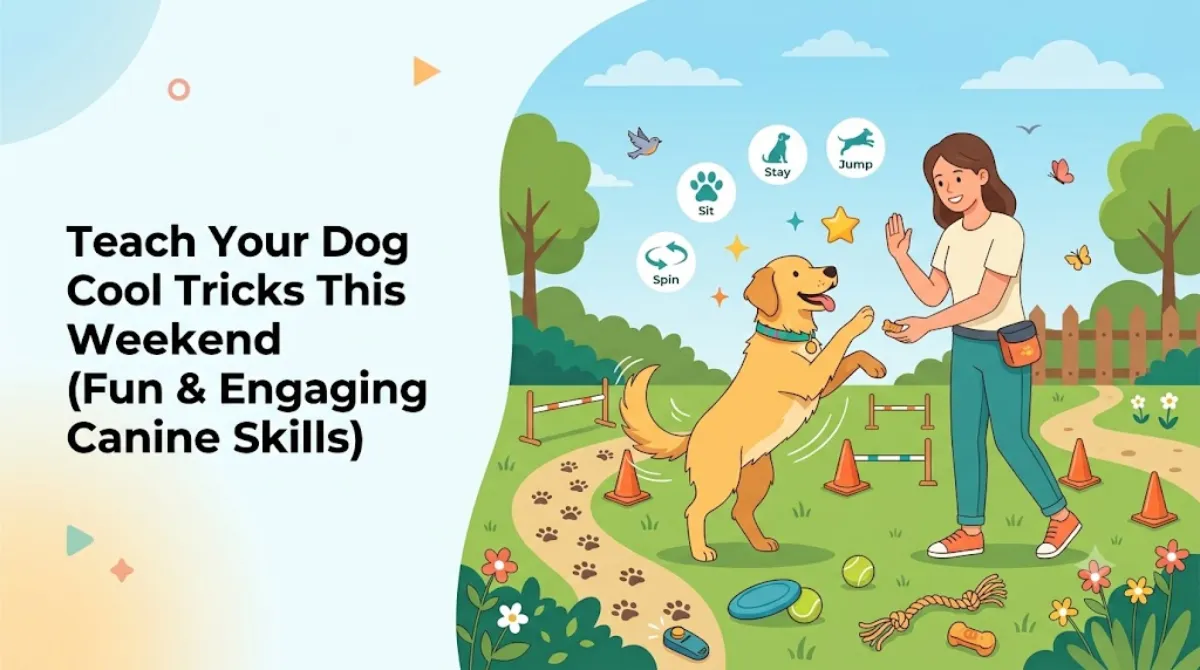
How to Teach Dog Cool Tricks: 20 Easy Skills With Instructions
When most people think of canine education, they picture serious obedience drills—practicing heel work on sidewalks, holding rigid stays in parks, or working tirelessly on emergency recalls. While foundational manners are essential for safety, dogs possess an incredible capacity for play, learning, and creative problem-solving that extends far beyond basic obedience. Engaging in dog-trick training is one of the most rewarding ways to strengthen your bond, burn off mental energy, and share genuine fun with your companion.
Whether you are looking for easy tricks to teach a dog, exploring entertaining puppy tricks, mastering fun dog commands, searching for dog-enrichment tricks to stave off boredom on rainy days, or looking for fun indoor dog-training games, learning how to teach dog cool tricks transforms your living room into an engaging classroom. This comprehensive guide explores the mechanics of shaping behavior, provides step-by-step instructions for 20 distinct skills, includes a trick difficulty chart, and offers tips for senior dogs and small spaces.
Quick Answer
Teaching your dog cool tricks relies on positive reinforcement, precise marker timing (using a clicker or word like “Yes!”), and breaking complex behaviors down into tiny, manageable steps using luring or shaping. Trick training requires no harsh corrections—only high-value treats, patience, and short 3-to-5-minute sessions. By starting with beginner skills like “Touch” or “Spin” and gradually advancing to functional party tricks like “Put Toys Away” or “Close a Door,” you provide vital mental enrichment that tires out an active canine brain faster than physical exercise alone.
Preparing for Trick Training
Before you reach into the treat pouch and start waving food around your living room, establish a clean, structured training environment to maximize your dog’s focus.
Choosing Rewards
Tricks require high-value motivation. Standard dry kibble is rarely exciting enough to compete with living-room distractions. Use tiny, pea-sized morsels of aromatic, irresistible foods:
-
Small cubes of roasted chicken or turkey.
-
Soft cheese bites.
-
Freeze-dried beef liver.
-
Commercial soft training treats that can be swallowed instantly without heavy chewing.
Using a Marker Word or Clicker
A marker word (such as “Yes!”) or a mechanical clicker acts as a camera flash in time. It marks the exact microsecond your dog performs the correct movement, bridging the gap between the action and the delivery of the food reward. Say your marker word cleanly, then deliver the treat.
Keeping Sessions Short
Dog brains fatigue rapidly during cognitive tasks. Keep trick-training sessions short and sweet—lasting only 3 to 5 minutes, once or twice a day. Always end a session on a successful note with a celebration reward, leaving your dog eager for the next game.
20 Cool Tricks to Teach Your Dog
1. Spin (Circling)
-
Difficulty: Beginner
-
How to Teach: Hold a treat right in front of your dog’s nose. Slowly move your hand in a wide horizontal circle toward their tail, leading their head and body around in a full 360-degree rotation. The moment they complete the circle, mark “Yes!” and give them the treat. Once they follow your hand smoothly, add the verbal cue “Spin” (clockwise) or “Twist” (counter-clockwise) and fade the hand movement into a smaller gesture.
2. Paw or Shake
-
Difficulty: Beginner
-
How to Teach: Have your dog sit in front of you. Hold a closed fist containing a treat right in front of their chest. Your dog will naturally paw, nudge, or scratch your fist trying to access the food. The second their paw touches your hand, mark “Yes!,” open your fist, and let them eat the treat. Repeat several times, then introduce an open palm and the verbal cue “Paw.”
3. High Five
-
Difficulty: Beginner
-
How to Teach: Master the “Paw” trick first. Once your dog reliably places their paw into your open palm at waist height, raise your flat palm vertically (like a human high-five gesture). When your dog lifts their paw to meet your upright palm, mark “Yes!” and reward. Add the verbal cue “High five.”
4. Touch (Hand Target)
-
Difficulty: Beginner
-
How to Teach: Extend your open hand with your index finger pointing out, holding it a few inches from your dog’s nose. Dogs are naturally curious and will investigate new objects by sniffing them. The millisecond your dog’s nose touches your fingertips, mark “Yes!” and reward. Practice moving your hand to different angles (left, right, higher, lower) so they learn to track your hand target.
5. Take a Bow
-
Difficulty: Beginner
-
How to Teach: Start with your dog standing. Hold a treat near their nose and slowly lower it straight down between their front paws, moving it slightly forward along the floor. Their front elbows should drop to the ground while their rear end stays up in the air. Mark “Yes!” the moment they hit the bow position and reward. Add the verbal cue “Bow.”
6. Crawl
-
Difficulty: Intermediate
-
How to Teach: Start with your dog in a “Down” position. Hold a treat near their nose and slowly drag it along the floor away from them, keeping your hand low so they don’t stand up. If they try to pop up into a stand, reset and move your hand slower. When they creep forward on their belly, mark “Yes!” and reward. Add the verbal cue “Crawl.”
7. Go Around an Object
-
Difficulty: Intermediate
-
How to Teach: Place a sturdy object (like a laundry basket, cone, or dining chair leg) in the center of the room. Stand on the opposite side of the object from your dog. Lure your dog in a wide circle around the perimeter of the object using a treat in your hand. When they complete the full loop, mark “Yes!” and reward. Add the verbal cue “Around” and gradually distance yourself from the object.
8. Put Toys Away (Tidying Up)
-
Difficulty: Advanced
-
How to Teach: Place a low basket or toy bin on the floor alongside a favorite toy. First, teach your dog to target the toy with their mouth (shaping them for picking it up). Next, lure them toward the basket. When they drop the toy inside the container, mark “Yes!” and deliver a jackpot reward. With repetition, they will learn to pick up items and deposit them directly into storage bins.
9. Ring a Bell
-
Difficulty: Intermediate
-
How to Teach: Hang a string of jingle bells or place a desk call-bell on the floor near your dog. Use your “Touch” hand target to guide your dog’s nose directly onto the bell. The moment the bell rings, mark “Yes!” and reward enthusiastically. Repeat until your dog rings the bell independently upon seeing it, adding the verbal cue “Ring.”
10. Find a Toy (Scent / Matching Game)
-
Difficulty: Intermediate
-
How to Teach: Show your dog a specific toy (e.g., a stuffed duck) and let them sniff it. Command them to “Wait,” place the toy in plain sight a few feet away, and release them with the cue “Find it!” When they run to the toy and touch it, mark and reward. Over time, hide the toy behind furniture or in another room to build tracking skills.
11. Carry an Object
-
Difficulty: Intermediate
-
How to Teach: Choose a lightweight, safe item (like a rolled-up washcloth or a soft toy). Encourage your dog to take it in their mouth. The second they bite down on it, mark “Yes!” and reward. Next, ask them to take two steps while holding it before you reward. Gradually build duration so they carry the item across the room.
12. Middle (Stand Between Owner’s Legs)
-
Difficulty: Intermediate
-
How to Teach: Stand with your feet spread apart. Hold a treat in your hand behind your knees, luring your dog backward until they stand squarely between your legs facing forward. Mark “Yes!” and feed them between your knees. This trick is a crowd-pleaser and forms the foundation for fancy heelwork and weaving.
13. Back Up
-
Difficulty: Intermediate
-
How to Teach: Stand facing your dog. Take a deliberate step toward them, invading their space slightly. Most dogs will naturally take a step backward to maintain balance. The microsecond your dog takes a single step back, mark “Yes!” and toss a treat behind them. Add the verbal cue “Back up” as they step backward.
14. Wave
-
Difficulty: Beginner
-
How to Teach: Start by asking your dog to give you a “Paw.” Once they lift their paw into your hand, lift your hand slightly higher so they have to reach into the air. Remove your hand entirely so their paw flails in the air like a polite wave. The second their paw moves in a waving motion, mark “Yes!” and reward. Add the verbal cue “Wave.”
15. Close a Door
-
Difficulty: Advanced
-
How to Teach: Start with a lightweight interior door opened at a 45-degree angle. Attach a sticky note or small target to the door. Use your “Touch” target to guide your dog’s nose to push against the target. As they push, the door swings shut. Mark “Yes!” and deliver a high-value reward. Add the verbal cue “Close the door.”
16. Open a Lightweight Drawer Safely
-
Difficulty: Advanced
-
How to Teach: Attach a piece of thick rope or a rubber ring to the handle of a bottom kitchen drawer so it hangs low. Teach your dog to grip the rope loop with their teeth or nose. When they tug backward, the drawer slides open. Mark “Yes!” and reward immediately. Always ensure drawers are free of hazardous items during practice.
17. Go to a Named Mat
-
Difficulty: Intermediate
-
How to Teach: Place two distinct mats across the room. Lure your dog onto Mat A, reward them, and release them. Then lure them to Mat B. Give Mat A a specific name (e.g., “Station”) and Mat B another name (e.g., “Bed”). Ask them to go to a specific named mat, rewarding them only when they choose the correct target.
18. Identify Named Toys
-
Difficulty: Advanced
-
How to Teach: Lay out two unique toys (e.g., a ball and a rope). Hold the ball, say its name (“Find the ball”), and play with it briefly before asking your dog to fetch it. Once they consistently retrieve the named item, place both on the floor, call out one toy’s name, and reward them when they select the correct object.
19. Roll Over
-
Difficulty: Intermediate
-
How to Teach: Start with your dog in a “Down” position. Hold a treat near their nose and slowly lure their head backward toward their shoulder blade. Their body will naturally roll onto its side. Continue the lure in a circle over their spine until they complete a full 360-degree rotation onto their other side. Mark “Yes!” and reward. Add the verbal cue “Roll over.”
20. Play Dead (Bang!)
-
Difficulty: Intermediate
-
How to Teach: Ask your dog to lie down. Lure them onto their side by moving a treat from their nose toward their hip. Once their head and body are flat against the floor on their side, mark “Yes!” and reward. Pair the trick with a hand gesture (like a pointing finger gun) and a fun verbal cue like “Bang!”
Unique Content Asset: Trick Difficulty Chart
Use this comprehensive reference matrix to select appropriate tricks based on your dog’s experience level, available living space, and physical fitness:
| Trick Name | Difficulty Level | Space Required | Physical Demand | Equipment Required | Foundation Skill | Estimated Training Stages |
| Spin | Beginner | Small (Indoor room) | Low | None (Treats only) | Luring mechanics | 2 stages |
| Paw / Shake | Beginner | Small | Low | None | Natural pawing | 2 stages |
| High Five | Beginner | Small | Low | None | Paw / Shake | 2 stages |
| Touch | Beginner | Small | Low | None (Hand target) | Curiosity | 1 stage |
| Take a Bow | Beginner | Medium | Low to Mod | None | Luring down | 3 stages |
| Crawl | Intermediate | Medium | Moderate | None | Down position | 3 stages |
| Go Around | Intermediate | Medium | Moderate | Cone / Chair | Luring movement | 3 stages |
| Put Toys Away | Advanced | Small | Low | Toy bin & toys | Hold & Drop | 5 stages |
| Ring a Bell | Intermediate | Small | Low | Training bell | Touch target | 3 stages |
| Find a Toy | Intermediate | Large | Low | Selected toy | Scent awareness | 3 stages |
| Carry Object | Intermediate | Medium | Low | Washcloth / Toy | Mouth grab | 3 stages |
| Middle | Intermediate | Small | Low | None | Luring backward | 3 stages |
| Back Up | Intermediate | Small | Moderate | None | Spatial pressure | 3 stages |
| Wave | Beginner | Small | Low | None | Paw / Shake | 2 stages |
| Close a Door | Advanced | Medium | Low | Target sticky note | Touch target | 4 stages |
| Open Drawer | Advanced | Medium | Moderate | Rope loop on drawer | Grip & Tug | 5 stages |
| Named Mat | Intermediate | Large | Low | Two distinct mats | Place targeting | 4 stages |
| Identify Toys | Advanced | Small | Low | Named toys | Toy discrimination | 6 stages |
| Roll Over | Intermediate | Medium | Moderate | None | Luring side-to-side | 3 stages |
| Play Dead | Intermediate | Small | Low | None | Down position | 3 stages |
Beginner Tricks Versus Advanced Tricks
Understanding the distinction between cognitive tiers helps prevent frustration during training:
-
Beginner Tricks (such as Spin, Paw, Touch, Wave) rely on luring, where the dog simply follows your hand like a magnet. These can be taught in minutes.
-
Advanced Tricks (such as Put Toys Away, Identify Named Toys, Open a Drawer) require shaping—breaking complex behaviors down into sequential micro-steps and waiting for the dog to offer creative problem-solving solutions. These require patience across multiple training days.
Adapting Tricks for Senior Dogs
Senior dogs (ages 8+) still love mental stimulation, but their aging joints require physical modifications:
-
Avoid Impact: Skip high-jumping tricks, rolling over on hard hardwood floors, or demanding deep crawling sessions if your senior dog suffers from canine arthritis.
-
Focus on Mental Engagement: Prioritize stationary cognitive tricks like Touch, Find a Toy, Ring a Bell, and Identify Named Toys, which provide intense mental enrichment without stressing aging limbs.
Adapting Tricks for Small Spaces
You don’t need a sprawling estate to teach impressive tricks. Apartment living and compact rooms are ideal for trick training:
-
Focus on stationary, tight-radius skills like Spin, Middle, Paw, Wave, and Touch.
-
Utilize vertical space or furniture (like a sturdy ottoman or couch) for gentle pivoting tricks rather than long-distance running behaviors.
Signs the Dog Is Becoming Frustrated
Dogs communicate cognitive overload through subtle physiological stress signals. Watch for these red flags during your training sessions:
-
Yawning or Lip-Licking: A classic displacement behavior indicating mounting stress or confusion.
-
Pacing or Turning Away: Refusing to look at you or walking away from the treat pouch.
-
Frustration Vocalizations: Whining, barking, or pawing aggressively at your hands.
-
Action: If you spot these signs, immediately ask your dog to perform an easy, known trick (like a simple “Sit”), reward them lavishly, and end the session on a happy note.
Trick-Training Safety Rules
-
Never Force Movements: Never physically push your dog’s body into positions like a roll-over or a bow. Let them discover the movement voluntarily through luring.
-
Protect Joints: Always train on carpeted surfaces or yoga mats rather than slippery hardwood floors to prevent sliding injuries.
-
Keep Treats Tiny: To prevent canine obesity during intensive training sessions, use pea-sized treats or subtract training calories from their regular daily meal portions.
Frequently Asked Questions
What is the easiest trick to teach a dog?
The hand-target “Touch” trick is widely considered the easiest and fastest trick to teach because it taps directly into a dog’s natural curiosity to investigate objects with their nose.
How long should a trick-training session be?
Keep sessions very brief—between 3 to 5 minutes, once or twice a day—to maintain high enthusiasm and prevent mental burnout.
Can old dogs learn new tricks?
Yes! Senior dogs possess neuroplasticity and benefit immensely from mental enrichment, which helps keep their brains sharp and ward off canine cognitive decline.
What should I do if my dog gets frustrated during training?
Immediately pause, drop back to an easier foundational skill your dog already knows, reward them heavily, and end the training session on a positive, successful note.
Conclusion
Teaching your dog cool tricks is an extraordinary way to spark joy, build mutual trust, and provide top-tier mental enrichment. By keeping sessions short, using positive reinforcement, celebrating small successes, and exploring our 20 diverse skills and difficulty chart, you can unlock your dog’s hidden potential. Take your next step by grabbing your treat pouch, choosing a beginner trick like “Touch” or “Spin,” and starting your first fun trick session today!