Taking home, a puppy is equal to bliss and worry. One of the first things that all new pet parents inquire about is how often should I feed my puppy? It’s not simply about filling a bowl; feeding has a direct impact on behavior, growth, digestion, and even the effectiveness of toilet training.
The puppy feeding schedule you establish now is crucial. Not only does it hinder their growth, but it also increases the likelihood of stomach problems and “surprises” on your carpet at three in the morning.
Pet Parent Education
How many times a day should I feed my Puppy?
The Complete Puppy Feeding Masterclass: Schedules, Portions, and Health
This guide is designed to help you about everything from puppy feeding by age, correct puppy feeding portions, and calorie needs, to puppy feeding schedules by breed through useful charts and vet-informed guidance that you may need.
I. Mastering the Clock: Schedule & Frequency
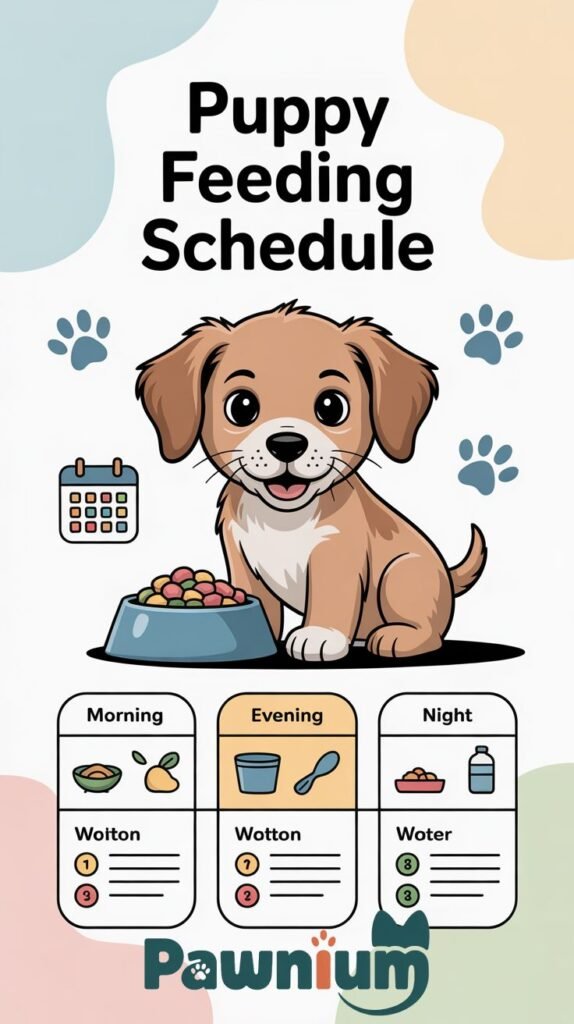
The Ultimate Puppy Feeding Schedule by Age (8–24 Weeks)
Understanding puppy feeding schedule starts knowing how often puppies need to eat as they grow because of their tiny stomachs and high energy needs, pups must eat frequently.
General puppy feeding schedule by age:
- 8–12 weeks: 4 meals per day
- 12–16 weeks: 3 meals per day
- 4–6 months: Transition from 3 to 2 meals
- 6+ months: 2 meals per day (most breeds)
Key takeaway: Frequent meals promote growth, enhance digestion, and help avoid low blood sugar.
How to Move Your Puppy from 3 Meals to 2 Meals a Day
When following a puppy feeding schedule, most puppies are ready to drop their midday meal around 5–6 months.
A puppy’s readiness is indicated by:
- No malice vomiting between meals
- Always completes meals
- Keeps a healthy weight and level of energy
How to make a seamless transition:
- Increase the quantities of breakfast and dinner gradually.
- Cut back on the noon meal for seven to ten days.
- Keep an eye on energy levels and stool quality.
The ideal time for a puppy to have their final meal before bed
Nighttime feeding is one of the most often asked topics regarding how often should I feed my puppy.
Ideal timing: The final meal is two to three hours before bed.
This lowers the likelihood of accidents at three in the morning by providing adequate time for digestion and a last bathroom trip.
Free Feeding vs. Scheduled Feeding (Pros & Cons)
Most vets advise scheduled feeding, but some pet owners think about leaving food out all day.
Scheduled feeding benefits:
- More effective portion control
- Easier potty training
- Early identification of changes in appetite
- A lower chance of obesity
Free feeding drawbacks:
- Consuming too much food
- Insufficient motivation for training
- Health monitoring is more difficult
Bottom line: For puppies, scheduled feeding is nearly always successful.
What Happens If You Miss a Puppy Feeding Time?
Did you miss any meals? Don’t worry.
- Avoid double the next meal
- Get back to your regular feeding routine.
- Keep an eye out for vomiting (especially in toy breeds)
Missed meals do occur occasionally; what matters is consistency over time.
II. Getting the Portions Right: Control & Metrics
Daily Calorie Requirements for Growing Puppies
While organizing a puppy feeding schedule, timing is important, but so are calorie requirements. Veterinarians calculate the number of calories using the Resting Energy Requirement (RER):
Puppies typically need: 2–3 × RER, based on breed size and age. This prevents overfeeding and guarantees enough energy for growth.
Puppy Feeding Amount Calculator by Breed Size
Considering that growth rates vary, puppy feeding portions should always factor in breed size.
- Small breeds: Higher calories per pound
- Medium breeds: Moderate growth and calorie needs
- Large breeds: Controlled calories to protect joints
Your calculations should always be compared to the feeding chart for your puppy food.
Grams vs. Cups: Why Weighing Food Matters
Cups for measuring are handy, but they are not precise. Why weighing food is better:
- The shape and brand of cups vary.
- The density of kibble varies.
- Tiny mistakes quickly add up
Pro tip: For precise puppy feeding portions, one of the greatest investments is a digital kitchen scale.
Adjusting Food During Puppy Growth Spurts
There is no linear growth. During their spurts, puppies may look more hungry, overnight outgrow collars, and get more sleep than normal.
What to do:
- Increase calories by 5–10%
- Reassess weight weekly
- Once growth has stabilized, return to the baseline.
Puppy Body Condition Score (BCS)
A puppy feeding schedule isn’t complete without monitoring body condition. You can determine whether your puppy is underweight, overweight, or just right by using the Body Condition Score.
| BCS | Description | What You See & Feel |
|---|---|---|
| 1–3 | Too Thin | Ribs, spine, and hips visible |
| 4–5 | Ideal | Ribs felt easily, visible waist |
| 6–9 | Overweight | Ribs hard to feel, no waist |
The rib test: You should feel ribs easily with light pressure. If ribs are visible → increase food. If you can’t feel ribs → cut back on portions.
III. Size Matters: Breed-Specific Feeding Guides
Large Breed vs. Small Breed Feeding Differences
A puppy feeding schedule by breed is critical, especially for large dogs.
Large breed puppies: Reduced, regulated growth; stay on puppy food longer; overfeeding increases the risk of joint diseases.
Small breed puppies: Faster metabolism; higher calorie density; an earlier shift to adult diet.
Golden Retriever Puppy Feeding Chart
The puppy feeding schedule for Golden Retrievers need to be carefully balanced to promote growth without putting undue strain on their joints.
| Age | Meals/Day | Daily Amount (Dry Food) |
|---|---|---|
| 8–12 weeks | 4 | 1.5–2 cups |
| 3–4 months | 3 | 2–2.5 cups |
| 5–6 months | 2–3 | 2.5–3 cups |
| 7–12 months | 2 | 3–3.5 cups |
Important: Choose a large-breed puppy formula with controlled calcium and phosphorus.
French Bulldog Puppy Feeding Guide by Month
Small in stature, French Bulldogs are sensitive to calories.
- 8–12 weeks: 3–4 small meals
- 3–6 months: 3 meals
- 6–12 months: 2 meals
Avoid overfeeding—this breed gains weight easily and is prone to digestive issues.
When to Switch Large Breed Puppies to Adult Food
Compared to small breeds, large breeds should remain on puppy diet for a longer period of time.
- Large breeds: 12–18 months
- Small breeds: 9–12 months
Switching too early can compromise bone development.
IV. Problem Solving & Digestive Health
Signs Your Puppy Is Still Hungry After Eating
Not every “hungry look” means hunger. True hunger signs: Weight loss, poor growth, low energy. Not hunger: Begging, food motivation, learned behavior. Always examine body’s condition before expanding food.
What to Do If Your Puppy Refuses to Eat Kibble
It is typical to skip meals, particularly when under stress or during teething. Try this first: Adhere to the schedule, remove food after 15 minutes, avoid constant toppers. If refusal lasts more than 24 hours, call your vet.
Safe Human Foods to Mix with Puppy Kibble (Do’s & Don’ts)
Safe additions (small amounts): Plain pumpkin, blueberries, cooked carrots, plain boiled chicken. Avoid: Onions, garlic, grapes, raisins, fatty or seasoned foods.
How Much Water Should a Puppy Drink?
On average: ½–1 ounce of water per pound per day. Fresh water should always be available, particularly when dry kibble is being fed.
Best Puppy Food for Sensitive Stomachs & Diarrhea
If digestive issues persist: Look for limited-ingredient puppy food, avoid frequent brand switching, and call your vet if diarrhea lasts more than 48 hours.
Reading the Label: What Must Be in Puppy Food?
Don’t let sophisticated marketing divert you. Keep an eye out for these three items:
- AAFCO Statement: Make sure it states that the bag is “complete and balanced” for growth or “all life stages.”
- DHA (Docosahexaenoic Acid): An essential omega-3 fatty acid for normal development of the brain and eyes.
- Protein Source: An identifiable meat (such as “Chicken” or “Lamb”) should be listed as the first ingredient rather than “meat by-products.”
V. Beyond the Bowl: Using Feeding for Mental Stimulation
A lot of new owners are unaware that the greatest time to expend puppy energy is around feeding time. Consider changing the way your puppy is fed if they seem bored and destructive or if they swallow their food in a matter of seconds.
The Benefits of Slow Feeders and Puzzle Toys
Puppies forage by nature. Standard bowl eating is “easy mode,” which can cause bloating or boredom.
- Slow Feeder Bowls: These have ridges and mazes that force your puppy to navigate around the plastic, slowing their eating pace by up to 10 times.
- Stuffable Rubber Toys: Stuffing kibble (softened with a little water) into a toy and freezing it provides a soothing, cold surface for teething gums and keeps a puppy occupied for 20+ minutes.
- Snuffle Mats: These fabric mats mimic long grass. Hiding dry kibble inside encourages your puppy to use their nose, which is mentally exhausting (in a good way!) for a young dog.
Feeding as a Training Opportunity
A bowl isn’t always necessary. For a morning training session, you can reward your puppy with their entire meal.
- Hand-Feeding: This is a fantastic method for strengthening your attachment and teaching your puppy “impulse control.” Give them a handful of kibbles once they sit or look at you.
- “Find It” Games: To keep them moving and interested, throw kibble on the floor one piece at a time.
Conclusion
As a pet parent, one of your most effective tools is a regular puppy feeding schedule. It promotes healthy growth, enhances digestion, and even facilitates potty training.
Remember:
- Feed by age, size, and breed
- Measure portions carefully
- Monitor body condition regularly
- Adjust as your puppy grows
Most importantly, partner with your veterinarian for personalized guidance. Feeding time isn’t just nutrition—it’s bonding, trust, and the start of a lifelong routine you’ll both rely on. You’ve got this—and your puppy is lucky to have you. 🐾
 Mustafa Ibrahim