
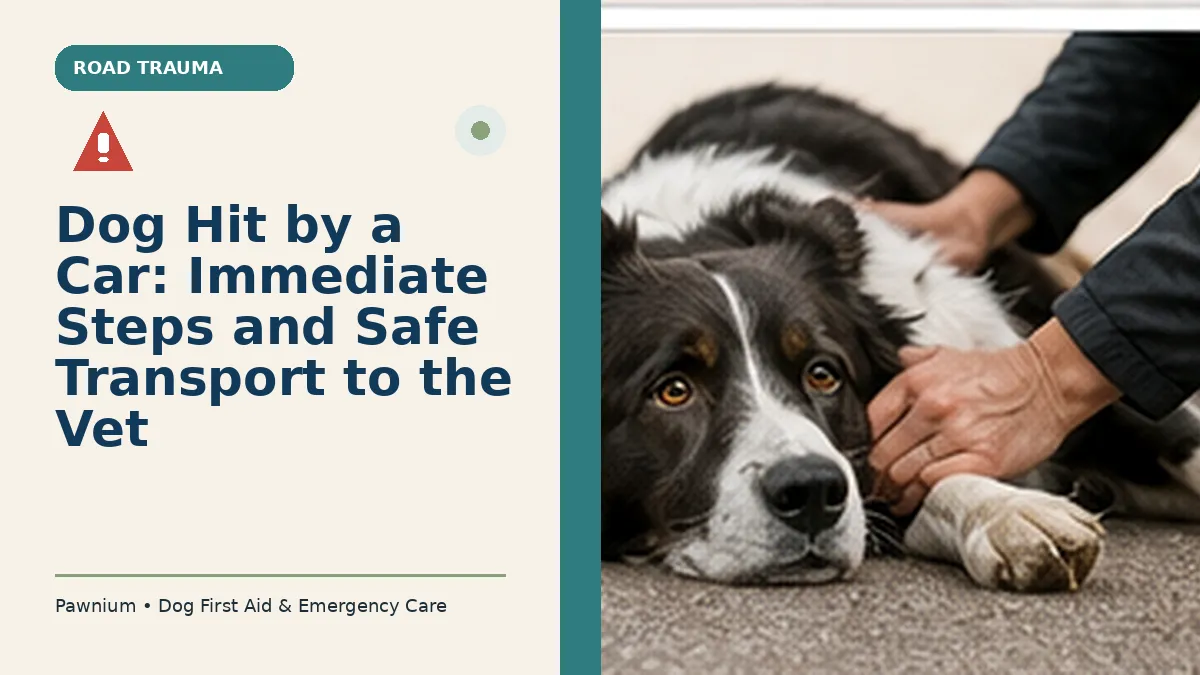
Dog Hit by a Car: Immediate Steps and Safe Transport to the Vet
Immediate Emergency Warning
A dog hit by a car needs prompt veterinary assessment even if the dog stands up or walks afterward. Make the traffic scene safe, approach carefully, check responsiveness and breathing, control severe external bleeding with direct pressure, minimize movement and call the emergency hospital. Do not make the dog walk to test a leg and do not give human pain medication.
Road trauma can cause fractures, lung injury, internal bleeding, head trauma or spinal damage that is not immediately visible. Adrenaline may allow a seriously injured dog to remain alert for a short period. The goal of first aid is safe stabilization and transport, not deciding at the roadside whether the dog is “okay.”
Make the Scene Safe
Do not run into moving traffic. Alert drivers, use hazard lights or ask another adult to control traffic when possible. Your safety comes first; a second casualty does not help the dog.
Approach the Dog Cautiously
An injured dog can bite from pain or fear. Approach from where the dog can see you if conscious, avoid putting your face close to the mouth and use minimal handling.
Check Responsiveness
Speak to the dog and observe purposeful response. Do not shake the body or repeatedly move the neck.
Check Breathing
Severe effort, gasping, blue-gray tissues or absent normal breathing is an immediate emergency. Do not muzzle a dog with respiratory distress.
Control Severe External Bleeding
Use firm direct pressure with gauze or a clean cloth. If it soaks through, add more material over the first layer rather than repeatedly removing it.
Visible Fractures
Do not straighten a deformed limb or push exposed bone back into the wound. Cover an open fracture loosely if practical and minimize movement.
Internal Injuries May Be Hidden
Chest and abdominal injuries can occur without obvious external wounds. A dog may initially stand or walk while bleeding internally or developing lung complications.
Why “Still Walking” Does Not Mean Safe
Walking ability cannot rule out rib fractures, pulmonary contusions, diaphragmatic injury, abdominal bleeding or other trauma. Do not delay assessment because the dog looks alert.
Signs of Shock or Circulatory Compromise
Pale gums, weakness, rapid breathing, cool extremities, collapse or poor responsiveness can occur with significant blood loss or shock. Keep transport moving toward the hospital.
Abdominal Trauma
Internal bleeding, organ injury or urinary-tract damage may not be visible. Abdominal distension, pain, weakness, vomiting or pale tissues after trauma is concerning.
Chest Trauma
Breathing difficulty after a vehicle strike can reflect lung bruising, pneumothorax, rib fractures or other chest injury. Minimize stress and handling and seek emergency care.
Head Injury
Altered consciousness, abnormal pupils, seizures, loss of balance or behavior change after trauma requires urgent assessment. Do not give food or medication to a poorly responsive dog.
Spinal Injury
Weakness, paralysis, severe neck/back pain or inability to stand can occur with spinal trauma. Avoid unnecessary bending or twisting.
Minimize Movement
Do not repeatedly reposition the dog to inspect every injury. Stabilize obvious severe bleeding and move toward veterinary care.
Small-Dog Transport
Use a padded carrier, sturdy box or firm board when loading can be performed gently. Keep the body supported.
Large-Dog Transport
Two or more adults may be needed. A heavy blanket can act as a flexible stretcher; a rigid board may provide better spinal support when available.
Blanket or Stretcher Technique
Position helpers on opposite sides, roll or slide the support beneath the dog with minimal manipulation and lift together. Keep the dog as level as practical.
Avoid Unnecessary Neck and Spine Manipulation
Do not force the spine straight or pull the head/neck into a specific position. Prioritize airway and breathing while limiting additional movement.
Call the Emergency Clinic
Tell the hospital the dog was hit by a vehicle, whether the dog is conscious, whether breathing is normal, whether severe bleeding is controlled, and the estimated arrival time.
What Information to Provide
- approximate time of impact
- vehicle speed if known without delaying care
- whether the dog was thrown or run over
- loss of consciousness or seizure
- breathing changes
- external bleeding
- known medical conditions and medications
What Not to Give
Do not give ibuprofen, naproxen, acetaminophen/paracetamol, aspirin, sedatives, food or other home medication unless a veterinarian specifically directs it.
What the Veterinary Team May Do
Emergency assessment prioritizes airway, breathing and circulation. Depending on injuries, the team may use oxygen, pain control, intravenous access, blood tests, radiographs, ultrasound or other imaging and monitoring.
Delayed Complications
Lung bruising, internal bleeding and other trauma effects can evolve after the accident. This is why a dog that appears brighter after the initial shock may still need monitoring.
Prevention
- use secure fencing and gates
- keep dogs leashed near roads
- teach reward-based recall without relying on recall beside traffic
- use secure vehicle restraint
- keep identification and microchip registration current
Do Not Move Into Traffic Until It Is Safe
If the dog is lying in an active road, use another person, hazard lights or emergency services to slow traffic when possible. Do not create a second accident. Human scene safety remains the first step in veterinary first aid.
Prevent an Injured Dog From Running Away
A frightened dog may bolt despite serious injury. If the dog is conscious and breathing normally, use a secure leash or barrier when it can be applied without struggling. Do not chase the dog into traffic.
Check the Whole Dog, Not Only the Impact Side
Vehicle trauma can throw or roll the body. The most visible abrasion may not correspond to the most serious internal injury. Observe breathing, responsiveness and overall movement before focusing on a single wound.
Chest Injury Can Worsen Over Time
Pulmonary contusions can evolve after impact. A dog that initially breathes reasonably may develop increased effort later. Veterinary monitoring is important after significant road trauma.
Internal Bleeding
Damage to abdominal organs can cause blood loss without external bleeding. Pale gums, weakness, rapid breathing, abdominal enlargement or collapse after trauma is concerning.
Urinary Tract Injury
Pelvic and abdominal trauma can injure the bladder or urinary tract. Tell the veterinarian whether the dog urinates after the accident, but do not delay transport waiting to see.
Pelvic Fractures
A dog may still stand with some pelvic fractures. Do not use walking ability to exclude serious orthopedic injury.
Head Trauma Monitoring
Changes in consciousness, seizures, unequal pupils, abnormal eye movement or worsening disorientation after impact requires urgent attention. Keep the dog in a low-stimulation environment during transport.
Spinal Trauma and Limb Weakness
Dragging limbs, inability to stand or loss of coordinated movement can suggest spinal or neurologic injury. Minimize bending and twisting and do not repeatedly test reflexes.
Road Rash and Wounds
Abrasions may contain gravel, dirt and road material. Control serious bleeding and cover contaminated areas loosely; extensive cleaning can wait for veterinary pain control and wound preparation.
Loading a Dog With Breathing Difficulty
Allow the dog to remain in the position that makes breathing easiest whenever possible. Do not force a distressed dog flat on its side merely to fit a transport technique.
Loading a Dog With Suspected Spine Injury
A rigid board is preferable when available and safe, but a blanket may be the only practical option. Coordinate helpers and reduce rotation rather than spending a long time constructing a perfect stretcher.
If You Are Alone With a Large Dog
Call the emergency hospital and explain the transport problem. A blanket can sometimes be used to slide the dog a short safe distance, but avoid dragging across rough surfaces or pulling by the legs.
Keep the Vehicle Ready
Open doors, fold seats and clear space before lifting the dog. This prevents having to set a severely injured dog down and move them repeatedly.
What Happens During Emergency Triage
Airway, breathing and circulation take priority. The team may provide oxygen, control hemorrhage, establish intravenous access and stabilize pain before completing imaging.
Why Radiographs May Not Be the First Test
A critically unstable patient may need stabilization before being positioned for X-rays. Ultrasound or other rapid bedside assessment can help identify internal fluid or organ injury.
Monitoring After a Normal Initial Examination
Some complications become clearer with time. Follow the clinic’s instructions about observation, repeat imaging, activity restriction and return precautions even if the dog is discharged.
Car Safety Prevention
Use an appropriate secured crate or crash-tested restraint where feasible, prevent dogs from riding loose in open truck beds and do not open vehicle doors near traffic without control of the dog.
Escape Prevention at Home
Repair fence gaps, use double-gate routines, supervise doorways and keep identification current. Reward-based recall is useful but should not be relied upon as the only protection beside fast traffic.
Keep the Dog Warm—but Not Overheated
A traumatized dog may lose body heat during prolonged transport. Use a light blanket when appropriate, but do not tightly wrap a dog that is panting heavily or struggling to breathe.
Do Not Offer a Large Meal on the Way
Major trauma may require sedation, imaging or emergency surgery. Follow the clinic’s instructions about food and water rather than feeding for comfort.
Prepare for a Rapid Handoff
On arrival, tell staff immediately that the dog was struck by a vehicle. Give the incident time, breathing status, loss of consciousness, major bleeding and medication information before discussing minor abrasions.
Never Chase a Loose Injured Dog Into Traffic
If the dog runs after impact, coordinate help and block traffic where possible rather than pursuing directly behind it. Fear can make the dog run farther or cross the road again.
Even when external injuries are minor, complete the recommended veterinary evaluation because internal trauma can be delayed or initially hidden.
Minimize repeated transfers between surfaces before arrival.
Prompt assessment remains essential.
Original Content Asset
| Road-trauma transport check | Done? |
|---|---|
| Scene safe before approaching | ☐ |
| Emergency clinic called | ☐ |
| Dog responsive? noted | ☐ |
| Breathing assessed | ☐ |
| Severe external bleeding controlled with direct pressure | ☐ |
| Movement minimized | ☐ |
| Blanket/rigid support ready if needed | ☐ |
| Medical information packed | ☐ |
| Another adult assisting if available | ☐ |
FAQs
Does my dog need a vet if they were hit by a car but can walk?
Yes. Walking does not rule out internal bleeding, chest trauma, fractures or other hidden injury.
Should I let my dog walk to the car?
Avoid unnecessary walking after significant trauma. Support or carry the dog when it can be done safely.
Can I give pain medicine before the vet?
Do not give human pain medication. Emergency clinicians will choose appropriate pain control.
How do I move a large injured dog?
When possible, use two adults and a blanket or rigid support to move the dog as a unit while minimizing spinal movement.
What signs after a road accident are especially dangerous?
Breathing difficulty, collapse, pale gums, severe bleeding, poor responsiveness, seizures or inability to stand are major emergency signs.