Homemade Pumpkin Applesauce Dog Treats: Easy, Healthy Recipe
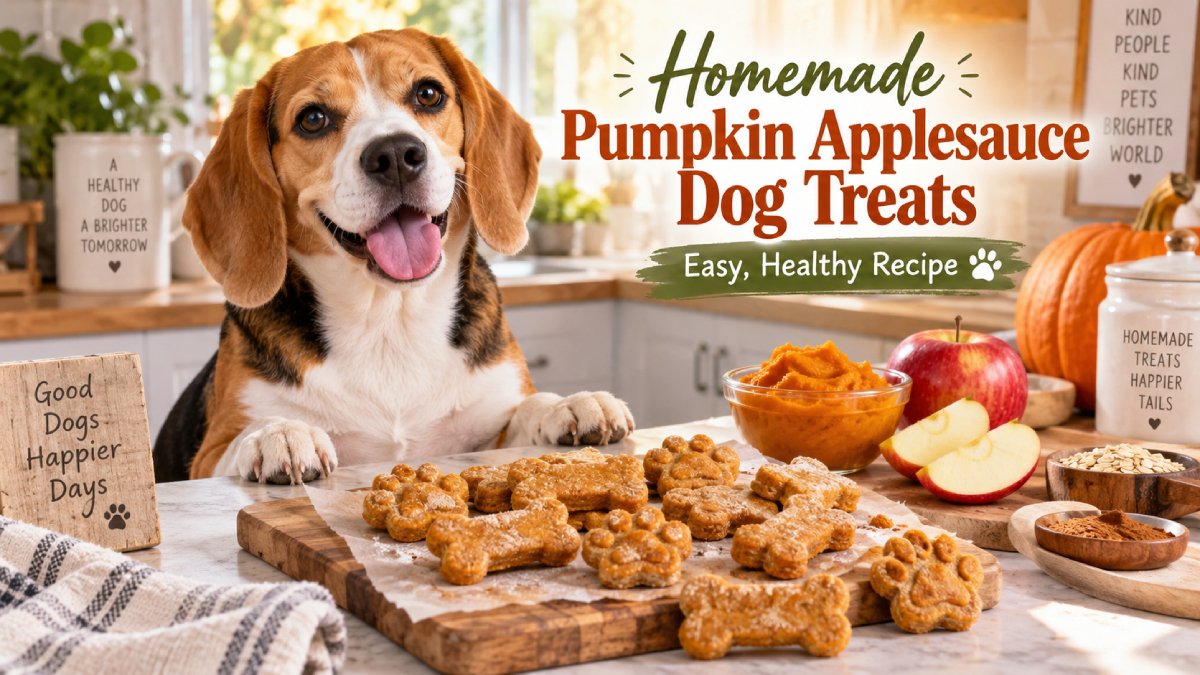
Homemade pumpkin applesauce dog treats are a simple way to make something special for your dog without relying on a long ingredient list. Pumpkin adds moisture and fiber, while unsweetened applesauce gives the dough a mild natural sweetness and helps keep the treats tender. With a few pantry staples, you can bake a batch that works well for training rewards, snack time, or an occasional homemade treat.
Why Pumpkin and Applesauce Work Well in Dog Treats
Pumpkin puree is useful in homemade dog biscuits because it adds moisture without needing a large amount of oil. It also helps create a dough that is easy to roll and cut. Applesauce has a similar role: it adds moisture, a light apple flavor, and enough natural sweetness that you generally do not need added sugar.
For most dogs, plain pumpkin and apple are familiar ingredients. Still, every dog is different, so introduce a new treat gradually, especially if your dog has a sensitive stomach, food allergy, or a veterinarian-prescribed diet.
Ingredients
- 1 cup plain pumpkin puree
- 1/2 cup unsweetened applesauce
- 1 large egg
- 2 1/2 cups oat flour or whole-wheat flour, plus extra as needed
- 1/2 teaspoon ground cinnamon, optional
Ingredient check: The applesauce should be unsweetened and xylitol-free. The pumpkin should contain pumpkin only, not sweetened pie filling. If using cinnamon, use a small amount and skip spice blends that may contain nutmeg.
How to Make Pumpkin Applesauce Dog Treats
- Preheat the oven to 350°F (175°C) and line a baking sheet with parchment paper.
- Add the pumpkin puree, applesauce, and egg to a mixing bowl. Stir until evenly combined.
- Add the flour gradually. Mix until a soft, workable dough forms. If the dough is sticky, add a little more flour one tablespoon at a time.
- Lightly flour your work surface and roll the dough to about 1/4-inch thickness.
- Cut into small shapes using a cookie cutter or pizza wheel. Smaller pieces are useful for training and portion control.
- Arrange the treats on the baking sheet with a little space between them.
- Bake for 22 to 30 minutes, depending on size and thickness. For a firmer biscuit, turn off the oven and let the treats sit inside for another 20 to 30 minutes with the door slightly open.
- Cool completely before serving or storing.
How to Get the Texture Your Dog Likes
If your dog prefers a softer treat, roll the dough slightly thicker and remove the treats as soon as they are set and lightly browned at the edges. Soft treats are easier for puppies, senior dogs, and dogs with dental limitations, but they also hold more moisture and should be refrigerated.
For a crunchier biscuit, roll the dough thinner and dry the treats longer at a lower temperature after the main baking time. A drier biscuit usually lasts longer because less moisture remains in the center. Always let the batch cool fully before deciding whether the texture is right; biscuits firm up as they cool.
Easy Substitutions
Oat flour is a convenient option and can be made by blending plain rolled oats into a fine flour. Whole-wheat flour also works for dogs that tolerate wheat. If your dog has known food sensitivities, use ingredients that your veterinarian has already confirmed are suitable rather than experimenting with multiple new substitutions at once.
You can also replace part of the applesauce with mashed banana for a different flavor. If the dough becomes softer after a substitution, simply add a small amount of flour until it can be rolled without sticking.
Storage and Freezing
Once fully cooled, store soft pumpkin applesauce treats in an airtight container in the refrigerator for about five to seven days. Drier biscuits may keep a little longer, but homemade treats contain no commercial preservatives, so inspect them before serving and discard any batch that smells unusual or shows mold.
For longer storage, freeze the treats in a sealed freezer bag or container. Freeze them in small portions so you only thaw what you need. Most small biscuits thaw quickly at room temperature.
How Much Can You Give Your Dog?
Treats are best kept as a small part of your dog’s daily calorie intake. A practical approach is to make the biscuits small, especially if you use them for training. Large dogs do not necessarily need large treats; dogs usually value the reward itself more than the size of the piece.
If your dog is on a weight-management plan, has diabetes, pancreatitis, kidney disease, digestive disease, or another medical condition, ask your veterinarian before adding homemade snacks to the diet.
Frequently Asked Questions
Can dogs eat unsweetened applesauce?
Plain unsweetened applesauce can be used in small amounts for many dogs. Always check the label and avoid products containing xylitol or unnecessary sweeteners.
Can I use pumpkin pie filling?
No. Use plain pumpkin puree. Pumpkin pie filling is formulated for desserts and may contain sugar and spices that are not appropriate for a simple dog treat recipe.
Can I make these without cookie cutters?
Yes. Roll the dough into a rectangle and cut it into small squares with a knife or pizza wheel. This is faster and makes portioning easy.
Can I freeze the dough?
Yes. Wrap the dough tightly and freeze it for later use. Thaw it in the refrigerator before rolling and baking.
Batch Size and Practical Portioning
The exact number of biscuits depends on the cutter size and how thinly you roll the dough. Instead of focusing on a fixed yield, decide how you plan to use the treats. If they are for training, cut the dough into very small squares so one batch creates many low-calorie rewards. For an occasional snack, slightly larger shapes are fine, but you can still break them in half before serving.
Uniform thickness matters more than perfect shapes. When every biscuit is approximately the same size, the batch bakes more evenly and you are less likely to end up with a few soft centers mixed with very dry edges.
Common Baking Problems and Fixes
If the dough cracks while rolling, it is probably too dry. Knead in a teaspoon of applesauce or water and let the dough rest for a few minutes. If it sticks heavily to the rolling pin, dust both the work surface and dough lightly with flour or roll it between two sheets of parchment paper.
If the biscuits puff or warp, that is usually harmless. Homemade dog treats do not need to look bakery-perfect. If some pieces brown much faster than others, rotate the tray halfway through baking and remove smaller pieces earlier.
Can You Use Fresh Apple Instead of Applesauce?
Yes, but the texture will change. Peel and core the apple, remove all seeds, then cook or finely grate a small amount before mixing it into the dough. Applesauce is easier because its moisture is distributed evenly, while grated apple can create wetter pockets that need extra baking time.
If you want to use fresh apple for flavor without changing the dough too much, finely dice a small amount and press away excess moisture before adding it.
Final Tips
Keep the ingredient list simple, make the treats small, and store them according to their moisture level. Plain pumpkin and unsweetened applesauce make a flexible base that is easy to customize while still keeping the recipe straightforward. Homemade treats can be a fun addition to your dog’s routine as long as they remain an occasional extra alongside a nutritionally complete diet.