
Bacon is one of the most irresistible breakfast treats for humans, and its mouth-watering aroma often catches the attention of our furry companions. The canine interest in food is natural dogs are drawn to smells and flavors that appeal to their senses. However, while bacon may seem like a harmless indulgence, its high fat and salt content can pose serious risks. Understanding the health issues from bacon is crucial to keeping your dog safe. Bacon is considered an off-limits food for dogs, and even small amounts should be given with caution.
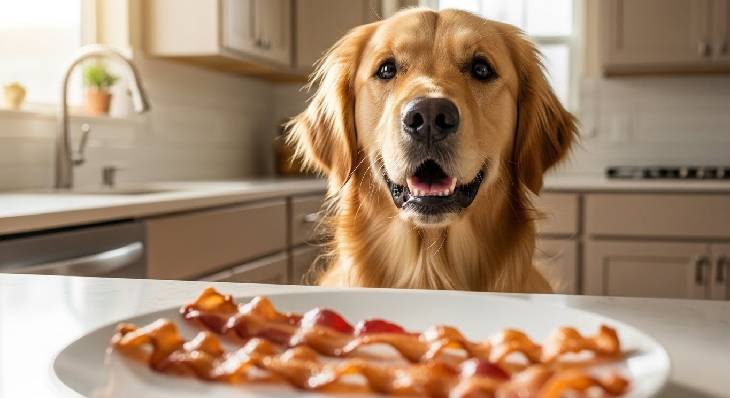
Why Is Bacon Bad for Dogs?
Bacon is a processed meat high in fat and salt, and often contains additives that can negatively impact a dog’s health. Here are the main reasons to avoid feeding bacon to dogs:
1. High Fat Content
Bacon is loaded with fat. Dogs consuming too much fat may experience pancreatitis, which is an inflammation of the pancreas and can become life-threatening if untreated.
2. High Salt Content
Salt in bacon far exceeds what dogs need. A sudden increase can lead to electrolyte imbalance. Symptoms include:
- Increased thirst
- Frequent urination
In severe cases, excessive salt can cause sodium ion poisoning, leading to:
- Tremors
- High fever
- Seizures
3. Harmful Preservatives and Additives
Commercial bacon often contains preservatives such as sodium nitrites, which can be toxic compounds for dogs. Large amounts may cause:
- Upset stomach
- Blood disorders like methemoglobinemia
4. Digestive Upset
Dogs have sensitive digestive systems. The richness and fat in bacon can trigger gastrointestinal disturbances such as:
- Diarrhea
- Vomiting
- General discomfort
| Risk Factor | Possible Symptoms | Severity |
|---|---|---|
| High fat | Pancreatitis, vomiting | High |
| High salt | Thirst, urination, sodium poisoning | High |
| Preservatives | Upset stomach, methemoglobinemia | Medium |
| Digestive upset | Diarrhea, vomiting, discomfort | Medium |
My Dog Ate Too Much Bacon What Do I Do?
If your dog accidentally eats bacon, the situation depends on how much was consumed. Bacon is not inherently toxic, so a small piece may not cause harm.
Steps to Take:
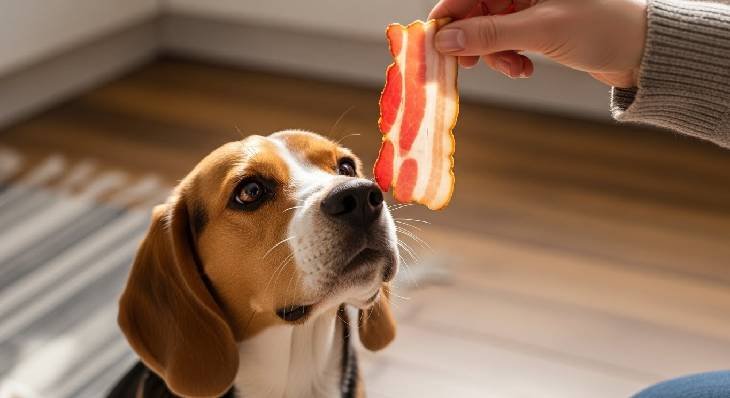
Assess the Quantity:
- Small piece: usually safe, monitor closely.
- Multiple slices: higher risk, take precautions.
Watch for Symptoms:
- Vomiting
- Diarrhea
- Lethargy
- Decreased appetite
Contact a Veterinarian immediately if severe symptoms appear.
Light Feeding After Incident:
Feed bland, easily digestible food the following day to prevent further gastrointestinal distress.
Pro Tip: Always have your veterinarian’s contact on hand in case of accidental ingestion of fatty or processed foods.
Bacon Treats To Give Your Dog
While feeding actual bacon should be avoided, there are dog-friendly bacon treats that mimic the flavor without the risks.
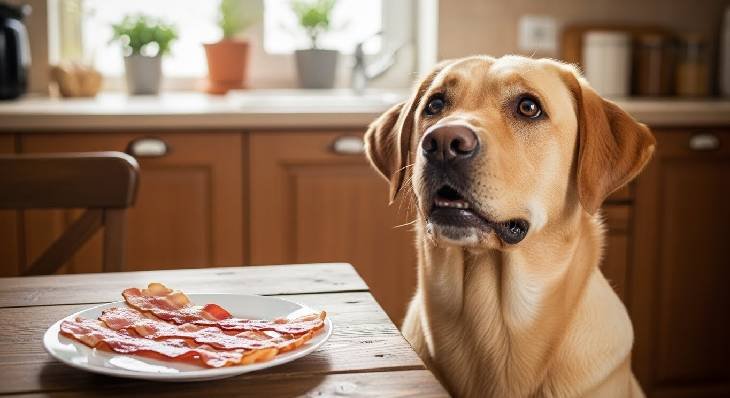
Recommended Products
| Product | Flavor | Weight | Rating | Price |
|---|---|---|---|---|
| Milk-Bone Mini’s Flavor Snacks | Beef, Chicken & Bacon | 2.5-oz | 4.8/5 | $1.25 |
| True Acre Foods Thick Cut Strips | Real Bacon & Beef | 25-oz | 4.4/5 | $9.99 |
| Blue Buffalo True Chews | Chicken & Bacon | 12-oz | 4.7/5 | $13.99 |
| Hartz Oinkies Bacon-Wrapped Twists | 100% Real Bacon, Rawhide-Free | 14 count | 4.7/5 | $9.47 |
These treats provide the savory taste alternatives dogs crave without the high fat, salt, and additives in real bacon.
FAQs About Bacon and Dogs
Can dogs have raw bacon?
No. Raw bacon can contain harmful bacteria like salmonella, which may cause food poisoning.
Can dogs have bacon fat?
Not recommended. Even a small amount contains high fat, which can upset the digestive system.
Can dogs have turkey bacon?
Turkey bacon is leaner than pork bacon but still processed. It may contain high salt and additives. Occasional, small pieces of low-sodium, uncured, cooked turkey bacon are acceptable.
Can dogs have pork?
Dogs can have small amounts of well-cooked, unseasoned pork as a treat. Avoid sauces or gravies. Pork found in dog food and dog treats is safe.
Can dogs have ham?
No. Ham is high in salt, fat, sugar, and preservatives. Large amounts can be harmful.
Healthy Alternatives for Dogs
Instead of bacon, consider offering safe human foods in moderation:
- Fruits: apples, blueberries, bananas
- Vegetables: carrots, green beans, sweet potatoes
- Seafood: cooked salmon, sardines
Key Takeaways
- Bacon unsafe for dogs due to high fat, salt, and preservatives.
- Can cause digestive issues such as diarrhea and vomiting.
- Increases risk of pancreatitis in dogs.
- Small amounts might be tolerated, but large amounts are dangerous.
- Dog-friendly bacon alternatives exist that are safe and tasty.
Conclusion
While bacon may smell appealing, it is unhealthy for dogs. Prioritizing your dog’s health means avoiding high-fat, high-salt, and processed foods. Fortunately, there are many safe alternatives, such as fruits, vegetables, seafood, and dog-friendly bacon treats that allow your pet to enjoy delicious flavors without compromising their wellbeing.
Remember: Moderation, observation, and veterinary guidance are key to keeping your furry friend happy and healthy.