
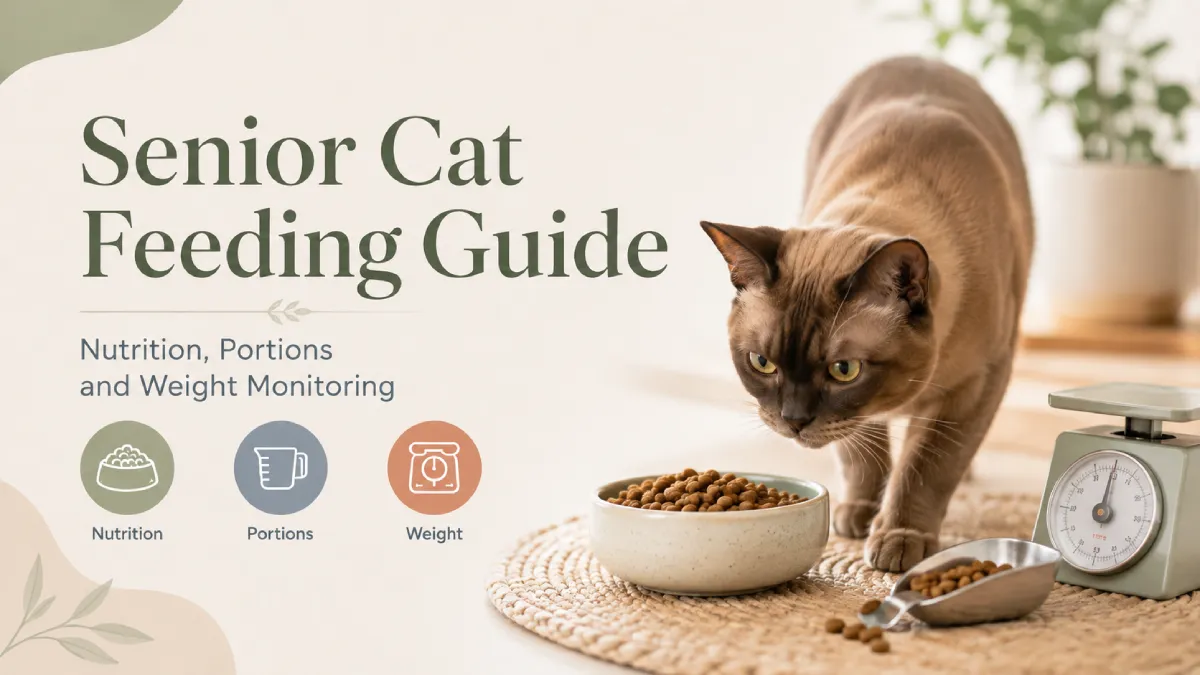
Senior Cat Feeding Guide: Nutrition & Weight Monitoring
Feeding an older cat well is not as simple as buying a bag labelled “senior.” Energy needs, digestive efficiency, body weight, muscle condition, appetite and disease can all change with age, and two cats of the same age may need very different diets. Some older cats gain excess fat, while others begin losing weight or muscle and may need more calorie-dense, highly digestible food.
This senior cat feeding guide focuses on monitoring the individual cat rather than applying one age-based rule. Healthy senior cats should not automatically be placed on low-protein, kidney or weight-loss diets. Disease-specific nutrition should match an actual veterinary diagnosis.
Quick Answer
Feed a senior cat according to current body weight, body condition, muscle condition, appetite, activity and health rather than age alone. Measure portions, monitor weight trends and make sure the diet is complete and balanced for the cat’s needs. Healthy older cats do not automatically need protein restriction or prescription renal food; therapeutic diets should be chosen with veterinary guidance for a diagnosed condition.
Do All Cats Need “Senior Food”?
No. There is no single nutritional standard that defines every commercial senior cat food, and AAHA notes that AAFCO does not establish a separate senior life-stage nutrient profile.
A product marketed for seniors may be appropriate for one cat and unsuitable for another. The useful question is whether the food’s calorie density, protein, texture, moisture and overall nutrient profile fit the individual cat’s condition and health.
Why Senior Nutritional Needs Vary
Published data on feline energy requirements with age are variable. AAHA notes that some older cats become less efficient at digesting nutrients and may lose body condition, while others remain overweight or develop disease that changes dietary needs.
Use repeated measurements instead of assumptions. A food plan should change because the cat’s condition changes, not simply because another birthday has passed.
Track Body Weight
Weight trend is one of the simplest ways to detect whether the current feeding plan is maintaining the cat appropriately. Use the same scale when practical and record results over time.
A small number by itself has limited meaning without considering frame size, body condition and muscle mass. Unexplained weight loss deserves medical investigation rather than an automatic increase in calories.
Use Body Condition Scoring
Body condition score estimates fat stores. It helps distinguish a cat that is over ideal from one that is appropriately lean or under ideal.
Ask your veterinary team to show you how they score your cat so home observations use the same reference points. Do not aim for an arbitrary lower weight just because the cat is older.
Monitor Muscle Condition Separately
A cat can lose muscle while still having excess body fat. WSAVA muscle condition scoring evaluates areas including the spine, shoulders, skull and pelvis.
Loss of lean tissue matters because muscle supports mobility and resilience. If the back or hindquarters are becoming more prominent, discuss the change with your veterinarian rather than assuming it is normal ageing.
Energy Needs Are Individual
AAHA reports that feline maintenance energy needs can decrease into mature adulthood and then rise in some older cats. Digestive efficiency may also decline in a subset of seniors.
This is why one universal “senior calorie reduction” is inappropriate. Portion size should be adjusted to maintain the individual cat’s healthy body and muscle condition.
Food Calorie Density Matters
Two foods can contain very different calories per cup, can or gram. Always check the product’s calorie information when changing diets.
A cat losing weight despite eating a reasonable volume may need a different medical evaluation or a more calorie-dense plan, while an overweight cat may need the opposite. Do not simply compare scoop size between brands.
Protein Considerations
Healthy older cats should not automatically be protein restricted. AAHA/AAFP guidance notes a lack of consensus on one ideal protein level but specifically advises against restricting protein in healthy mature and senior cats.
Protein supports lean tissue. Disease-specific modification may be appropriate for some diagnosed conditions, but that is different from reducing protein simply because a cat is old.
Maintaining Muscle Is a Major Goal
Age-related muscle loss can occur even in cats whose body weight looks stable. Adequate nutrition, appropriate protein, control of disease and comfortable activity all influence muscle maintenance.
If muscle is declining, the solution may involve more than food. Pain, kidney disease, hyperthyroidism, gastrointestinal disease and other conditions can contribute.
Wet Food
Wet food provides substantial moisture and can be useful for increasing overall water intake. It may also be easier for some cats with dental discomfort to manage, depending on the individual mouth problem.
Wet food is not automatically superior for every senior. Consider calorie density, complete-and-balanced status, the cat’s preferences and any therapeutic goals.
Dry Food
Dry food can be convenient, calorie dense and useful in some puzzle feeders. Some cats strongly prefer its texture.
A senior cat with dental disease should not simply be assumed able to chew dry food comfortably, and dry food should not be used to replace dental treatment.
Mixed Feeding
Some households use both wet and dry food. This can provide texture variety and make it easier to distribute moisture and calories.
Measure both components. Mixed feeding can unintentionally increase total calories if the wet and dry portions are each treated as full meals.
Meal Frequency
Some older cats do well with several smaller meals rather than one or two large portions, especially when appetite or digestive comfort has changed. AAHA senior nutrition guidance notes that smaller, more frequent meals may help some healthy senior cats maintain intake.
There is no requirement that every older cat follow the same frequency. Build the schedule around the individual cat and household.
Appetite Is a Health Signal
Record whether the cat eats the usual amount, takes longer to finish, walks away repeatedly or suddenly wants much more food.
Reduced appetite can occur with dental pain, nausea, gastrointestinal disease and many systemic illnesses. Increased hunger can occur with hyperthyroidism, diabetes and other conditions.
Dental Discomfort Can Change Eating
Signs such as dropping food, chewing on one side, avoiding hard textures, drooling or bad breath can indicate an oral problem.
Changing to softer food may make eating easier temporarily, but it does not treat painful dental disease. Arrange an oral assessment.
Smell and Palatability
Older cats may become less interested in food when smell, health or comfort changes. Stronger aroma can sometimes improve interest, but persistent appetite loss should not be managed only by cycling through flavours.
First determine whether illness or pain is contributing.
Food Temperature
Some cats prefer food closer to room temperature rather than straight from the refrigerator because aroma becomes more noticeable. If warming food, make sure it is only gently warmed and mixed thoroughly so there are no hot spots.
Do not leave perishable food sitting out for prolonged periods.
Hydration
Provide clean water in accessible locations and consider food moisture as part of the overall intake. AAHA notes that canned diets can improve total water consumption for some cats.
A new increase in thirst should be medically investigated; never restrict water to control urination.
Treats
Treats can support training, medication routines and enjoyment, but they should not displace a complete and balanced diet or push total intake beyond what maintains healthy condition.
For cats on therapeutic diets, ask whether particular treats are compatible with the dietary goal.
Weight Gain
Excess body fat can worsen mobility and complicate existing disease. If weight is increasing, review actual measured intake, treat calories, activity and medical factors.
Do not impose a rapid weight-loss plan. Weight reduction in cats should be gradual and professionally guided because severe calorie restriction can be dangerous.
Weight Loss
Unplanned weight loss is never something to dismiss as a normal senior change. Possible explanations include reduced intake, dental disease, hyperthyroidism, kidney disease, gastrointestinal disease, cancer and other conditions.
Arrange veterinary assessment before simply adding large amounts of calorie-dense food.
Muscle Loss
Muscle loss may show as a more prominent spine, shoulder blades or pelvis. It can occur with ageing, inadequate nutrition and chronic disease, but the cause needs context.
A nutritional plan may need to address protein, calories and digestibility, while the medical plan addresses pain or disease.
Chronic Kidney Disease
Prescription renal diets can be beneficial for cats diagnosed with chronic kidney disease, but a renal diet should not be recommended to every senior cat “just in case.”
These diets are designed around disease-specific goals, including phosphorus and protein characteristics that differ from ordinary maintenance feeding. Diagnosis and stage matter.
Hyperthyroidism
Hyperthyroidism can cause weight loss despite increased appetite and may also increase thirst, urination or activity. Nutrition alone cannot correct the hormone disorder.
If a senior cat is eating strongly but losing weight, veterinary testing is important.
Diabetes
Diabetes can cause increased thirst and urination, weight changes and altered appetite. Dietary management is individualized and may need to coordinate closely with medication.
Do not change a diabetic cat’s diet or meal schedule substantially without discussing it with the treating veterinarian.
Digestive Disease
Chronic vomiting, diarrhea, appetite change or weight loss can occur with gastrointestinal disease. A highly digestible or therapeutic diet may be appropriate after assessment, but diet choice depends on the specific problem.
Do not treat persistent digestive signs as a normal change in an elderly cat.
Prescription Diets
Therapeutic diets are designed for specific clinical goals. They may be appropriate for kidney disease, obesity, urinary disease, gastrointestinal disorders or other diagnosed conditions.
The fact that a cat is over 10 does not create a prescription-diet indication by itself.
Supplements
Do not automatically add joint, kidney, cognitive or multivitamin supplements because a cat is older. Supplements can vary in evidence, quality and interaction with disease or medication.
Discuss any product with the veterinary team, particularly when the cat has chronic disease or takes prescription medication.
Why Disease-Specific Diets Require Veterinary Guidance
A diet designed for one disease may be inappropriate for another cat. For example, a kidney diet is formulated for renal goals and should not be used as a generic “senior diet” for a healthy cat with muscle loss.
Good senior nutrition is individualized, not diagnosis-by-food-label.
Monitor the Weight Trend
Choose a practical schedule for weighing based on the cat’s health and veterinary plan. Monthly home weights may be useful for a stable cat, while a cat with active weight loss may need closer monitoring.
Record weight beside appetite and food amount so the trend has context.
When a Nutrition Assessment Is Needed
Ask your veterinarian for a nutrition review if:
- weight is changing unexpectedly
- muscle is declining
- appetite changes persist
- the cat has a new chronic diagnosis
- the cat is underweight or obese
- you are unsure whether the current food is complete and balanced
- a therapeutic diet has been recommended but intake is poor
A veterinary nutritionist may be useful for complex cases.
Senior Cat Nutrition Monitoring Sheet
| Item | Current Record | Trend / Notes |
|---|---|---|
| Weight | ________ | Stable / Up / Down / Unsure |
| Body condition | ________ | ________ |
| Muscle condition | ________ | ________ |
| Food / product | ________ | ________ |
| Daily calories | ________ | Measured / Estimated / Unknown |
| Appetite | Normal / Increased / Reduced | ________ |
| Water | Normal / Increased / Reduced | ________ |
| Stool | ________ | ________ |
| Medication | ________ | ________ |
| Weight trend | ________ | ________ |
| Veterinary diet | Yes / No | Diagnosis / Goal: ________ |
The sheet is for monitoring and veterinary discussion. It does not calculate the correct calorie intake or diagnose a nutritional problem.
Review the Feeding Plan When the Cat Changes, Not Just When the Birthday Changes
A useful senior feeding review asks whether weight, body condition, muscle condition, appetite, stool, activity or diagnosed disease has changed. If those factors are stable, a birthday alone is not a reason to switch automatically to a lower-calorie, lower-protein or prescription diet.
Recheck the calorie content when changing foods because equal-looking portions can provide very different amounts of energy. Measuring the portion and following the cat’s weight trend is more informative than relying on bowl volume alone.
FAQs
How much should I feed a senior cat?
There is no single amount for all senior cats. Use the calorie information on the food as a starting point, then adjust with your veterinarian according to weight, body condition, muscle condition, activity and health.
Should senior cats eat less?
Not automatically. Some older cats need fewer calories, while others need more calorie-dense food to maintain weight and muscle. Measure the individual cat rather than assuming all seniors have lower energy needs.
Do senior cats need more protein?
Healthy senior cats should not automatically be protein restricted, and maintaining muscle is important. The ideal amount depends on the complete diet and the cat’s health. Kidney disease and other diagnoses may change the recommendation.
Is wet food better for senior cats?
Wet food can increase moisture intake and may be easy for some cats to eat, but it is not universally better. Consider complete-and-balanced nutrition, calorie needs, dental comfort, disease and preference.
Should I switch my cat to kidney food at age 10?
No. Prescription renal diets are for cats with a clinical indication such as diagnosed chronic kidney disease. Senior age alone is not a reason to start a renal diet.
What if my older cat is losing weight but still eating?
Arrange veterinary assessment. Hyperthyroidism, kidney disease, diabetes, digestive disease and other conditions can cause weight loss even when appetite remains normal or increased.
Bottom Line
Older cat feeding works best when the diet follows the cat rather than the label. Track weight, body condition and muscle condition, measure portions, watch appetite and hydration, and review the food’s calorie density.
Do not automatically reduce protein, calories or food variety because of age. Therapeutic diets and supplements should match an actual clinical need. When weight or muscle changes, investigate the reason rather than assuming it is part of growing old.