
Bengal Cat: Temperament, Exercise & Care Guide
The Bengal cat is an established domestic breed known for a muscular build, spotted or marbled coat and generally high level of curiosity and activity. Its breed history includes Asian leopard cat ancestry, but today’s pedigreed companion Bengals should not be portrayed as wild pets or “mini leopards.” Major cat registries describe the modern Bengal as a domestic breed developed through generations of selective breeding for domestic temperament as well as appearance.
For a prospective owner, the important question is whether the household can provide enough climbing, interactive play, problem-solving, secure territory and social engagement. High activity is a breed tendency—not proof that every Bengal will be hyperactive, aggressive or difficult.
Quick Profile
| Trait | General Bengal Profile |
|---|---|
| General size | Medium to large; males usually larger |
| Build | Muscular, athletic and substantial |
| Coat | Usually short, close-lying and soft; longhair Bengals are also recognised by some registries |
| Patterns | Rosetted/spotted or marbled |
| Grooming | Generally lower for shorthaired individuals |
| Activity tendency | Higher |
| Climbing tendency | Commonly strong |
| Social tendency | Generally interactive and people-oriented |
| Vocalisation | Variable |
| Enrichment need | Higher than many lower-key breeds |
| Important screening | PRA-b, PK deficiency and appropriate HCM screening |
TICA currently gives broad adult ranges of about 6–12 pounds for females and 9–15 pounds for males, while describing Bengals overall as medium-to-large, muscular cats. These are reference ranges, not target weights every Bengal should reach.
Breed Development
The modern Bengal traces to breeding programmes involving the Asian leopard cat, Prionailurus bengalensis, and domestic cats. Jean Mill’s work from the 1960s and especially the early 1980s played a central role in developing the modern breed. TICA accepted Bengal cats as a new breed in 1986 and granted championship status in 1991.
That history is relevant, but it should not dominate an ownership article.
The goal of the established breed was to retain a distinctive spotted or marbled appearance while selecting for dependable domestic-cat temperament. CFA likewise describes multiple generations of careful breeding for companion temperament and requires substantial domestic ancestry for cats registered as Bengals within its programme.
Bengal Cats Are a Domestic Breed
The pet Bengal discussed throughout this guide is an established domestic pedigreed cat, not a non-domestic wild felid.
TICA states that modern Bengals are bred through Bengal-to-Bengal pairings, while CFA requires five generations of domestic ancestry for Bengal registration. Early-generation crosses have a different welfare, husbandry and sometimes legal context and should not be treated as equivalent to the ordinary pedigreed pet Bengal described here.
FelineVMA specifically distinguishes early-generation hybrid cats from established companion cats and discourages ownership of F1–F3 hybrids because of behavioural, welfare and safety concerns.
That distinction matters because calling every Bengal a “wild cat” is inaccurate.
Appearance
The Bengal is medium to large, muscular and athletic, with substantial bone and powerful hindquarters. The head is comparatively small in relation to the body, while the coat pattern creates much of the breed’s distinctive appearance.
The most familiar pattern is rosetted/spotted, in which markings may form two-tone rosettes. Bengals may also have a marbled pattern with flowing horizontal or diagonal markings. CFA and TICA recognise several colours and variations rather than one standard golden-brown appearance.
Avoid choosing solely for the most dramatic rosettes. Temperament, health screening and suitability for the household matter considerably more for everyday life.
Size
A Bengal should look athletic and muscular, not oversized.
TICA’s current breed information lists females around 6–12 pounds and males around 9–15 pounds, with substantial variation according to sex and individual genetics. CFA similarly describes Bengals as medium-to-large rather than giant cats.
There is no ownership advantage in trying to maximise body weight.
A healthy adult should instead maintain appropriate body condition and muscle condition for its own frame. Cornell notes that cats vary considerably in their energy requirements and recommends adjusting intake to maintain healthy body condition.
Coat
Shorthaired Bengals have a dense, soft, close-lying coat. Some individuals also show a reflective quality commonly called “glitter,” although it is not required for the breed.
Longhaired Bengals also exist. CFA recognises a longhair division, while TICA separately lists Bengal Longhair in its breed system. Coat-care advice therefore needs to match the individual rather than assuming every Bengal has identical short fur.
Bengal Cat Grooming
For a typical shorthaired Bengal, routine coat maintenance is comparatively simple.
Regular gentle brushing can remove loose hair and gives the owner a chance to check:
- skin
- coat condition
- lumps
- body condition
- handling tolerance
The short coat generally does not require the intensive detangling associated with long-haired breeds. Longhair Bengals need a different routine because longer fur can require more frequent combing.
For nails, teeth, ears and full coat-care technique, use Pawnium’s Cat Grooming Guide.
Bengal Temperament
Typical Bengal temperament is described as confident, curious, playful and highly engaged with the environment. TICA and CFA both emphasise activity and curiosity while also describing domestic Bengals as affectionate and people-oriented companions.
That does not mean every Bengal is:
- outgoing
- constantly moving
- demanding
- fearless
- friendly with strangers
- aggressive
- difficult to manage
TICA explicitly notes individual variation, including cats that are more extroverted and busy and others that are naturally more reserved.
The most useful description is:
higher activity and curiosity are common breed tendencies, while the individual personality still matters.
Activity Level
A higher Bengal cat activity level is one of the most important ownership considerations.
TICA describes Bengals as high-energy cats that commonly climb, chase, explore and investigate. CFA likewise describes the breed as athletic and energetic.
However, there is no evidence-based universal exercise quota such as:
“Every Bengal needs exactly 60 minutes of exercise.”
Instead, provide several daily opportunities for physical and mental activity and adjust them to:
- age
- health
- body condition
- interest
- individual stamina
A calmer Bengal is not defective, and a sudden major change from an individual cat’s normal activity level should be considered separately from breed reputation.
Climbing
Vertical territory is especially valuable for an athletic cat.
Bengals commonly seek elevated locations, and TICA specifically describes climbing as a prominent part of typical breed activity. General feline-welfare guidance also identifies vertical territory and safe resting places as important components of an indoor cat’s environment.
Useful options include:
- tall stable cat trees
- wall-mounted platforms
- window perches
- shelving designed for cats
- secure elevated resting areas
Stability matters. A lightweight narrow tree that rocks under an athletic adult cat is not equivalent to usable climbing territory.
Running and High-Speed Activity
Some Bengals enjoy bursts of fast running, chasing and rapid direction changes.
Make the home easier to move through safely by considering:
- clear running routes
- stable furniture
- secured loose cords
- non-slip landing areas
- secure screens
- breakable objects away from common routes
Do not interpret every sprint as evidence that the cat has “too much pent-up energy.” High-speed play can be part of normal feline activity, and the trigger varies between individuals. Pawnium’s Cat Zoomies guide owns the wider discussion of normal versus unusual sudden running.
Interactive Play
Interactive play lets the cat stalk, chase, pounce and capture something without using human hands as prey.
Useful toys include:
- wand toys
- lightweight balls
- tunnels
- kicker toys
- moving toys used under supervision
- safe retrieval toys
FelineVMA identifies play and simulated predatory behaviour as one of the core needs of indoor cats.
For Bengals, variety can be particularly helpful because many individuals are quick to investigate new movement or objects. But do not assume every Bengal enjoys the same toy.
Hunting-Style Enrichment
Domestic cats retain normal predatory behavioural sequences regardless of breed ancestry.
Suitable enrichment can allow:
watch → stalk → chase → pounce → capture
without encouraging hunting of wildlife or using hands as targets.
Food searches, movable toys and structured play can all support this behavioural need. FelineVMA specifically treats opportunities for play and predatory behaviour as an essential part of a healthy indoor environment.
Pawnium’s Why Does My Cat Bring Me Toys? article covers carrying, retrieving and hunting-style object play in more detail.
Puzzle Feeding
Puzzle feeding combines normal food intake with exploration or problem solving.
Examples include:
- rolling food puzzles
- treat-search games
- food hidden in safe household locations
- sliding or paw-operated feeders
- simple DIY forage setups made from safe materials
Do not make every meal artificially difficult. The goal is enrichment, not frustration.
Puzzle food should also come from the cat’s planned daily intake rather than becoming unlimited extra calories.
Training
Bengals are often responsive to reward-based training, and TICA describes them as highly trainable. Some individuals learn behaviours such as targeting, retrieving or harness routines.
Useful skills can include:
- entering a carrier voluntarily
- moving onto a mat
- touching a target
- coming indoors when called
- accepting nail handling
- harness familiarity
- simple tricks
Keep training voluntary and reward-based.
A cat refusing a session is not being stubborn. Motivation, environment and the value of the reward may simply have changed.
Vocalisation
Bengals can be communicative, but they should not be classified as universally loud.
TICA and CFA both describe substantial individual variation: some Bengals vocalise frequently, while others are quieter.
A familiar vocal pattern may simply be part of the individual’s behaviour.
A new major increase in vocalisation, especially if accompanied by appetite, weight, thirst, mobility or other changes, should not be dismissed as breed personality. Use Cat Health Check at Home to track changes from the cat’s normal baseline.
Water Behaviour Without the Stereotype
Bengals are often marketed as cats that “love water.”
Both TICA and CFA report that many individuals show interest in running water, sinks or bathing areas. But this is a tendency, not a defining requirement.
Use:
Some Bengals show unusual interest in water.
Not:
Bengals love water.
An individual Bengal may be completely uninterested in getting wet.
Children
Many Bengals can live successfully with children, particularly when the individual cat is confident and the household provides appropriate play. CFA describes the breed as potentially suitable for family life, but no breed is automatically safe or tolerant with every child.
Children should learn to:
- use toys rather than hands
- avoid chasing
- avoid forced holding
- allow the cat to retreat
- leave resting cats alone
For a high-energy individual, structured toy play is often a better child-cat interaction than rough physical handling.
Other Cats
Bengals may live successfully with other cats when personalities are compatible and introductions are handled appropriately. TICA specifically notes that many enjoy feline companionship when properly introduced.
Do not buy a second cat simply because:
“Bengals need another Bengal.”
Some individuals enjoy feline company; others may prefer their social interaction primarily with people.
Resources should still be distributed so the cats do not need to compete for food, litter boxes, resting sites or high-value territory.
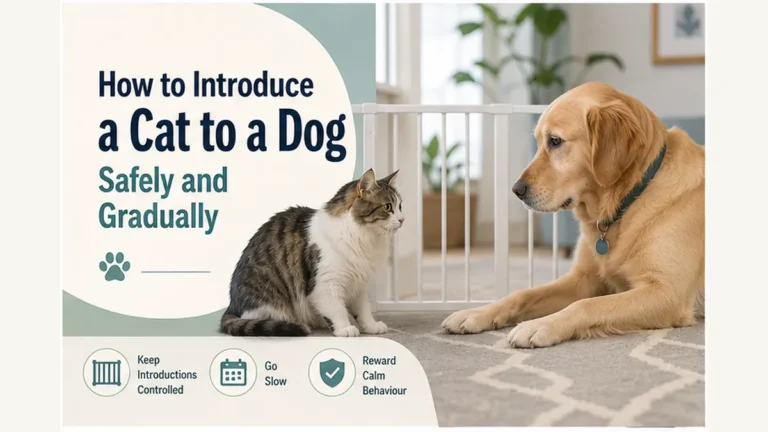
Dogs
Some Bengals live successfully with cat-friendly dogs. TICA and CFA both note compatibility with other pets when introductions are appropriate.
The dog’s behaviour matters at least as much as breed.
A high-energy cat may enjoy appropriate play with a calm, cat-experienced dog, but repeated chasing, cornering or blocking is not healthy interaction.
Small Pets
Do not treat the Bengal’s ancestry as the reason for caution around small prey animals.
All domestic cats retain predatory behaviour. FelineVMA specifically identifies hunting and predatory-type behaviour as normal feline needs.
As a practical safety inference, do not rely on breed friendliness to make unsupervised access to animals such as:
- hamsters
- gerbils
- small birds
- mice
- other prey-sized pets
safe.
Use secure physical separation.
The same rule would apply to many domestic cats, not just Bengals.
Apartment Considerations
A Bengal can live in an apartment, but a small space needs to work vertically and behaviourally, not simply provide four walls.
An apartment setup should ideally include:
- substantial vertical territory
- sturdy scratching areas
- interactive play space
- puzzle feeding
- secure window observation
- multiple resting locations
- predictable social interaction
FelineVMA’s indoor-cat guidance emphasises safe places, vertical space, predatory play and environmental resources.
A well-designed apartment may work better than a large house where the cat receives little interaction or enrichment.
Secure Environment
Bengals are athletic and curious, so household security deserves attention.
Check:
- window screens
- balcony access
- exterior doors
- damaged mesh
- tilt windows
- unstable shelving
- breakables on climbing routes
- toxic plants or chemicals
- accessible cords
The goal is not to create a fortress because the cat is “wild.” It is to create an appropriate environment for an athletic domestic cat.
Outdoor Safety
Unrestricted outdoor access exposes cats to risks that controlled access can reduce.
FelineVMA recommends considering options such as secure outdoor enclosures, cat-safe fencing or appropriately introduced harness-and-leash access when outdoor stimulation is desired.
For a Bengal, possible controlled options include:
- catio
- secure enclosed garden
- escape-resistant cat fencing
- harness training for an individual that accepts it
Never assume that trainability guarantees safe off-leash outdoor behaviour.
First-Time Owners
A Bengal can be a first cat for an owner who genuinely wants an interactive, enrichment-heavy routine.
It may be harder for a first-time owner who expects:
- a low-effort indoor pet
- toys to replace human interaction
- almost no climbing
- long periods with little environmental stimulation
- a cat that never scratches or investigates furniture
First-time ownership itself is not the problem.
Mismatch between expectations and activity needs is.
For wider behavioural context, use Pawnium’s Cat Behavior Explained.
Feeding
High activity does not justify unlimited food.
Feed a complete and balanced diet appropriate for the cat’s life stage, then adjust the amount to:
- body condition
- muscle condition
- activity
- age
- neuter status
- health
- calorie density of the food
Cornell emphasises that individual cats vary considerably in their calorie needs and that intake should be adjusted to maintain healthy body condition.
For full portion guidance, use Pawnium’s Cat Feeding Guide.
Puzzle feeding can provide enrichment, but the calories placed in the puzzle still count toward the day’s intake.
Health Screening
A responsible Bengal guide should discuss breed-relevant screening without implying that every Bengal will develop inherited disease.
Progressive Retinal Atrophy — PRA-b
UC Davis identifies a Bengal-associated form of progressive retinal atrophy known as PRA-b. It is inherited as an autosomal recessive condition and can be screened using a DNA test.
Ask a breeder for the actual results for both parents rather than accepting:
“Our line is PRA clear.”
A carrier is not clinically affected by the recessive condition, but breeding decisions need to account for the genotype of both parents.
Pyruvate Kinase Deficiency
Bengals are also among the breeds for which UC Davis recommends genetic testing for erythrocyte pyruvate kinase deficiency. The inherited disorder can cause haemolytic anaemia and is also autosomal recessive.
Again, ask for the actual parental results.
Hypertrophic Cardiomyopathy
HCM is another relevant screening discussion. Cornell includes Bengals among breeds in which HCM has been reported more commonly and identifies echocardiography as the gold-standard method for diagnosing feline HCM.
CFA notes that Bengal breeders commonly use echocardiographic screening because a simple Bengal-specific DNA test does not replace direct cardiac evaluation.
FelineVMA’s responsible-breeding statement likewise supports preventive testing, including echocardiographic screening where HCM is relevant.
Do not interpret one normal cardiac examination as a lifetime guarantee.
Questions to Ask a Responsible Bengal Breeder
Before paying a deposit, ask:
- Can I see the PRA-b results for both parents?
- Can I see the PK-deficiency results for both parents?
- What HCM screening is performed?
- Who performs cardiac ultrasounds and how often are breeding cats reassessed?
- Can I see the actual veterinary and genetic records?
- What health problems have occurred in close relatives?
- How are kittens socialised in the home?
- What is this specific kitten’s activity and confidence level?
- Can I see the parents in person or by video?
- What veterinary care has the kitten already received?
- What diet and litter is the kitten accustomed to?
- What does the contract say about health and return/rehome situations?
- Can the pedigree and registration be verified?
TICA’s buyer guidance specifically recommends requesting parental health and genetic records, reviewing pedigree information and using a written contract with clear health and return terms.
Example Daily Enrichment Schedule
A high-activity household does not need to entertain a Bengal every minute.
The goal is to distribute different opportunities through the day.
Morning
Interactive play → breakfast or part of breakfast through food enrichment → climbing/window time → rest
Midday
Provide independent options such as:
- safe observation area
- scratcher
- puzzle feeder
- rotating toy
- climbing platform
Later Active Period
Use another interactive session based on what the individual enjoys:
- chasing
- pouncing
- retrieval
- target training
- obstacle movement
- harness practice
Evening
Interactive play → food/search activity → quieter social interaction
Rest
Leave several uninterrupted sleeping and hiding areas available throughout the day.
High-energy cats still need extensive rest. Enrichment should give the cat choices, not create constant forced stimulation. FelineVMA’s environmental guidance specifically includes both safe places and opportunities for normal activity.
Who May Struggle With This Breed?
A Bengal may be a difficult match for someone who wants:
- a mostly sedentary companion
- little interactive play
- no climbing on vertical structures
- almost no environmental planning
- a cat expected to entertain itself indefinitely
- a guarantee of quiet behaviour
- a cat whose curiosity will never affect household setup
The breed can be a stronger fit for someone who enjoys:
- interactive play
- training
- environmental enrichment
- climbing structures
- puzzle feeding
- an involved feline companion
The deciding factor should still be the actual individual Bengal.
FAQs
Are Bengal cats wild cats?
Established pedigreed Bengals are domestic cats. Their breed history includes Asian leopard cat ancestry, but modern companion Bengals are produced through established domestic breeding programmes. Early-generation hybrids are a separate issue and should not be confused with an ordinary pedigreed pet Bengal.
Are Bengal cats aggressive?
Aggression is not an automatic Bengal trait. Major breed registries describe established Bengals as confident, curious and affectionate domestic cats. Individual behaviour depends on genetics, socialisation, health, environment and experience.
How much exercise does a Bengal cat need?
There is no reliable universal minute target. Bengals generally have a higher activity tendency, so several opportunities for interactive play, climbing, exploration and mental enrichment across the day are appropriate. Adapt the routine to the individual’s age, health and interest.
Can a Bengal live in an apartment?
Yes, if the apartment offers enough vertical territory, play, scratching, environmental resources and social interaction. A small but enriched home can work better than a larger unstimulating environment.
Do all Bengal cats like water?
No. TICA and CFA note that many Bengals show interest in water, but individual preferences vary. Water interest should be described as a possible breed tendency, not a guarantee.
Are Bengals suitable for first-time cat owners?
They can be, especially for a first-time owner who actively wants frequent play, enrichment and interaction. They may be a poor match for someone expecting a low-involvement companion.