Shih Tzu vs Maltese: Size, Grooming, Temperament and Care Compared
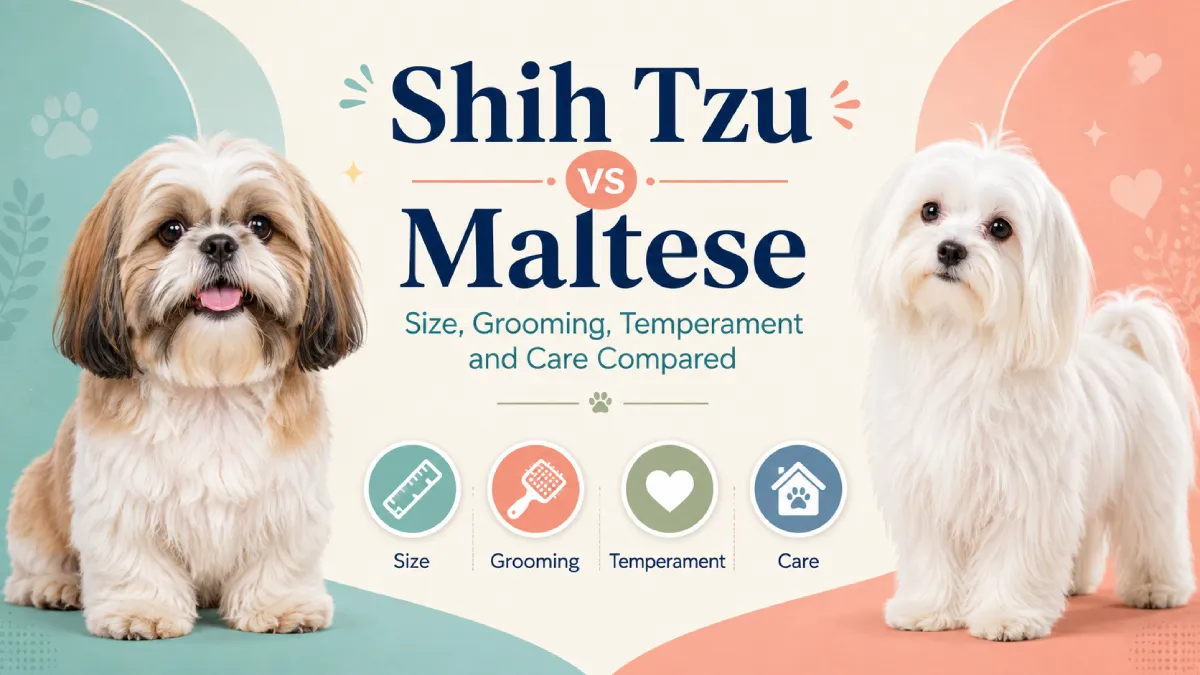
A Shih Tzu vs Maltese comparison comes down to more than choosing between two small, long-haired lapdogs. The Maltese is substantially lighter, with adults under 7 pounds, while Shih Tzu commonly weigh 9–16 pounds and have a denser double coat and shorter facial structure. Both are affectionate companion breeds, both can adapt well to apartments, and both require considerably more grooming than their size suggests. The Shih Tzu also needs extra attention to heat and eye protection because of its short-faced anatomy.
Quick Verdict
A Maltese may suit you better if very small size, portability and minimal visible shedding are priorities. A Shih Tzu may suit you if you prefer a somewhat sturdier small companion and are comfortable managing a dense coat, prominent eyes and short-faced heat considerations. Both need frequent grooming, dental care, training and substantial human companionship.
Shih Tzu vs Maltese Comparison Table
| Trait | Shih Tzu | Maltese |
|---|---|---|
| AKC weight | 9–16 lb | Under 7 lb |
| AKC height | 9–10.5 in on breed page | 7–9 in |
| Build | Small but comparatively sturdy | Very small and fine-boned |
| Coat | Long, dense double coat | Long, straight, silky white coat |
| Visible shedding | Very low | Minimal |
| Long-coat grooming | Daily | Daily |
| Tear staining | Can occur; short face and eye anatomy matter | Particularly visible on white coat |
| Temperament | Playful, affectionate, outgoing | Playful, charming, affectionate |
| Exercise | Modest | Modest, but surprisingly athletic |
| Training | Reward-based consistency important | Reward-based consistency important |
| Children | Often good family potential | Better with careful/older children because of tiny size |
| Apartment living | Strong potential | Strong potential |
| Long periods alone | Poor fit | Poor fit |
| Heat considerations | Extra caution because of short face and coat | Normal small-dog hot-weather precautions |
| Dental care | High priority | High priority |
AKC lists the Shih Tzu at 9–16 pounds and the Maltese under 7 pounds, making size one of the clearest practical differences. Both have long coats and low visible shedding, but that does not translate into low grooming effort.
Size
For Shih Tzu vs Maltese size, the Maltese is clearly the smaller breed.
AKC lists Shih Tzu at approximately 9–16 pounds and 9–10.5 inches on its current breed page. Maltese stand about 7–9 inches and weigh under 7 pounds.
That difference matters in everyday handling. A Maltese may be easier to carry and travel with, but its tiny body also means rough handling, jumping from furniture and interactions with very young children deserve particular care. AKC specifically notes that Maltese may be better suited to homes with older children because of their small size.
The Shih Tzu remains a Toy breed but generally feels more substantial in the hand.
Appearance
The Shih Tzu is known for a broad head, large expressive eyes, a shortened face, long flowing hair and a tail carried over the back. Its coat can occur in many colours and patterns.
The Maltese has a more delicate outline and a long, straight, silky white coat. Dark eyes and a black nose create strong contrast against the white hair.
Owners planning to keep either dog in a practical pet trim should remember that photographs of floor-length show coats do not represent the only grooming option.
Coat
The Shih Tzu has a true double coat. AKC describes a long silky outer layer with a softer, fleecier undercoat. Coat texture and density can vary somewhat between individuals, which can change how easily the hair mats.
The Maltese coat is long, straight, silky and white. It lacks the same dense Shih Tzu appearance but still tangles readily when left long and therefore needs consistent brushing and combing.
For both breeds, choosing a short pet trim can reduce the amount of coat that must be managed, but it does not remove the need for brushing, bathing, eye-area care and regular clipping.
Grooming
The answer to Shih Tzu vs Maltese grooming is simple: neither is low-maintenance when kept in a long coat.
AKC recommends daily brushing for long-coated Shih Tzu, along with regular bathing, moustache and topknot care, eye-corner cleaning, nail trimming and ear care. Owners who do not want to maintain a floor-length coat can use a professional puppy trim.
Maltese also require daily gentle brushing and combing when their coats are long. Regular bathing, nail trimming and ear monitoring are part of the routine.
A practical routine for either dog can include:
- brushing and combing before tangles become mats
- checking behind the ears and around the legs
- keeping hair away from the eyes
- nail care
- ear checks
- dental care
- professional trimming when using a shorter pet style
The detailed frequency for individual grooming tasks should live in Pawnium’s Dog Grooming Schedule rather than being duplicated here.
Tear Staining
Both breeds can show reddish-brown staining around the eyes, although it is especially obvious against the Maltese’s white coat.
The colour is commonly associated with porphyrins present in tears. Mild staining may be cosmetic, but excessive or suddenly changing tearing can also occur with irritation, eye disease or tear-drainage problems.
Shih Tzu deserve particular attention because their short faces and prominent eyes can affect tear drainage and expose the eye surface. AKC recommends regular cleaning around the eye corners and keeping head hair from rubbing against the eyes.
For either breed, contact a veterinarian if staining appears with:
- squinting
- marked redness
- swelling
- yellow, green or bloody discharge
- obvious eye pain
- a sudden major increase in tearing
Keep detailed stain management on Pawnium’s Tear-Stain Guide. Avoid unverified whitening remedies or harsh chemicals around the eyes.
Shedding
Both breeds are attractive options for owners who dislike large amounts of loose hair around the home.
AKC describes Maltese as minimally shedding. Shih Tzu also have very low visible shedding despite possessing a double coat.
However:
low shedding does not mean low grooming.
Hair that remains within a long coat can tangle and form mats, which is why both breeds still need frequent brushing.
Temperament
The Shih Tzu vs Maltese temperament comparison has substantial overlap.
Shih Tzu are described by AKC as playful, affectionate, outgoing and highly people-oriented. They were developed specifically for companionship and tend to value close interaction with their household.
Maltese are also playful and affectionate, but AKC describes them as carrying a surprisingly confident, lively personality for such a tiny dog. They can develop stubborn streaks, so small size should not be mistaken for an absence of training needs.
Neither breed has a guaranteed personality. Early experiences, socialisation, training, health and the individual dog all influence adult behaviour.
Exercise
Neither requires the workload of a working or sporting breed.
Shih Tzu are primarily companion dogs and can fit lifestyles with modest daily activity. Their short facial structure and heavier coat also mean strenuous activity in warm conditions is a poor fit.
Maltese are tiny but can be surprisingly athletic. AKC notes that they can participate successfully in obedience and agility, while ordinary household exercise can include walks and active indoor play.
There is no need to publish a fixed universal number of exercise minutes. Age, fitness, health and weather change the appropriate amount.
Training
Both breeds benefit from consistent, reward-based training.
AKC notes that Shih Tzu are strongly people-oriented but can become difficult if owners consistently let unwanted behaviour succeed. Praise and rewards are recommended over harsh handling.
Maltese are quick learners but can also show an independent or stubborn streak. Consistency and rewards are particularly useful.
AVSAB’s current humane-training position recommends reward-based methods for all dog training and behaviour modification and advises against aversive techniques.
Useful early skills for either breed include toilet training, recall, leash walking, handling, settling, calm greetings and comfortable brief periods of independence.
Barking
Neither breed should be chosen with a guarantee of silence.
Maltese can be alert and vocal. AKC specifically notes a tendency toward excessive barking in some dogs, particularly when boredom or loneliness becomes a problem.
Shih Tzu may also alert to noises, visitors or activity in shared buildings, although barking varies considerably between individuals. AKC lists watchdog and barking tendencies among its breed characteristics rather than describing the breed as silent.
For apartment owners, training around corridor sounds, doors and windows may matter more than a small average difference between breeds.
Children
Both can be affectionate family companions.
AKC describes Shih Tzu as particularly affectionate with children. Their 9–16-pound size also gives them somewhat more physical substance than a Maltese.
Maltese can get along well with children, but AKC recommends particular caution with younger children because the dog’s tiny size makes accidental injury easier.
Regardless of breed:
- supervise dog-child interactions
- prevent squeezing and climbing
- teach children not to disturb sleep or meals
- give the dog an undisturbed retreat
Other Pets
Either breed may live successfully with other dogs when appropriately socialised.
AKC specifically notes that Maltese can get along well with other dogs with suitable training and socialisation. Shih Tzu are similarly social companion dogs, but compatibility still depends on individual temperament and the other animal involved.
Cat compatibility should also be assessed individually. Neither breed should receive an automatic “cat-safe” guarantee simply because it is small.
Use gradual introductions, barriers when needed and reinforcement for calm behaviour.
Apartment Living
For Shih Tzu vs Maltese for apartments, both are strong candidates.
AKC specifically recommends Shih Tzu for city dwellers and small homes, while its apartment-breed guidance includes both Shih Tzu and Maltese.
The Maltese has a size advantage where space is extremely limited. The Shih Tzu is still compact while offering a slightly sturdier body.
Apartment success depends on more than size. Owners still need to manage:
- barking
- toileting
- exercise
- grooming
- alone time
- indoor temperature
- behaviour around neighbours and shared hallways
Use Pawnium’s Apartment Dogs article for broader breed comparisons.
Alone Time
Both breeds were developed around close human companionship.
AKC says Shih Tzu thrive on attention and do not fare well when left alone for long periods.
Maltese also form strong bonds and AKC notes that some can develop separation-related problems, including barking when lonely or distressed.
This does not mean every attached Maltese or Shih Tzu has separation anxiety.
Owners should teach comfortable independence gradually rather than allowing a puppy to spend every moment physically attached to a person and then suddenly expecting it to tolerate a full workday alone.
First-Time Owners
Both can work for first-time dog owners who are prepared for the coat.
AKC includes Shih Tzu among breeds that can make good first-time companions, largely because of their friendly house-dog temperament and modest activity requirements.
A Maltese can also be manageable for a committed beginner because of its small size and trainability, but toilet training, dental care, coat maintenance and safe handling of a very small dog should not be underestimated.
If “low maintenance” is the main requirement, neither is an obvious winner.
Dental Care
Dental care is a major ownership responsibility for both.
AAHA specifically warns that owners of dogs expected to mature below about 20–25 pounds should anticipate more involved periodontal prevention than many owners of larger dogs. Brachycephalic anatomy can create additional tooth crowding as well.
Both Shih Tzu and Maltese fall well below that size threshold.
AAHA recommends daily tooth brushing as the strongest home method for limiting plaque accumulation, together with regular veterinary oral assessment.
Maltese breed guidance also gives dental care particular emphasis.
Use Pawnium’s Dog Dental-Care Guide for the full home routine.
Eye Care
Eye care is relevant to both, but the Shih Tzu deserves extra emphasis.
Its short facial structure and large exposed eyes can increase vulnerability to irritation and injury. AKC advises keeping facial hair from rubbing the eyes, while RVC research explains that brachycephalic skull shape can leave the corneal surface more exposed to trauma and ulceration.
Contact a veterinarian promptly if either breed develops:
- squinting
- an eye held shut
- marked redness
- cloudiness
- obvious injury
- sudden persistent discharge
Maltese should also receive veterinary evaluation when tear staining becomes excessive or accompanies eye discomfort.
Heat Considerations
This is one area where the breeds should not be treated as identical.
The Shih Tzu is a brachycephalic, or short-headed, breed. Cambridge lists the Shih Tzu among brachycephalic breeds and explains that shortened facial anatomy can predispose affected dogs to airway obstruction and impaired heat regulation. Not every Shih Tzu develops clinically significant BOAS, but the anatomy makes heat and breathing worth monitoring.
AKC separately warns that Shih Tzu do not tolerate heat well because of their short faces and heavy coats.
A Maltese does not carry the same clearly documented breed-level heat warning in its AKC guidance, but normal hot-weather precautions still apply to any dog.
For a Shih Tzu, pay particular attention to:
- warm and humid weather
- heavy panting
- respiratory noise
- slowing during activity
- unusually difficult recovery
No single outdoor temperature is safe for every dog.
Feeding
Neither breed requires a special breed-branded diet simply because it is a Shih Tzu or Maltese.
AAHA recommends choosing a complete and balanced diet appropriate for life stage, then adjusting feeding according to the individual dog’s weight, body condition, activity and total calorie intake. Treats and extras also contribute to daily calories.
The large size difference between these breeds matters. A five-pound Maltese may need substantially fewer calories than a 15-pound Shih Tzu, so generic “small dog” portions should not be assumed to fit both.
Use Pawnium’s feeding resources for detailed portion planning rather than creating a universal cups-per-day chart here.
Health
Neither breed should receive a simple “healthier” label.
Shih Tzu Health Screening
AKC’s current Toy Group testing page states that the national Shih Tzu breed club has no mandatory recommended health-test list.
That should not be interpreted as meaning Shih Tzu have no health concerns.
The American Shih Tzu Club’s 2024 health statement encourages breeders to track issues including renal dysplasia, portosystemic shunt, patellar luxation, hip dysplasia, hereditary eye problems and cardiac conditions. The club does not require specific testing, but an optional CHIC number requires an ACVO eye examination and patella evaluation registered with OFA; hip and cardiac evaluations are additional options.
Shih Tzu owners should also be aware of the breed’s short-faced respiratory and eye considerations discussed earlier. Cambridge lists Shih Tzu among brachycephalic breeds, and RVC research has highlighted periodontal disease among commonly diagnosed conditions in UK Shih Tzu.
Maltese Health Screening
AKC currently lists three parent-club recommendations for Maltese:
- patella evaluation
- cardiac examination
- serum bile acids
The American Maltese Association health statement similarly emphasizes patella and congenital cardiac screening and explains why bile-acid testing is used when assessing congenital liver concerns in the breed.
Screening cannot guarantee that a puppy will remain free of disease. Prospective owners should ask breeders for actual registered results rather than accepting vague descriptions such as “vet checked.”
Grooming Costs
There is no useful universal price difference.
Professional grooming prices depend on:
- location
- coat length
- matting
- haircut
- appointment frequency
- dog behaviour during grooming
- local labour rates
A Maltese is physically smaller, but a floor-length white coat can still require significant work. A Shih Tzu is larger and has a dense double coat, but a short puppy trim can simplify home maintenance considerably.
The practical conclusion is that owners of either breed should budget for regular grooming if they do not plan to maintain and trim the coat themselves.
A Shih Tzu May Suit You If…
A Shih Tzu may be the stronger fit if:
- you want a small but somewhat sturdier companion
- you like an affectionate, outgoing house dog
- modest exercise fits your routine
- apartment living is important
- you can brush frequently or maintain a short professional trim
- you can provide substantial companionship
- you are prepared for eye monitoring
- you understand short-faced heat and breathing considerations
The breed is not ideal if frequent hot-weather activity is central to your lifestyle.
A Maltese May Suit You If…
A Maltese may be the stronger fit if:
- extremely small size is appealing
- portability matters
- you want minimal visible shedding
- you like a lively companion in a tiny package
- you can commit to daily coat maintenance
- you will provide proactive dental care
- your children are old enough to handle a very small dog safely
- you can avoid routinely leaving the dog alone for long periods
Do not choose one simply because its white coat looks easier than the Shih Tzu coat; long-coated Maltese remain grooming-intensive.
FAQs
Which is smaller, a Maltese or Shih Tzu?
The Maltese is considerably smaller. AKC lists Maltese under 7 pounds, while Shih Tzu generally weigh 9–16 pounds.
Which needs more grooming?
Both can require daily brushing when kept in full coat. Shih Tzu have a dense double coat, while Maltese have a long silky coat that also tangles readily. A short pet trim can make either easier to manage.
Which sheds less?
Both shed very little visibly. Maltese are described as minimally shedding, and Shih Tzu are also considered very low-shedding despite having a double coat.
Which is better with young children?
Shih Tzu may have a practical advantage because they are generally more substantial. Maltese can be affectionate with children, but AKC specifically recommends extra consideration around younger children because of the breed’s tiny size.
Which is better for an apartment?
Both can adapt well to apartment living. Behaviour, barking, grooming, toilet access and ability to cope with alone time matter more than the small difference in physical space they occupy.
Does the Shih Tzu have more heat concerns than the Maltese?
Shih Tzu have a specific additional concern because they are short-faced and are documented as having poor heat tolerance. The degree of respiratory compromise varies between individuals, so not every Shih Tzu is equally affected.