Can Dogs Safely Eat Pumpkin Seeds? Expert Guide
As pumpkin season rolls in, many pet parents find themselves carving jack-o’-lanterns, baking pies, and roasting pumpkin seeds for a cozy fall snack. And if you’re a dog owner, you already know what happens next; those hopeful puppy eyes staring up at you, silently asking for a bite. Naturally, the question comes up: Can Dogs Safely Eat Pumpkin Seeds?
The short answer is yes, dogs can eat pumpkin seeds, but the full story is far more nuanced. While humans often treat pumpkin seeds as a nutrient-dense superfood, dogs have digestive systems that simply aren’t built to handle seeds the same way we do. In fact, when fed incorrectly, pumpkin seeds can cause more harm than good.
Before you share even a small handful with your furry friend, here’s everything you need to know—including expert veterinary insight, real risks, preparation rules, common myths, and safer pumpkin alternatives that dogs benefit from far more.

Pet Health Report
Can Dogs Eat Pumpkin Seeds? Vet-Reviewed Safety, Risks, and Better Alternatives
Expert Insight on This Popular Fall Treat
🛡️ Expert Verdict: Are Pumpkin Seeds Safe for Dogs?
According to Sarah J. Wooten, DVM, a practicing veterinarian based in Silverthorne, Colorado, pumpkin seeds are non-toxic to dogs, but safety depends entirely on:
- How they’re prepared
- How many are given
- The dog’s size, age, and health history
Dr. Wooten also emphasizes that many popular online “health hacks” surrounding pumpkin seeds—such as curing worms, stopping allergies, or improving digestion—are not backed by clinical science. In other words, pumpkin seeds aren’t poisonous, but they’re also not the miracle dog supplement the internet often claims they are.
🐕 The Reality of Dog Digestion (Why Seeds Aren’t Ideal)
Dogs evolved primarily as meat-eaters, with digestive systems optimized for processing animal protein and fats—not hard plant seeds.
Why Pumpkin Seeds Are Hard on Dogs
- 1. Low Bioavailability: Pumpkin seeds contain nutrients like magnesium, zinc, and iron, but dogs cannot efficiently break down the tough seed structure. Most nutrients pass straight through the digestive tract without being absorbed.
- 2. Rapid Digestive Transit: Unlike humans, dogs have shorter digestive tracts. Seeds often exit the body almost unchanged, providing little to no nutritional value.
- 3. Mechanical Irritation: Whole or poorly chewed seeds can irritate the stomach lining or intestines, especially in dogs with sensitive digestion.
Bottom line: Even though pumpkin seeds are “healthy” for people, dogs gain very little benefit from them.
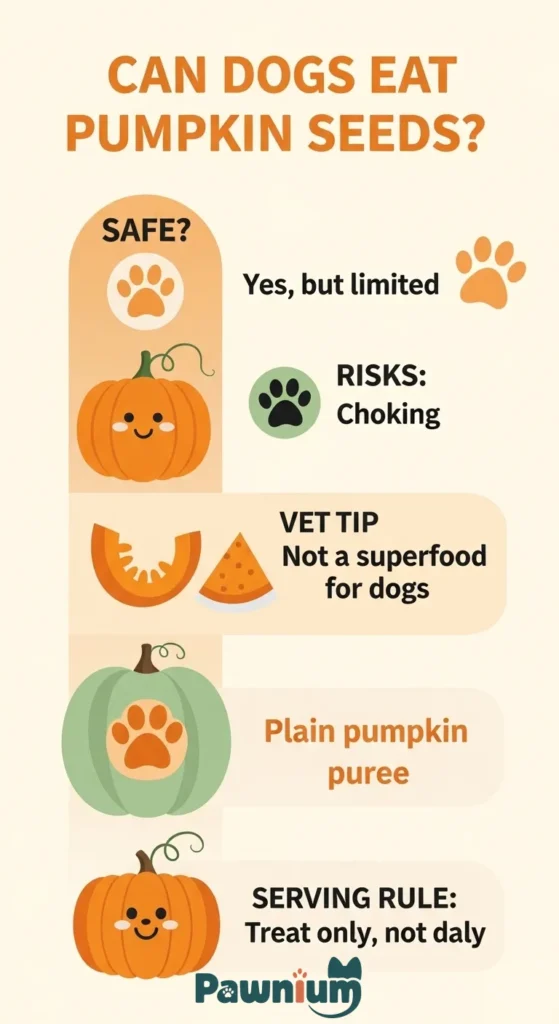
🎃 Pumpkin Seeds vs. Pumpkin Puree: Which Is Better for Dogs?
If your goal is to support your dog’s digestion or overall health, pumpkin seeds are actually the least effective way to do it. The real canine superstar is plain pumpkin puree.
| Feature | Pumpkin Seeds | Pumpkin Puree (100% Plain) |
|---|---|---|
| Digestibility | Difficult; often causes gas | Excellent; gentle on the gut |
| Nutrient Absorption | Very low | High (Beta-carotene, Vitamins A, C, E) |
| Fiber Type | Hard, insoluble (can irritate) | Soluble (helps diarrhea & constipation) |
| Risk Level | Moderate | Very low |
| Preparation | Time-consuming | Ready to serve |
Veterinary consensus: If you’re choosing one pumpkin product for your dog, plain pumpkin puree wins every time.
🚫 Debunking the Parasite & Worm Myth
One of the most persistent internet myths claims that pumpkin seeds act as a “natural dewormer” due to a compound called cucurbitacin.
What Actually Happens
Yes, pumpkin seeds may cause intestinal irritation when fed in large quantities. This irritation can trigger diarrhea, which may physically flush out some worms. But here’s the critical truth: This does NOT kill parasites or treat the infestation.
Why This Myth Is Dangerous
- Parasites continue reproducing
- Dogs lose nutrients and weight
- Risk of anemia increases
- Puppies are especially vulnerable
The Safe Solution
If you suspect worms: Schedule a veterinary visit, Request a fecal exam, Use FDA-approved deworming medication. Relying on pumpkin seeds instead of veterinary care can seriously delay proper treatment.
⚠️ The Risks: When Pumpkin Seeds Can Be Bad for Dogs
While small amounts may be tolerated by some dogs, pumpkin seeds do carry real risks—especially if fed incorrectly.
- 1. Choking & Intestinal Blockage: Pumpkin seed shells are hard, sharp, and difficult to digest. They can lodge in the throat or create blockages in the intestines, which may require emergency surgery.
- 2. Stomach Upset: The combination of fat and fiber can lead to: Vomiting, Gas, Loose or greasy stools. Dogs with sensitive stomachs are especially prone to these reactions.
- 3. Pancreatitis Risk: Pumpkin seeds are fat-dense. For dogs with a history of pancreatitis, even small amounts can trigger a painful flare-up.
👨🍳 How to Safely Prepare Pumpkin Seeds for Dogs
If you still want to let your dog try pumpkin seeds as an occasional treat, strict preparation is essential.
Safe Preparation Guidelines
- ✔ Remove the Shells: Only feed the inner green seed (pepitas). The white shells are a major hazard.
- ✔ Roast Plain: No salt, No butter or oil, No garlic, onion powder, or spices (toxic to dogs).
- ✔ Grind Into Powder: Grinding helps dogs absorb a small portion of nutrients and reduces choking risk.
- ✔ Introduce Slowly: Start with a tiny amount and monitor for reactions.
- ✔ Watch for Allergic Signs: Stop immediately if you notice: Facial swelling, Hives, Excessive itching.
📏 Dosage Guide: How Many Pumpkin Seeds Can Dogs Have?
Pumpkin seeds should be considered a rare treat, not a supplement. Treats should never exceed 10% of your dog’s daily calorie intake.
| Dog Size | Weight Range | Max Seeds per Day |
|---|---|---|
| Small | 2–30 lbs | 3–5 seeds |
| Medium | 31–50 lbs | 5–10 seeds |
| Large | 51+ lbs | 10–20 seeds |
⚠️ Important: Puppies, senior dogs, and dogs with medical conditions should only try pumpkin seeds after veterinary approval.
🥫 Best Pumpkin Alternatives for Dogs (Much Safer Options)
If your dog loves pumpkin flavor, there are far better choices than seeds.
- ✅ Plain Canned Pumpkin Puree: 100% pumpkin only, No sugar or spices, Excellent for digestive health. Typical serving: Small dogs: 1 teaspoon, Medium dogs: 1 tablespoon, Large dogs: 2 tablespoons.
- ✅ Cooked Fresh Pumpkin: Steamed or boiled, No seasoning, Mash before serving.
- ❌ Avoid Pumpkin Pie Filling: Contains: Sugar, Nutmeg (toxic), Preservatives.
❓ Frequently Asked Questions
Can dogs eat pumpkin seeds with shells? No. The shells are a serious choking hazard and can cause internal blockages or intestinal injury.
Are store-bought roasted pumpkin seeds safe? Only if the ingredient list says “pumpkin seeds” and nothing else. Most packaged snacks contain salt or preservatives that are unsafe for dogs.
Do pumpkin seeds help with digestion? Not effectively. Plain pumpkin puree provides significantly better digestive support with far fewer risks.
Can puppies eat pumpkin seeds? It’s not recommended. Puppies have sensitive digestive systems and a higher choking risk.
📝 Key Takeaways for Pet Parents
- Moderation is critical: Pumpkin seeds should be rare treats only
- Low nutritional payoff: Dogs absorb very little benefit
- Preparation matters: Plain, shelled, roasted, and ground only
- Better option exists: Plain pumpkin puree is safer and more effective
- Health first: Vomiting, pain, or diarrhea = stop immediately and consult a vet
🐾 Final Verdict: Should Dogs Eat Pumpkin Seeds?
Pumpkin seeds aren’t toxic, but they’re far from ideal for dogs. While a few properly prepared seeds may not cause harm, they offer minimal benefits and unnecessary risks compared to safer pumpkin alternatives. When it comes to treating your dog, simpler is always better. Stick to vet-approved foods, choose plain pumpkin puree over seeds, and remember—your dog’s health matters more than sharing a seasonal snack.