
Understanding your dog isn’t just about hearing a bark; it’s about reading the “silent symphony” of their movements. Most pet parents think they know exactly what their dog is saying, but the reality of how dogs communicate is far more nuanced than we imagine. If you’ve ever wondered, “Why is my dog acting weird?” or found yourself surprised by a sudden growl, you likely missed a series of “whispered” signals.
Quick Summary
Dog body language is the primary way dogs communicate emotions, intentions, and stress. Learning to read these signals—from the subtle lip lick to the high-aroused “freeze”—is essential to prevent bites, reduce anxiety, and strengthen your bond with your pet.
Canine Communication
The Secret Body Language of Dog
A Holistic Guide to Understanding Dog Body Language
1. Introduction: The Secret Language beyond the Bark
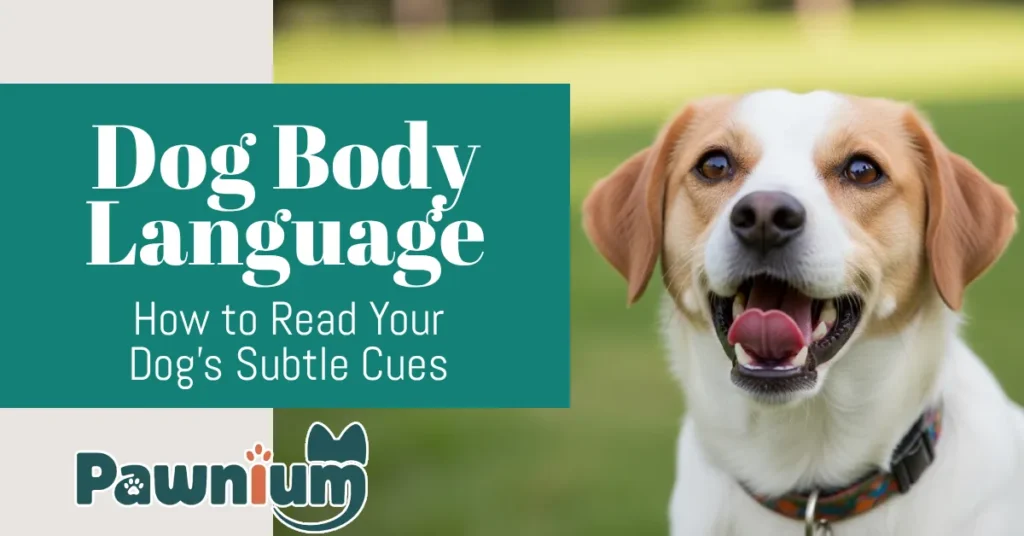
Beyond the bark, dogs speak a visual language developed over thousands of years of evolution. While humans are a verbal species, dogs are masters of non-verbal communication signals. They use their entire bodies—from the tip of their nose to the base of their tail—to negotiate space, express needs, and signal their emotional state.
🛡️ Reviewed by Experts:
“In the canine world, behavior is communication. When a dog ‘misbehaves,’ they are often simply reacting to a situation they find overwhelming. Understanding distance-increasing signals is the single most important thing a dog owner can do to ensure safety.” Insight from the Association of Professional Dog Trainers (APDT).
2. Visual Cue Guide: Quick Reference Table
To help you identify signs a dog is uncomfortable or happy at a glance, use this structured guide.
| Signal | Meaning | Intent | Risk Level |
|---|---|---|---|
| Loose, Wiggly Body | Happy / Playful | Distance-Decreasing | Very Low |
| Lip Licking / Yawning | Stress / Anxiety | Calming (No threat) | Low |
| Paw Lift | Uncertainty / Conflict | Wait and see | Low/Medium |
| Whale Eye | Intense Fear / Guarding | Warning (Back off) | High |
| The “Freeze” | Extreme Tension | About to react | Critical |
3. The Building Blocks: Posture and Movement
To understand the big picture, we have to look at the individual “alphabet” of canine communication.
Understanding Weight Distribution
- Forward Leaning: This is an assertive posture. The dog is moving into the space, often signifying confidence, curiosity, or potential confrontation.
- Backward Leaning: The dog is “tucking” themselves away. This is one of the clearest signs a dog is scared or trying to avoid a conflict.
The Meaning of Tail Height and Wag Speed
It is a dangerous myth that a wagging tail always means a happy dog.
- The “Flagging” Wag: A tail held high, stiff, and vibrating. This indicates high arousal and a dog that is ready to react.
- The “Helicopter” Wag: A circular, loose wag that involves the whole hips. This is the hallmark of a relaxed, social dog.
- The Slow, Tentative Wag: Often seen during “distance-increasing” signals where the dog is unsure if they can trust the person approaching.
4. Facial Expressions: Eyes, Ears, and Mouths
Soft Gazes: Relaxed eyes with normal pupils.
Hard Stares: A fixed, unblinking gaze. In the dog world, this is a direct challenge or predatory focus.
Whale Eye: Seeing the whites of the eyes. This is a common sign a dog might bite because they feel trapped or are guarding a resource.
Ears: The “Radar” of Emotion
- Neutral/Forward: Interested and alert.
- Pinned Flat Back: Fear, submission, or extreme stress.
- Rotating/One Up-One Down: This often happens when a dog is “processing” conflicting information—trying to decide if a new sound is a threat or a treat.
5. Interpreting the Mood: How Is Your Dog Feeling?
The “Freeze” Response: A Real-Life Scenario
Example: You are at the dog park, and a large dog approaches yours. Your dog stops moving entirely. They aren’t “being calm”—they have Frozen. This stillness is the silence before the storm. It’s the dog’s way of gathering all their energy for a flight-or-fight response. If you see the freeze, advocate for your dog and create distance immediately.
Subtle Micro-Signals (The “Hidden” Cues)
Many owners miss these “whispered” dog calming signals:
- Sudden Ground Sniffing: If your dog starts sniffing the ground intensely right when a stranger approaches, they aren’t looking for a scent. It’s a “displacement behavior” used to de-escalate a tense social situation.
- Sudden Scratching: Like the sniff, a sudden itch during training or a social greeting is often a sign of internal conflict or mild stress.
- Panting and Pacing: When it’s not hot, this is a high-level sign of how dogs show stress.
6. Understanding Social Dynamics and Intent
The Myth of the “Safe” Submissive Dog: I often see my Golden, Bailey, roll on her back when a larger dog approaches. Owners often say, “Oh, he’s just being submissive!” In reality, this is an appeasement behavior. The dog is terrified and trying to say, “Please don’t hurt me; I am not a threat.” If you force a dog in this state to interact, they may bite out of sheer desperation.
Assertive and Distance-Increasing Signals: The Muzzle Punch is a quick, closed-mouth “jab” with the nose. It’s a very stern “Get away from me” warning. Additionally, Body Stiffening—if a dog’s body feels like a statue under your hand, stop petting them. They are communicating that they have reached their limit.
7. Common Misinterpretations Owners Make
We often project human emotions onto our dogs, leading to dangerous misunderstandings.
- Thinking Wagging Tail = Happy: As discussed, a wagging tail just means “excited” or “aroused.” Always check the rest of the body for stiffness.
- Punishing the Growl: A growl is a dog’s “smoke alarm.” If you punish the growl, you take the batteries out of the alarm. A dog that is taught not to growl is a dog that bites without warning.
- The “Guilty” Look: When you come home to a torn-up pillow and your dog has their ears back and eyes averted, they don’t feel “guilt.” They are reacting to your angry tone and body language with submissive appeasement.
- Hugging Dogs: Most dogs actually hate hugs. It feels like a “restraint” to them. Watch for a lip lick or a turn away next time you lean in—those are signs they are “tolerating” you, not enjoying it.
8. How to Prevent Dog Bites Using Body Language
- Stop interaction at the first stress signal: Don’t wait for the growl. Stop at the lip lick or the whale eye.
- Teach Kids “No Touch” Signs: Children often miss the “freeze.” Teach them that a “still dog” is a “sleeping dragon” that should be left alone.
- Never approach a frozen dog: If a dog is stiff, give them an exit.
- Let the dog initiate: Always use the “Consent Test.” Pet for 3 seconds, stop, and see if the dog leans in for more. If they move away, the interaction is over.
9. Bridging the Communication Gap
The burden of communication is on us. When we learn to speak “Dog,” we stop being “bosses” and start being “partners.”
🐾 7-Day Body Language Observation Plan
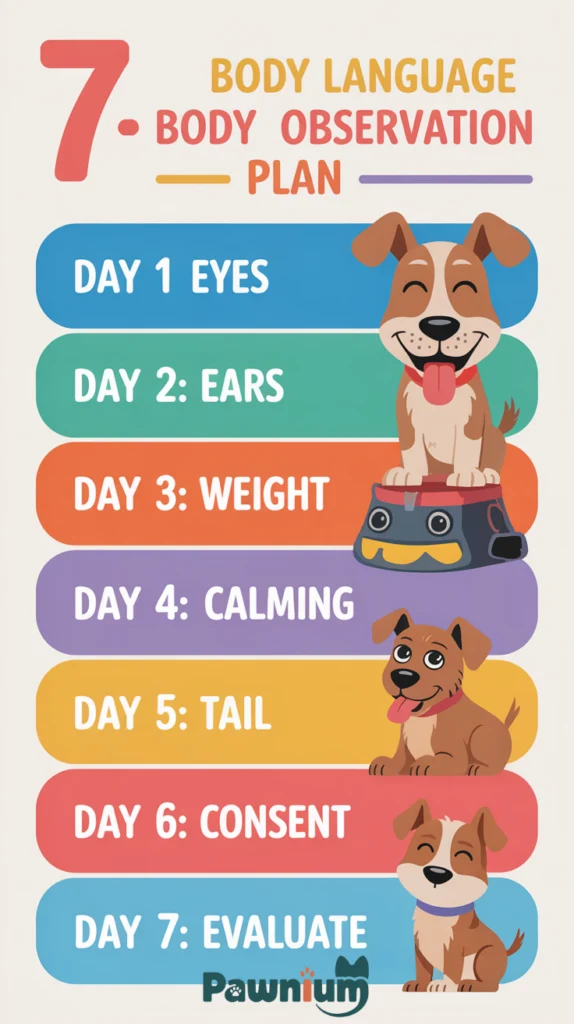
Watch for Whale Eye and soft vs. hard gazes.
Watch rotation and pinning during scolding.
Does your dog lean in or pull away from touch?
Count yawns and lip licks throughout the day.
Note height differences in relaxed vs. aroused wags.
Practice the 3-second consent test.
Spend 10 mins just watching your dog exist.
FAQs: Dog Communication Signals
Q: Why does my dog yawn when I scold them?
A: This is a classic dog calming signal. They aren’t bored; they are trying to de-escalate your anger and soothe their own stress levels.
Q: Why does my dog avoid eye contact with me?
A: In the canine world, direct eye contact can be a challenge. Avoiding eye contact is a sign of respect or a submissive way of saying, “I am not a threat.”
Q: What does it mean when a dog stiffens suddenly?
A: This is “The Freeze.” It means the dog is highly stressed and is deciding whether to bite or run. Give the dog space immediately.
Q: Why does my dog turn away from me when I try to kiss them?
A: This is a “Distance-Increasing Signal.” They are politely asking for space. Respecting this “No” is the best way to build trust.
Q: Does a “low growl” always mean an attack is coming?
A: Not necessarily, but it is a clear boundary. It means, “I am uncomfortable, and if this continues, I may have to protect myself.”
Become Your Dog’s Best Advocate
Spending five minutes today watching your dog without interacting will change your relationship forever. Once you “see” the secret language of canines, you’ll never misunderstand your best friend again.
Three Key Takeaways:
- Context is everything: A wagging tail is only “happy” if the body is “loose and wiggly.”
- Respect the “No”: If your dog shows stress, give them an exit.
- Trust the Growl: It is a valuable communication tool, not a flaw.