
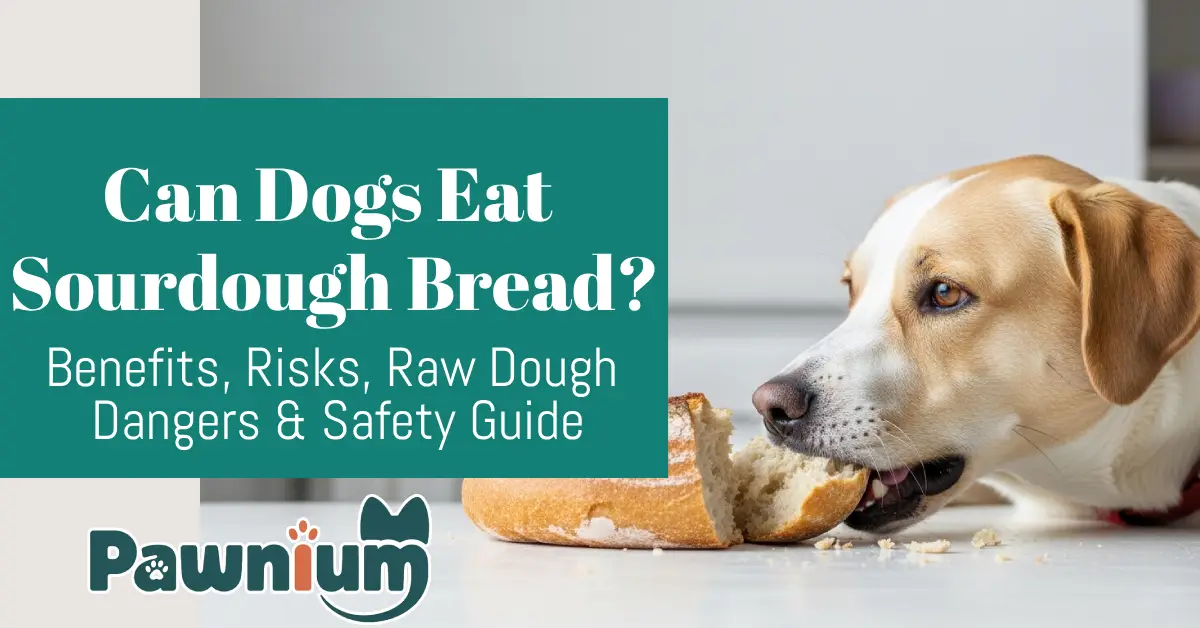
Can Dogs Eat Sourdough Bread? A Safety Guide
If you bake sourdough at home or grab an artisanal loaf from the store, you’ve probably wondered: Can dogs eat sourdough bread?
The short answer is: Yes, dogs can eat fully baked, plain sourdough bread in small amounts.
However, raw sourdough dough is extremely dangerous and can become life-threatening within hours. While a small bite of crust won’t harm most healthy dogs, sourdough offers little nutritional benefit and comes with important risks — especially when raw dough, garlic, raisins, or excess salt are involved.
Nutrition & Safety
Can Dogs Eat Sourdough Bread?
Benefits, Risks, Raw Dough Dangers & Safety Guide
In this complete guide, you’ll learn:
- Whether sourdough is safe for dogs
- Why raw dough is an emergency
- Risks of seeds, butter, and toppings
- Calorie considerations
- Which dogs should avoid bread entirely
- What to do if your dog eats raw dough
Let’s break it down.
Is Sourdough Safe for Dogs?
Sourdough bread differs from regular white bread because it’s made with a fermented starter containing wild yeast and beneficial bacteria. This fermentation process makes sourdough easier for humans to digest.
However, for dogs:
- It is still primarily carbohydrates
- It provides minimal essential nutrients
- It adds extra calories without meaningful benefits
One slice of sourdough bread contains approximately: 80–100 calories, 15–20 grams of carbohydrates, minimal protein, and little fiber. For dogs, that’s essentially “empty calories.” While not toxic when plain and baked, sourdough should only be an occasional treat.
The Biggest Danger: Raw Sourdough Dough
This is where many pet owners underestimate the risk.
⚠️ What Is Bread Dough Toxicosis?
If a dog eats raw sourdough dough:
- The yeast continues fermenting in the warm stomach.
- The dough expands as gas is produced.
- Ethanol (alcohol) forms during fermentation.
- The stomach becomes distended.
- Alcohol enters the bloodstream.
This condition is known as bread dough toxicosis — and it is a veterinary emergency.
Symptoms May Include:
Severe abdominal bloating, vomiting or dry heaving, disorientation, weakness, unsteady walking, low body temperature, seizures, and collapse. The expanding dough can cause gastric dilation, and the alcohol can depress the nervous system.
If your dog eats raw dough, contact your veterinarian or an emergency animal hospital immediately. Never allow dogs near sourdough starter or rising dough.
Can Dogs Eat Baked Sourdough Bread?
Yes — if it is: Fully baked, plain, free of toxic ingredients, and served in small amounts. Once baked, the yeast is inactive, eliminating the fermentation danger. However, sourdough still offers limited nutritional value for dogs.
Can Dogs Eat Toasted Sourdough?
Yes. Toasted sourdough is generally safe as long as: It is not burnt and it contains no butter or seasoning. Burnt toast may irritate the digestive tract and contains compounds that are not ideal for pets.
Can Dogs Eat Sourdough Pizza Crust?
This depends on what’s on the crust. Plain, fully baked crust without seasoning is safe in small bites. However, pizza crust often contains: Garlic oil, onion powder, excess salt, herbs, or cheese. Garlic and onion are toxic to dogs and can damage red blood cells. Always verify ingredients before sharing. When in doubt, skip it.
Common Additives: What Makes Sourdough Unsafe?
The biggest risks are not the bread itself — but what’s added to it.
Can Dogs Eat Sourdough with Butter?
Butter is not toxic, but it is high in fat. Feeding buttery bread can lead to weight gain, digestive upset, diarrhea, and pancreatitis in sensitive dogs. Pancreatitis is a painful inflammation of the pancreas that can require hospitalization. Plain bread is safer than buttered bread.
Can Dogs Eat Sourdough with Seeds?
Some seeds are safe; others require caution.
- Generally Safe in Small Amounts: Sesame seeds, Chia seeds, Flax seeds, Sunflower seeds (unsalted).
- Use Caution: Poppy seeds — large amounts may cause opioid-like symptoms.
- Avoid: “Everything” seasoning blends (often contain garlic or onion) and salt-heavy toppings.
Can Dogs Eat Sourdough with Raisins?
No. Raisins are toxic to dogs and can cause acute kidney failure — even in small amounts. Any sourdough containing raisins, currants, or grapes should never be given.
What About Xylitol?
Some specialty breads or spreads contain xylitol, an artificial sweetener that is extremely toxic to dogs and can cause rapid blood sugar drops and liver failure. Always read ingredient labels carefully.
Which Dogs Should Avoid Bread Entirely?
Puppies can technically eat a tiny piece of plain baked sourdough, but it offers no nutritional benefit. Because puppies are growing rapidly, their diets must remain carefully balanced. Bread should never replace puppy-formulated kibble or veterinary-approved growth diets.
Avoid Bread If Your Dog Has:
Diabetes, obesity, grain allergies, gluten sensitivity, chronic pancreatitis, or digestive disorders. Because sourdough is high in carbohydrates, it can spike blood sugar levels and contribute to weight gain. Dogs thrive on complete and balanced diets formulated specifically for their life stage. Bread should never replace that foundation.
Is Sourdough Healthier Than White Bread for Dogs?
For humans, sourdough may be easier to digest. For dogs, the difference is minimal. Both are high in carbohydrates, low in essential canine nutrients, and not necessary in a dog’s diet. Sourdough is not “health food” for dogs.
What Should You Do If Your Dog Ate Raw Dough?
Act immediately. Call your veterinarian. Monitor for bloating and lethargy. Do not wait for symptoms to worsen. Early treatment may involve inducing vomiting (if safe and early enough), hospital monitoring, IV fluids, and alcohol level monitoring. Time matters in these cases.
Frequently Asked Questions
- Can dogs eat gluten-free sourdough? Yes, if fully baked and plain. However, gluten-free does not make it healthier for dogs unless they have a diagnosed sensitivity.
- Can dogs eat sourdough with olive oil? Small amounts are generally safe, but added fats increase calorie density.
- Why is raw dough more dangerous than baked bread? Raw dough continues fermenting in the stomach, causing expansion and alcohol production.
- Can senior dogs eat sourdough? Only in small, plain amounts — and only if they have no underlying metabolic issues.
- How much sourdough is safe? For most dogs, a small bite occasionally is sufficient. Avoid making it a habit.
Final Verdict
Should You Share Sourdough With Your Dog? Yes — but only occasionally and only when fully baked, plain, free from toxic ingredients, and given in small portions. The true danger lies in raw dough, which can cause life-threatening complications. Sourdough bread offers little nutritional value for dogs. While not inherently toxic when baked, it should remain an occasional indulgence — not a dietary staple.
A Smarter Alternative to Table Scraps:
Consider keeping high-quality, veterinarian-formulated treats on hand. Purpose-made dog treats are nutritionally balanced, contain controlled calories, and avoid toxic ingredients. Your dog’s primary nutrition should always come from a complete and balanced commercial food that meets established canine dietary standards. Fresh table foods like sourdough should remain rare exceptions — not daily habits.
Safety First! 🐾