Canine Influenza Vaccine: Which Dogs May Need the Dog Flu Vaccine?
Direct Answer
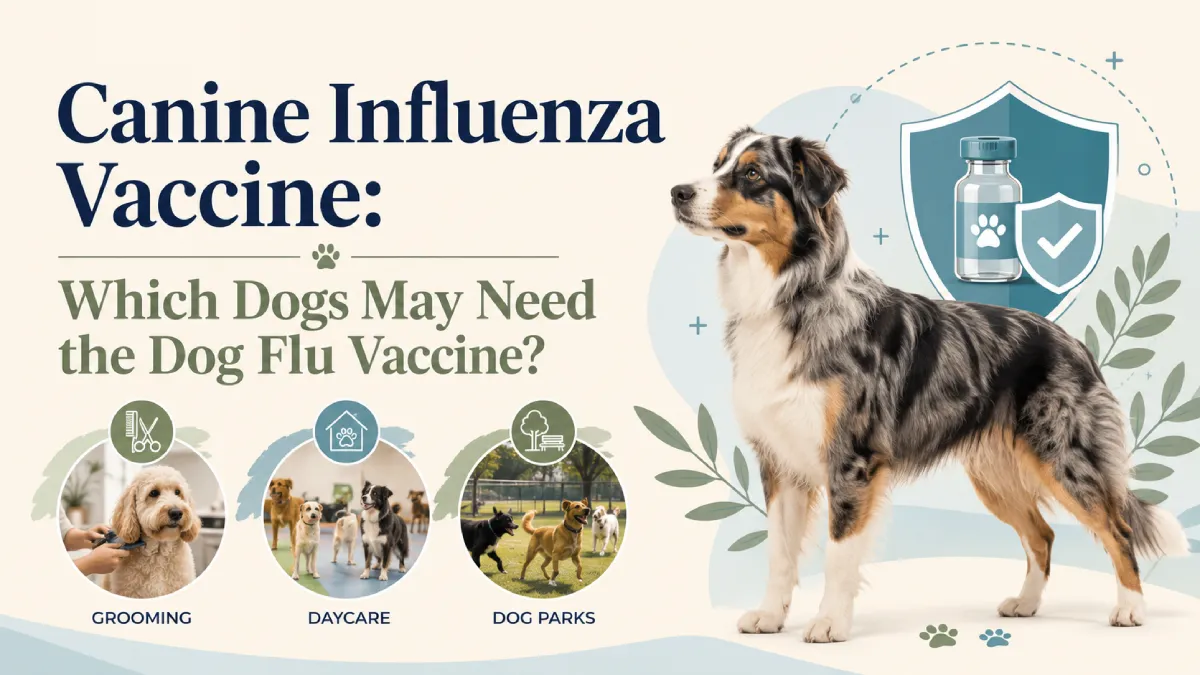
Canine influenza vaccination is not recommended routinely for every dog. AAHA advises risk-based use, especially when canine influenza virus is circulating and a dog has frequent exposure to boarding, daycare, dog parks, shows, group training, shelters or travel. Vaccination can reduce disease risk and severity but does not guarantee zero infection or replace management of outbreaks.
Vaccination Guidelines Last Checked: August 26, 2026.
What Canine Influenza Is
Canine influenza is a contagious respiratory disease caused by influenza A viruses adapted to dogs. H3N8 and H3N2 strains have been documented in North America. Clinical disease can resemble other respiratory infections, which means cough alone cannot identify canine influenza.
Respiratory Transmission
Spread occurs mainly through respiratory secretions, close dog-to-dog contact and contaminated environments. Indoor shared-air settings can facilitate transmission because dogs may cough, bark and interact in close proximity.
Shared Dog Environments
Risk is determined less by whether a dog is “social” in general and more by how often the dog enters environments with many unfamiliar dogs and whether influenza is circulating there. Repeated exposure can matter more than a rare, controlled meeting.
Boarding and Daycare
Boarding and daycare are important risk settings because dogs from multiple households mix over extended periods. Ask facilities about their vaccination policies, recent respiratory disease and how they isolate coughing dogs.
Shelters
Routine influenza vaccination of every shelter dog is not universally recommended by AAHA, but local outbreaks can change the decision. Shelter protocols should respond to current epidemiology, population movement and available resources.
Dog Events and Training Facilities
Shows, agility trials, competitions and group classes can bring together dogs from multiple regions. That makes travel history and local outbreak information relevant when deciding whether influenza vaccination adds value.
Travel
A dog that rarely encounters group settings at home may become higher risk during a trip involving hotels, competitions, boarding or daycare. Discuss travel before departure so any initial vaccine series can be completed in time.
Local Outbreaks
AAHA emphasizes current virus circulation when considering canine influenza vaccination. An outbreak can temporarily change the relevance of vaccination for dogs that otherwise have moderate risk.
Vaccine Availability and Serotypes
Canine influenza vaccines have been developed for H3N8 and H3N2, including bivalent products. Availability varies by market and time. The veterinarian should use currently licensed products and verify the product label rather than relying on an old online schedule.
Initial Series and Boosters
AAHA’s canine vaccination guidance describes a multi-dose initial series for canine influenza vaccines followed by revaccination for dogs that remain at risk. Exact dates depend on age, product and history, so owners should not self-schedule from a generic chart.
What the Vaccine Can and Cannot Do
Vaccination may reduce infection risk, disease severity and shedding, but it does not create a guarantee against every cough. Respiratory disease can be caused by Bordetella, parainfluenza, adenovirus, influenza and other pathogens.
Canine Influenza Versus Bordetella
Canine influenza is viral; Bordetella is bacterial. Their vaccines target different organisms and are not substitutes for one another. A dog’s exposure pattern may justify discussion of both.
See Bordetella Vaccine for Dogs.
Dog Influenza Versus “Kennel Cough”
“Kennel cough” is a syndrome label, not a precise diagnosis. Canine influenza can be one cause of infectious respiratory disease, but testing may be needed to identify the pathogen during an outbreak.
Respiratory Symptoms
Possible signs include cough, nasal discharge, fever, reduced appetite and lethargy. Some dogs develop more severe pneumonia. These signs overlap many other conditions, so a home symptom list cannot diagnose canine influenza.
When Veterinary Care Is Appropriate
Contact a veterinarian if a dog develops persistent cough, fever, marked lethargy, reduced appetite or worsening respiratory signs after group-dog exposure. Breathing difficulty is an emergency. During outbreaks, call the clinic before arrival so they can reduce exposure to other patients.
Canine Respiratory Vaccine Comparison
| Vaccine | Pathogen/context | Exposure setting | Key limitation |
|---|---|---|---|
| Bordetella | B. bronchiseptica, part of CIRDC | Boarding, daycare, grooming, groups | Does not prevent all kennel-cough causes |
| Canine influenza | Influenza A H3 strains | Commingled dogs, outbreaks, travel | Risk-based; does not cover other CIRDC pathogens |
| Parainfluenza | Canine parainfluenza virus | Respiratory contact | Not interchangeable with influenza virus |
What Canine Influenza Is
Canine influenza is a contagious respiratory infection caused by influenza A viruses adapted to dogs. In North America, H3N8 and H3N2 have both circulated historically, although which strains are active changes over time. The disease is spread mainly through respiratory secretions and contaminated environments associated with close dog-to-dog contact.
Because circulation changes geographically, the value of vaccination should be reviewed with current local information rather than assuming that every dog in every region has the same exposure.
How Canine Influenza Spreads in Group Settings
Dogs can encounter respiratory droplets and contaminated surfaces in boarding, daycare, shelters, training facilities, shows and other events. High turnover and close contact make outbreaks easier to sustain. Travel can introduce dogs from regions with different disease activity into the same facility.
Dogs that spend most of their time at home and rarely interact with unfamiliar dogs may have less exposure, but a sudden change such as an upcoming boarding stay can change the discussion.
H3N2 and H3N8 Vaccine Coverage
Available products may target one or more canine influenza strains. Availability varies by country and over time. The veterinary team should verify that the product used is licensed and relevant to current regional risk. Owners should not assume that an old vaccination record automatically reflects the strains or products currently available.
Why the Vaccine Is Risk-Based
AAHA does not recommend routine canine influenza vaccination for every dog. It is considered according to exposure and current virus circulation. Dogs that board, attend daycare, compete, visit shows or travel to areas with active outbreaks may have a stronger reason to discuss vaccination than dogs with minimal dog-to-dog contact.
This is decision support, not a yes/no rule. Age, medical history, vaccine availability and the dog’s broader respiratory vaccine plan also matter.
Initial Series and Boosters
Canine influenza vaccines generally require an initial series before ongoing boosters, but exact ages, intervals and licensed durations depend on the product. This article intentionally avoids publishing a universal injection calendar. Bring previous records so the veterinarian can decide whether an initial series, continuation or booster is appropriate.
Canine Influenza Is Not the Same as Bordetella
Bordetella is a bacterium associated with canine infectious respiratory disease complex, while canine influenza is caused by influenza viruses. The vaccines target different pathogens and are not interchangeable. A dog at high respiratory exposure may be considered for both, but that does not mean both are necessary for every dog.
See Bordetella Vaccine for Dogs for the separate Bordetella decision.
Vaccination Does Not Prevent Every Cough
“Kennel cough” is a broad label for respiratory disease that can involve multiple agents. A canine influenza vaccine cannot prevent Bordetella, parainfluenza or every other respiratory cause. Likewise, Bordetella vaccination does not protect against canine influenza. Facility hygiene, ventilation and prompt isolation of sick dogs remain important.
Possible Signs After Exposure
Canine influenza may cause cough, nasal discharge, fever, lethargy and reduced appetite. These signs overlap with other respiratory diseases and cannot identify influenza at home. Some dogs develop more serious pneumonia or breathing problems, while others have mild disease.
Contact the veterinarian if respiratory signs develop after a known outbreak or shared-dog exposure. Difficulty breathing, marked weakness or persistent high fever needs prompt care.
What to Do During a Local Outbreak
Follow current veterinary and public-health-style facility guidance. Temporarily reducing visits to high-density dog settings may be reasonable when local clinics or facilities report active transmission. If your dog is coughing, do not bring them to daycare, grooming, training or a routine waiting room without calling ahead.
Canine Respiratory Vaccine Comparison
| Vaccine/antigen | Disease context | Typical exposure discussion | Key limitation |
|---|---|---|---|
| Bordetella | CIRDC bacterial component | Boarding, daycare, grooming, classes | Does not prevent all kennel-cough causes |
| Canine influenza | Influenza A respiratory disease | Commingling, travel, outbreaks | Risk and strain circulation vary |
| Parainfluenza | CIRDC viral component | Often included in combination vaccines | Not the same pathogen as influenza |
Vaccine Reactions
Mild temporary soreness, reduced energy or appetite can occur after vaccination. Facial swelling, repeated vomiting, collapse or breathing difficulty require urgent veterinary attention. If a dog has reacted previously, provide the exact product and timing to the veterinarian before future vaccination.
Puppies, Seniors and Medically Vulnerable Dogs
Age alone does not determine whether canine influenza vaccination is needed. A healthy puppy beginning daycare may have substantial exposure, while a senior dog that rarely meets other dogs may have little. Older dogs and dogs with cardiopulmonary disease can have greater consequences from respiratory illness, so the veterinarian should consider both exposure probability and potential severity.
What If a Boarding Facility Requires the Vaccine?
A facility may require canine influenza vaccination even when it is categorized as risk-based in general guidelines. Ask for the exact policy well before check-in. If the dog has never received the vaccine, an initial series may be needed according to the product label. The veterinary team should review health and prior records rather than simply administering an unidentified “boarding shot.”
After Known Exposure
If your dog was exposed to a confirmed or suspected influenza outbreak, call the veterinary clinic before arriving. The clinic may use separate entry procedures to reduce exposure to other dogs. Monitor for cough, nasal discharge, fever, reduced appetite and lethargy, but remember these signs cannot distinguish influenza from other respiratory infections without veterinary evaluation.
Facility Requirements Can Change During Outbreaks
Boarding and daycare businesses may temporarily tighten vaccine or screening policies when canine influenza is circulating locally. Check again shortly before a planned stay even if you have used the facility before. A policy change is not proof that every dog in the community needs vaccination; it reflects the facility’s responsibility for a high-contact population.
Do Not Self-Treat a Cough as “Dog Flu”
Cough, fever and lethargy can occur with Bordetella, parainfluenza, pneumonia and other respiratory diseases. Do not use leftover antibiotics, human cough medicine or another dog’s prescription. Call the veterinary team, describe recent dog-contact exposure and follow isolation instructions while a diagnosis is being considered.
Keep Local Risk Current
Canine influenza circulation can change over time, so a recommendation made several years ago may no longer match current conditions. Review local outbreak information with the veterinary team before boarding, travel or major dog events. Likewise, if the dog stops attending group environments, the future vaccine discussion may change. Risk-based vaccination should respond to the dog’s real current lifestyle, not stay fixed simply because a previous owner or facility once requested it.
Keep the vaccine record with the rest of the dog’s preventive history. If the dog later changes daycare, travels or moves to another region, that documentation helps the new veterinarian determine whether protection should be continued, changed or no longer prioritized.
Vaccination decisions should therefore be revisited whenever the dog’s contact with other dogs increases or local outbreak conditions change.
Owners should also keep boarding and travel dates with the vaccine record so the next veterinarian can understand why vaccination was chosen and whether the exposure still exists.
Related Pawnium Respiratory Guides
See Bordetella Vaccine for Dogs, Dog Vaccination Schedule and Dog Preventive Care Guide.
FAQs
Does every dog need a canine influenza vaccine?
No. AAHA recommends risk assessment based on current circulation and exposure such as boarding, daycare, dog events and travel.
Is dog flu the same as kennel cough?
No. Canine influenza is one viral cause of respiratory disease. “Kennel cough” can involve several different pathogens.
Does Bordetella vaccine protect against canine influenza?
No. They target different organisms and are not interchangeable.
Can vaccinated dogs still get dog flu?
Yes. Vaccination reduces risk and may reduce severity but cannot guarantee complete protection.
Should a coughing dog be vaccinated immediately?
Vaccination is preventive, not treatment. A dog that is already coughing should be assessed by a veterinarian, particularly during an outbreak.