
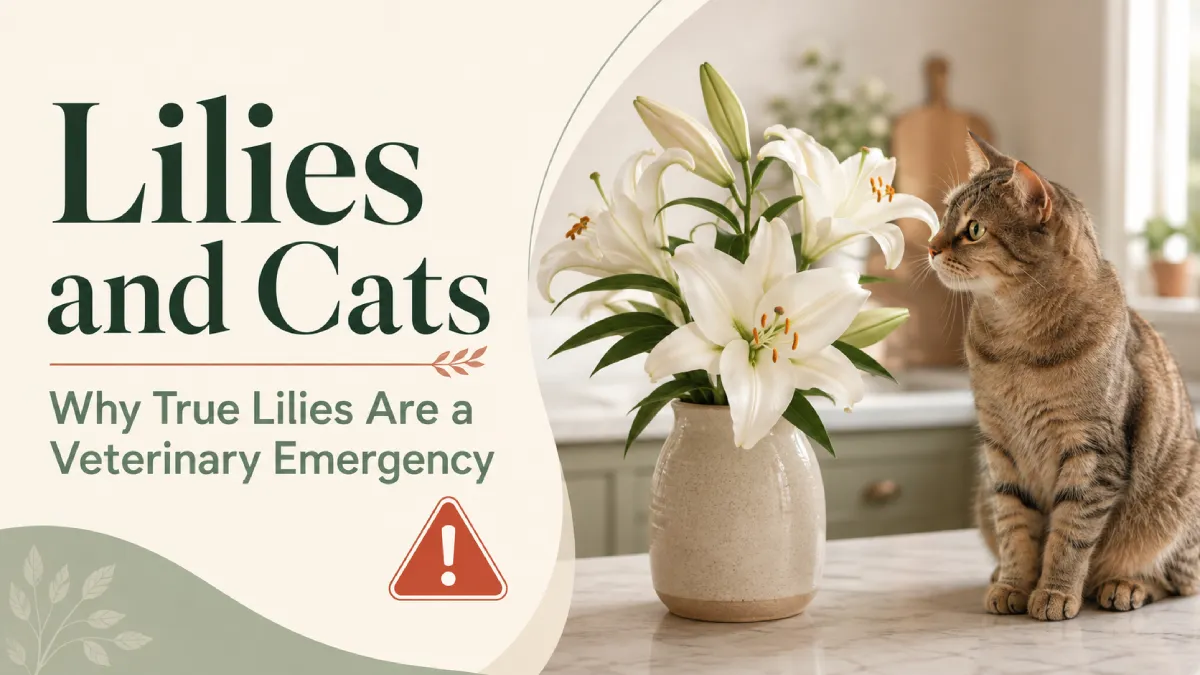
Lilies and Cats: Why True Lilies Are a Veterinary Emergency
True lilies and daylilies can cause severe, potentially fatal kidney injury in cats. The risk is not limited to chewing an entire flower. Leaves, petals, stems, pollen and even water from a vase containing a toxic lily can create dangerous exposure.
If your cat has chewed a true lily, licked pollen from their coat or may have drunk lily vase water, contact a veterinarian or emergency veterinary hospital immediately. Do not wait for vomiting or other symptoms before seeking help. Early veterinary treatment offers the best opportunity to prevent severe kidney damage.
Emergency Answer
Exposure to a true lily (Lilium) or daylily (Hemerocallis) is an emergency in cats. Remove access, prevent the cat from grooming visible pollen and contact a veterinarian immediately. Bring the plant, a photograph or its botanical name if possible. Do not induce vomiting at home.
Which Lilies Are Most Dangerous to Cats?
The kidney-toxic group includes lilies from the Lilium genus and daylilies from the Hemerocallis genus.
Examples include:
- Easter lily
- Tiger lily
- Asiatic lily
- Oriental lily
- Stargazer lily
- Japanese show lily
- Casa Blanca lily
- daylilies
Every Part of a True Lily Can Be Dangerous
FDA warns that toxicity is not restricted to the bulb or flower.
Potential exposures include:
- leaves
- flowers
- stems
- pollen
- water from the vase
A cat does not need to eat a large plant portion for the situation to warrant emergency veterinary attention.
Why Lily Pollen Is Dangerous
Pollen can fall onto:
- tables
- floors
- furniture
- the cat’s coat
A cat may then swallow pollen while grooming.
If pollen is visible on your cat, prevent further grooming where safely possible and contact your veterinarian immediately for decontamination instructions.
Vase Water Can Also Cause Exposure
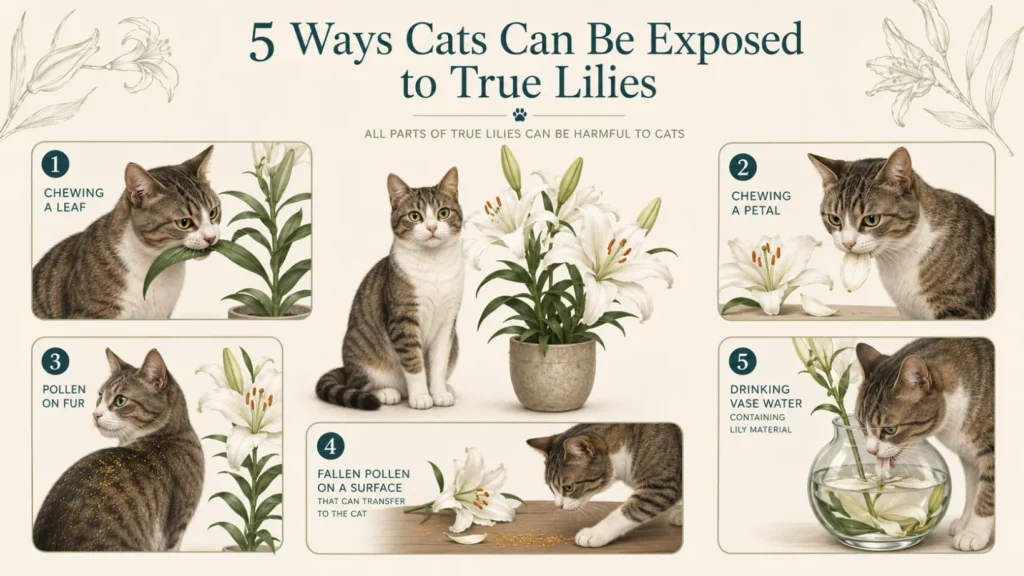
Water from a vase containing true lilies should not be accessible to cats.
Cats often investigate glasses, vases and other water sources, so keeping only the flowers out of chewing distance is not enough.
What Lilies Do to a Cat’s Kidneys
The exact nephrotoxic compound has not been definitively identified.
What is known is that true lily exposure can damage renal tubular cells and lead to acute kidney injury.
Without prompt treatment, kidney failure can become severe and potentially fatal.
Early Signs of Lily Poisoning
Possible early signs include:
- vomiting
- drooling
- reduced appetite
- lethargy
- depression
However, absence of symptoms does not make a known lily exposure safe.
Later Signs of Kidney Injury
As kidney injury develops, changes can include:
- increased thirst
- changes in urination
- dehydration
- weakness
- continued vomiting
- severe lethargy
- eventually reduced or absent urine production in severe cases
Waiting for these signs means valuable treatment time may already have been lost.
What to Do After Lily Exposure
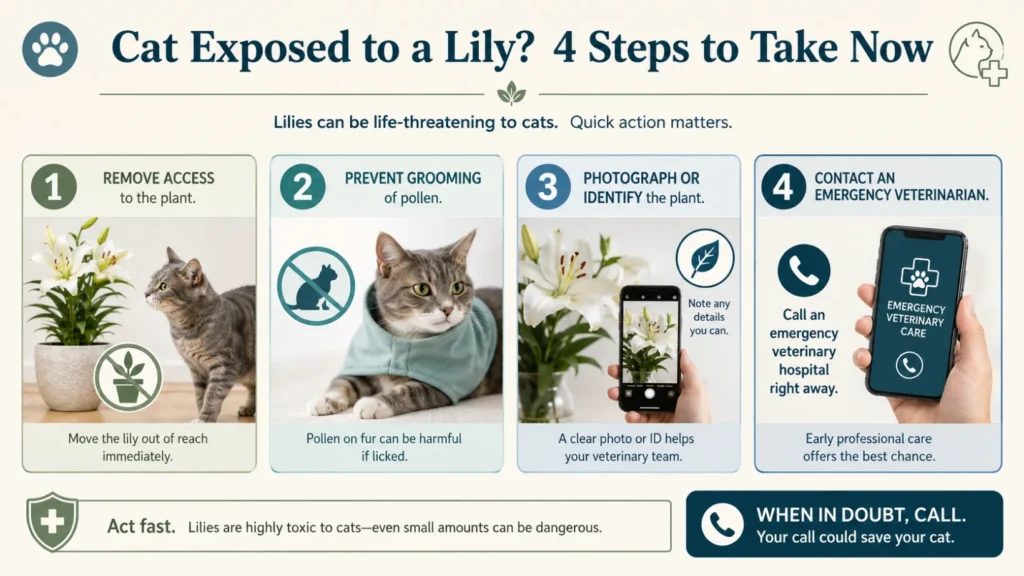
- Remove the plant and vase from the cat’s reach.
- Prevent additional grooming if pollen is visible on the coat.
- Take a photograph of the flower and leaves.
- Keep the plant label or bouquet information if available.
- Contact a veterinarian or emergency veterinary hospital immediately.
- Transport the cat as instructed.
Do Not Wait to See If Your Cat Becomes Sick
Lily exposure is different from many low-level plant irritants.
The reason to act immediately is that veterinary decontamination and supportive treatment are most useful before substantial kidney damage has developed.
Do Not Induce Vomiting at Home
Do not give hydrogen peroxide, salt or another homemade emetic.
Veterinary professionals should decide whether and how gastrointestinal decontamination is appropriate.
What Happens at the Veterinary Hospital?
The veterinary team may consider:
- decontamination when appropriate
- blood and urine testing
- intravenous fluid therapy
- kidney-function monitoring
- continued hospitalization depending on the exposure and clinical findings
The exact plan depends on timing and individual circumstances.
Peace Lily Is Not the Same Type of Lily
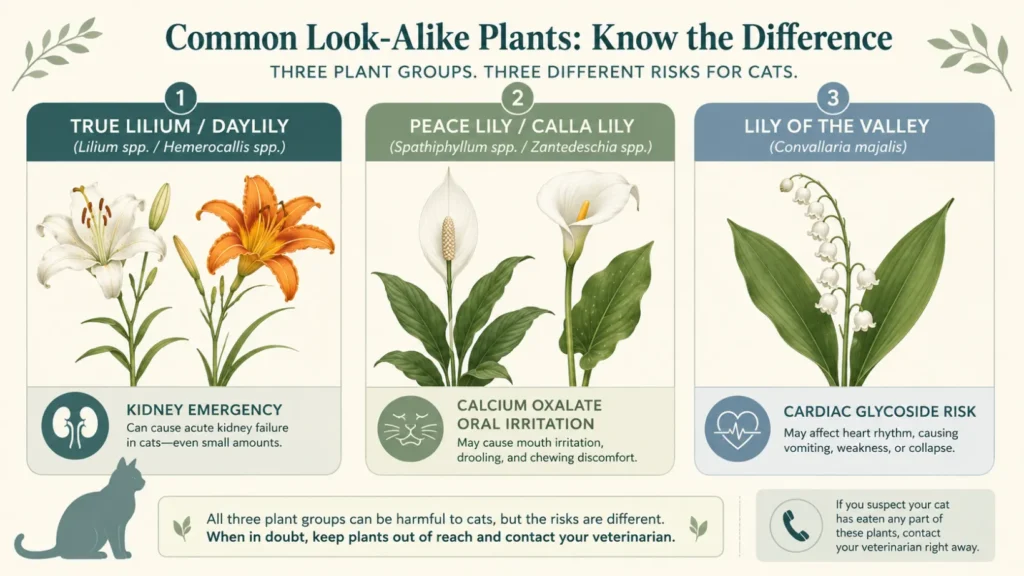
Peace lily is not a member of Lilium or Hemerocallis.
It contains insoluble calcium oxalate crystals and is more commonly associated with:
- mouth pain
- drooling
- oral irritation
- difficulty swallowing
It does not cause the characteristic true-lily kidney-failure syndrome.
Calla Lily Is Also Different
Calla lilies likewise contain calcium oxalate crystals rather than the unidentified nephrotoxin associated with true lilies.
They are still toxic and should not be chewed, but the expected toxic effect differs.
Lily of the Valley Is Dangerous for a Different Reason
Lily of the valley is not a true lily.
It contains cardiac glycosides capable of affecting heart function.
It therefore remains a potentially serious toxic plant even though it does not cause the same kidney injury as Lilium species.
Do Not Keep True Lilies in a Cat Household
For true lilies, putting a bouquet on a high shelf is not sufficient protection.
Pollen can fall, leaves can drop and vase water may become accessible.
The most reliable prevention is to keep true lilies and daylilies out of the home entirely.
Be Careful With Mixed Bouquets
Florist arrangements may contain lilies among several other flowers.
Before bringing a bouquet into a cat household:
- identify every flower
- look for unopened lily buds as well as open flowers
- check botanical names where uncertain
Lily Exposure Emergency Card
| Information | Record |
|---|---|
| Lily type/name | ________ |
| Botanical name | ________ |
| Exposure | Leaf / Flower / Pollen / Vase water / Unknown |
| Time | ________ |
| Symptoms | ________ |
| Photo/sample available | Yes / No |
| Veterinarian contacted | ________ |
FAQs
Can one lick of lily pollen hurt a cat?
Yes. Small pollen exposures from true lilies are considered potentially dangerous because the pollen can be swallowed during grooming.
Is lily vase water toxic to cats?
Yes. FDA specifically includes water from a vase containing true lilies among potential exposure routes.
Should I wait for symptoms after my cat touches a lily?
No. Known or suspected exposure to a true lily or daylily warrants immediate veterinary contact.
Are peace lilies as dangerous as Easter lilies?
No. Peace lilies cause calcium-oxalate oral irritation and do not cause the same acute kidney-failure syndrome. They are still not safe to chew.
Can I just remove the pollen from my cat’s coat?
Prevent grooming and contact your veterinarian immediately. Removing contamination can be useful, but it should not delay professional assessment after a true-lily exposure.


