
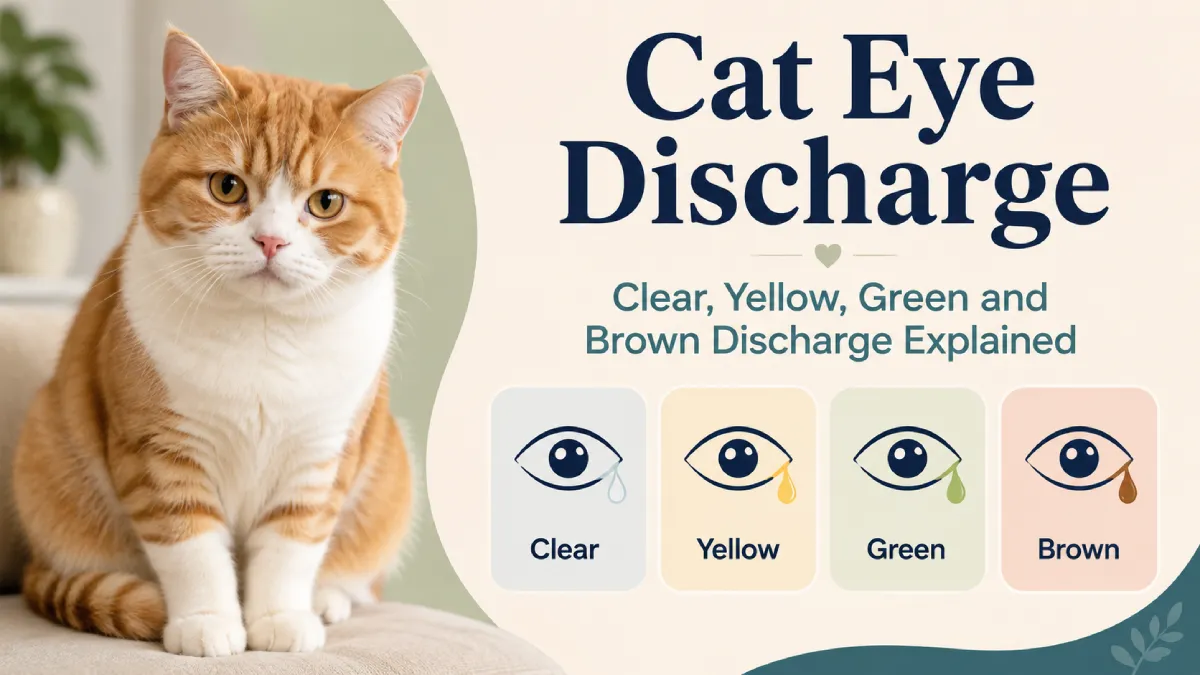
Cat Eye Discharge: Clear, Yellow, Green and Brown Discharge Explained
Cat eye discharge can range from clear tears to white mucus, yellow or green material, brown staining or occasionally blood-tinged fluid. The appearance is worth recording, but colour alone cannot tell you whether the cause is conjunctivitis, an upper respiratory infection, irritation, a corneal injury, blocked tear drainage or another eye problem. Cornell notes that conjunctivitis can produce either clear watery discharge or thicker, darker material depending on the underlying cause.
Pay particular attention to what happens alongside the discharge. Squinting, marked redness, swelling, cloudiness, trauma or obvious eye pain deserve prompt veterinary attention, because disorders involving the cornea can be painful and potentially threaten vision.
Direct Answer
A small temporary amount of eye debris may be less concerning when a cat otherwise has clear, comfortable eyes. Persistent or increasing discharge is different. Clear tearing can occur with irritation or drainage problems, while mucus and coloured discharge may accompany conjunctival or respiratory disease. Discharge colour does not diagnose infection. Squinting, cloudiness or eye trauma should be assessed promptly.
Normal Small Amounts of Discharge
Healthy feline eyes should generally appear bright and clear, with little or no persistent tearing. A very small amount of dried material at the inner corner may occasionally be noticed, but repeated accumulation, increasing moisture or a new change from your cat’s normal pattern deserves closer attention.
The more useful questions are:
- Is the amount increasing?
- Is it happening every day?
- Is only one eye affected?
- Is the eye red or swollen?
- Is the cat squinting?
- Has the discharge become thick or coloured?
These details help distinguish minor debris from an active ocular problem.
Clear Tears
Clear fluid may simply be tears.
Tearing can increase when the surface of the eye is irritated or painful, and it can also occur when tears do not drain normally through the nasolacrimal system. Merck explains that tear-duct disorders may lead to excessive watering and can be associated with congenital anatomy, infection, foreign material or trauma.
Clear tears are therefore an observation, not a diagnosis.
Watery Discharge
Persistent watery eyes in cats are often described as epiphora, meaning tears overflow instead of remaining within the normal drainage system.
Possible reasons include:
- increased tear production from irritation
- conjunctival inflammation
- corneal discomfort
- abnormal eyelid or facial anatomy
- impaired tear drainage
VCA describes epiphora as a symptom that can result either from excessive tear production or inadequate drainage.
If watering is accompanied by squinting, redness or cloudiness, the problem deserves more urgent attention than uncomplicated tear staining.
White Mucus
White or greyish cat eye mucus may occur when the conjunctiva or ocular surface is irritated.
The appearance does not tell you whether the problem is infectious. Merck notes that conjunctivitis has many possible causes and that the appearance of the conjunctiva alone is generally not specific enough to identify the responsible agent.
Record whether mucus is:
- thin or thick
- occasional or persistent
- affecting one or both eyes
- accompanied by redness
- associated with squinting
Yellow Discharge
Yellow discharge from a cat’s eye may occur when mucus and inflammatory material accumulate, including in some cases of conjunctivitis or respiratory disease. Cornell describes feline respiratory infections in which initially clear ocular discharge may later become mucous or yellowish.
However:
yellow discharge does not prove a bacterial infection.
Viral disease, secondary bacterial involvement and other forms of ocular inflammation can overlap in appearance. Veterinary examination may be needed to determine the actual cause.
Green Discharge
A green discharge from a cat eye should also be treated as a description rather than a diagnosis.
Coloured or pus-like discharge can occur with inflammatory and infectious eye disease, but veterinarians do not determine the responsible organism simply by looking at its colour. The clinical examination and, in selected cases, testing of ocular material provide more useful information.
Green discharge combined with pain, squinting, marked redness or corneal cloudiness deserves veterinary assessment.
Brown Staining
Brown or reddish-brown material on the fur beneath the eye is often tear staining rather than brown fluid coming directly from inside the eye.
Chronic tear overflow can keep the fur damp and produce reddish-brown staining. VCA notes that this is commonly seen with epiphora, particularly when tear drainage is affected.
This distinction matters:
- brown-stained fur may reflect chronic tearing
- thick brown ocular material may represent something different
Photograph the eye before cleaning if you are unsure what you are seeing.
Blood-Tinged Discharge
Blood around the eye should not be treated as a routine discharge colour.
Possible explanations may include trauma, tissue irritation or bleeding from ocular structures, and the cause cannot be identified safely from appearance alone. Merck describes trauma as one cause of serious ocular injury, while bleeding inside the eye can occur with several eye and systemic disorders.
If blood follows trauma, appears within the eye itself, persists or occurs with pain or visual changes, seek prompt veterinary care.
One Eye Versus Both Eyes
Whether discharge affects one eye or both is useful information.
Merck notes that conjunctivitis limited to one eye may be associated with problems such as:
- a foreign object
- tear-sac inflammation
- dry eye
while infectious conjunctivitis may begin in one eye and spread to the other or involve both.
This is not a strict diagnostic rule. Record the distribution rather than trying to diagnose from it.
Redness
Redness usually reflects inflammation somewhere around or within the eye.
Conjunctivitis commonly produces reddened and swollen conjunctival tissue, but other eye disorders can cause a similar appearance.
Redness becomes more concerning when accompanied by:
- squinting
- cloudiness
- swelling
- trauma
- persistent discharge
Squinting
Squinting is an important sign of eye discomfort.
The American College of Veterinary Ophthalmologists identifies squinting as a sign of ocular pain and advises veterinary evaluation when eye discomfort is present.
Corneal ulcers are one important example. They can cause:
- squinting
- tearing
- redness
- mucus
- cloudiness
and may progress rapidly in some cases.
Do not wait for discharge to change colour before taking squinting seriously.
Swelling
Swelling may involve:
- eyelids
- conjunctiva
- tissue around the eye
Conjunctivitis frequently causes conjunctival swelling, while trauma and other inflammatory processes can produce more dramatic changes.
New marked swelling, especially with pain or an inability to open the eye normally, warrants veterinary assessment.
Cloudiness
A normally clear cornea becoming hazy, blue, grey or cloudy deserves prompt attention.
Corneal ulceration and inflammation can cause cloudiness, particularly when the corneal surface is painful or damaged.
Cloudiness can also originate from other structures inside the eye, so appearance alone cannot identify the cause.
Discharge + squinting + cloudiness should not be managed as routine eye boogers.
Upper Respiratory Infections
Eye discharge often occurs alongside feline upper respiratory disease.
Cornell lists signs including:
- ocular discharge
- nasal discharge
- sneezing
- conjunctivitis
- lethargy
- reduced appetite
among affected cats.
Feline herpesvirus can cause conjunctivitis and corneal disease, while other organisms can also contribute to respiratory and ocular symptoms.
If congestion or illness leads to reduced food intake, link naturally to Pawnium’s Why Is My Cat Not Eating? guide at /why-is-my-cat-not-eating/.
Conjunctival Irritation
The conjunctiva is the membrane lining the inner eyelids and covering part of the surface of the eye.
When inflamed, it can cause:
- redness
- swelling
- blinking
- squinting
- watery or thicker discharge
Potential causes include infectious agents and environmental irritants.
The appearance is not sufficiently specific to determine the exact cause without considering the history and examination findings.
Corneal Injury
The cornea is the clear surface covering the front of the eye.
Scratches, ulcers, foreign material, eyelid abnormalities and infections can damage it. Cornell and ACVO describe squinting, tearing, discharge and cloudiness among important signs of corneal ulceration.
A veterinarian may use fluorescein stain to identify defects in the corneal surface.
Because ulcers can worsen and threaten vision, suspected corneal injury requires veterinary assessment rather than home treatment with random eye drops.
Foreign Material
Dust, plant material or another foreign object can irritate the eye or become trapped beneath an eyelid.
Foreign material may contribute to:
- tearing
- redness
- squinting
- rubbing
- discharge
and foreign objects are also recognised causes of corneal injury and conjunctival inflammation.
Do not use tweezers or probe beneath the eyelids yourself.
If something appears embedded or the cat is painful, veterinary examination is safer.
Tear-Drainage Problems
Tears normally drain through the nasolacrimal ducts toward the nose.
If drainage is obstructed, tears may overflow onto the face. Causes can include congenital abnormalities, inflammation, foreign material, trauma or masses affecting the drainage pathway.
A veterinarian may assess drainage with fluorescein dye or investigate further if obstruction is suspected.
Persistent watering does not automatically mean an infection is present.
Breed-Related Facial Structure
Facial anatomy can influence tear drainage.
Merck notes that chronic tear overflow occurs more commonly in Persian and Himalayan cats, while ACVO explains that flat-faced cats can have ocular problems related to shallow eye sockets, eyelid conformation and exposure of the ocular surface.
This does not mean discharge should automatically be considered normal in flat-faced breeds.
New redness, squinting, cloudiness or changing discharge still deserves veterinary evaluation.
What Owners Can Wipe Safely
If discharge is only on the fur or eyelid margins, gently soften and wipe external debris with:
- a clean soft cloth
- a clean washcloth dampened with warm water
- a fresh moist tissue
Do not scrub the eyeball itself. VCA recommends gently cleaning debris from around a cat’s eyes using warm water and a washcloth before prescribed eye medication, and also advises keeping tear-stained areas clean and dry.
Use a clean part of the cloth for each eye when possible.
Cleaning removes debris. It does not treat the underlying cause of persistent discharge.
Products to Avoid
Do not put medication into your cat’s eye simply because another product previously helped.
Avoid using:
- human eye drops unless specifically directed by a veterinarian
- leftover pet eye medication
- another animal’s prescription drops
- hydrogen peroxide near or in the eye
- household antiseptics
- homemade mixtures
VCA specifically advises against hydrogen peroxide around the eyes because accidental ocular exposure can cause severe damage.
Old or inappropriate eye medication can also be dangerous because some ophthalmic drugs are unsuitable when corneal ulcers are present. Merck states that corticosteroids are contraindicated with corneal ulceration and can interfere with corneal healing; in cats they may also reactivate feline herpesvirus.
This is one reason leftover prescription drops should not be reused without veterinary guidance.
When Veterinary Assessment Is Needed
Arrange veterinary evaluation when eye discharge:
- persists or repeatedly returns
- increases noticeably
- becomes thick
- occurs with significant redness
- occurs with swelling
- affects a cat that is squinting
- occurs with obvious eye pain
- is associated with cloudiness
- follows an eye injury
- accompanies appetite loss or systemic illness
- occurs with suspected foreign material
Cornell recommends veterinary assessment when ocular discharge occurs with apparent discomfort, because more serious eye problems may need to be ruled out. Its urgent-care service also lists ocular discharge with squinting as a reason for prompt evaluation.
Eye Emergencies
Seek urgent veterinary care for:
- significant eye trauma
- a penetrating or embedded foreign object
- sudden severe cloudiness
- an eye that appears ruptured or displaced
- sudden vision loss
- severe pain with the eye held closed
- major bleeding involving the eye
Merck classifies injuries such as corneal foreign bodies, corneal lacerations, globe rupture and acute vision loss as ophthalmic emergencies because rapid treatment may be necessary to preserve vision.
Squinting after trauma or squinting with a cloudy eye should never be dismissed as simple discharge. ACVO notes that painful corneal ulcers may show squinting, tearing, discharge, redness and cloudiness and can worsen rapidly.
FAQs
Is a small amount of eye discharge normal in cats?
A very small amount of occasional clear or dried material can occur, but healthy eyes should generally be clear and comfortable with little persistent tearing. Increasing, recurring or thick discharge deserves closer attention, particularly if redness or squinting develops.
Does yellow eye discharge mean my cat has an infection?
Not necessarily. Yellow material can occur with inflammatory or infectious conjunctival disease, but colour alone cannot determine whether the cause is bacterial, viral or something else. Veterinary examination may be needed.
Does green eye discharge mean a bacterial infection?
No reliable colour rule can diagnose a bacterial infection. Green or pus-like discharge is worth reporting, but conjunctival appearance and discharge colour overlap among different eye disorders.
Why does my cat have brown stains under the eyes?
Brown or reddish-brown staining can develop when tears repeatedly overflow onto the fur. This is commonly associated with epiphora and can be influenced by tear drainage and facial anatomy.
Can I use human eye drops on my cat?
Do not use human eye drops unless your veterinarian specifically tells you to use that exact product. Eye problems can have very different causes, and some ophthalmic medications are unsafe when corneal damage is present.
Why is my cat squinting with eye discharge?
Squinting indicates ocular discomfort and can occur with conjunctivitis, corneal ulcers and other painful eye disorders. Because corneal disease can worsen rapidly, discharge accompanied by squinting deserves prompt veterinary assessment.