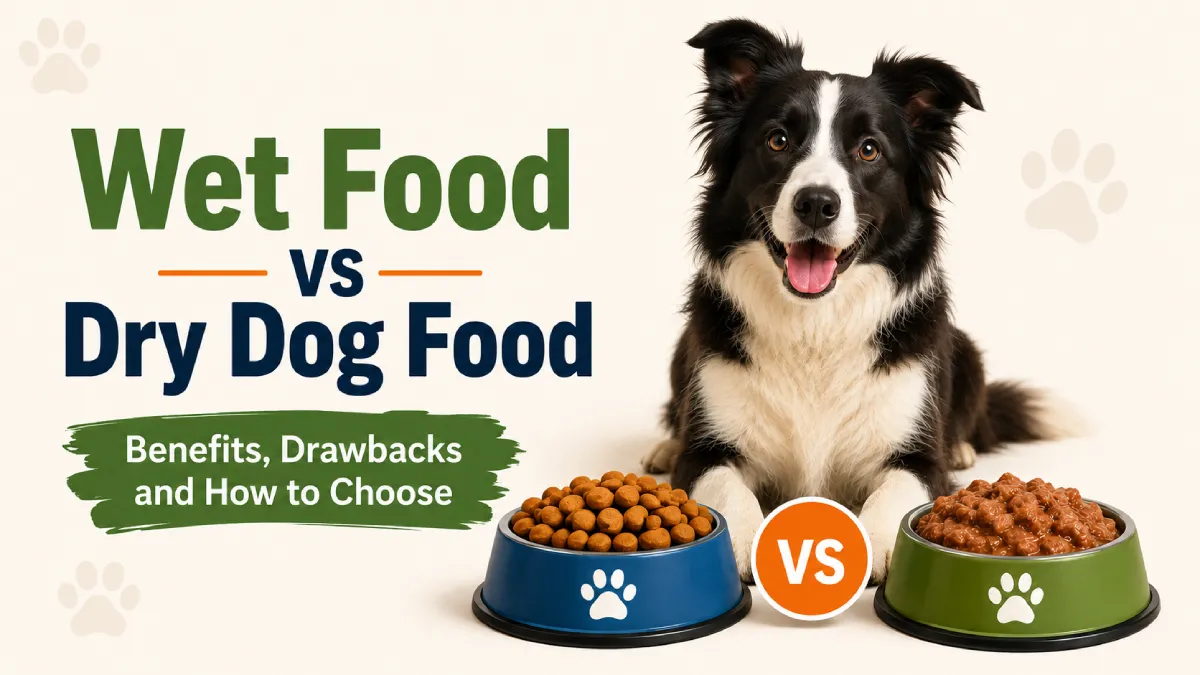
Wet Food vs Dry Dog Food: Benefits, Drawbacks and How to Choose
When standing in the pet food aisle or browsing online, dog owners are confronted with an overwhelming array of choices. Among the most fundamental decisions is selecting the format of your dog’s daily diet. The debate surrounding wet food vs dry dog food is filled with passionate opinions, marketing claims, and longstanding myths.
Whether you are weighing wet versus dry dog food, asking is wet food better for dogs or is dry food good for dogs, comparing canned dog food versus kibble, wondering can dogs eat wet and dry food together, or learning the mechanics of mixed feeding for dogs, this comprehensive guide provides an objective, evidence-based roadmap. Grounded in veterinary nutrition, this article explores the physiological differences, practical trade-offs, life-stage considerations, and portion calculations needed to make the best choice for your companion.
Quick Comparison
| Feature | Dry Dog Food (Kibble) | Wet Dog Food (Canned / Pouch) |
| Moisture Content | Low (~10%) | High (~75%–80%) |
| Calorie Density | High (Concentrated energy) | Low (Volumetric bulk) |
| Palatability | Moderate | High (Rich aroma and texture) |
| Cost & Shelf Life | Cost-effective; long shelf life after opening | Higher cost per calorie; spoils quickly once opened |
| Convenience | High (Easy to store, measure, and use in feeders) | Moderate (Requires refrigeration after opening) |
Nutritional Completeness Matters More Than Format
Before comparing the pros and cons of canned food and kibble, it is vital to recognize a foundational principle of canine clinical nutrition: The physical format of pet food (wet vs. dry) does not determine its nutritional quality.
A high-quality dry kibble that is formulated to be “complete and balanced” according to Association of American Feed Control Officials (AAFCO) or European Pet Food Industry Federation (FEDIAF) guidelines will provide every single essential nutrient, vitamin, and mineral your dog requires. Similarly, a complete and balanced wet food provides total nutrition. Conversely, a poor-quality formula in either format can lead to nutritional deficiencies. Always look for a statement of nutritional adequacy on the package rather than assuming one format is inherently superior. (Learn how to decode packaging in our Dog-food label guide).
Format Overviews
Wet Dog Food Overview
Wet dog food—typically packaged in cans, pouches, or trays—is manufactured by blending fresh or frozen meat ingredients with water, vitamins, and gelling agents. The mixture is sealed in airtight containers and cooked under high heat and pressure (retorting) to sterilize the food while locking in moisture and flavor.
-
Key Characteristic: High moisture levels (usually 75% to 80%) and strong olfactory appeal.
Dry Dog Food Overview
Dry kibble is produced primarily through an extrusion process. Raw ingredients—including meat meals, grains, legumes, vegetables, and fats—are combined into a dough, cooked rapidly under high heat and pressure, pushed through a die to form specific shapes, and dried. After cooling, kibble is often sprayed with fats and palatability enhancers.
-
Key Characteristic: Low moisture content (typically around 10%) and high stability.
Core Comparison Parameters
1. Moisture Content and Hydration
The most significant biological difference between wet and dry dog food is water content. Kibble contains roughly 10% moisture, whereas canned food contains between 75% and 80% water.
-
For dogs that naturally drink plenty of fresh water, dry kibble maintains healthy hydration effortlessly.
-
However, for dogs prone to urinary tract issues, kidney disease, or those who simply refuse to drink adequate water, wet food serves as an exceptional built-in hydration vehicle. (Explore strategies to increase fluid intake in our Dog hydration guide).
2. Calorie Density and Portion Size
Because wet food is roughly three-quarters water, its caloric density is significantly lower than dry kibble.
-
A single cup of dry kibble can contain anywhere from 350 to 500 calories (kcal).
-
In contrast, a similar volume of wet food may contain only 150 to 250 calories.
-
This means dogs eating wet food can consume a larger physical volume of food to achieve the same caloric intake, which can promote satiety in dogs prone to constant begging.
3. Palatability
Wet food holds a distinct advantage in palatability. The cooking process inside sealed cans retains intense savory aromas and soft, meaty textures that appeal strongly to a dog’s keen sense of smell. This makes wet food an invaluable tool for picky eaters, sick dogs, or senior pets with diminished olfactory senses.
4. Debunking Dental-Health Misconceptions
Important Instruction: Do not claim dry food automatically cleans teeth.
A persistent myth in dog care is that eating dry kibble automatically cleans a dog’s teeth through crunchy friction. In reality, standard dry kibble shatters immediately upon contact with the tips of a dog’s teeth, offering minimal to no mechanical scraping action near the gumline where plaque accumulates. Unless kibble is specifically engineered and certified by the Veterinary Oral Health Council (VOHC) as a specialized dental diet, dry food does not replace regular tooth brushing or professional veterinary dental cleanings. Similarly, wet food does not inherently cause tooth decay, provided oral hygiene is maintained.
5. Storage, Cost, Convenience, and Shelf Life
-
Dry Food: Highly convenient, cost-effective, and easy to measure. Unopened bags have a long shelf life, and opened kibble remains stable for weeks when stored properly in a cool, dry place. (Learn best practices in our Dry dog-food storage guide).
-
Wet Food: Significantly higher cost per calorie, making it expensive for large or giant breeds. Once opened, canned food spoils rapidly if left at room temperature. (Check safe room-temperature timelines in our guide on How long wet dog food can sit out). Opened cans require immediate refrigeration and must be consumed within 2 to 3 days.
Choosing by Life Stage and Health Status
No single format suits every dog. The ideal choice depends on your dog’s individual physiological profile:
1. Life-Stage Considerations
-
Feeding Puppies: Puppies have small mouths and developing teeth. Soft wet food or kibble softened with warm water is ideal during weaning. As puppies grow, dry kibble formulated for growth supports intense caloric needs efficiently.
-
Feeding Adult Dogs: Adult dogs maintain energy on either format, provided caloric intake matches their daily activity level. (Establish foundational frameworks via our master Dog-feeding pillar).
-
Feeding Senior Dogs: Older dogs frequently experience dental sensitivity, missing teeth, or declining olfaction. Wet food provides soft texture, strong aroma, and essential moisture to support aging kidneys.
2. Specific Health Profiles
-
Dogs with Dental Discomfort: Dogs with advanced periodontal disease, fractured teeth, or sore gums benefit immediately from the soft, effortless texture of wet food.
-
Dogs That Need More Hydration: Dogs suffering from chronic kidney disease, recurrent cystitis, or urinary stones thrive on wet food due to its high water content.
-
Dogs That Need Calorie Control: Overweight dogs can eat a visually larger volume of wet food while consuming fewer total calories, helping them feel full while losing weight.
-
Dogs That Struggle to Maintain Weight: Highly active working dogs or underweight pets often benefit from the concentrated caloric density of dry kibble, allowing them to hit energy targets without eating uncomfortable volumes.
-
Sensitive Stomach and Food Allergies: Both wet and dry formats offer novel-protein and limited-ingredient options. However, wet food often contains fewer artificial preservatives and binders, which can occasionally benefit sensitive dogs.
Combining Wet and Dry Food (Mixed Feeding)
Many owners choose to combine wet and dry food to capture the benefits of both: the crunch, convenience, and cost-effectiveness of kibble paired with the aroma, palatability, and hydration of wet food.
How to Calculate Combined Portions (Avoiding Accidental Overfeeding)
Critical Instruction: Do not present mixed feeding as adding full portions of both foods. Explain how calorie totals can increase accidentally.
A common mistake when introducing mixed feeding is scooping out a dog’s normal portion of kibble and simply plop a half-can of wet food on top. This dramatically increases daily caloric intake, leading to rapid, unwanted weight gain.
To practice mixed feeding safely:
-
Determine your dog’s total daily caloric requirement (using our Dog calorie calculator).
-
Decide on the percentage split (e.g., 50% calories from dry food, 50% from wet food).
-
Calculate the exact gram or cup measurement for the dry portion to meet its calorie allotment.
-
Calculate the exact gram or can fraction for the wet portion to meet its remaining calorie allotment.
-
Mix the two reduced portions together.
Transitioning Between Formats
Switching your dog from dry food to wet food—or vice versa—must be done gradually to avoid gastrointestinal upset (such as diarrhea or vomiting). Transition over 7 to 10 days:
-
Days 1–3: 75% current food + 25% new format.
-
Days 4–6: 50% current food + 50% new format.
-
Days 7–9: 25% current food + 75% new format.
-
Day 10: 100% new format.
When a Veterinary Diet May Be Required
If your dog is diagnosed with a medical condition—such as severe inflammatory bowel disease (IBD), advanced renal failure, pancreatitis, or urinary stones—your veterinarian may prescribe a specialized therapeutic diet. Therapeutic diets exist in both wet and dry formats, engineered with precise nutrient restrictions or altered protein structures that commercial diets cannot replicate.
Unique Content Asset: Wet-Versus-Dry Comparison Chart
Use this master reference matrix to evaluate the practical and biological trade-offs between wet and dry dog food:
| Feature / Metric | Dry Dog Food (Kibble) | Wet Dog Food (Canned / Pouch) |
| Moisture Content | ~10% (Requires external water consumption) | ~75%–80% (Provides built-in hydration) |
| Calorie Density | High (~350–500 kcal per cup) | Low (~150–250 kcal per cup) |
| Storage & Stability | Stays fresh for weeks in a sealed container | Spoils in hours at room temp; 2–3 days refrigerated |
| Cost Efficiency | Highly economical per calorie | Higher cost per calorie (expensive for large dogs) |
| Palatability & Aroma | Moderate (May require toppers for picky dogs) | High (Strong scent and rich texture) |
| Portion Measurement | Easy (Measured via scale or standard cup) | Requires fractioning cans or weighing liquid volumes |
| Suitable Situations | Multi-dog homes, active dogs, busy schedules | Senior dogs, picky eaters, kidney/urinary health |
| Main Limitations | Less appealing to picky eaters; low moisture | Expensive; spoils quickly; higher packaging waste |
Frequently Asked Questions
Is wet food better for dogs than dry food?
Neither format is inherently better. Both wet and dry foods can provide 100% complete and balanced nutrition. Wet food offers superior hydration and palatability, while dry food provides superior cost-efficiency, convenience, and storage stability.
Does dry dog food clean a dog’s teeth?
No. Standard dry kibble shatters instantly upon contact with teeth and does not provide mechanical cleaning at the gumline. Unless a food is a VOHC-certified dental diet, dry kibble does not replace regular tooth brushing.
Can I mix wet and dry dog food together?
Yes! Mixed feeding is a fantastic way to combine the palatability and hydration of wet food with the crunch and cost-effectiveness of kibble. Just be sure to reduce the portion sizes of both so you do not exceed your dog’s total daily calorie target.
How long can wet dog food sit in a bowl?
Wet dog food should not be left out at room temperature for more than 2 to 4 hours. After that window, bacterial growth increases rapidly, risking food contamination and gastrointestinal illness.
Expert Review Note
This guide on wet versus dry dog food, caloric density calculations, hydration biology, and mixed feeding mechanics was reviewed and approved by a licensed doctor of veterinary medicine (DVM) and a board-certified veterinary nutrition specialist.