American Staffordshire Terrier VS Pit Bull: Breed Traits Compared
When it comes to dog breed differences, few comparisons create as much confusion as the American Staffordshire Terrier vs Pit Bull debate. These are two of the most similar-looking dog breeds, and many people mistakenly assume they are the same dog. This common American Staffordshire Terrier vs Pit Bull confusion often leads to misunderstandings about temperament, behavior, and suitability as family pets.
Often referred to as Staffy vs Pitbull, both breeds have faced aggressive dog myths for decades. In reality, they are loyal dogs, intelligent dogs, and highly people-oriented companions. They are also high-energy dogs, making them better suited for owners who can meet their exercise and attention needs.
Dog Breed Guide
American Staffordshire Terrier vs Pit Bull
A Detailed Comparison of Two Iconic Terrier Breeds
In this dog breed guide, we’ll explore the differences between Pit Bull and AmStaff, including Physical traits, Personality differences, Health conditions, Trainability, and Adoption considerations. This detailed dog breed comparison will help you decide which terrier breed fits your lifestyle best.
Visual Differences: American Staffordshire Terrier vs Pit Bull
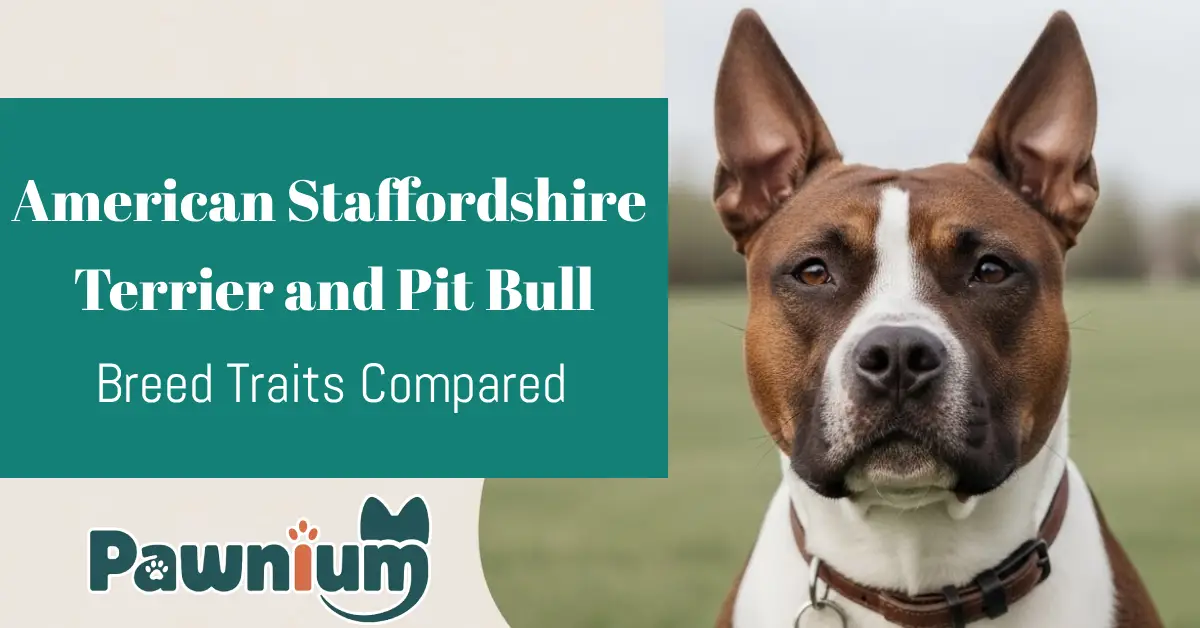
At first glance, these dogs appear nearly identical. A visual comparison or side by side comparison shows why the confusion is so common.
Shared Visual Traits
- Muscular dogs with broad chests
- Strong jaws
- Short coats
- Similar body structure
- Confident stance
Subtle Appearance Differences
- AmStaff: Tends to be stockier and heavier
- Pit Bull: Often leaner and more athletic
Despite these nuances, both dogs fall squarely into the category of powerful, athletic terrier breeds.
At a Glance: Breed Comparison Table
| Feature | American Staffordshire Terrier | American Pit Bull Terrier |
|---|---|---|
| Average Height | 17–19 inches | 17–20 inches |
| Average Weight | 40–70 pounds | 30–60 pounds |
| Lifespan | 12–16 years | 12–16 years |
| Energy Level | Moderate | Moderate to High |
| Daily Exercise | 1+ hours | 1.5+ hours |
| Grooming Needs | Mild | Mild |
| Coat Type | Short, low-shedding | Short, moderate shedding |
| Family-Friendly | Yes | Yes |
| Other Pets | Mostly pet-friendly | Not other-pet friendly |
| Trainability | Easy to train | Easy to train |
| Temperament | Playful, affectionate | Loving, eager to please |
American Staffordshire Terrier Overview
The American Staffordshire Terrier is a medium-sized dog known for its muscular build, stocky body, and strong jaws. Historically, the breed was associated with dog fighting history and bear-baiting history, which fueled the long-standing aggression myth surrounding them.
Today, responsible breeding and ownership have shown the truth: this is a friendly breed with a playful personality, loving temperament, and deep loyalty to its family.
Key Traits:
- Loyal dog
- Family-oriented
- Confident yet affectionate
- Thrives on human companionship
Personality
If one word defines this breed, it’s friendly. Personality highlights include being affectionate with family, good with children, friendly toward strangers, and having protective instincts without being overly aggressive.
However, this is a vocal breed. Barking and howling can be common, making them less suitable for noise-sensitive environments or areas with strict noise restrictions. Early socialization is essential to ensure well rounded behavior with people and other animals.
Training and Exercise
Thanks to their intelligence, this is an easy-to-train and highly intelligent dog. Training tips: Responds best to reward-based training, strong treat motivation, and enjoys structured routines.
Exercise Needs: Daily exercise is required, typically 20–30 minute walks, fetch games, and interactive play. Because of their strong chew strength, always use durable toys to prevent damage.
Health & Care
Common Health Concerns: Elbow dysplasia, Hip dysplasia, Hypothyroidism, Progressive retinal atrophy (PRA), and Weight gain risk. A balanced diet combined with regular exercise helps prevent many issues.
Grooming Needs: Short coat, low shedding. Monthly grooming is sufficient.
Suitability
Ideal for active individuals, active families, and a home-centered lifestyle. Considerations: They are an owner-dependent breed prone to separation anxiety. They are not apartment-friendly and not ideal for homes with strict noise restrictions.
American Pit Bull Terrier Overview
Despite widespread Pit Bull misconceptions, the American Pit Bull Terrier is a gentle canine and an excellent companion. This people-oriented breed thrives on affection and close family bonds.
They are often misunderstood due to aggressive dog myths, but experienced owners know Pit Bulls as deeply loving dogs who form intense connections with their humans.
Personality
Personality Highlights: Family-friendly, good with children, highly affectionate, and an attention-seeking dog. Because they crave interaction, Pit Bulls may develop separation anxiety, which can lead to destructive chewing if left alone too long. Puppy socialization is critical to reduce dog aggression risk later in life.
Training and Exercise
Exercise Needs: High exercise needs. Daily walks are essential, along with indoor play, mental stimulation, and tug-of-war games with sturdy chew toys. Adequate exercise helps with energy release and destructive behavior prevention.
Health & Care
Health Concerns: Hip dysplasia, kneecap dislocation, skin issues, and mange. Grooming: Short coat, minimal grooming, moderate shedding. Weekly brushing or coat wiping is recommended.
Suitability
Best for single-pet households, owners with high time availability, and affection-focused ownership. Living Conditions: Apartment adaptability is possible. They are not ideal for long absences and thrive with constant companionship.
Comparing American Staffordshire Terrier & Pit Bull
Size and Physical Traits
Similar height, similar weight, muscular body, strong jaws, and a short shiny coat with no undercoat. Physically, they are nearly identical among terrier breeds.
Overall Personality
| Trait | American Staffordshire Terrier | American Pit Bull Terrier |
|---|---|---|
| Human Interaction | Very friendly | Extremely affectionate |
| Other Dogs | Mostly tolerant | Dog-to-dog aggression risk |
| Socialization Need | Important | Critical |
| Energy | Moderate | Higher |
Despite lingering aggression myths, both are human-friendly dogs when trained and socialized.
Health and Life Expectancy
Both breeds enjoy a 12–16 year lifespan but carry weight gain risk without exercise. They require a proper diet and regular exercise. Pit Bulls are more prone to skin irritation, while both breeds share risks of hip dysplasia and other breed-related health concerns.
Which Breed Is Right for You?
Choosing the right dog comes down to lifestyle compatibility. Consider the following:
- Do you have other pets? AmStaff may be better
- Live in an apartment? Pit Bull adapts better
- Away from home often? Neither breed is ideal
- Want a deeply affectionate companion? Pit Bull
- Prefer a slightly calmer temperament? AmStaff
Both dogs can become a lifelong companion when matched correctly, making the final family dog decision deeply personal. 🐾