

A beautiful garden or a home filled with greenery can be relaxing for humans — but for dogs, some plants pose serious and even life-threatening risks.
Many poisonous plants for dogs are common landscaping shrubs or popular houseplants. Because dogs explore the world with their mouths, accidental plant poisoning happens more often than most pet owners realize.
Quick Answer: What Are the Most Poisonous Plants for Dogs?
The most common poisonous plants for dogs include Sago Palm, Oleander, Azalea, Tulips, Lily of the Valley, Yew, Foxglove, Dieffenbachia, Philodendron, and Castor Bean. These plants can cause symptoms ranging from vomiting and drooling to seizures, heart failure, liver damage, and sudden death.
According to the ASPCA Toxic Plant Database, hundreds of indoor and outdoor plants are classified as toxic to dogs. If your dog eats a toxic plant, contact your veterinarian immediately or call the Pet Poison Helpline.
Pet Health Alert
20 Most Common Poisonous Plants for Dogs
Symptoms, Pictures & Emergency Guide
Why Plant Poisoning in Dogs Is So Dangerous
Plant poisoning in dogs can affect multiple organ systems:
- Digestive system (vomiting, diarrhea)
- Nervous system (tremors, seizures)
- Cardiovascular system (irregular heartbeat)
- Liver and kidneys (organ failure)
The severity depends on the type of plant, amount consumed, dog’s size and health, and speed of treatment. Some toxic plants for dogs cause mild irritation. Others can be fatal within hours.
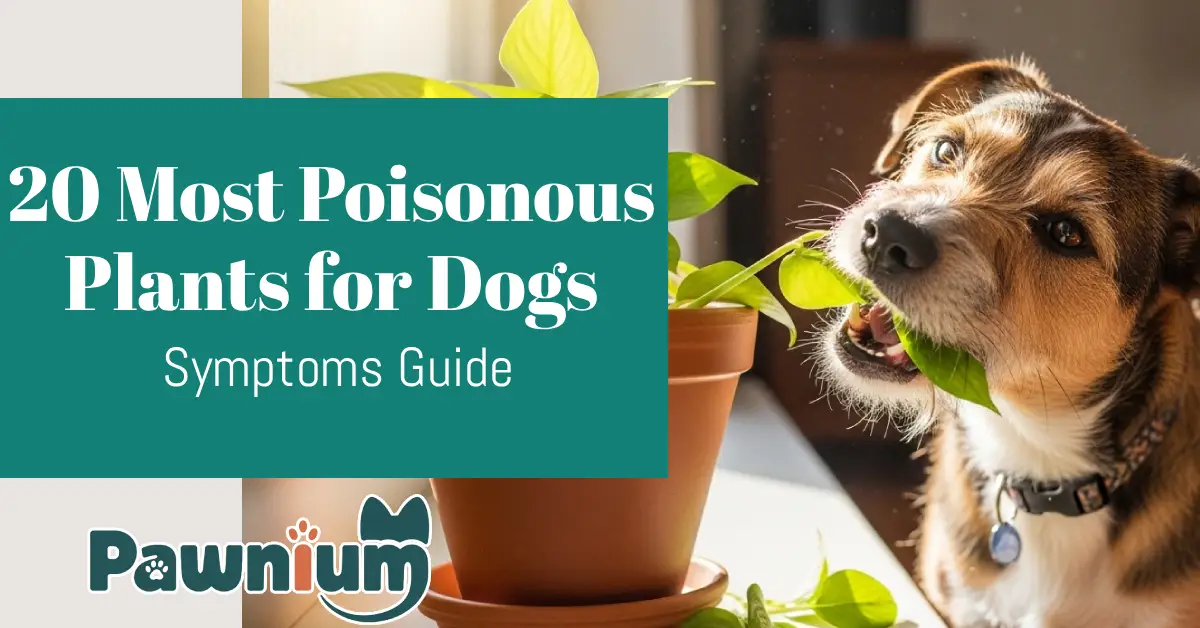
20 Most Common Poisonous Plants for Dogs (With Symptoms)
Below is a detailed list of the most common plants toxic to dogs found in homes and gardens.
1️⃣ Sago Palm 🔴 Extremely Toxic
One of the most dangerous poisonous plants for dogs. All parts contain cycasin, but the seeds are most toxic.
Symptoms: Bloody vomiting, liver failure, seizures, death within 48 hours. Immediate emergency care required.
2️⃣ Oleander 🔴 Extremely Toxic
Contains cardiac glycosides that disrupt heart rhythm.
Symptoms: Severe vomiting, irregular heartbeat, collapse, sudden death. Even small amounts can be fatal.
3️⃣ Azalea & Rhododendron 🔴 Highly Toxic
Contain grayanotoxins affecting the heart and nerves.
Symptoms: Drooling, weakness, cardiovascular collapse.
4️⃣ Castor Bean 🔴 Extremely Toxic
Contains ricin — one of the most potent natural toxins.
Symptoms: Severe abdominal pain, bloody diarrhea, organ failure. Even one seed can be deadly.
5️⃣ Lily of the Valley 🔴 Highly Toxic: Contains cardiac glycosides. Symptoms: Irregular heartbeat, seizures, sudden death.
6️⃣ Yew 🔴 Extremely Toxic: All parts (except the berry flesh) are poisonous. Symptoms: Tremors, cardiac arrest, sudden collapse.
7️⃣ Foxglove 🔴 Highly Toxic: Used in heart medication but dangerous in raw form. Symptoms: Heart rhythm changes, weakness, seizures.
8️⃣ Autumn Crocus 🔴 Extremely Toxic: Causes multi-organ damage. Symptoms: Bloody vomiting, kidney failure, respiratory distress.
9️⃣ Tulips & Hyacinths 🟠 Moderately Toxic: Bulbs are most poisonous. Symptoms: Drooling, intense stomach upset, depression.
🔟 Cyclamen 🟠 Moderately to Highly Toxic: Roots contain the highest toxin concentration. Symptoms: Heart rhythm abnormalities, seizures (large amounts).
11️⃣ Dieffenbachia (Dumb Cane) 🟠: Contains calcium oxalate crystals. Symptoms: Mouth swelling, difficulty swallowing, drooling.
12️⃣ Philodendron 🟠: Common indoor plant toxic to dogs. Symptoms: Oral irritation, vomiting, pawing at mouth.
13️⃣ Aloe Vera 🟡 Mild to Moderate: Latex portion is irritating. Symptoms: Diarrhea, lethargy, vomiting.
14️⃣ Chrysanthemum 🟡: Contains pyrethrins. Symptoms: Drooling, incoordination, skin irritation.
15️⃣ English Ivy 🟡: Symptoms: Skin rash, stomach upset.
16️⃣ Wisteria 🟠: Seeds and pods are toxic. Symptoms: Central nervous system depression, vomiting.
17️⃣ Hydrangea 🟠: Contains cyanogenic glycosides. Symptoms: Lethargy, vomiting.
18️⃣ Peace Lily 🟠: Causes oral irritation (not true lily toxicity like cats). Symptoms: Mouth pain, swelling, drooling.
19️⃣ Jade Plant 🟡: Symptoms: Vomiting, depression, incoordination.
20️⃣ Tomato Plant (Green Parts) 🟠: Contains solanine. Symptoms: Weakness, confusion, GI upset.
Indoor vs. Outdoor Hazards
Indoor Plants Toxic to Dogs: Common houseplants toxic to dogs include: Dieffenbachia, Philodendron, Peace Lily, Snake Plant, and Pothos. Always check plant safety before bringing greenery indoors.
Outdoor Plants Toxic to Dogs: Landscaping hazards include: Oleander, Azalea, Yew, Foxglove, and Hydrangea. Backyards are a frequent source of plant poisoning in dogs.
Palm Plants Toxic to Dogs
Not all palms are safe.
- 🔴 Sago Palm (Extremely Toxic): Severe liver failure risk.
- 🟠 Cardboard Palm: Similar toxicity to Sago.
- 🟢 Areca & Majesty Palms: Generally non-toxic alternatives.
Poisonous Plants for Dogs in Tropical Regions
In the Philippines & similar climates, common toxic plants include: Lantana (Santamaria), Elephant Ear (Gabi), Snake Plant, Poinsettia, and Oleander. Tropical climates increase exposure risks year-round.
Dog Ate a Poisonous Plant – Symptoms to Watch For
If your dog has ingested a toxic plant, symptoms may appear within minutes or hours.
Digestive Signs
- Severe vomiting
- Diarrhea (possibly bloody)
- Excessive drooling
Neurological Signs
- Tremors
- Seizures
- Acting disoriented
Cardiac Signs
- Irregular heartbeat
- Weak pulse
- Collapse
Behavioral Changes: Sudden lethargy, refusal to eat.
What To Do If Your Dog Eats a Toxic Plant
- Remove plant material from mouth.
- Do NOT induce vomiting unless directed.
- Take a photo of the plant.
- Call your veterinarian immediately.
- Contact the Pet Poison Helpline.
Fast action can save your dog’s life.
Prevention Tips: Keeping Dogs Safe Around Plants
- Research every new plant before purchase.
- Use hanging planters for questionable species.
- Fence off landscaping hazards.
- Train a reliable “leave it” command.
- Supervise outdoor playtime.
Prevention is far safer than emergency treatment.
Final Thoughts
Many poisonous plants for dogs are common household or garden varieties. While some cause mild stomach upset, others can lead to heart failure, seizures, or fatal organ damage. Before adding greenery to your home or yard, verify safety using trusted resources like the ASPCA Toxic Plant Database. When it comes to plant poisoning in dogs, quick action saves lives.
Frequently Asked Questions (FAQ)
What plant is most toxic to dogs?
Sago Palm is considered one of the most toxic plants for dogs due to its ability to cause rapid liver failure.
How long does it take for symptoms to appear?
Symptoms can appear within 30 minutes to several hours depending on the plant and amount consumed.
Can dogs survive plant poisoning?
Yes, if treated quickly. Early veterinary care significantly improves survival rates.
Are all lilies toxic to dogs?
Most lilies primarily affect cats, but some varieties can still cause stomach upset in dogs.
Should I induce vomiting if my dog eats a plant?
No. Only induce vomiting if instructed by a veterinarian.